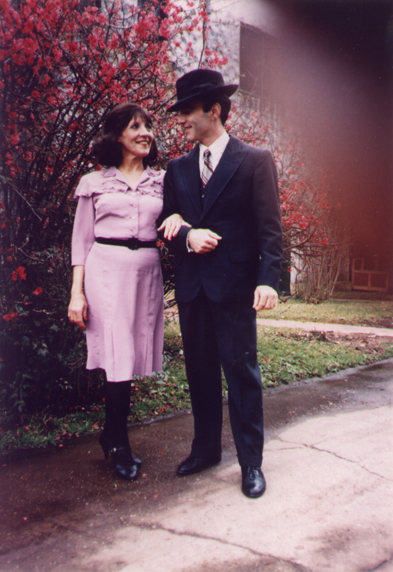
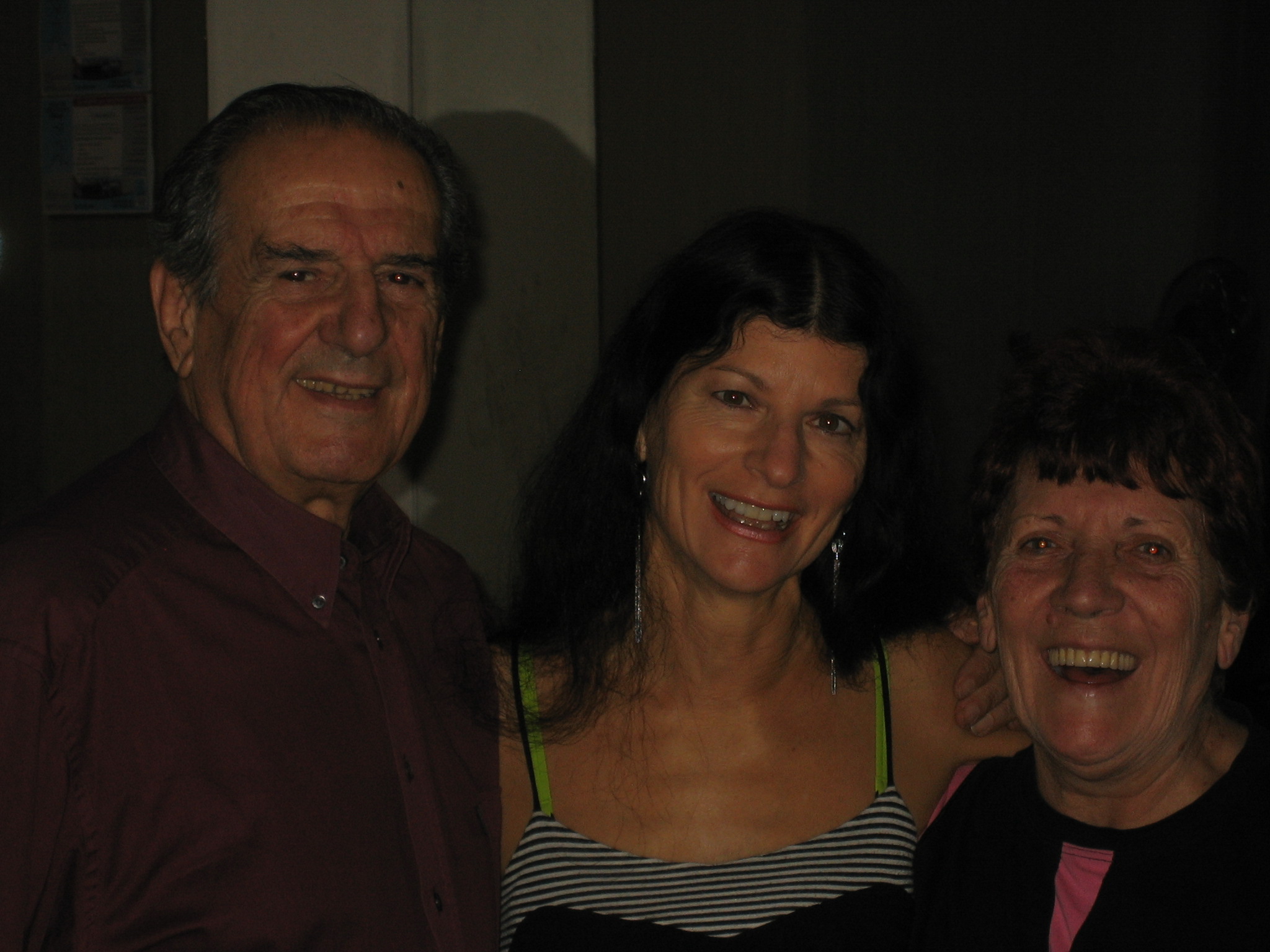
I’ve Developed A Dangerous New Habit

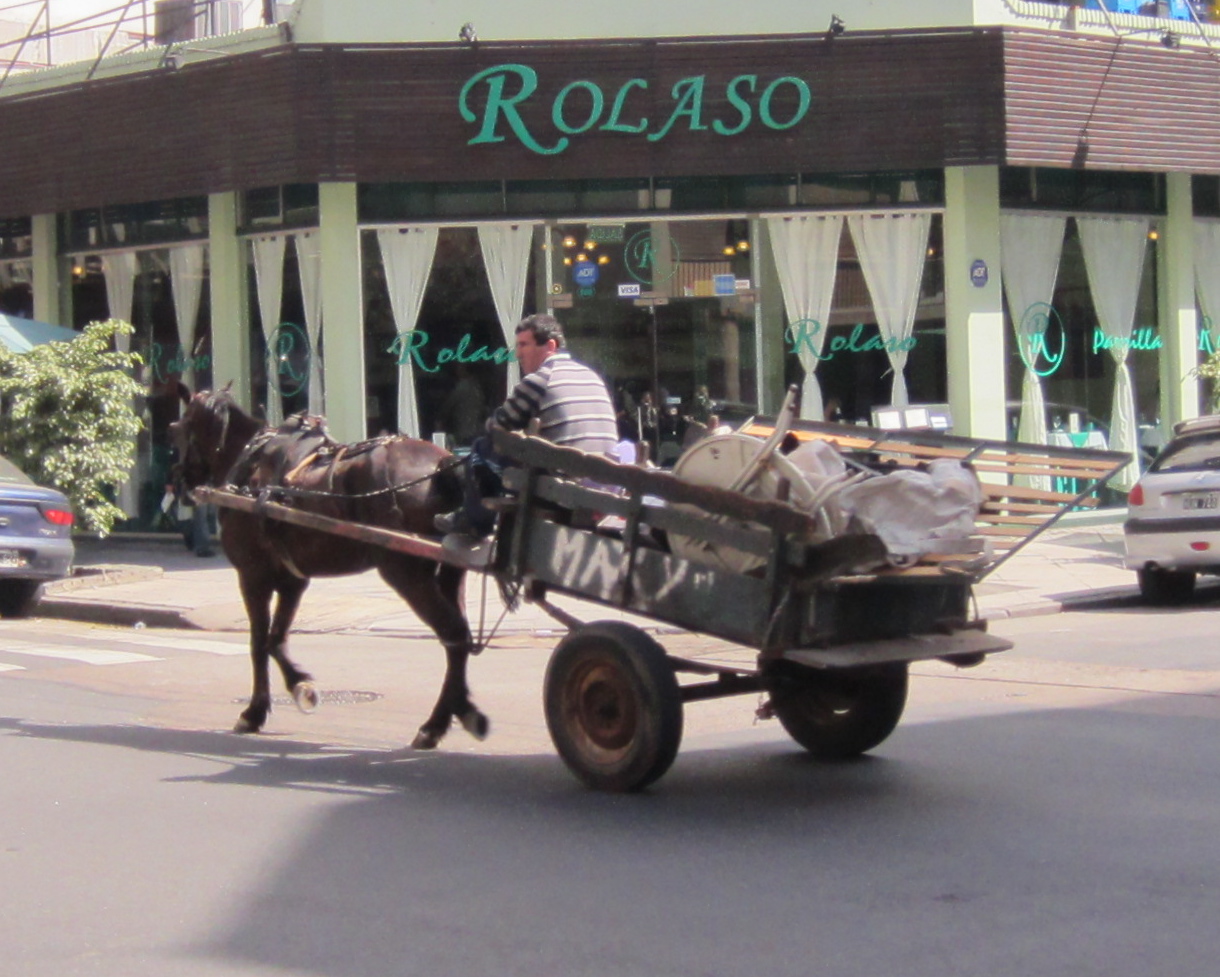
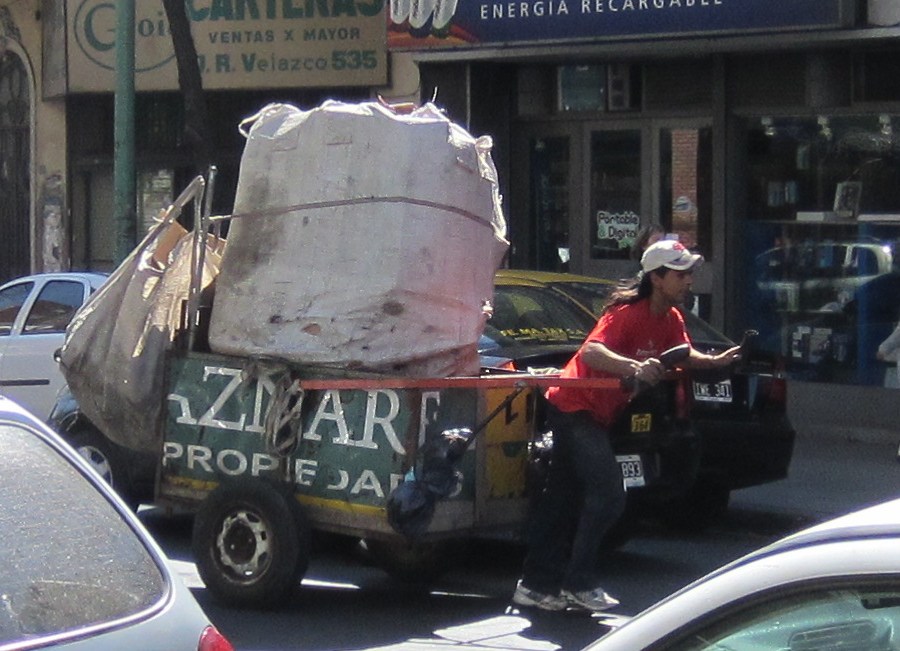
No, I haven’t taken up cart-driving.  (Although that could be fun!)  Nor have I started up my own recycling delivery service:

I’ve made the chic, eco-friendly, planet-friendly, sustainable choice  …riding a bici in Buenos Aires!

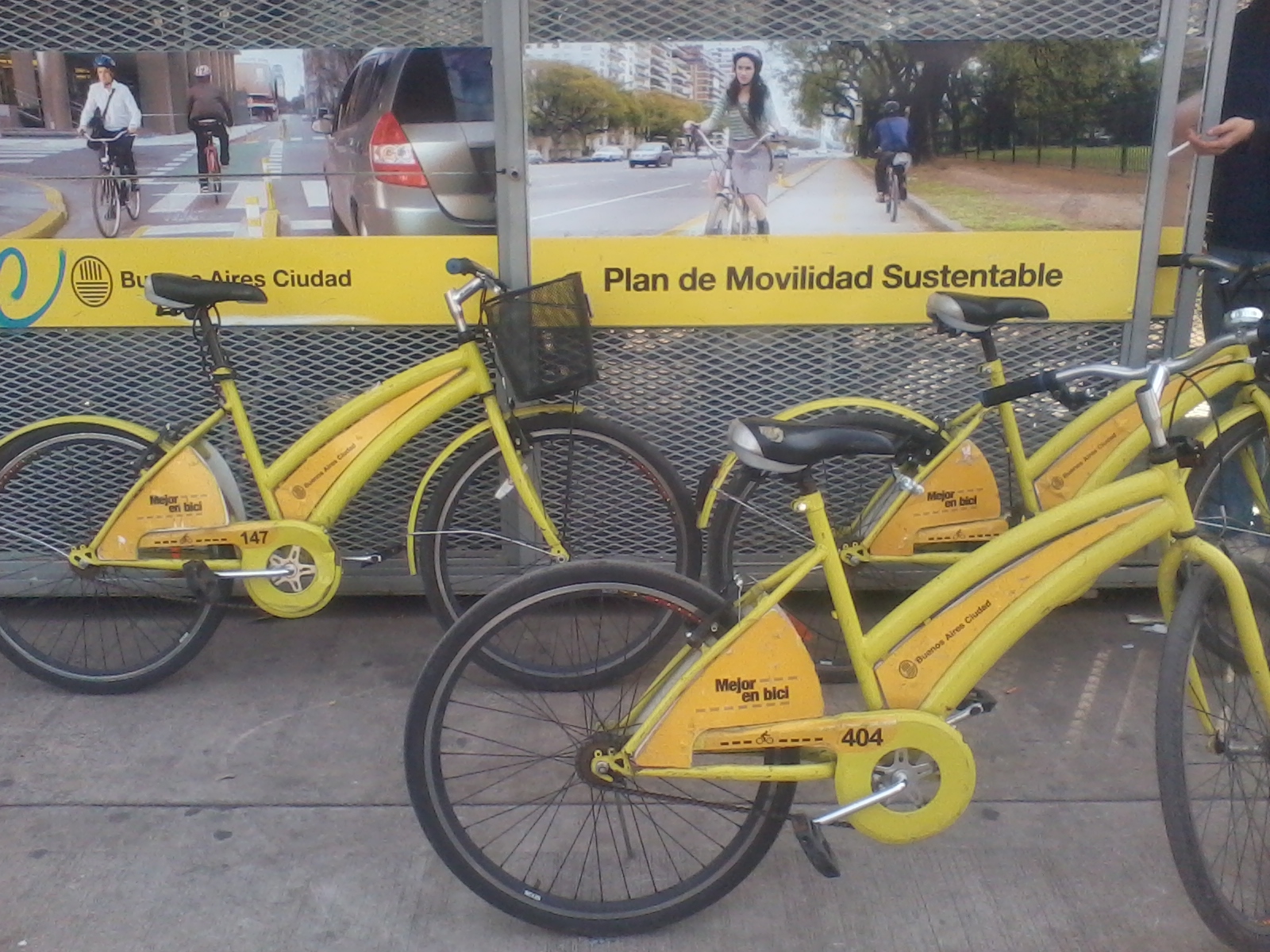
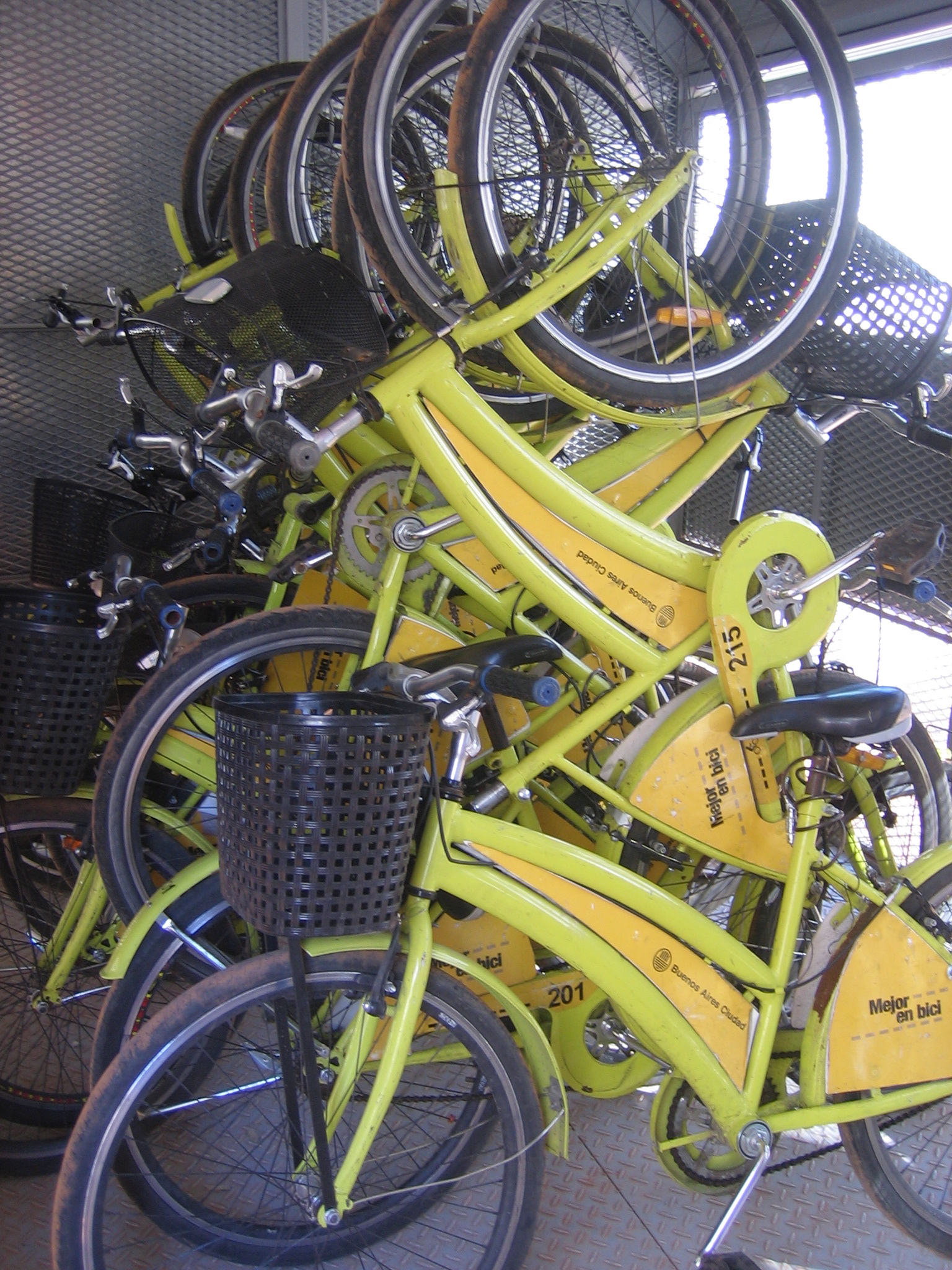
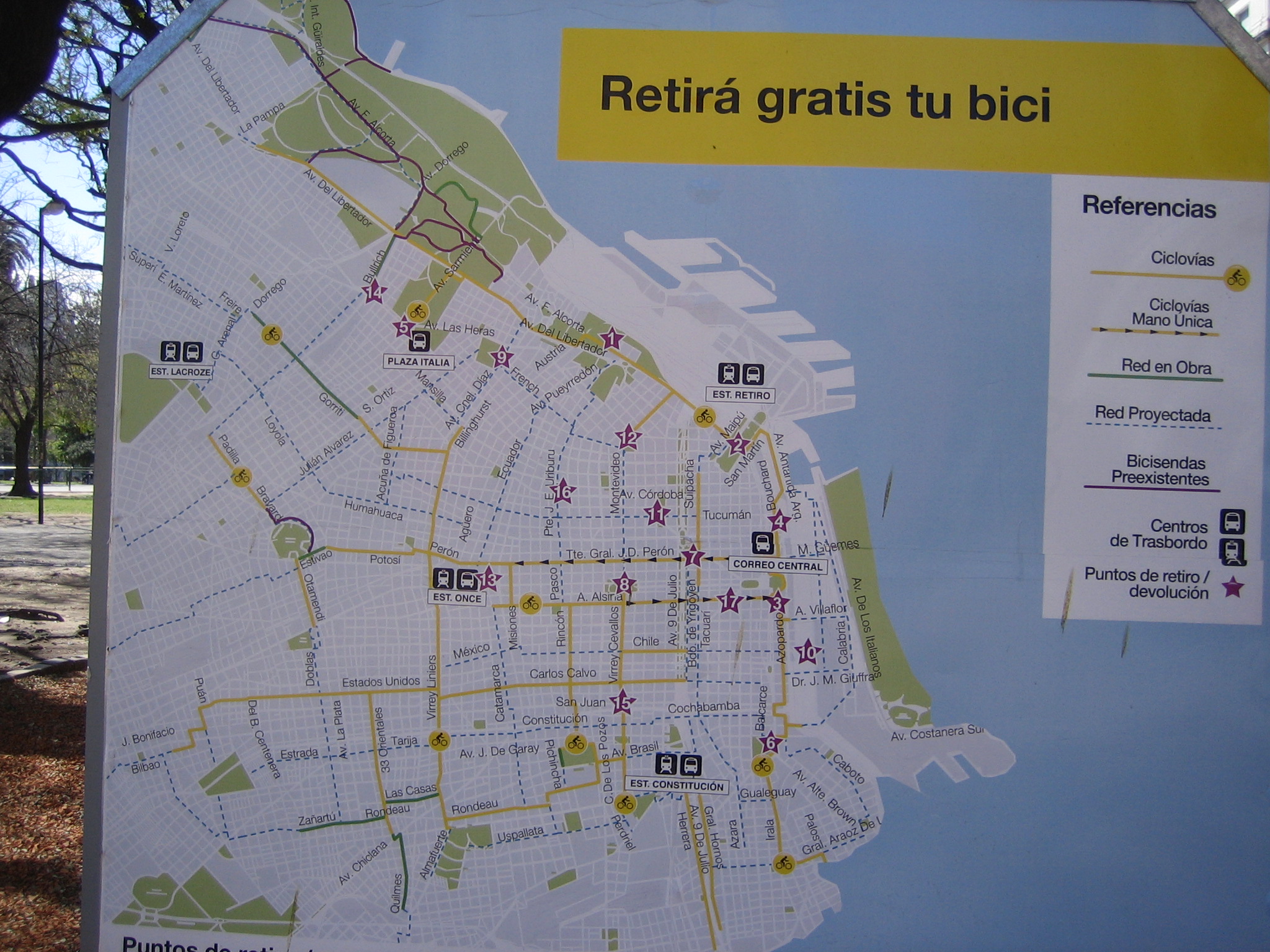
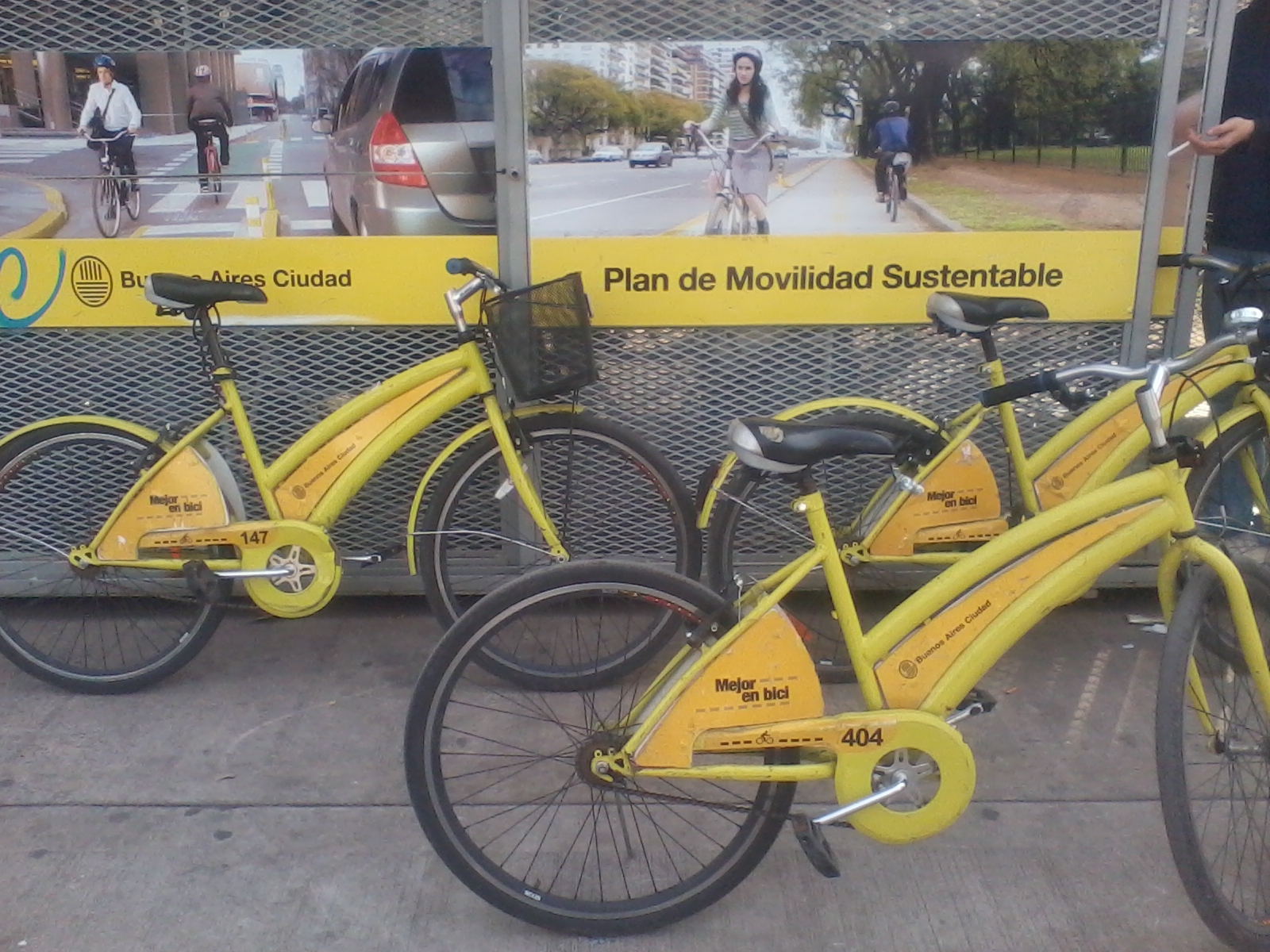
The streets are crowded with people and traffic,  aplastada like an empanada is my subway haiku, taxis cost money (but not that much), buses are fun if you like to window shop while standing, so why not ride a bike?  Cause it’s suicidal, that’s why!  But what about the beautiful parks?  They can’t be all that dangerous….. right?  It’s just getting to them that can be tricky.  Fortunately,  you don’t need your own bike, there’s a citywide Sustainable Mobility Plan.   So one pretty day we set out to ride bikes, but the closest Bici Station, at the Plaza Italia, was closed.  A week passed before we went back, only to be informed that we needed to sign up first.  Sure, let’s sign up!  Easy, right?  ha-ha!  First we need your ID, your passport,  a document from the local police certifying your residence, and your firstborn child’s bank account access code (sorry, Ode!).

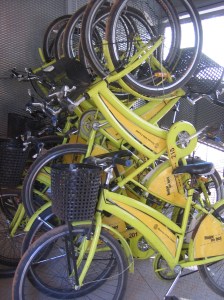
a stack of bicis

We went to the closest comisario de policia , across from the Plaza Italia, but were told we had to go to our neighorhood comisario which is a few blocks in the other direction.  That was a tough blow to our bike ride plan, so we went for a nice walk around part of the park instead (the Palermo bosque is the size of Golden Gate Park) but the wind kicked up and pretty soon we had to break for pizza and coffee.  A few days later we went for a walk and, thanks to a friendly sidewalk flower-seller, found our local comisario.  They have a casual waiting room with blue plastic seating and a flat-screen tv to keep visitors occupied (like turning on the tv to keep the kids quiet).  We handed over our pasaportes to the pretty cop with hair down to her waist and a big semi-auto on her hip.  She logged in all our info and told us to come back the next day to pick up our certificates (cost: 10 pesos each).  The next day we went back and a big male knuckle-dragger informed us that our certificates would be delivered the following monday morning.  Monday afternoon we went back to the comisario to let them know that our certificados de domicilio had not, in fact, been delivered.  We were told that, yes, the logbook showed that the certificates had been delivered, probably to the doorman of our building.  It was suggested we speak with our doorman.  We asked Santiago, our friendly doorman, about it and he said he had not received anything for us.  Ben ranted and raved about South American bureaucracy for a while, I finally quieted him down with a glass of wine and some bread and cheese.  (However he did like the first officer and gave her a commemorative SLO County Sheriff’s Star.)  Lo and Behold, the very next morning the buzzer rang, it was a police officer letting me know he was sliding our documents under the front door of our building.

adorable police vehicle

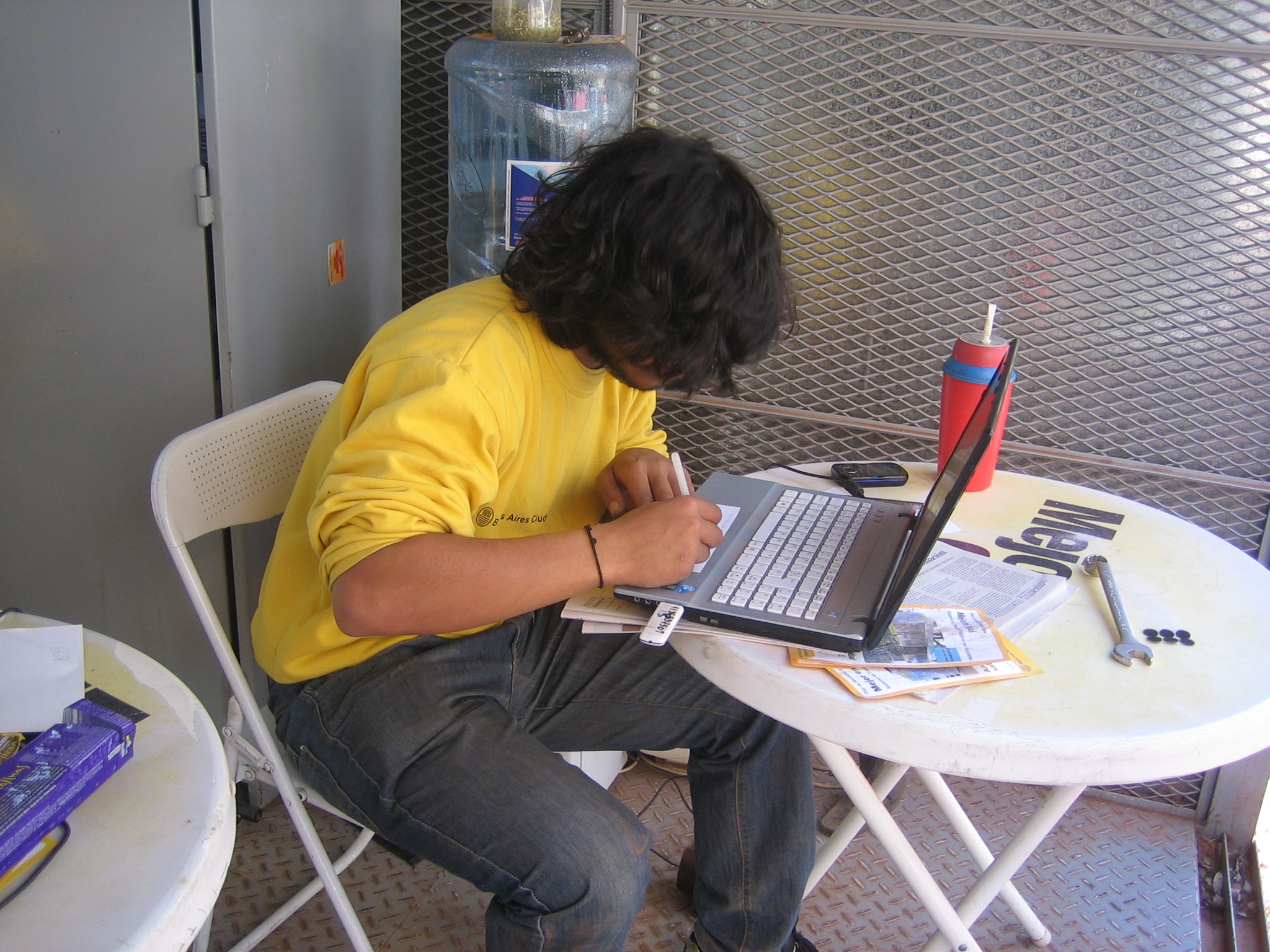
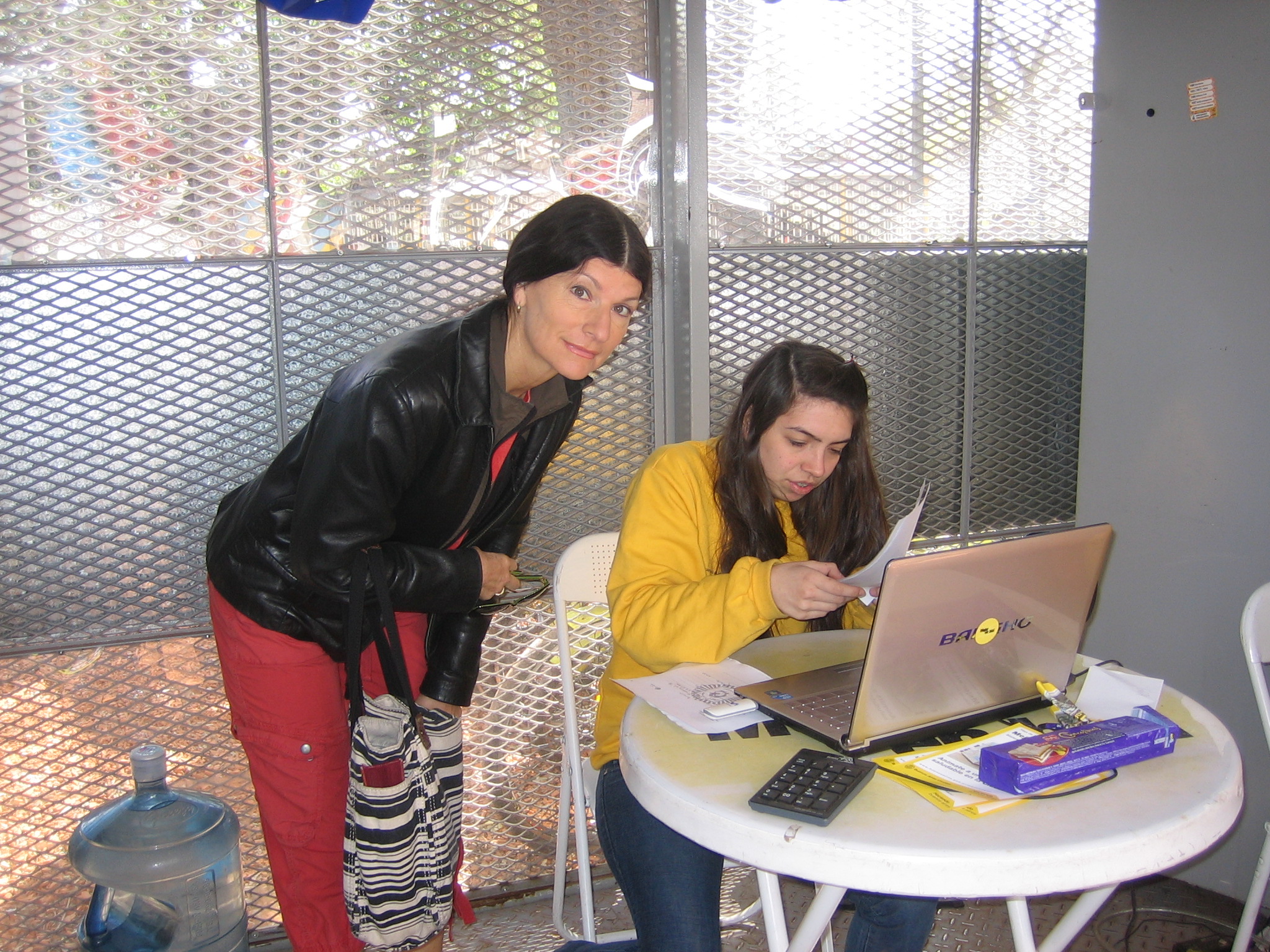
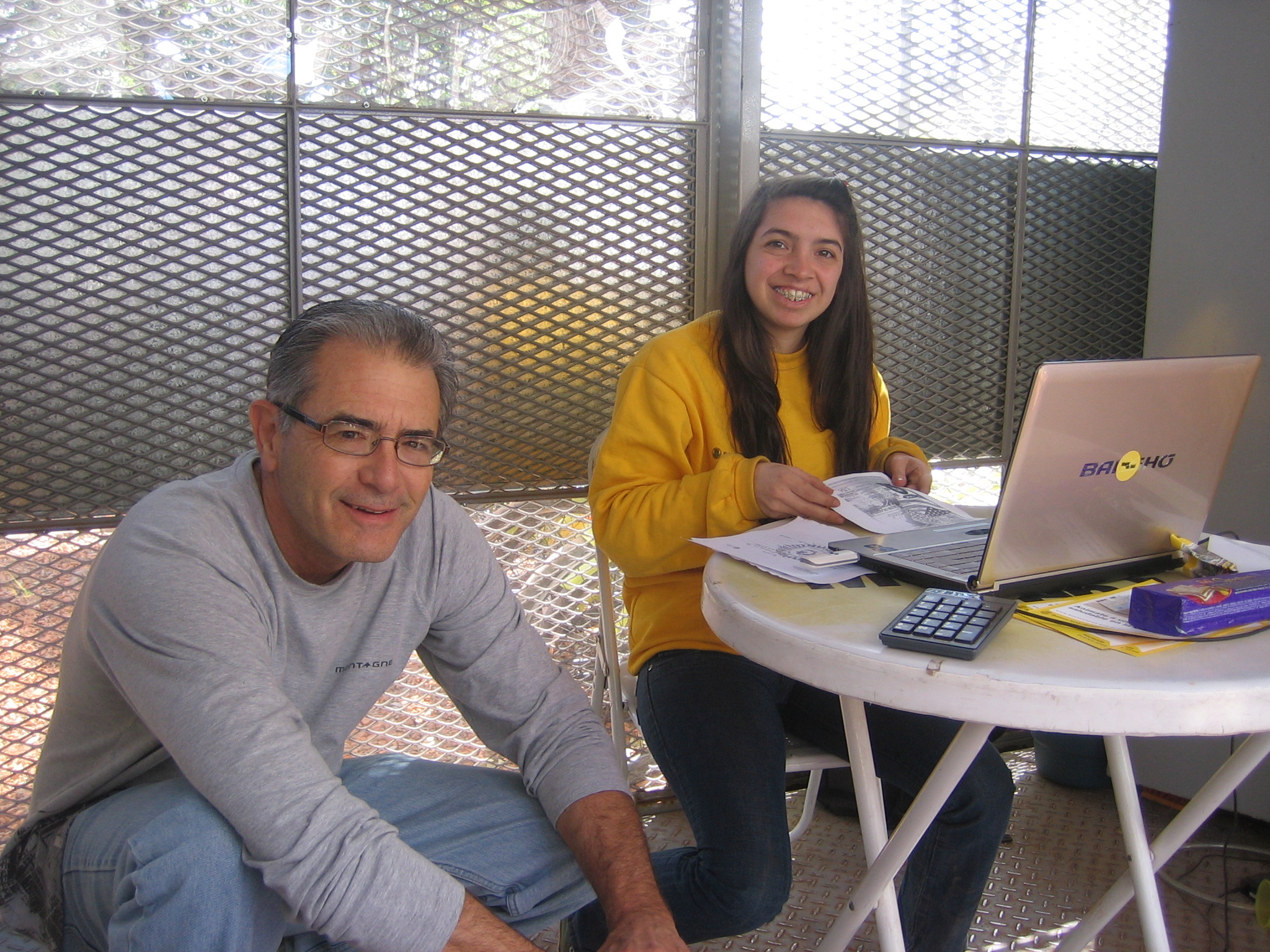
A few days later Ben, on one of his Search & Rescue missions, found an open BikeShare stand in Las Heras Park, so we went over there armed with documents in order.  The nice young kids had their laptop up and running and they had us signed up in a jiffy… almost!

bici-chico

bici-chica scrutinizing willow's documents

Ben getting his Bike Share account

But, alas!  they didn’t have a functioning printer so we couldn’t get a couple of bikes just yet.  We decided to hoof it over to the Plaza Italia bici station, their printer was supposed to be working.   About 10 minutes later we made it over there, their printer was working but they were out of paper.  I suggested they used look in the trash to find a usable piece of paper with a blank side as yet unprinted, meanwhile Ben was ready to buy some paper, but it was suggested we try the next bici station, only about 10 minutes farther on.  Meanwhile the sunshine tangoed with the clouds and wind, and I was glad I had worn my tennies, leather jacket and cap.


At the third bici station, we were finally able to get our documents printed and signed.  We received the short version training on checking out a bike and a helmet if you want one (in the contract it says you have to wear one but in reality if you want to crack your coco that’s your choice).  So we went for a ride!  Yahoo!  We blasted up Libertador past the Facultad de Derecho, and turned up Scalabrini Ortíz.  Ben led me through some really scary intersections, but we finally made it back to the Las Heras bici station, dropped off the bikes, and walked over to a nearby café to warm up with coffee and a snack.

Spring will be here in just 2 days and I am looking forward to warmer weather, bike rides, runs in the park, and outdoor milongas.  I’m looking forward to walking around town in sandals and a tank top, and having gelato at a streetside café at midnight on my way to a milonga!   I have another post with photos of live tango orquestas coming out very shortly, so stay tuned!  Ciao from Buenos Aires!

Salon Tango Finals

Welcome to the New Normal. Are you wondering what I’m talking about?  Well, maybe I’m wondering what I’m going to say next.  You see, I grew up in the sixties, when normal was usually negotiable, and frequently difficult to define.  One of my favorite country western singers said, “Some people have friends in high places.  I have high friends in places!” If you know who I’m quoting, you win!  The winner gets…. something really special … TBA in a moment TBA.  Like maybe a free tango lesson?  A Buenos Aires city tour?  Va bene?

So, we were having dinner the other night in a really nice little bistro, a seafood place about 3 blocks from our apartment, the food was really good, it was about 10 pm and really crowded and noisy.  Suddenly I had a Realization.  I didn’t mind the crowd or the noise.  In fact, I really liked it.  That’s such a sea-change for me, lover-girl of horses and wide open spaces.  But the point here being that I had stepped through a portal into another reality!  I had been assimilated into the city!  After all the daily subway and bus rides at rush hour (which is perpetual unless you’re up and about in the morning which I’m not; public transport evaporates after about 10:30 pm, except for taxis which purr around the city in the middle of the night when you’ve just emerged from a milonga and your feet are killing you and it’s cold out and you might have to walk a few blocks to a busier street and wait 5 or 10 minutes for one to show up, finally…), I’ve adapted.  (You know, like in that Star Trek episode when Capt. Jean-Luc Picard and his gang are fighting off a Borg invasion, and our fearless heroes keep recalibrating their weapons but Data, the android, keeps announcing “they’ve adapted.”)  All this to say I’m finally getting used to all the crowding and being squished, aplastada like an empanada, hordes of busy people in motion everywhere.  I will probably never get used to walking on the extremely crowded pedestrian-only streets downtown, like Suipacha, Florída, Lavalle, also known as pickpocket central.  But I have adjusted my system prefs to accommodate all the people and the constant noise levels of Buenos Aires.  I am in the New Normal.

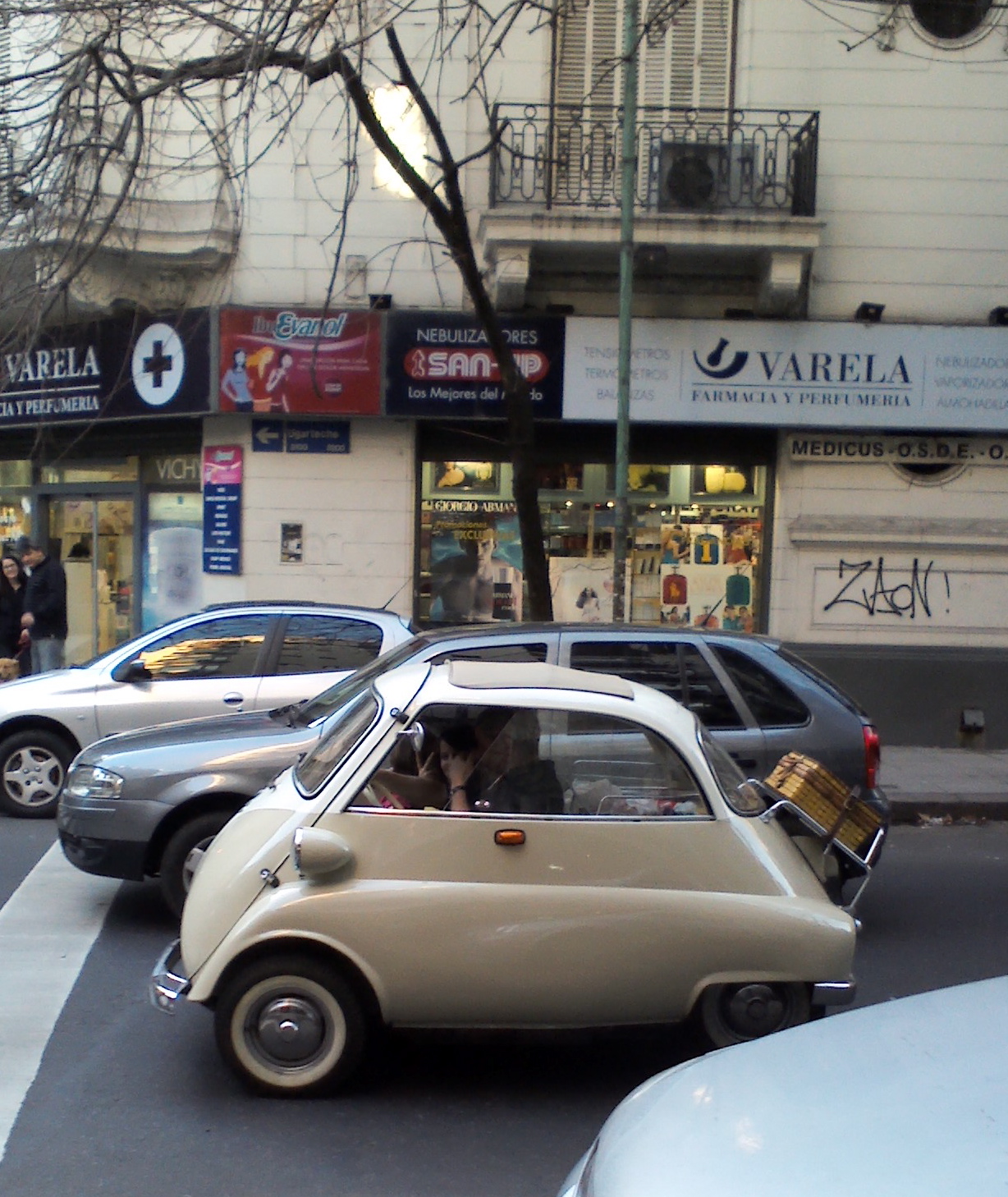
Buenos Aires is so different from other cities.  In some ways it feels like New York, with all the tall buildings and traffic and noise, but it’s so much friendlier, so much more hip, the beautiful buildings, parks, cafés.  More like Paris, they say, but I’ve never been to Paris.  Not yet.  The people here are really good-looking, and seem more educated and cultured than anywhere I’ve ever been.  They are also kind and considerate.  Men open doors for women, people smile and make eye contact.  None of this walking around, head down, don’t speak to anyone.  Even the cops are friendly.  Buenos Aires is truly a liveable city.  Like, where else would you see the tiniest vintage microcar pull up to a light?

1953 BMW Isetta

Luckily for all of us, Ben had the presence of mind to get his camera out before the light turned.  Is this not the most adorable Barbie car ever?  It’s only got one cylinder, and the front of the car opens up to let you get in!  How cute it that?  There were two little girls in the front seat next to the driver, they appeared to be just as excited to be riding in it as we were to catch a glimpse!

And now to the Finals of the World Cup of Tango!  El Mundial!

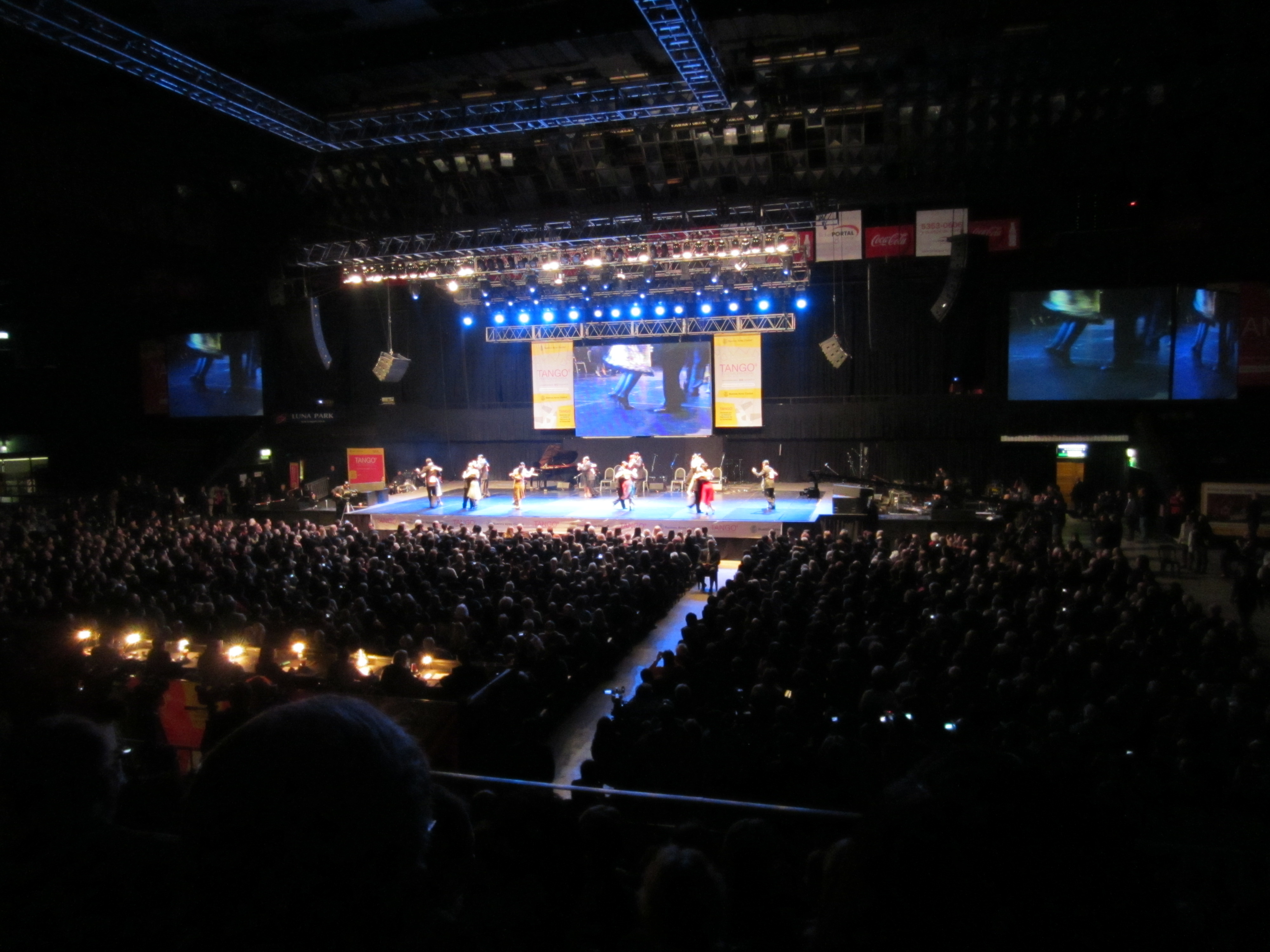
we had a great view

Here we are at the Tango Salón finals.  As I explained in my last blog, Tango Salón is close embrace dancing.  It’s the only way to dance tango on a crowded dance floor.  Tango Escenario, or stage tango, is the other style which is beautiful and very dramatic.  The finals were held in a sports stadium called Luna Park, in La Boca.  It’s a very nice venue, and was packed to the rim for both nights of the Finals.  The fabulous Mario Orlando DJ’d the entire event, except for the live music provided by Rubén Rada and the Orquesta Río de la Plata:

Mario played tangos by the orchestras of DiSarli, Pugliese, D’Arrienzo, Troilo, Tanturi, Biagi, Lucio Demare, Enrique Rodríguez, Fresedo.  All much-loved tunes that you tangueros are familiar with.  There were four final rounds, with 10 couples in each round.  They were all very good dancers!  And they came from the four corners of the whole world.

The judges were a grouping of the legendary:  Maria Nieves, Eduardo Arquimbau, Carlos Borges, Guillermina Quiroga, Julio Dupláa, Jorge Torres, Miguel Angel Zotto, Cachi & Juan Manuel Fernández, and Aguila Crespo.  My apologies in advance for any spelling errors!

The first prize given out went to a couple from Japan, for Most Elegant Couple.  Fifth prize went to another Japanese couple, from Tokyo; Fourth to a very chic Italian couple; Third to a pair from San Francisco (Go Team!) Brian Nguyen & Yuliana Basmajyan.   (All entrants had to pre-qualify by winning the competitions in their home country.  In California, it was our friends and longtime tango teachers Gato and Andrea who were in charge of the US Finals which took place last spring in SF.)

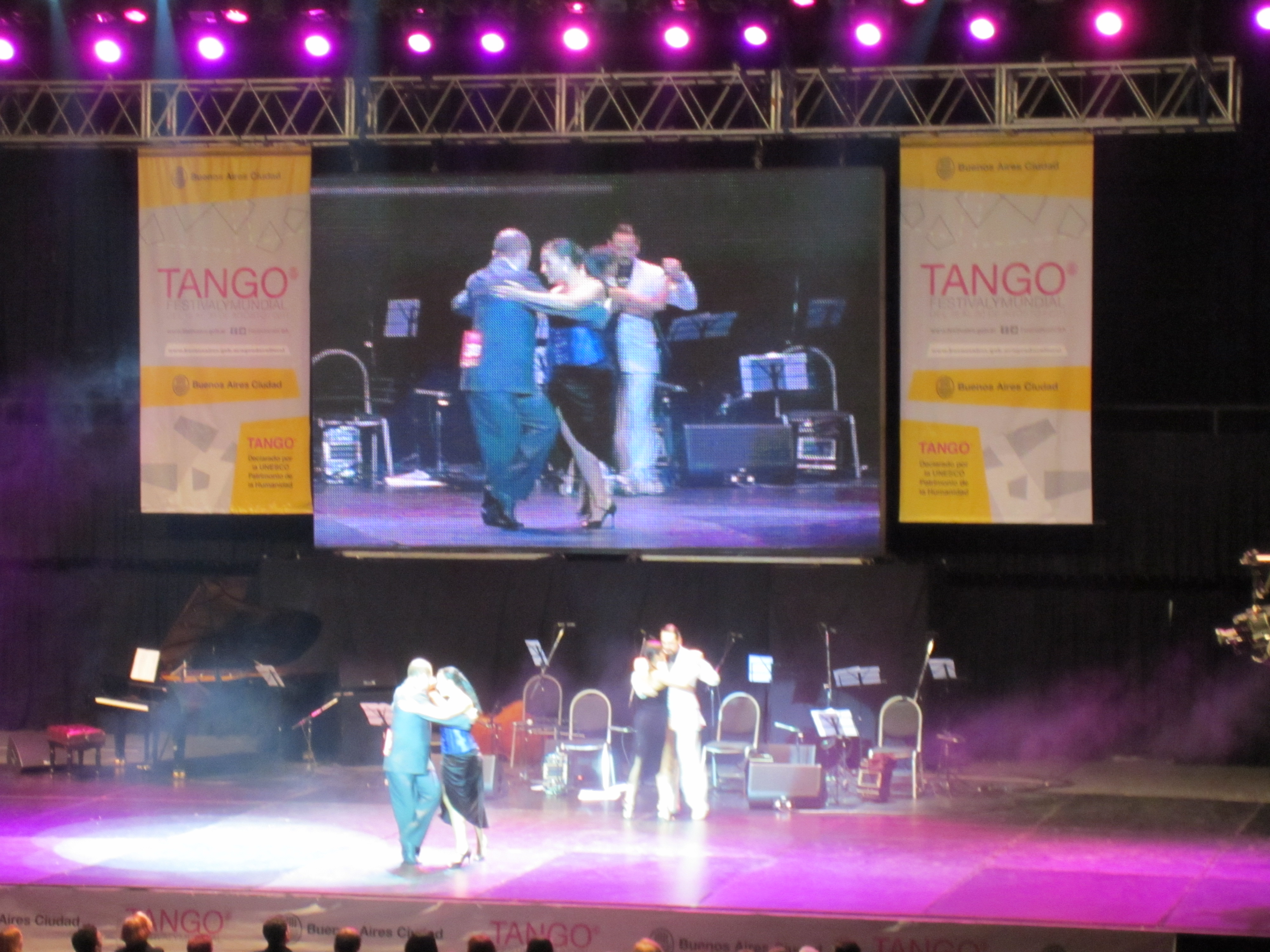
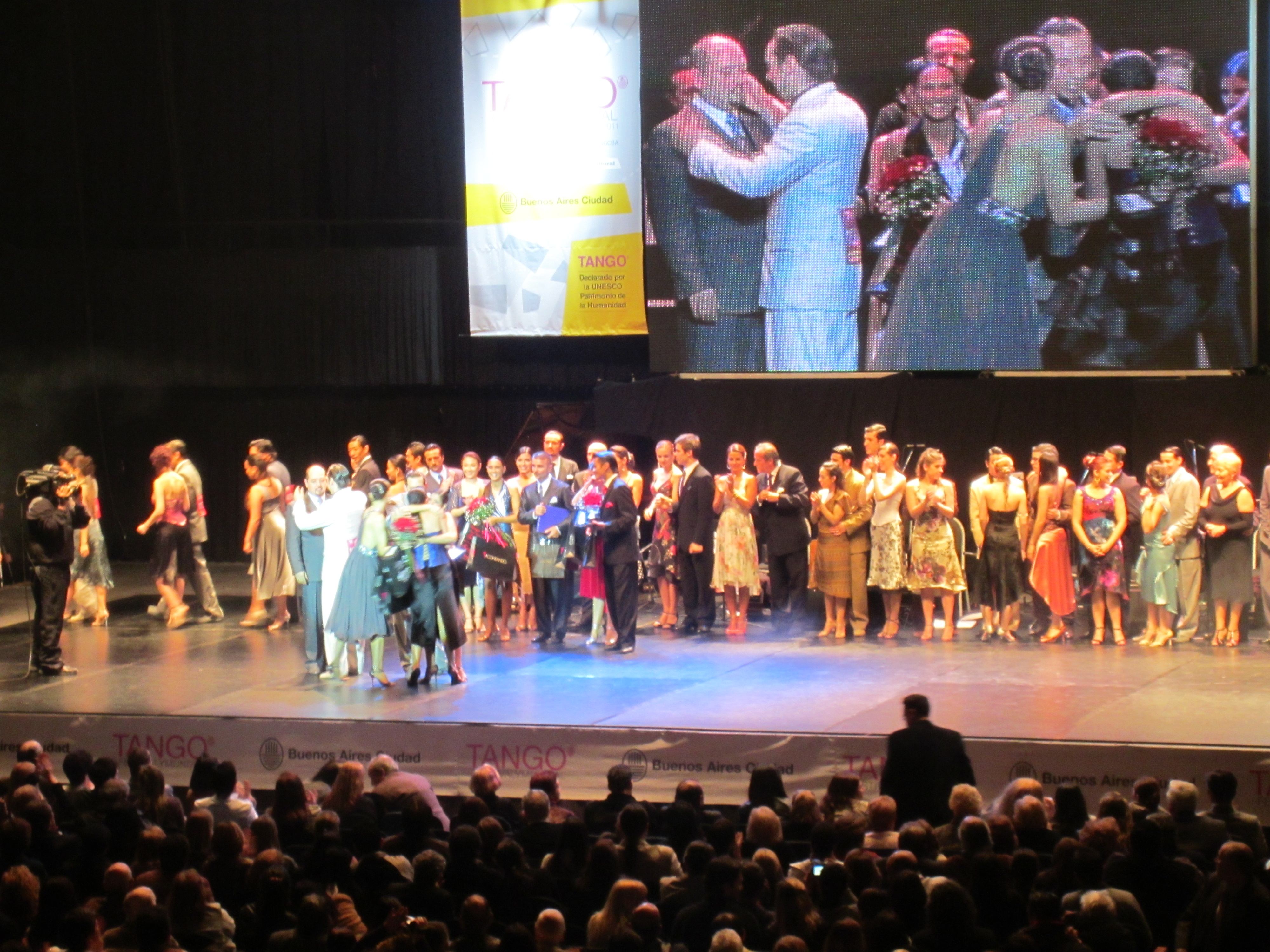
After those presentations were made, complete with flowers and boxes of tango clothes and shoes and trophy bowls for the lucky winning dancers, the announcer let the crowd know that the judges were unable to decide between 1st and 2nd place.  So the stage was cleared once again to make room for the dance-off between the top two couples. Here’s a photo:

They were phenomenal!  I personally was voting for the Venezuelans: a tall elegant guy in a white suit, and his gorgeous partner.  But they were all so perfect, how could anyone choose?  The judges’ point system came out in favor of the Colombians.  It was a happy, ecstatic moment, as you can see:

Diego Benavídez Hernández and Natasha Agudelo Arboleda, from Bogotá, Colombia!  Besides all the flowers, engraved glass bowls, tango clothes and shoes, the winning couple received 30,000 Pesos (about $8,000) a trip to Paris (this weekend!) from Air France, including a mandatory performance (are we jealous yet?) dancing at the Eiffel Tower!

2nd Place winners John Erban & Clarissa Sánchez

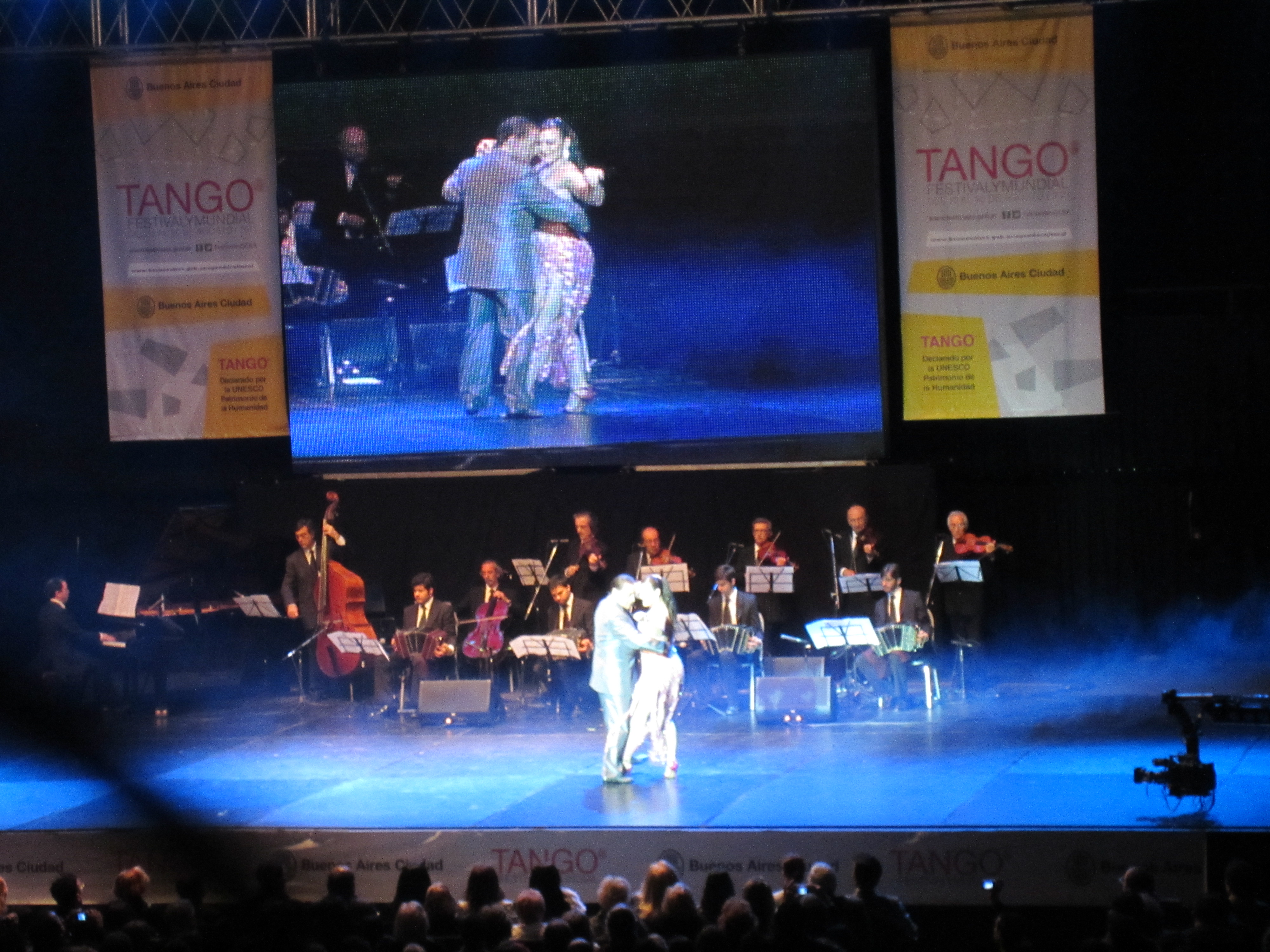
Topping off the evening was a tango by Juan Carlos Copes and his daughter, Joana Copes, with the full orchestra.  They were fantastic!  I feel most privileged to have seen the living legend in person!  He also dances an awesome milonga in Carlos Saura’s movie Tango, from a few years back.  (Please note, all of these performances are on uTube, check it out!  Use these search terms:  Mundial de Tango Salon Buenos Aires 2011)

Juan Carlos Copes y Joana Copes

All in all, the Mundial was attended by 400,000 people during its two weeks of concerts, shows, films, workshops, dance classes, milongas & etc.  It was a fabulous success, and the talk about town is that once again tango has gone back to its roots, i.e., we are in the midst of a renaissance at the local level: emerging new tango clubs, young new composers, musicians, orquestras, dancers from a host of barrios (as portrayed in my post on the Tango Zone!).  This is truly an exciting time to be here.  Our favorite dance teachers, and doubtless all the best maestros of Buenos Aires, have been working with the dancers, helping them  polish their technique and choreography.  No matter where the couples were from, I think I can say absolutely that this was not their first trip to Buenos Aires.  A pilgrimage to the Mecca of Tango is a journey that all serious dancers must take at some point.  (Hello!  this means YOU)  The downside talk is that porteños are a bit embarrassed that there were no winners from Buenos Aires this year, and people asking why.  How can it be possible that foreigners are taking the gold?  A very interesting question and topic for discussion.

The next big competition is the CITA (Congreso Internacional de Tango Argentino), in March.  We were here during the CITA a few years ago, the milongas were so packed you could not even find a place to drop your jacket & purse unless you made a reservation AND showed up before 11 or so.   The CITA offers classes, workshops, the whole nine yards.   It also means that the price of privates (dance classes) will double, and hotel rooms and late night taxis will be harder to find.

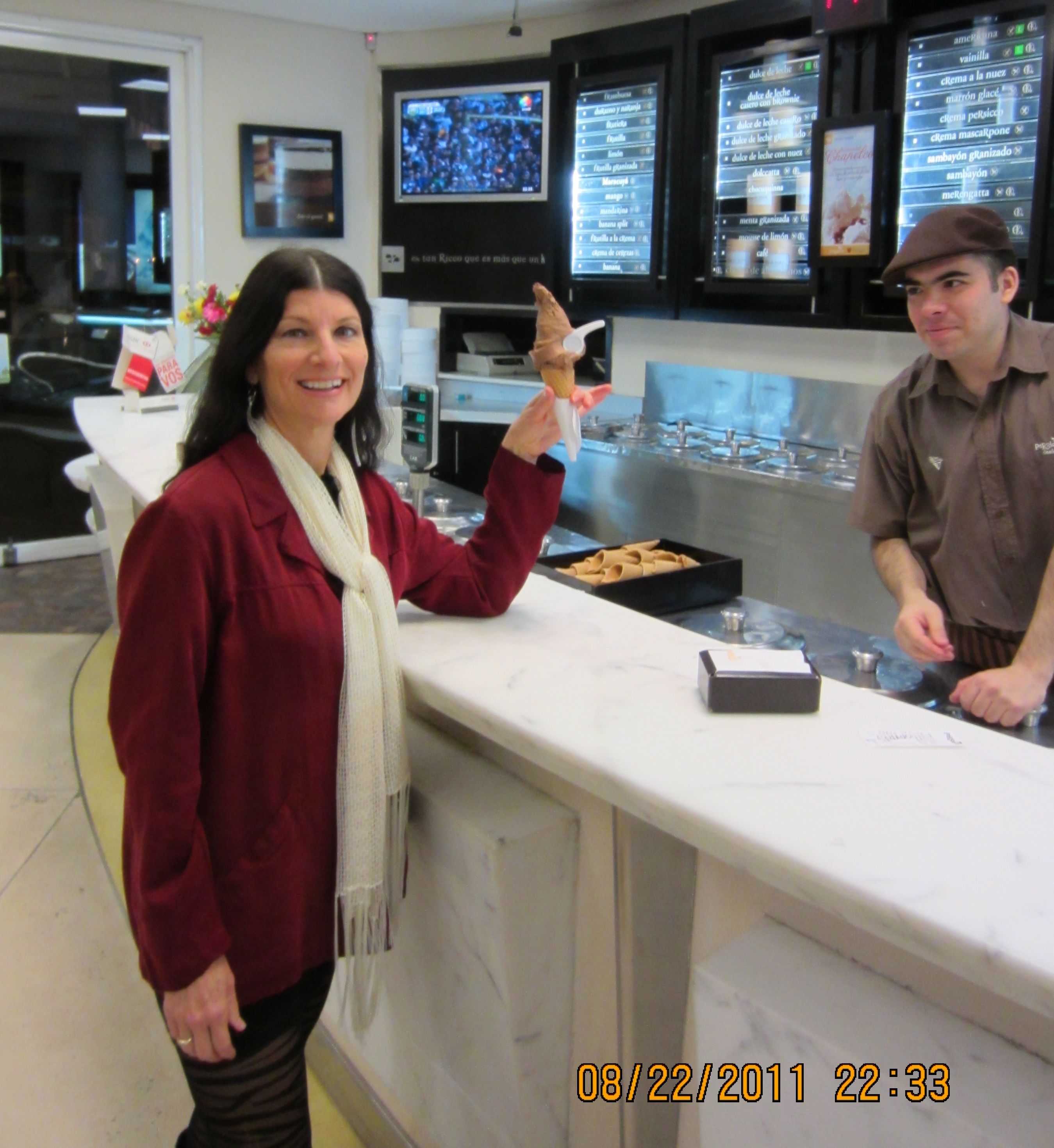
gelato at Persicco

Hope you enjoyed the post!  Here I am rematando (finishing off) the evening with a dulce de leche granizado.  The best!  Ciao from Buenos Aires!

Tango Buenos Aires Festival 2011

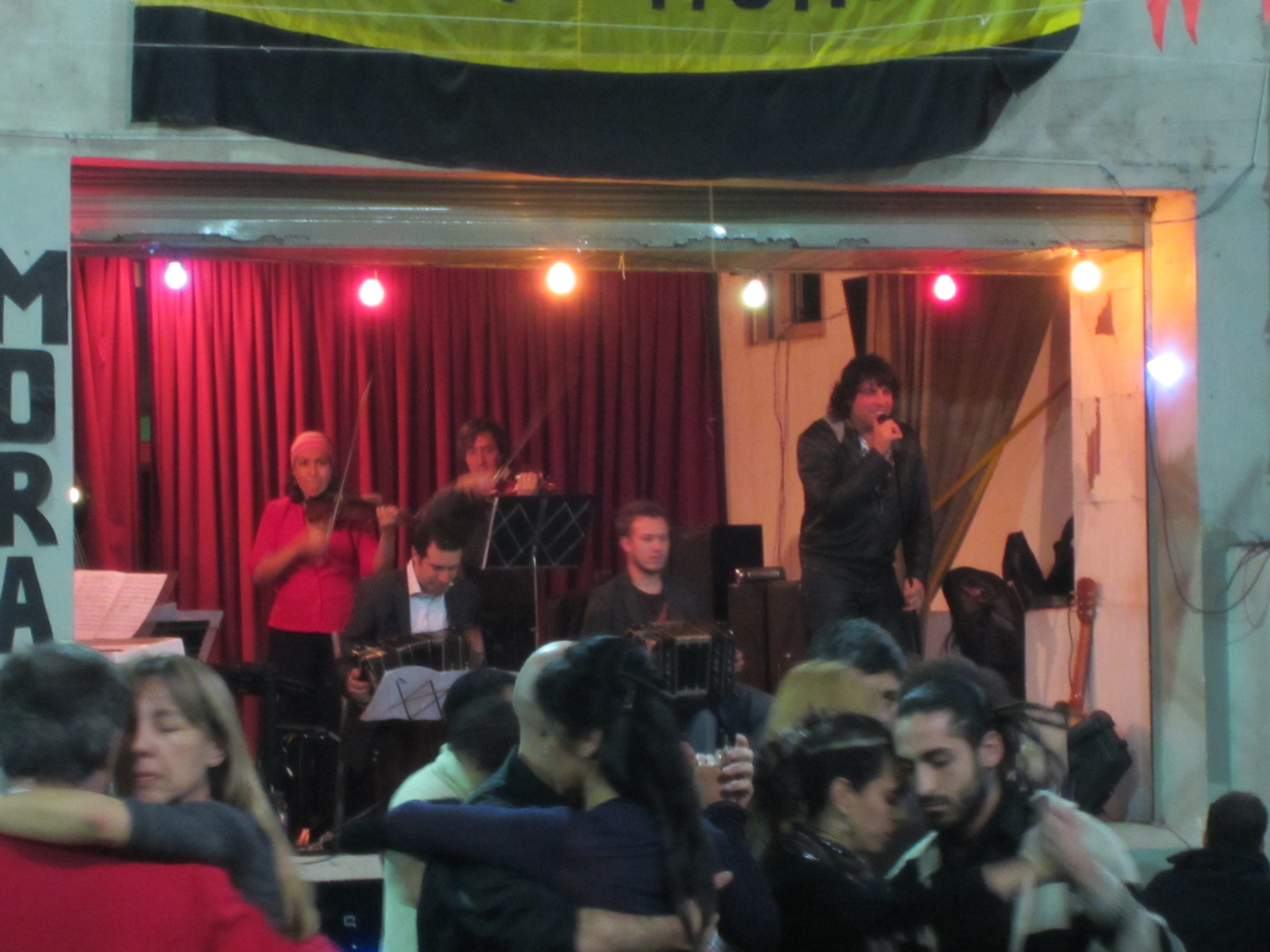
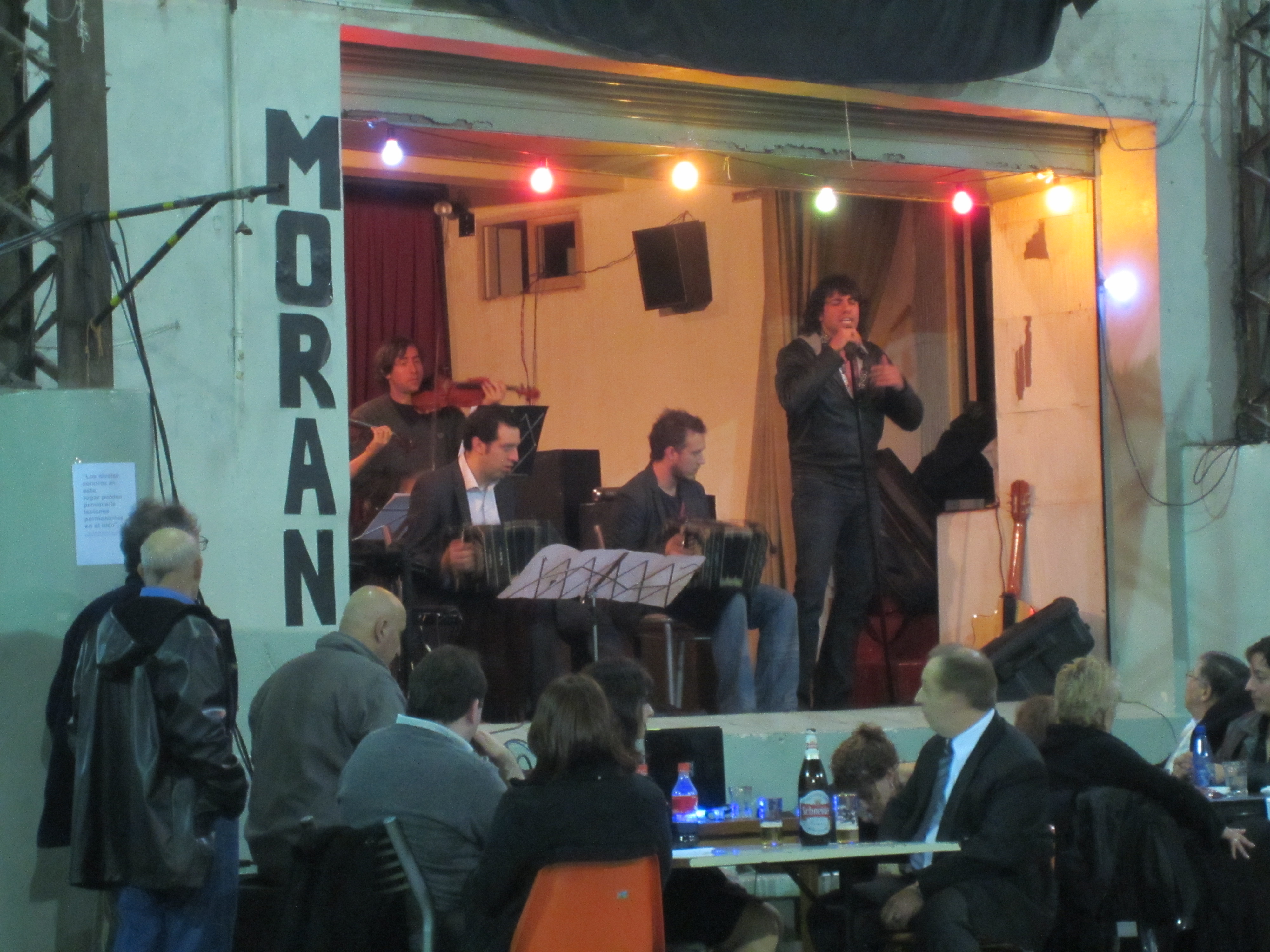
One might wonder how a coherent blog can be written at 4 in the morning after 3 hours of tango class in the afternoon and then dancing from 11 to 3 am.   Well, it wasn’t.  I’m still working on it, just past midnight now, about 20 hours and another tango class later.  We were at La Milonga del Morán, in the Villa Urquiza barrio.  How can a dirty, grungy basketball gym be transformed into a sublime Tango experience?  The lighting was what you’d expect in an auto repair shop, same goes for the sound system.  Sawhorses with recycled formica countertops for tables are, well, reminiscent of 4th of July picnics and Rizzotti’s, a beer garden on Alpine Road in Portola Valley.  (We used to ride our horses over there on Saturdays, tie them to the hitch racks under the eucalyptus trees by the creek.)  No one was wearing a suit and tie except Ben, who ditched the tie as soon as we sat down (and still the sharpest-looking guy there!).  Everybody seemed to know each other.  All ages were present, lots of  young people.  The dance floor was packed, meaning it took about four songs  (10 minutes or so)  to make a complete circuit around.  The phenomenal sound of Sexteto Milonguero, followed by a Tango performance by Gabriel Missé and Analía Centurion, added to the amazing wabi-sabi atmosphere.  I mean, how can you not have a great time, despite the dismal decayed environment, while watching two of the most highly acclaimed tango dancers in the world?
Wabi-sabi is a Japanese word that describes an experience of beauty that is imperfect, transient, and incomplete.  Wabi-sabi  is all about authenticity.  “Wabi… (according to Wikipedia) “may be interpreted as the imperfect quality of any object, due to inevitable limitations in design and construction and/or manufacture, especially with respect to unpredictable or changing usage conditions.   Wabi-sabi acknowledges three simple realities: nothing lasts, nothing is finished, and nothing is perfect.”  Yikes, it’s starting to sound like my evolving tango experience!  Or is it a definition of my existence?
I think I like wabi-sabi.  (I like wasabi too, just like I love sushi.)  I think what made the difference, the other night, was the PEOPLE.  The milonga was filled with friendly, happy, enthusiastic, dancing people.  Negative environment meets positive people: the yin/yang of it all, the good vibes.  A fantastic wabi-sabi experience!  This delightful concept also applies to the highs and lows, the polish and the grunge,  the glitz and glam of the World Tango Festival!

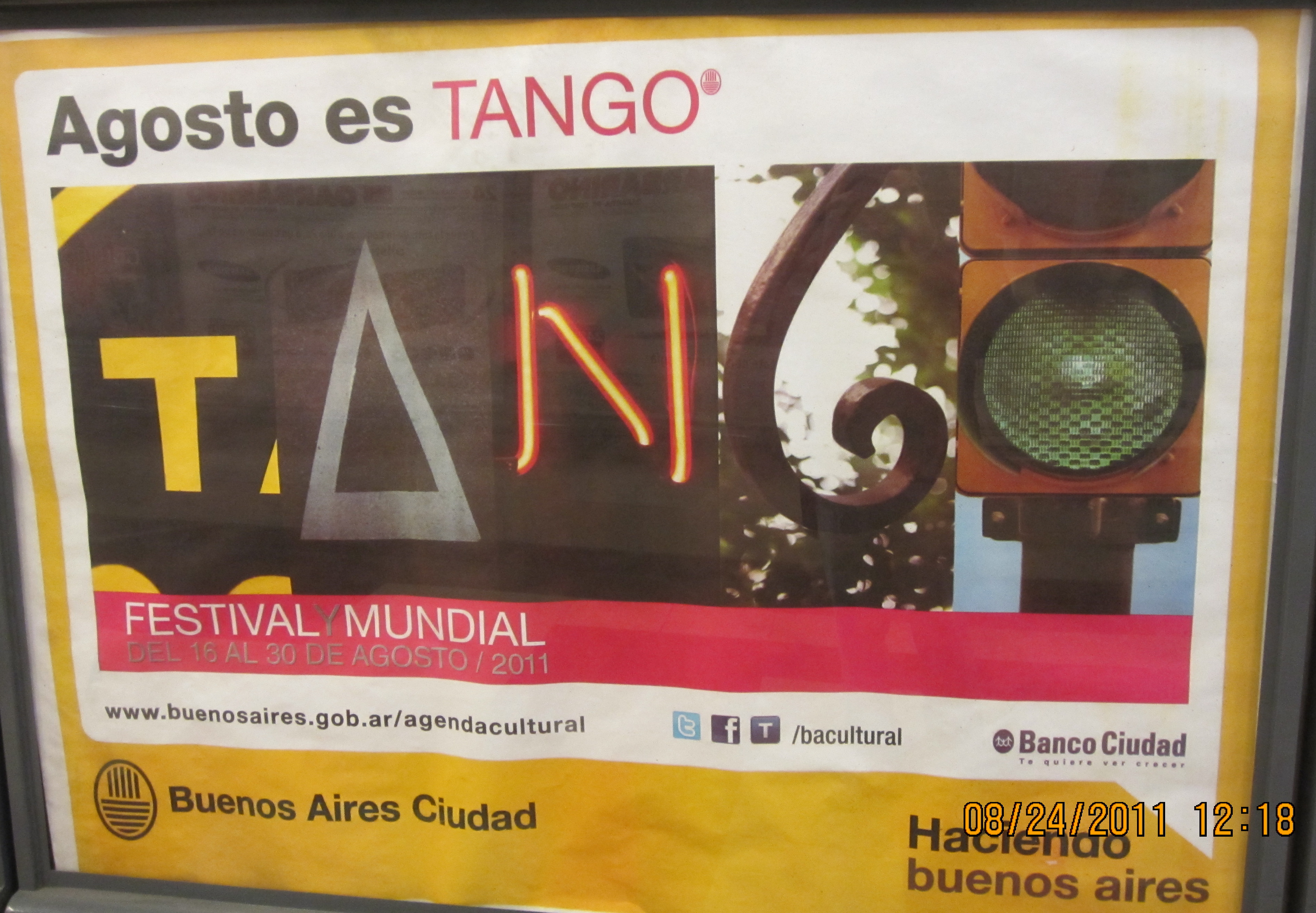
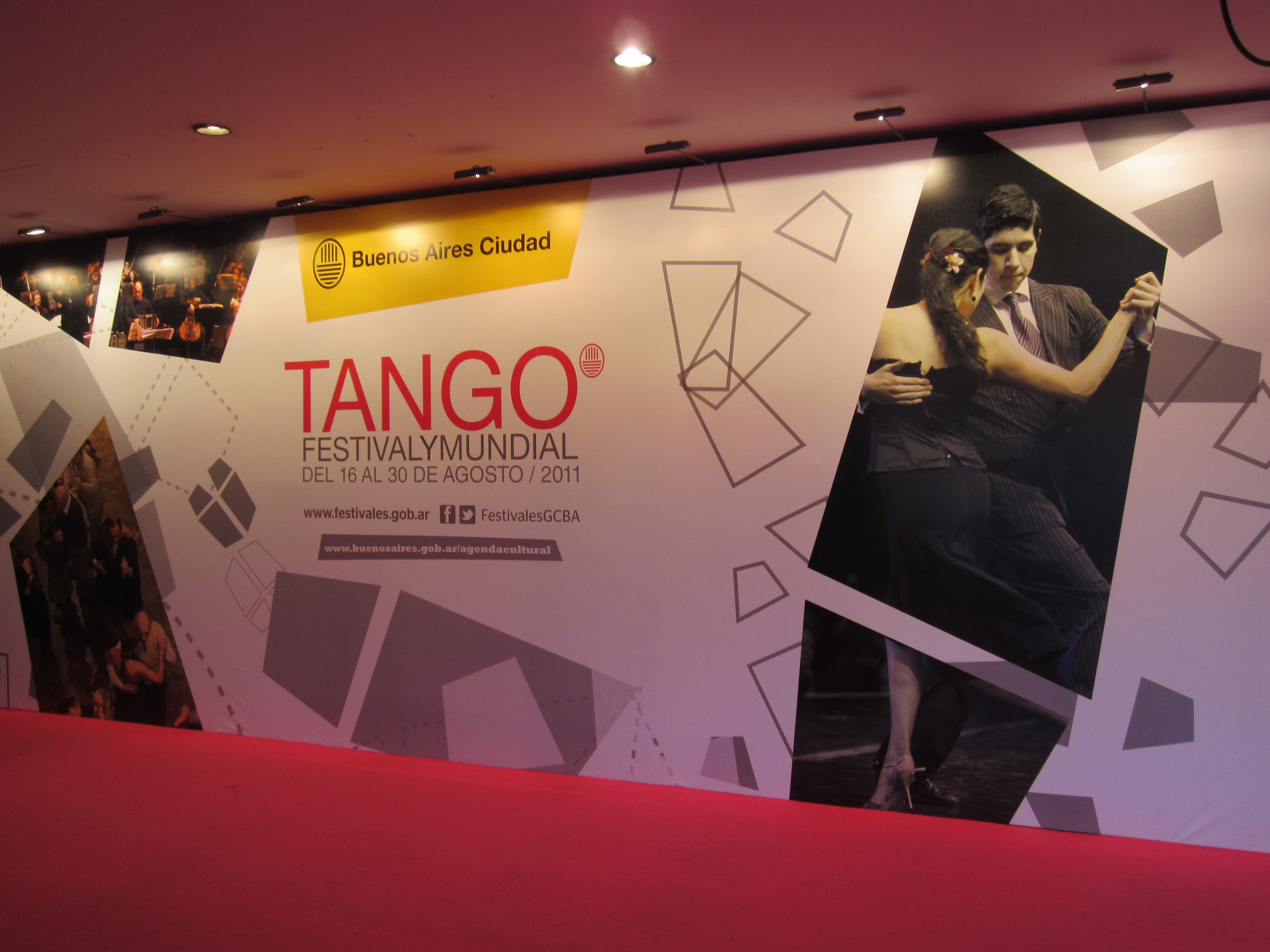
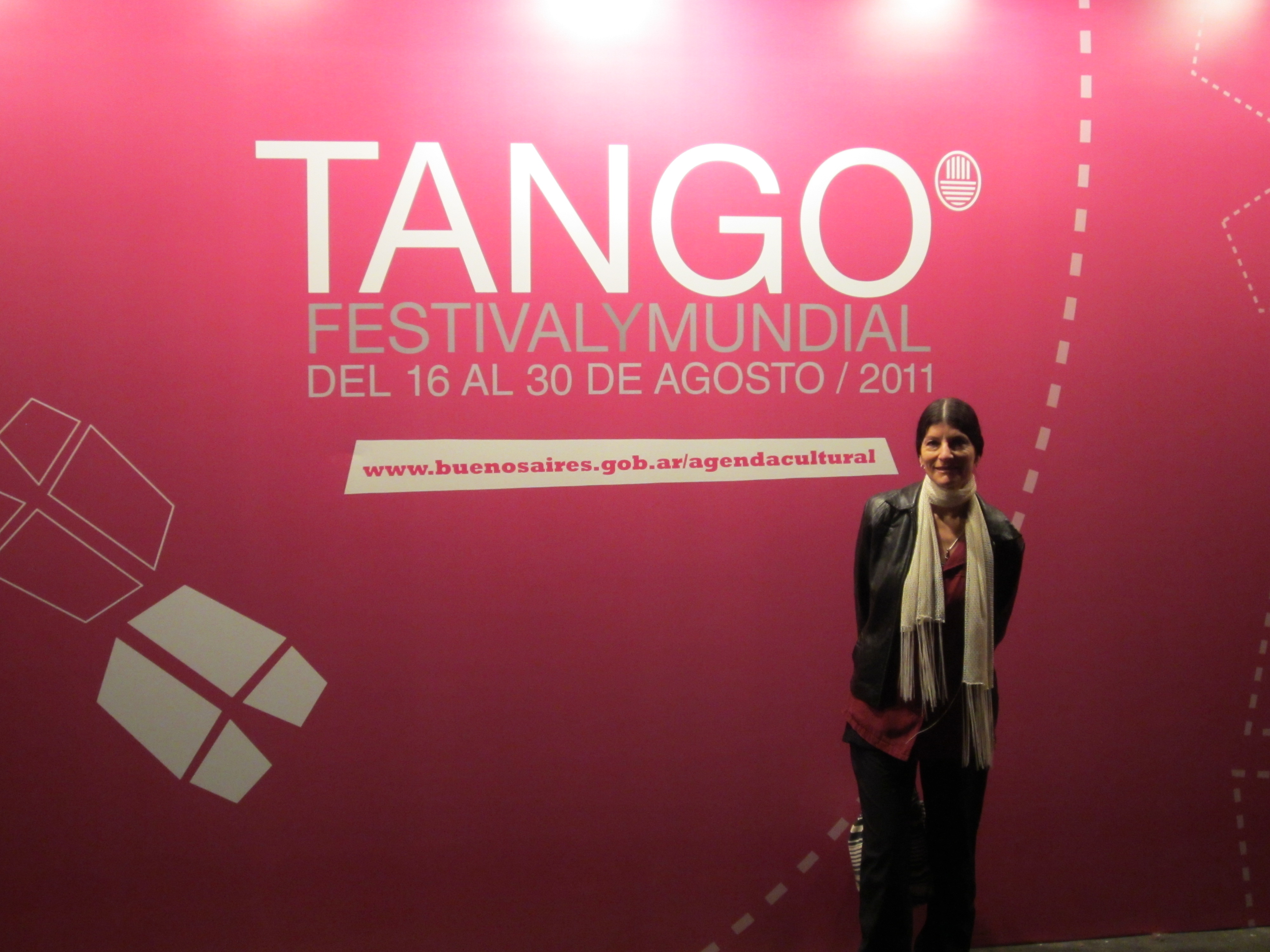
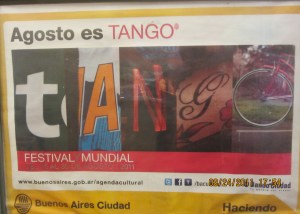
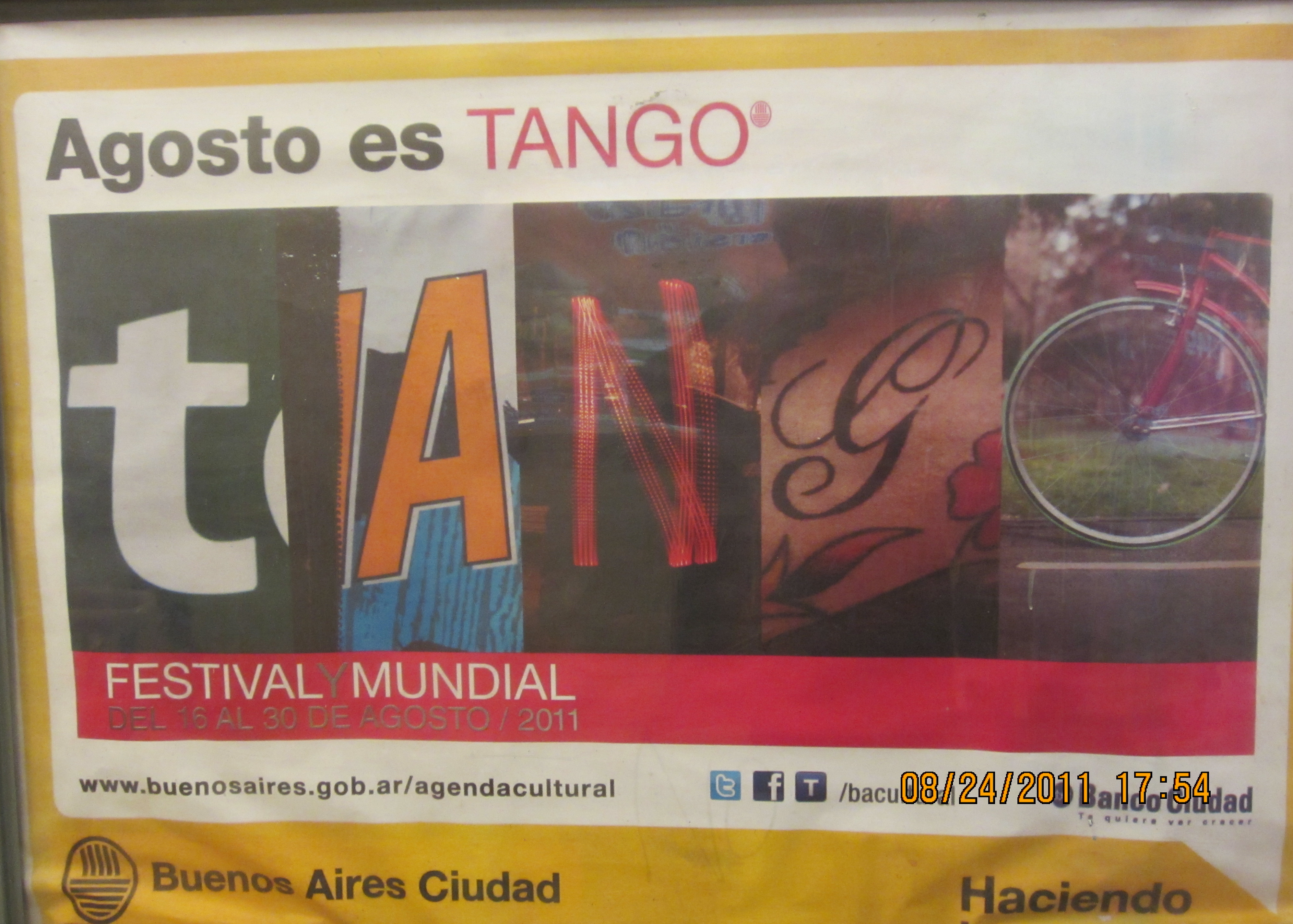
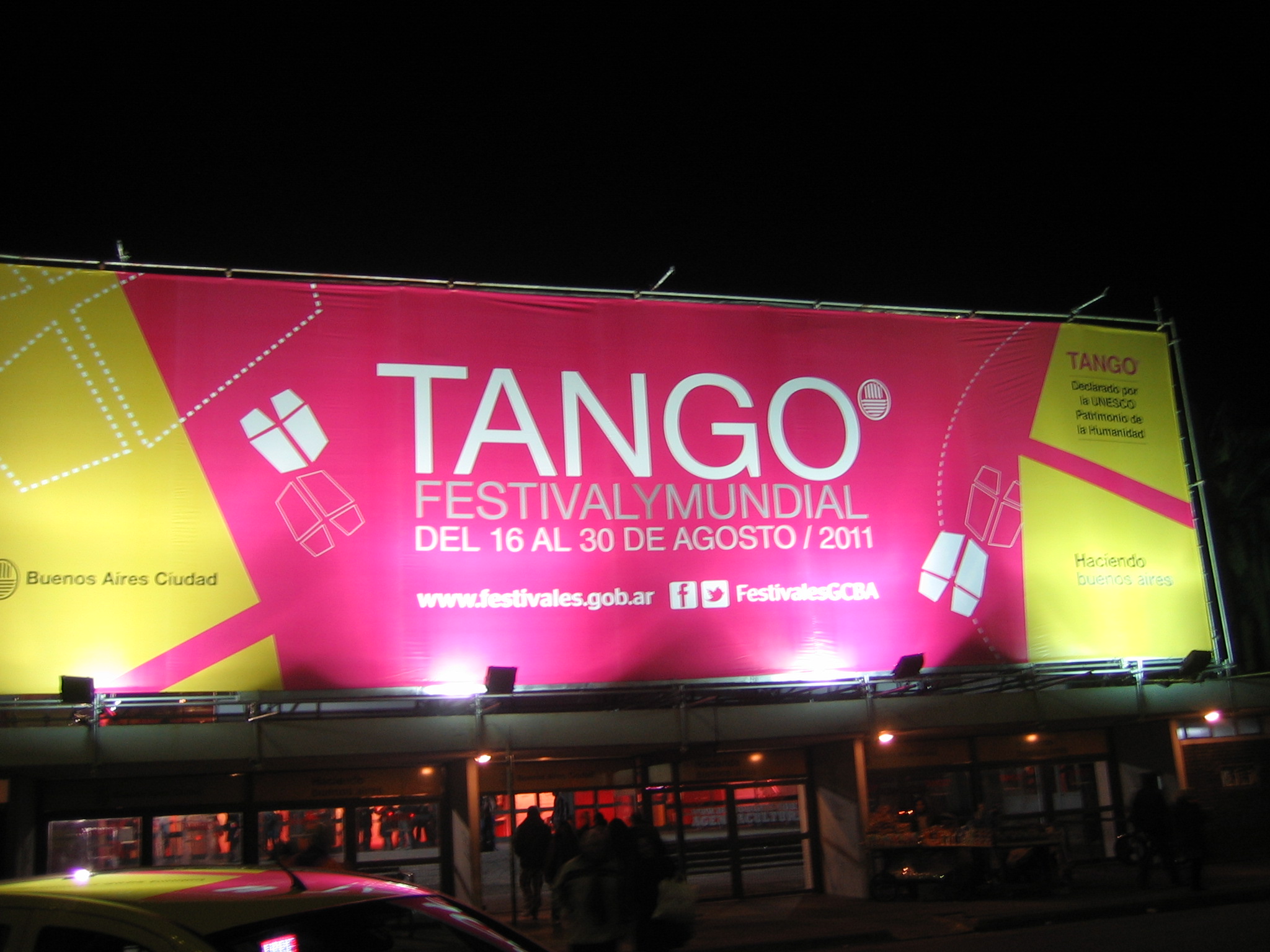
The Buenos Aires Tango Festival and World Cup runs from August 16 – 30.  Billboards and ads on TV are all over town and down in the subte too.
Here’s how it looked the first time we went over to the Expo Center for a free concert:
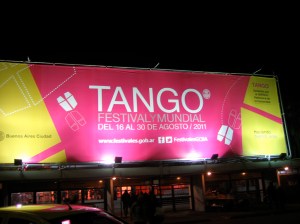
UNESCO has declared Tango to be part of the world’s Cultural Heritage.  Every year, porteños have the opportunity to remember, reimagine, and recreate the traditions of Tango which came out of a mixing of raíces, culturas y identidades (roots, cultures, identities).  Every day for 14 days there are dance classes, dance performances, concerts, jam sessions, milongas, exhibits, documentary films, workshops and conferences, not to mention the rounds of competitions down to the semi-finals and finals in two categories:  Tango Salón (the social dancing of ordinary people at milongas, very useful for dancing in small spaces) and Tango Escenario (stage tango, also known as show tango or Hollywood tango, wonderful for dancing in big open spaces).   All of the events at the Mundial are free,  and it’s not over yet…. tonight  (monday) is the Salon Tango Finals, and we HAVE TICKETS!!  (Note: Just cause it’s free doesn’t mean you don’t have to stand in line for  hours to get your ration of 2 tickets to high-ranking events.)
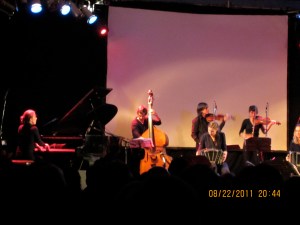
Orquesta Típica la Andariega

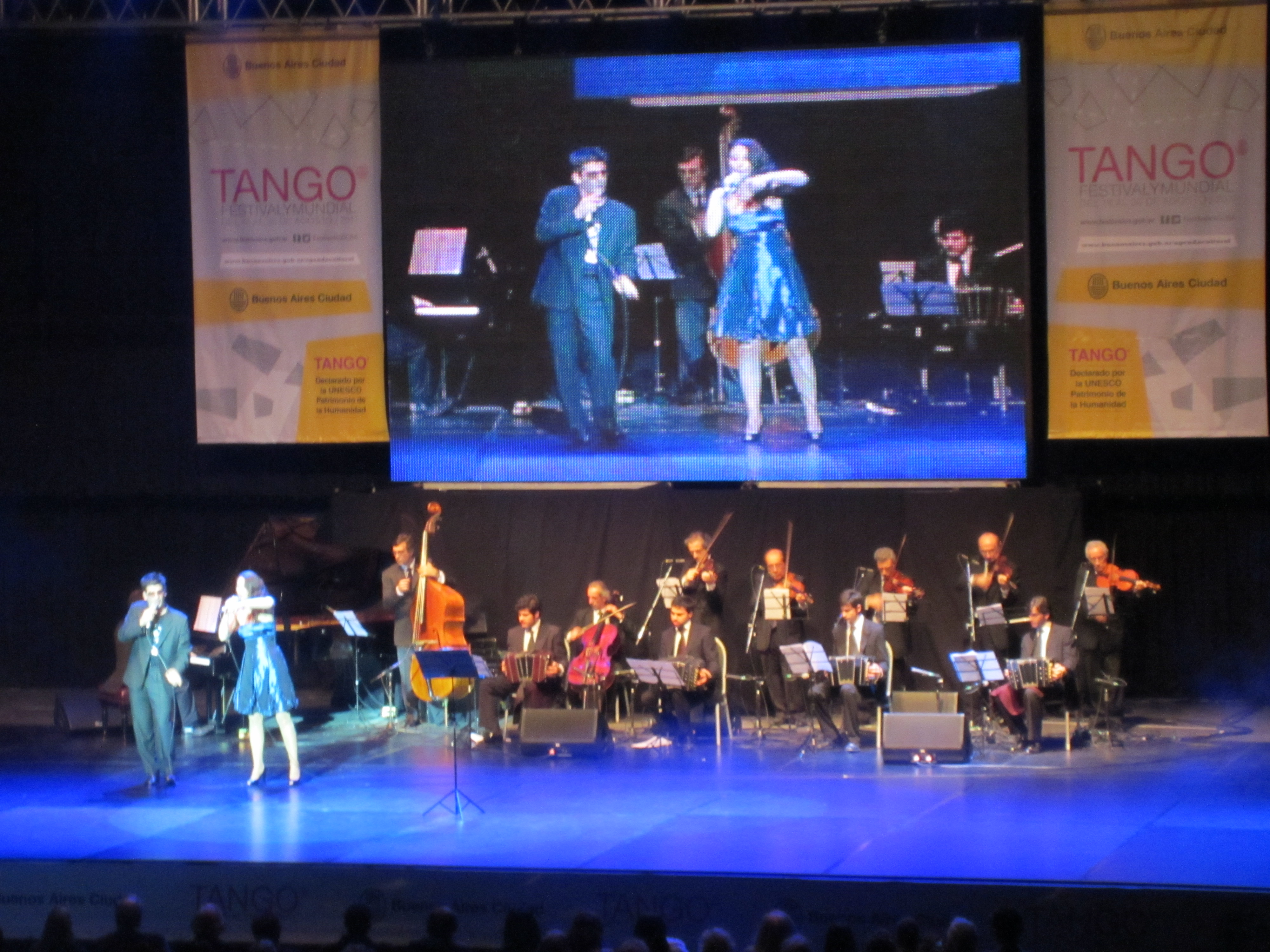
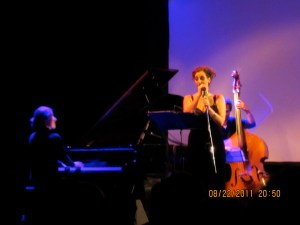
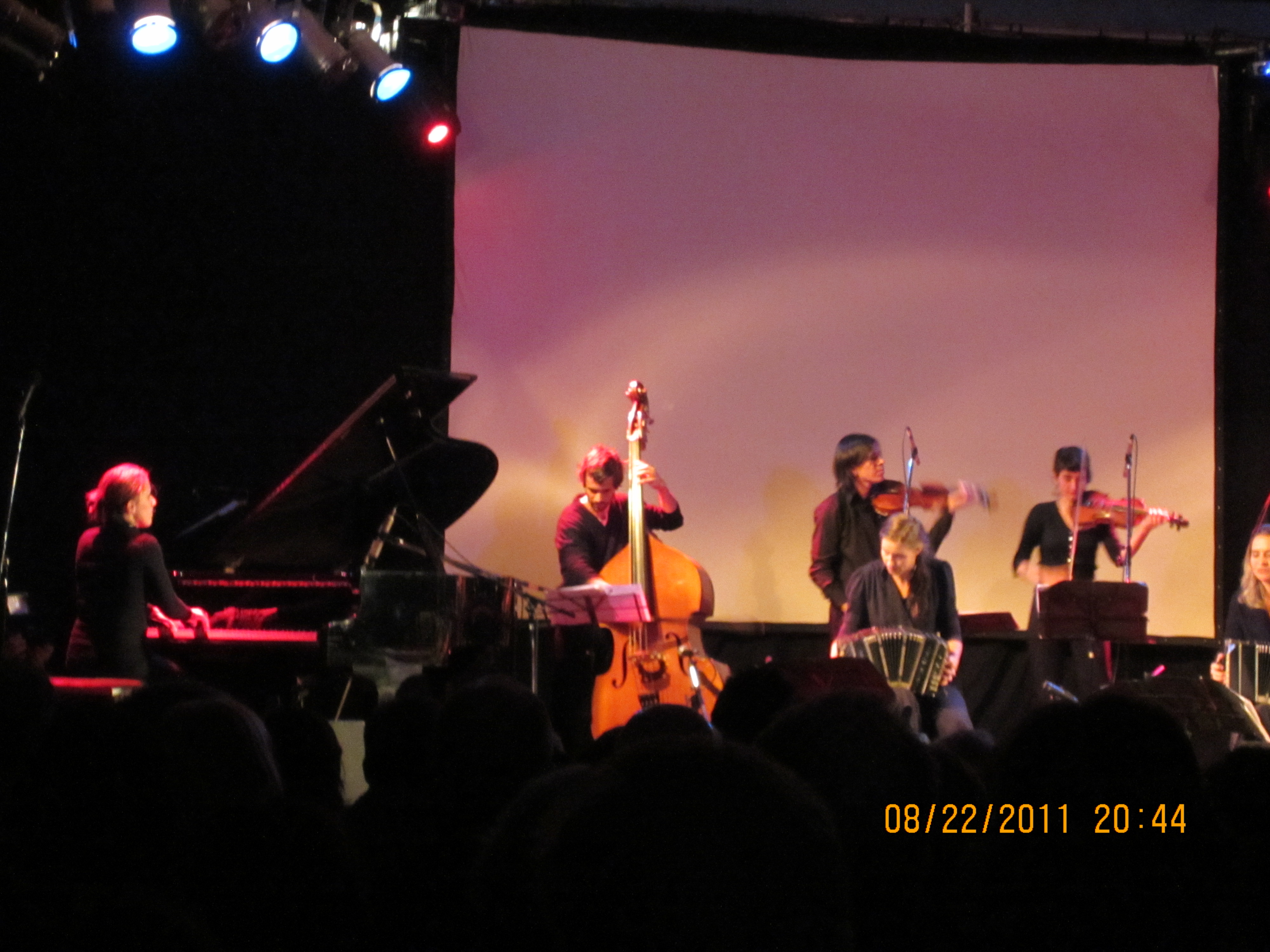
The first Expo event we attended was an awesome orchestra at the Horacio Ferrer theatre,  Orquesta Típica la Andariega.  They were fabulous!  Three girl bandoneon players, a pianist – orchestra leader (Pauline Nogues), a female violinist, two male violinists, a male bass fiddle, and a female singer.  I feel really sexist just mentioning their respective genders.  Should I call them girls?  chicks?  chicas?  femmes?  donne?  How could I describe this group differently?  If I don’t mention their genders at all, then my readers don’t realize how unusual it is to see women musicians in Tango orchestras.  Even the singers are almost always men.  Well, please send me your comments on this dilemma, and I will move on.  Their music was definitely fabulous and in the tango nuevo category… definitely tango, but kind of jazzy.   Here’s a photo with their singer Andrea Peñaloza:
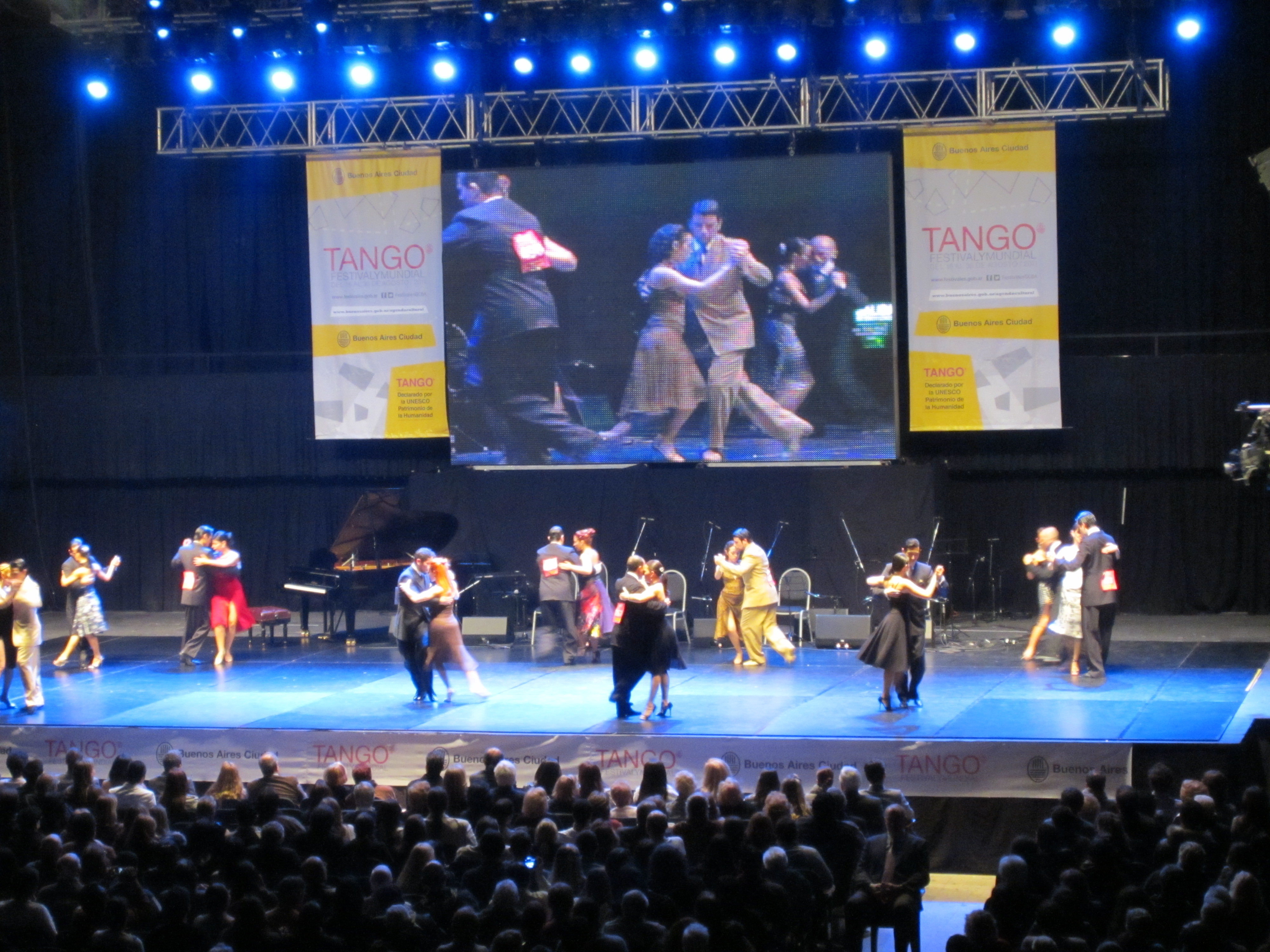
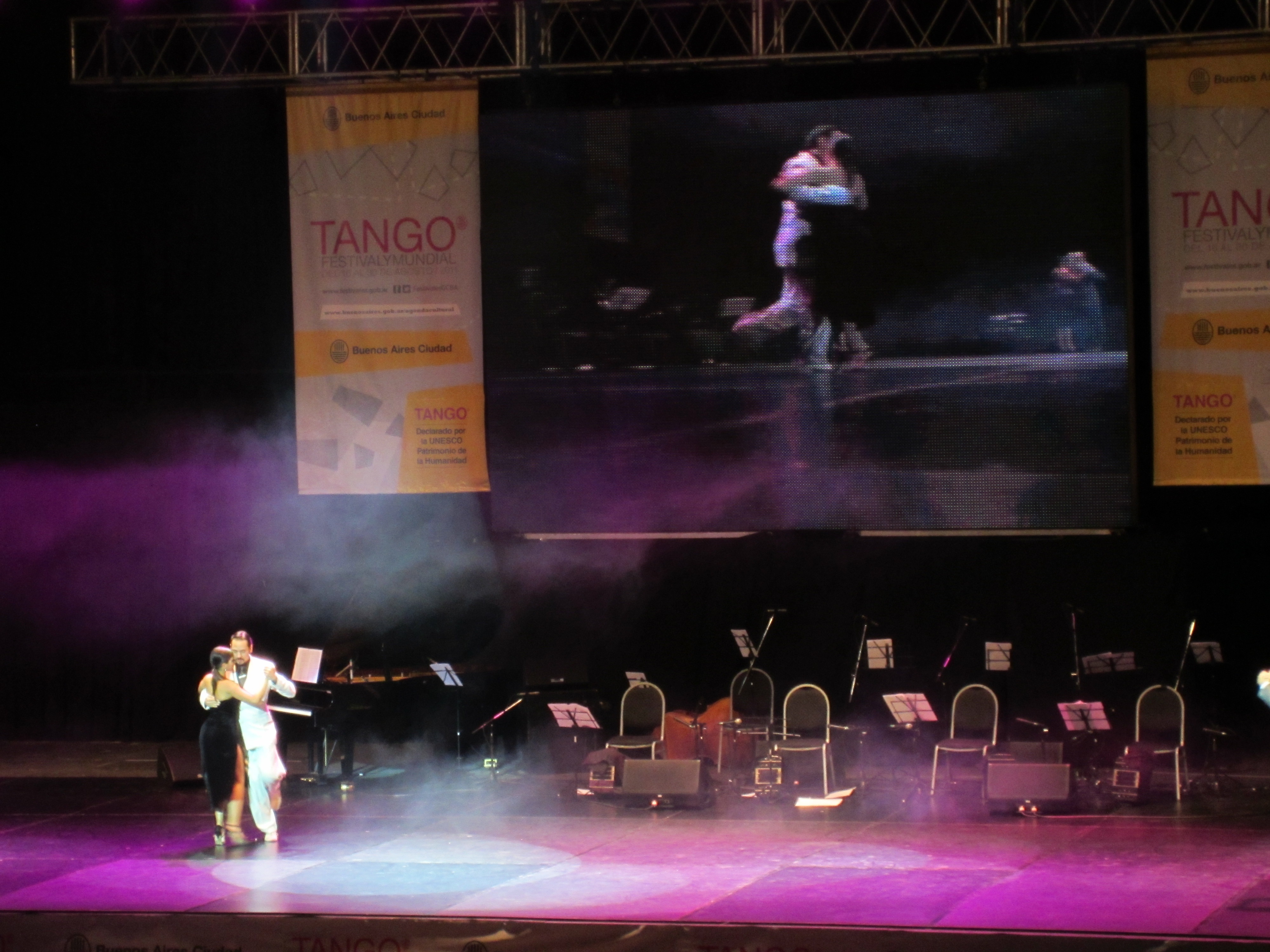
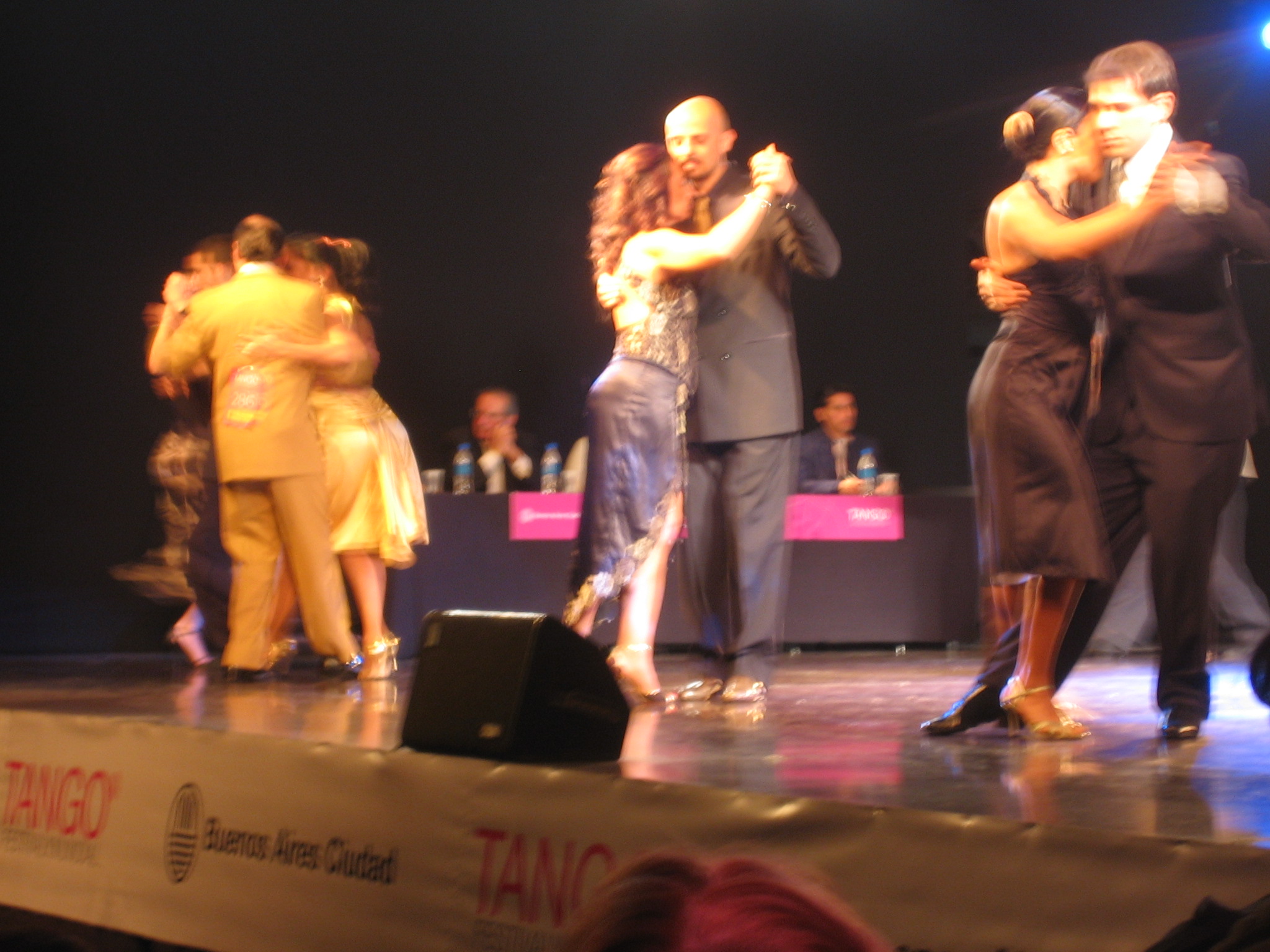
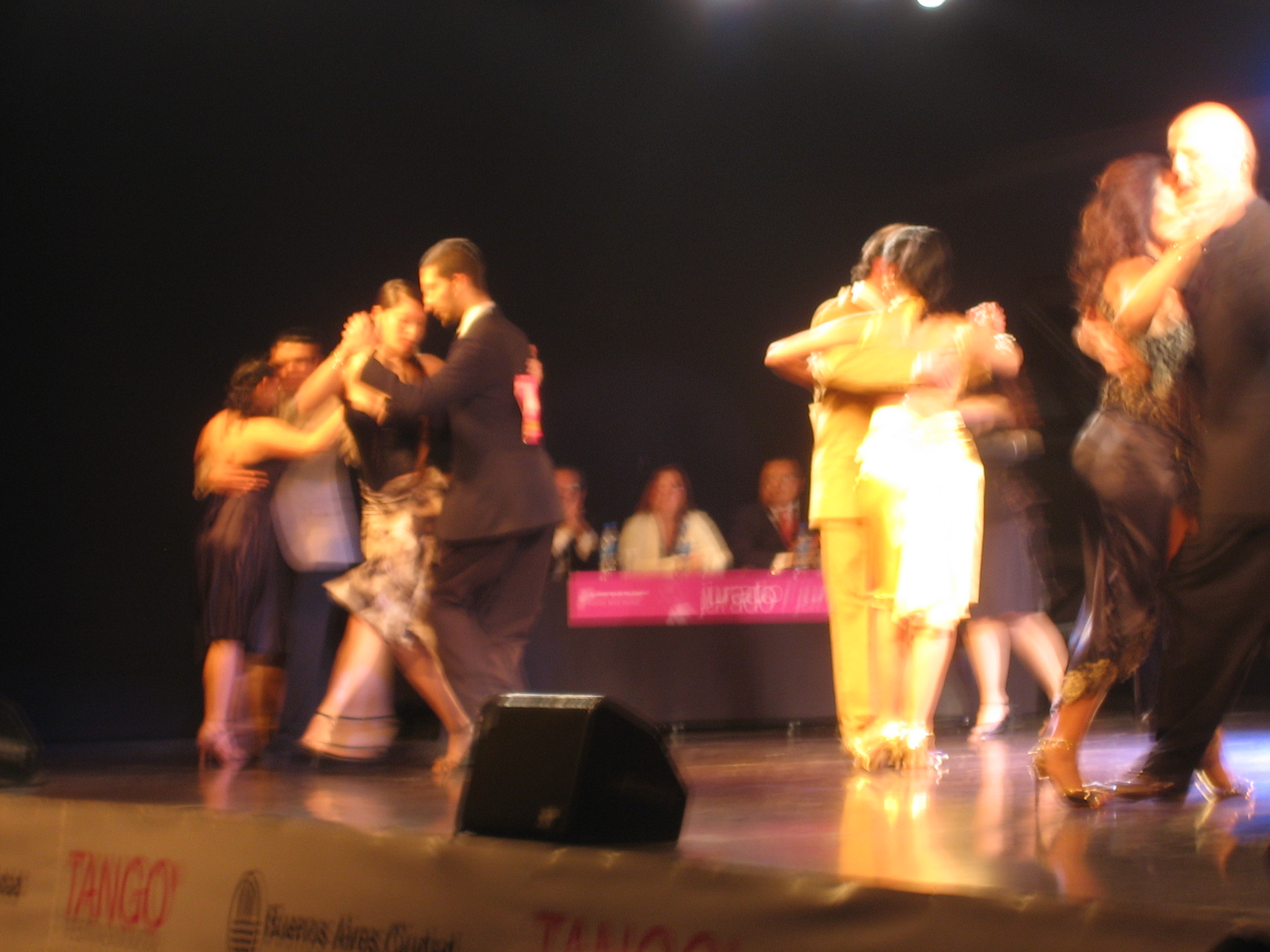
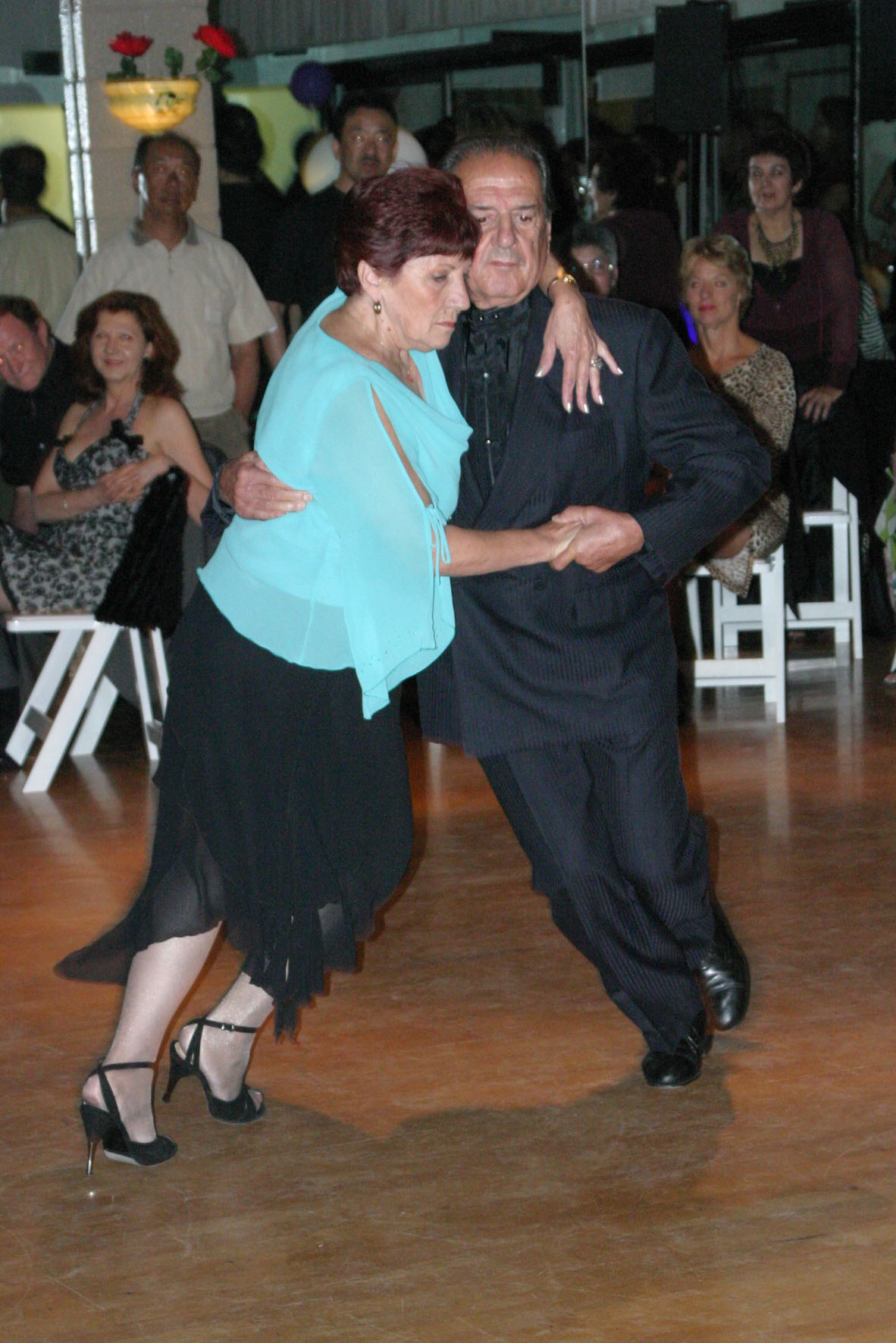
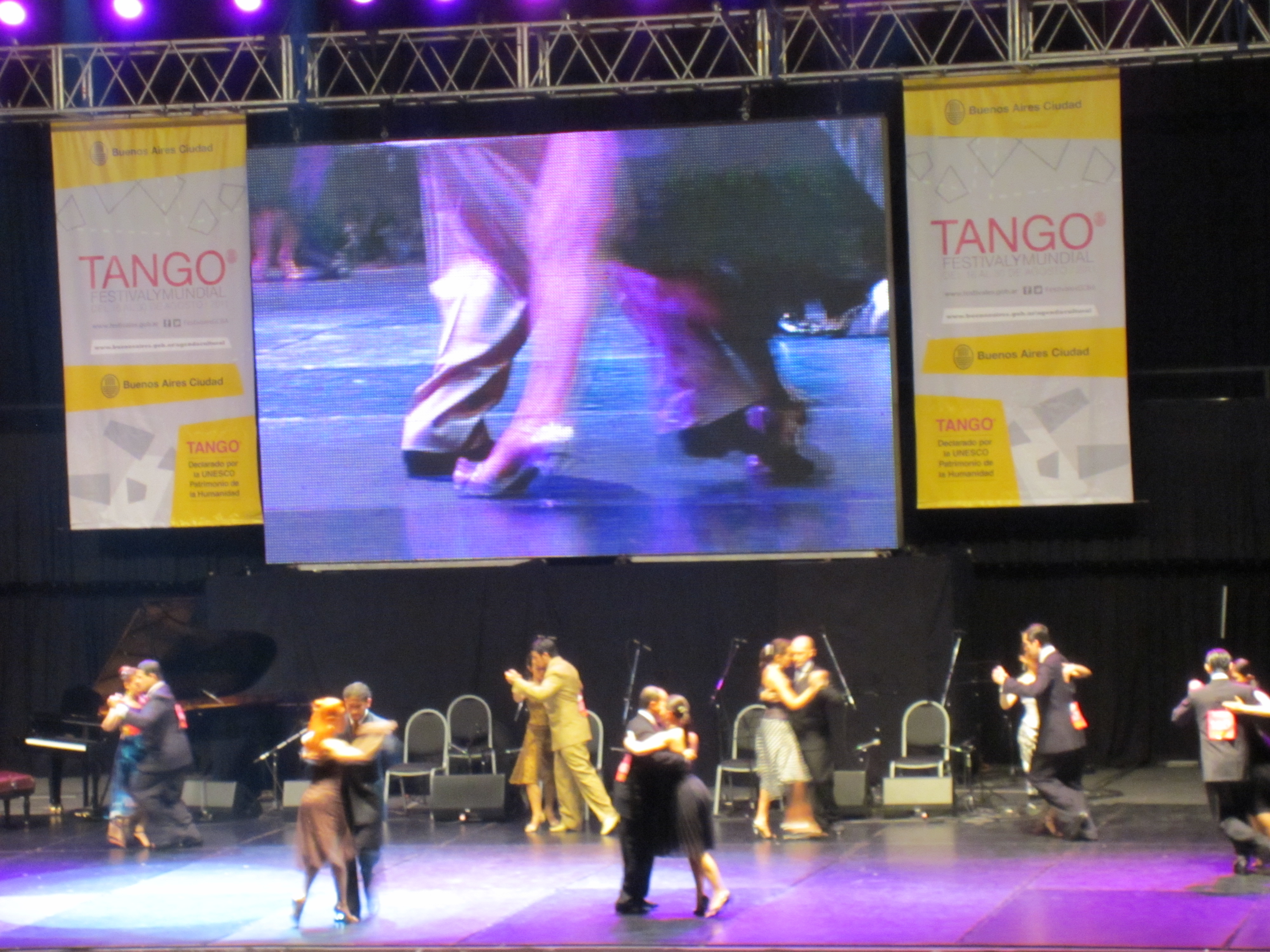
That same evening we watched several rounds of eliminations for the Salon Tango competition.  Six or seven couples at a time were announced and danced three tangos on the main stage.  The panel of judges (el jurado) you can see off to the left, and behind the dancers, a huge live screen view of the dancing.  I liked the couple in the middle of this one:
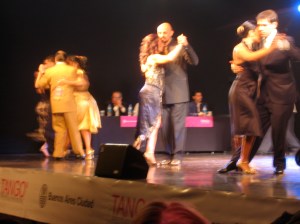
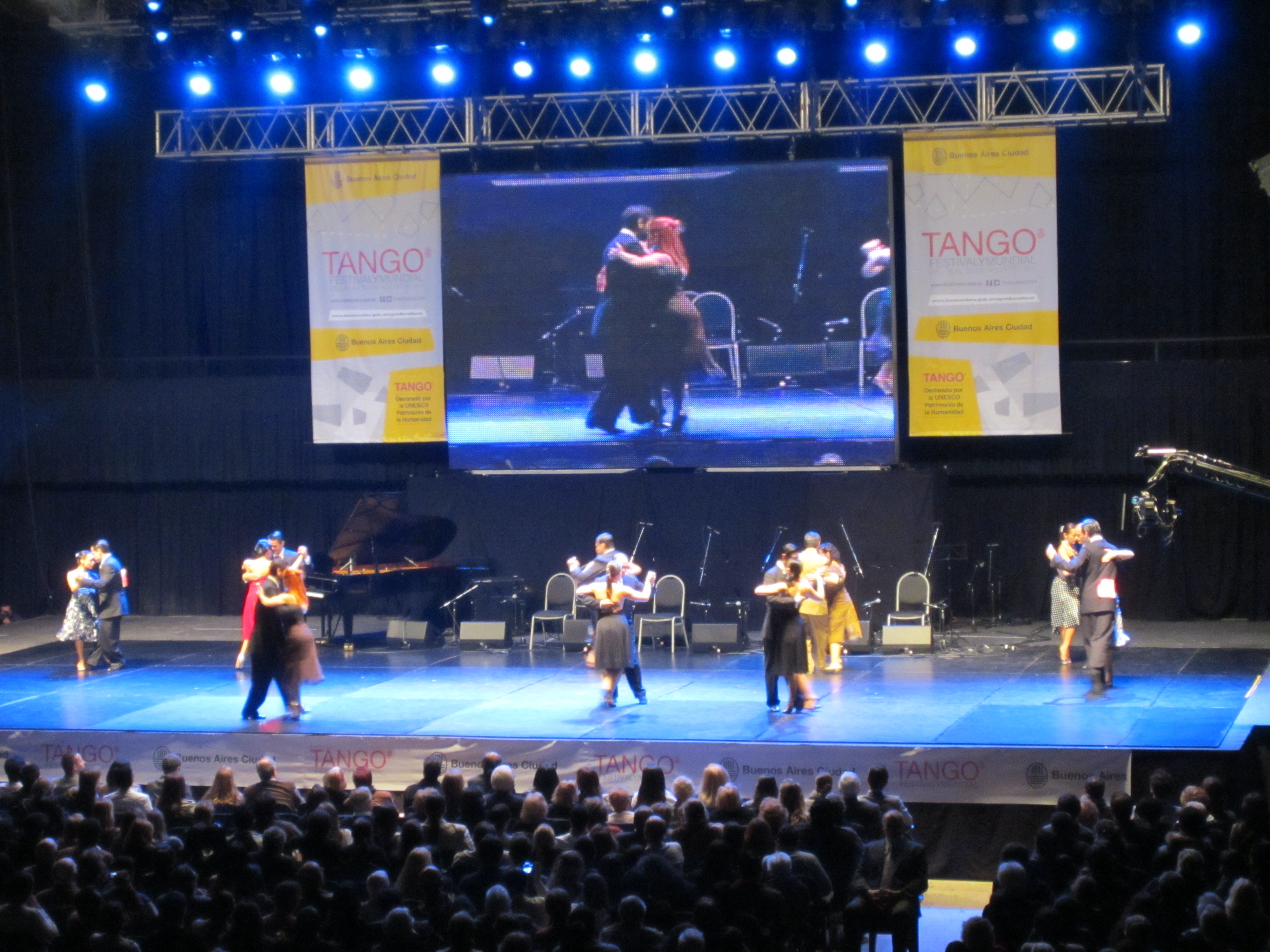
Here is another shot during the same round.  This is definitely not Dancing With the Stars.  This is the real McCoy.  Which dancers do you like best?
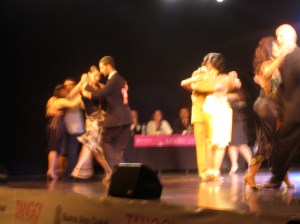
We didn’t get to watch the Stage Tango finals.   I wanted to, of course, but we can’t do it all!  And they were only handing out tickets to one or the other show, so whichever ones you got, you got.  But it didn’t matter, because quite a few of the performers turned up at the tango school last week, crashing Raúl Bravos’s tango classes to get last minute tune-ups and new moves from the maestro who’s taught just about everybody who teaches dance in Buenos Aires.  And he’s still got it!

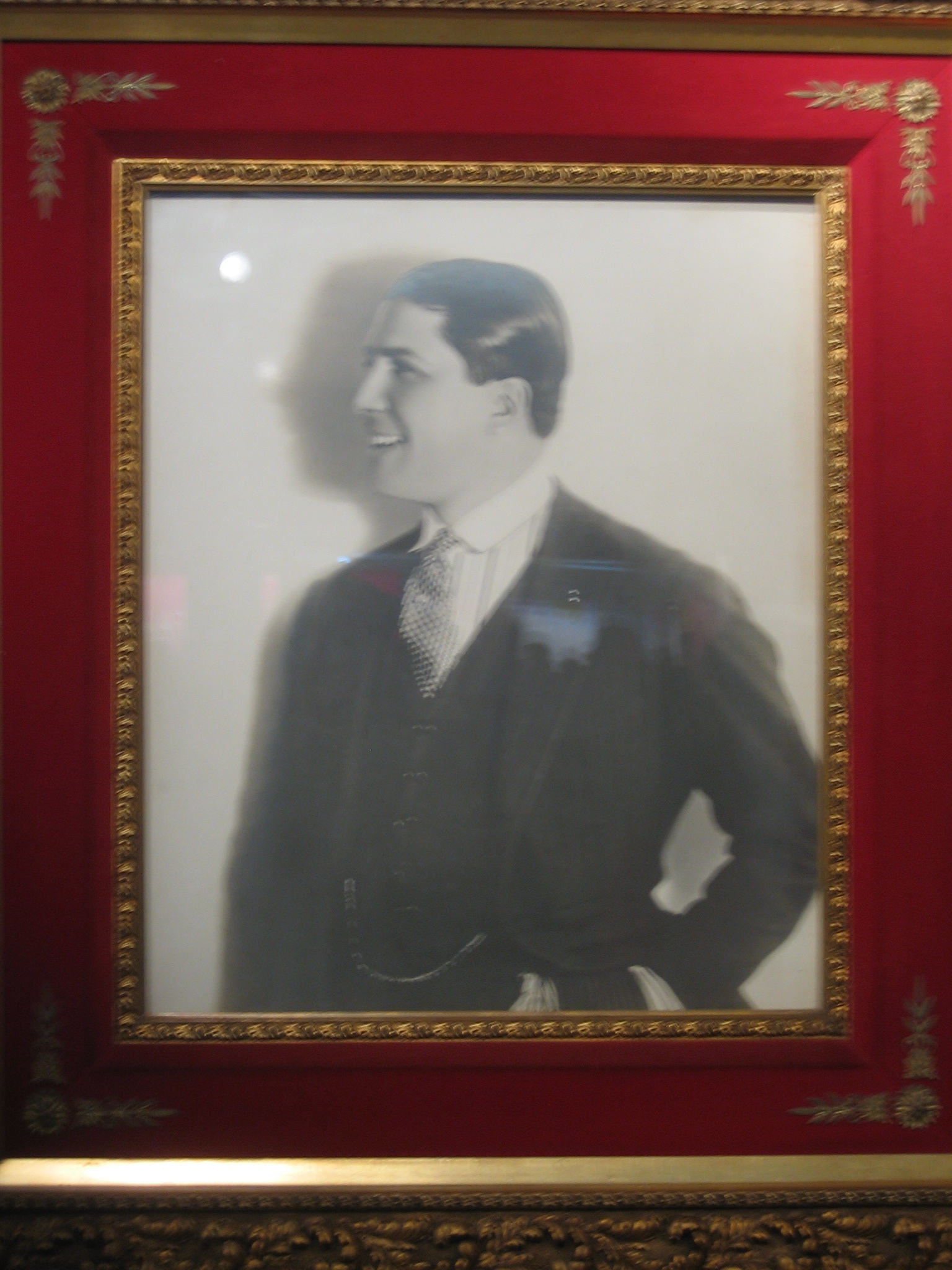
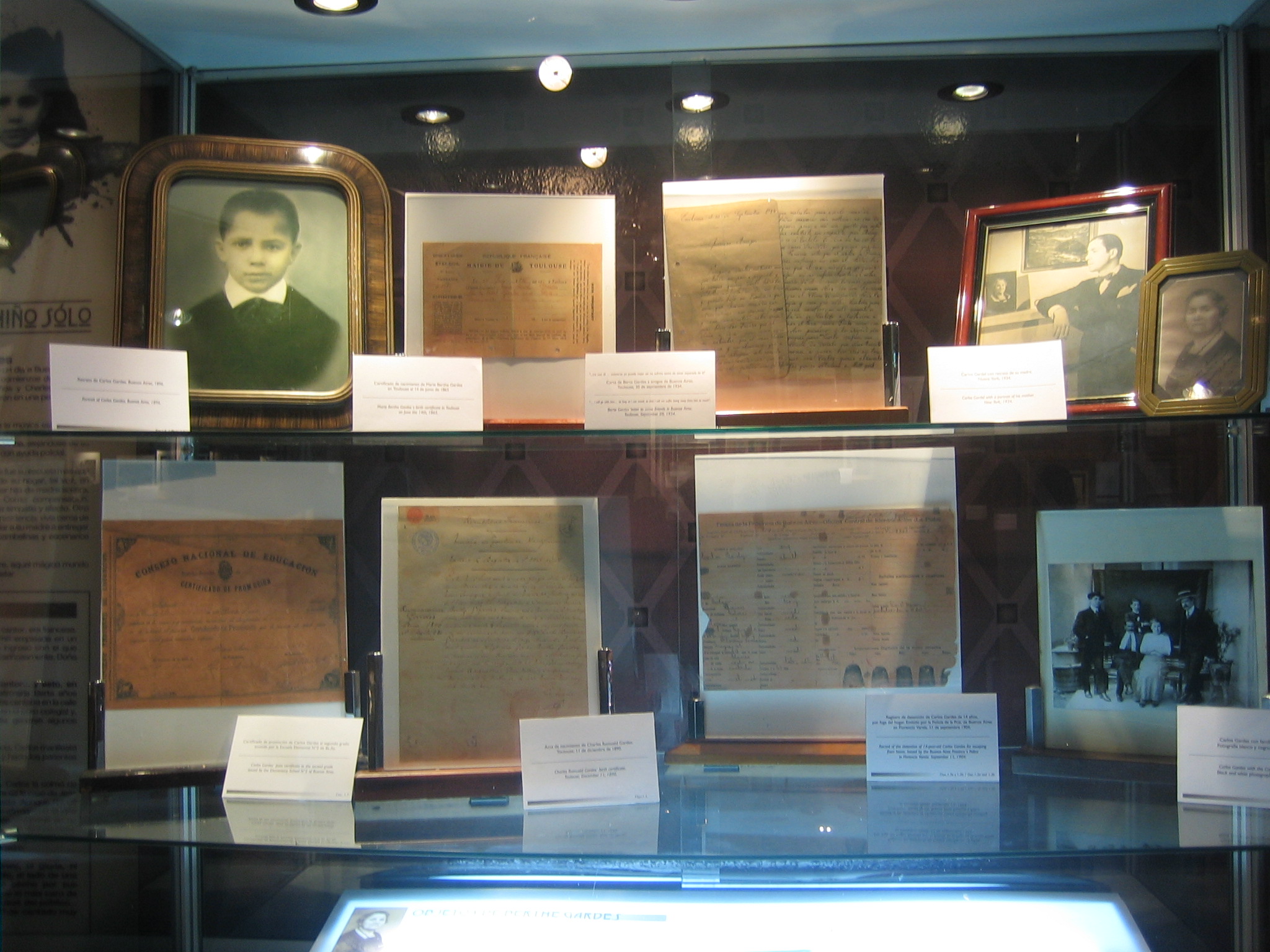
At the Expo Center they have an entire room dedicated to the worship of Carlos Gardel.  It is pretty amazing.  Gardel was born in France, and came with his mother to Buenos Aires when he was three years old, around the turn of the last century.  He died in a plane crash near Bogotá, Colombia in 1935 or thereabouts, pobrecito.  Gardel had a beautiful voice, a great stage and screen presence, and was a self-admitted womanizer.  So many beautiful women, so little time!
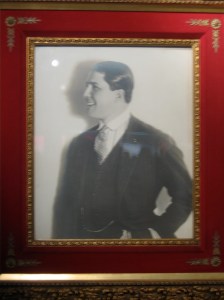
Carlos Gardel, the Elvis of Tango

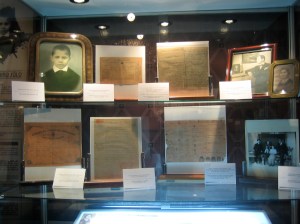
I enjoyed looking at the archival photos and documents of Gardel’s childhood and early years:
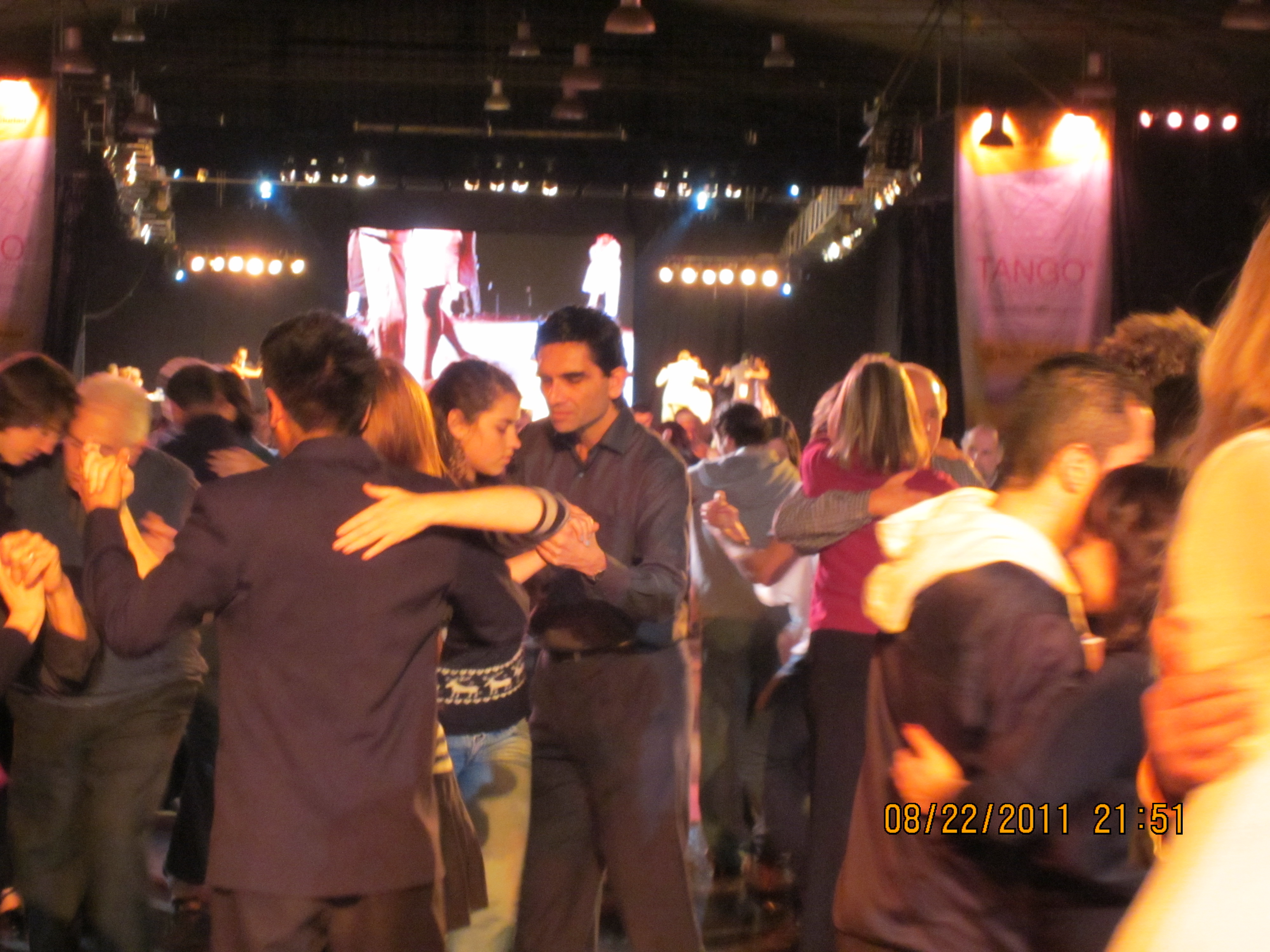
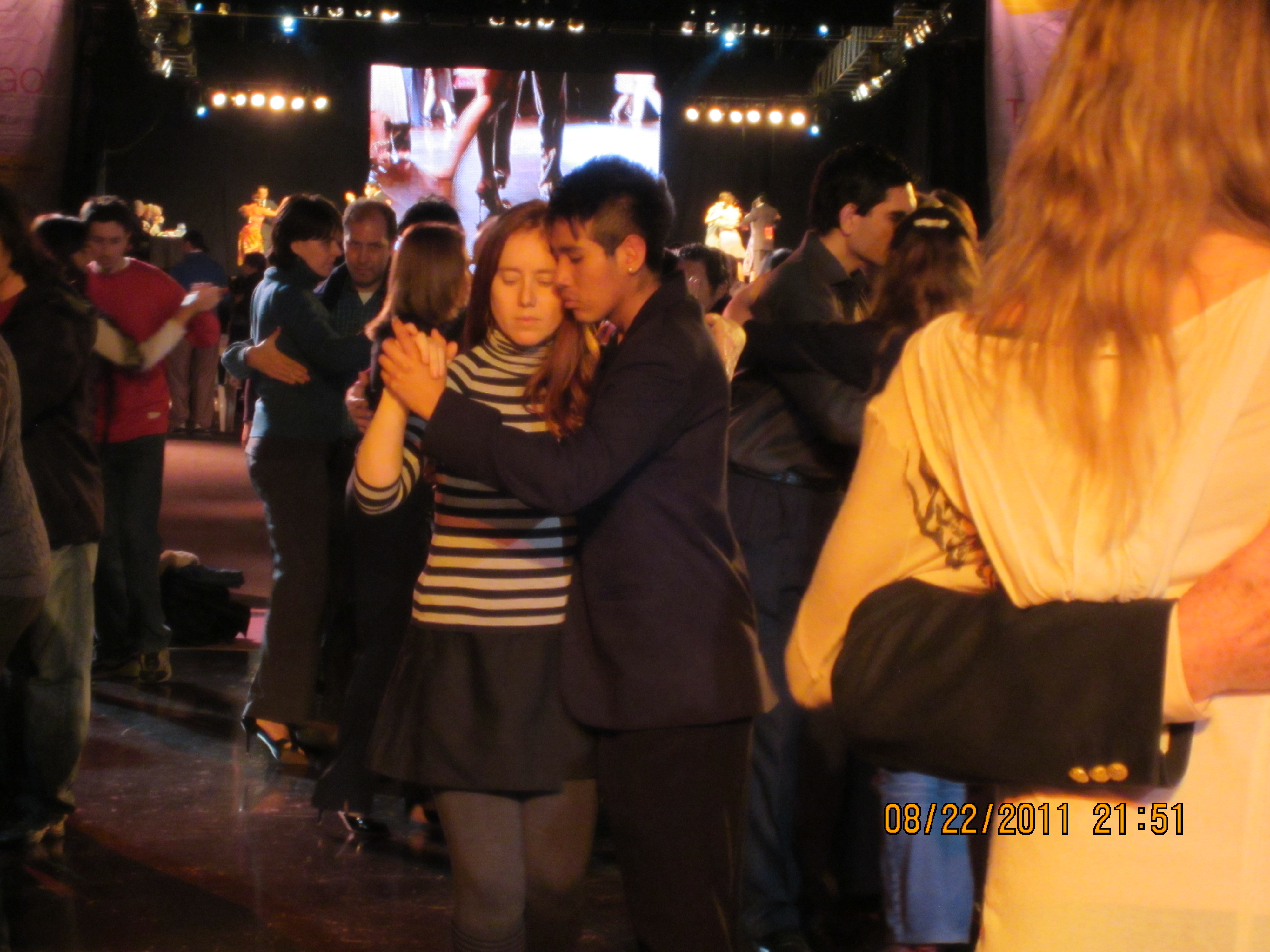
In front of the main stage is a seating area for several hundred people, and behind that is a big dance floor.  We milonga’d for a little while but the intensely bright event lighting was making me see fireballs even with my eyes closed.  You can see the big screen on the stage behind the motley crew of dancers enjoying the free music and dancing in a big warm space on a cold evening in Buenos Aires.
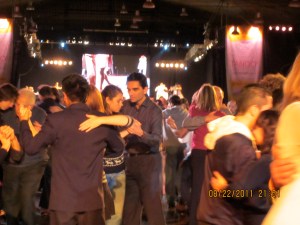
milongueando en el Mundial
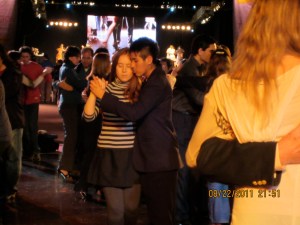
free dancing at the world cup of tango

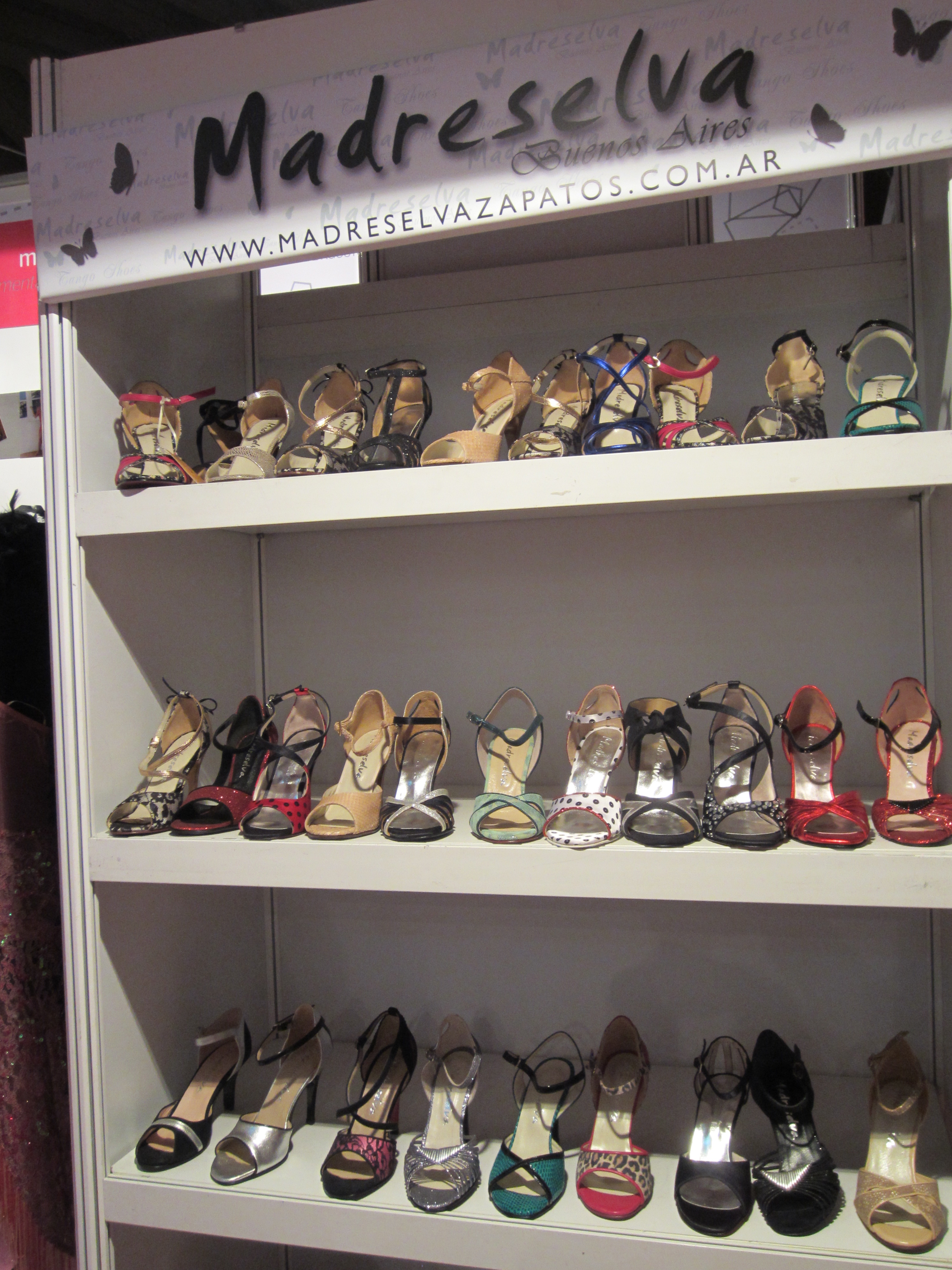
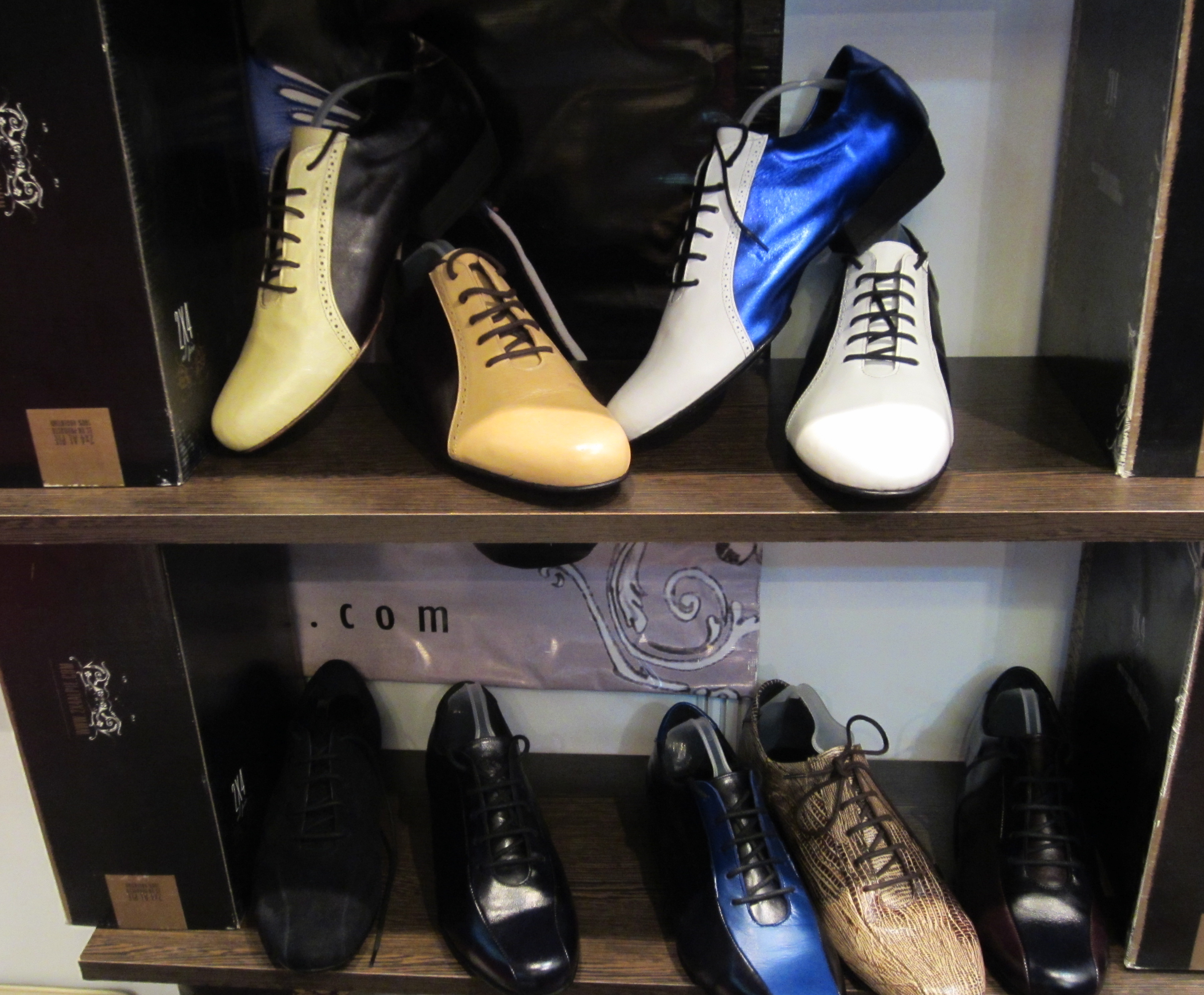
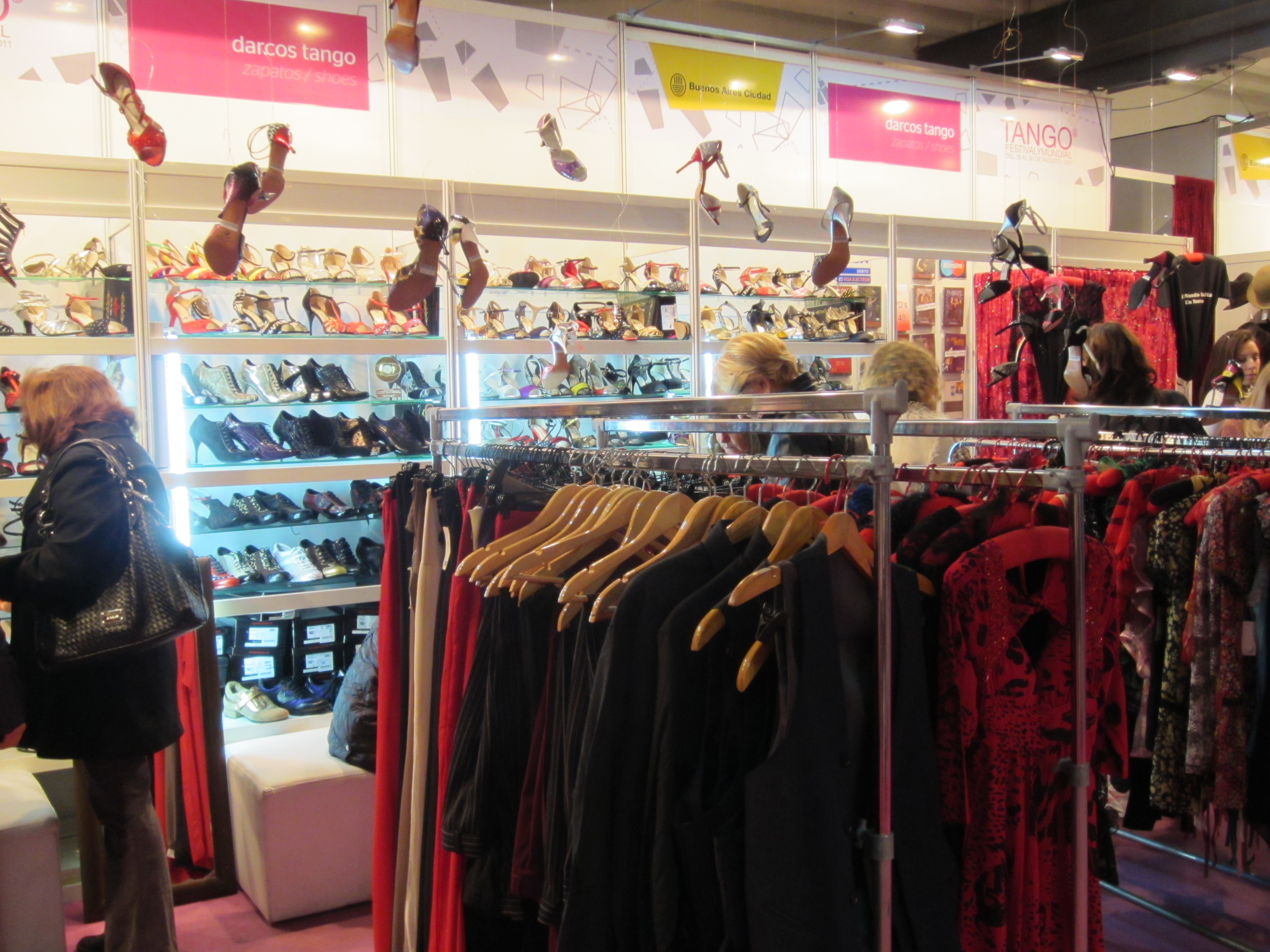
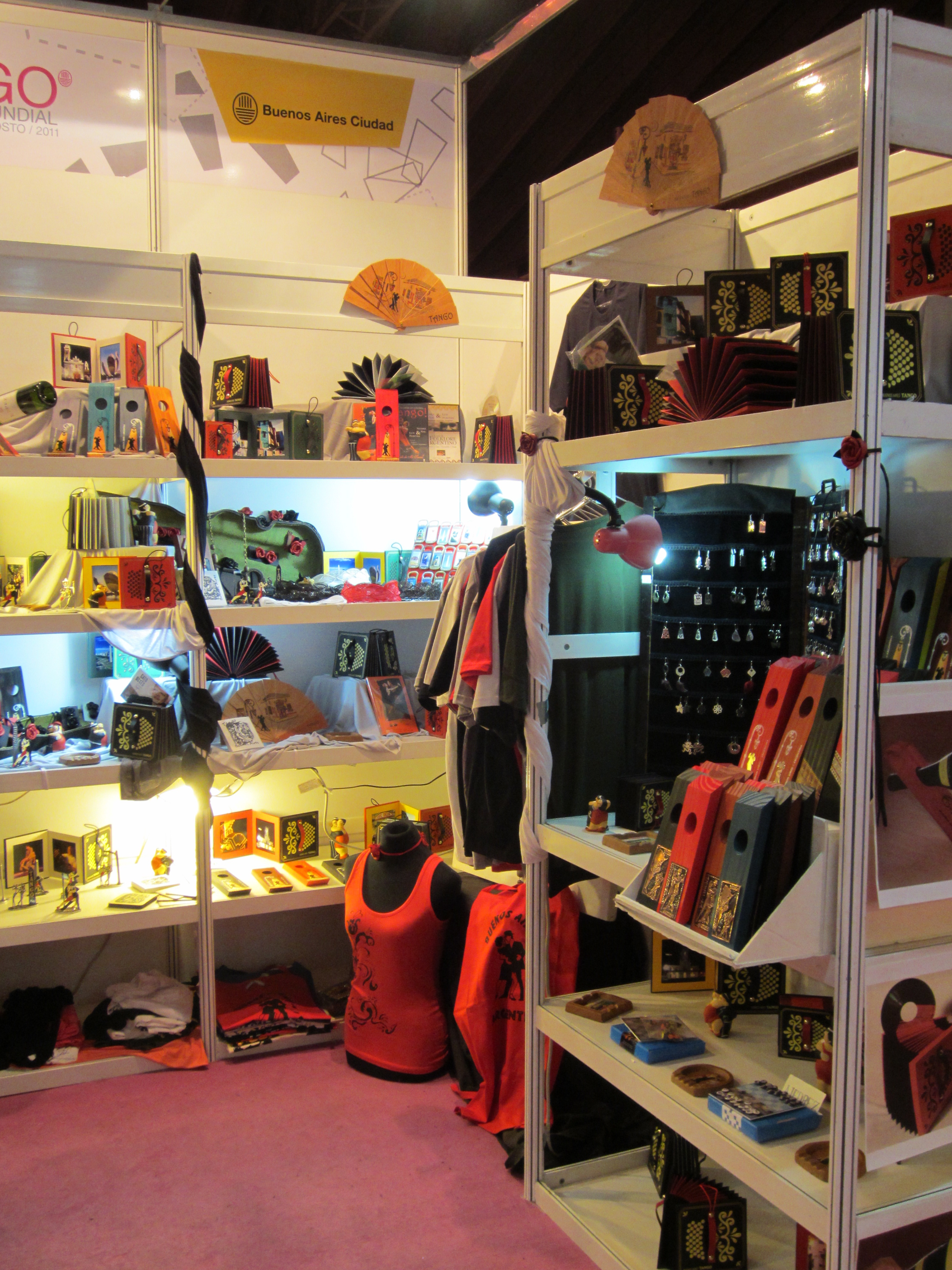
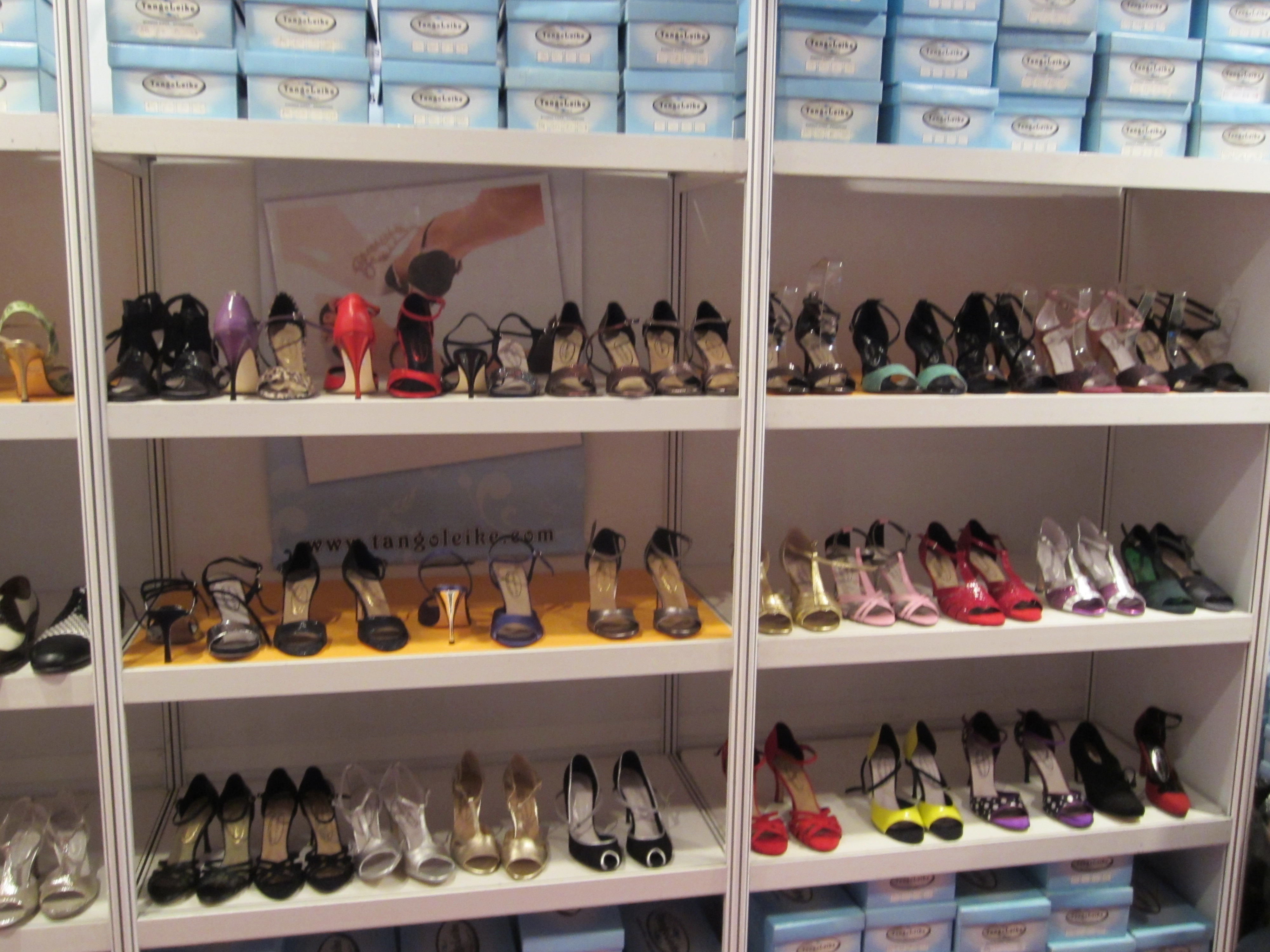
Before I go on to the other concert we attended, I know my readers wouldn’t want to miss seeing some of the fabulous stuff for sale at the Expo Center, like….. tango shoes?

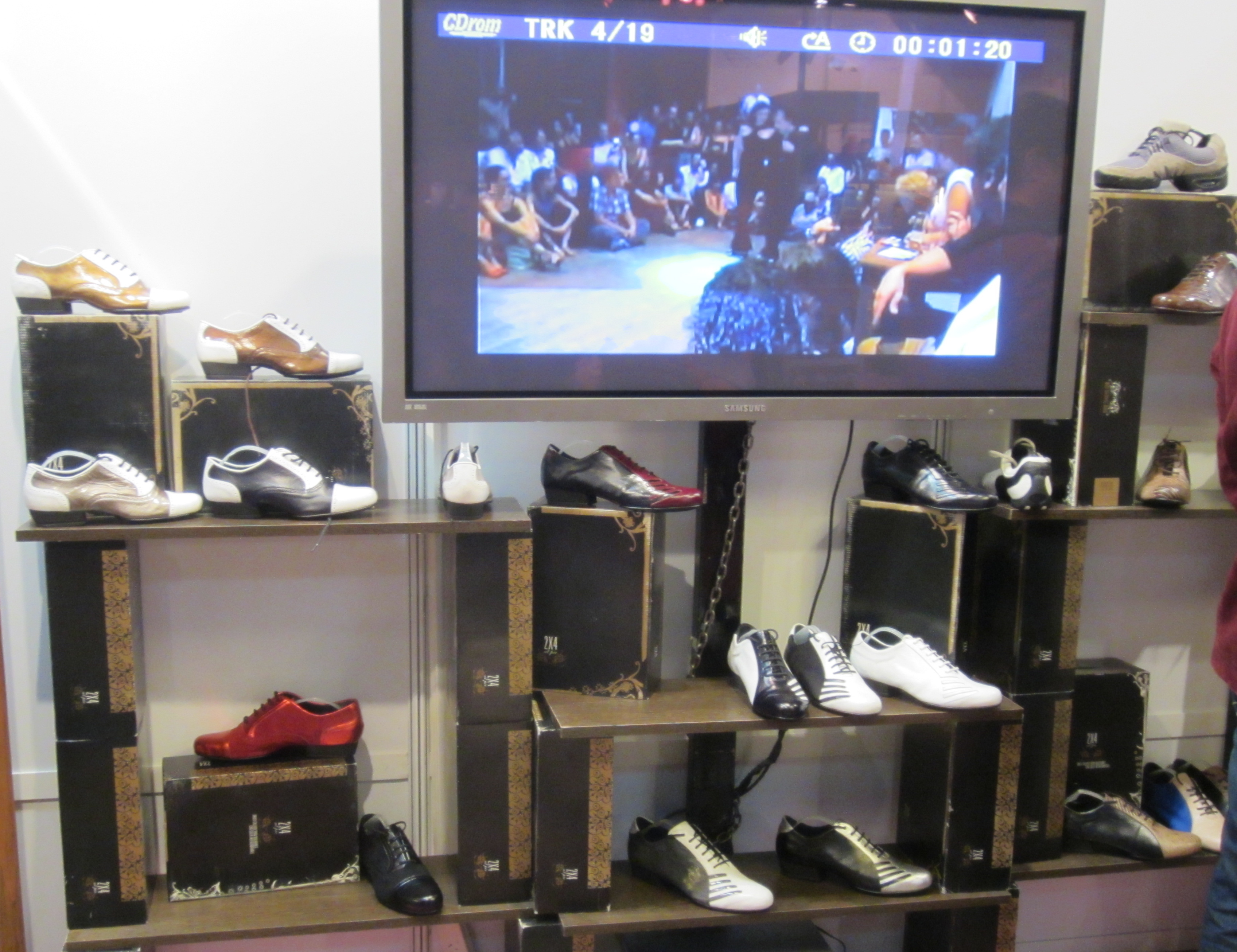
So many shoes, so little time!  No, I’m not getting a kickback for the free PR.  I wish!!  And for the guys, great tango shoes and electronic entertainment while you try them on:

Some of the men’s tango shoes are being made now with pop-out, interchangeable soles.    The part that pops out is the ball-of-foot area.  Each pair comes with 3 pairs of soles, with different finishes so you can mix-and-match to the floor conditions.   Not even Ken & Barbie could have dreamed up this type of accessorizing!  (well their brain capacity was under the legal limit.)
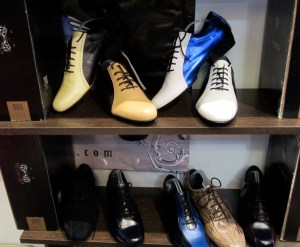
You guys better look sharp!

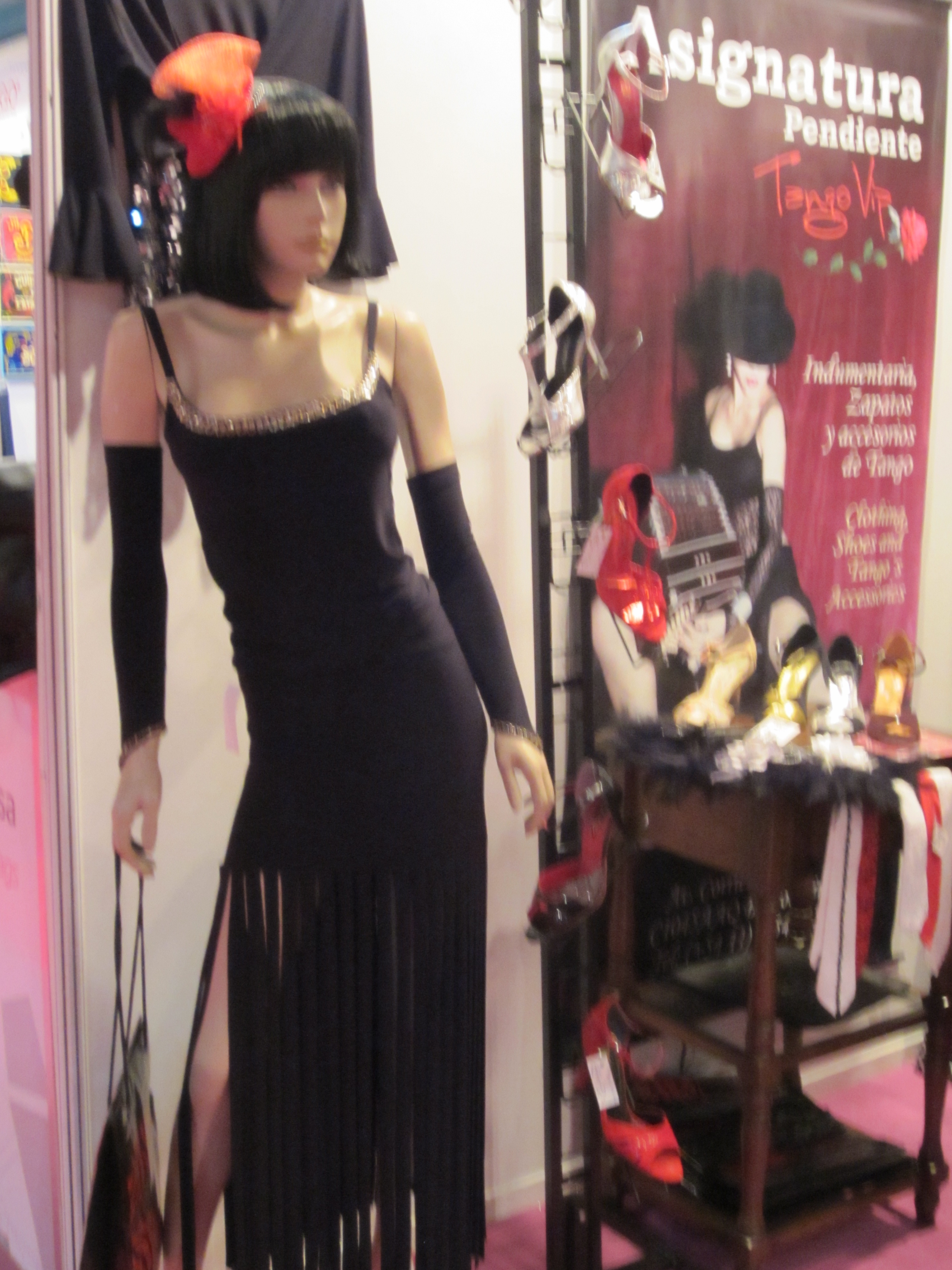
And if you need some new duds for that special milonga, (no guys, not for you!  we’re back to the girls) you’re sure to find something in one of the Expo shops: Ooh la la!

Darcos

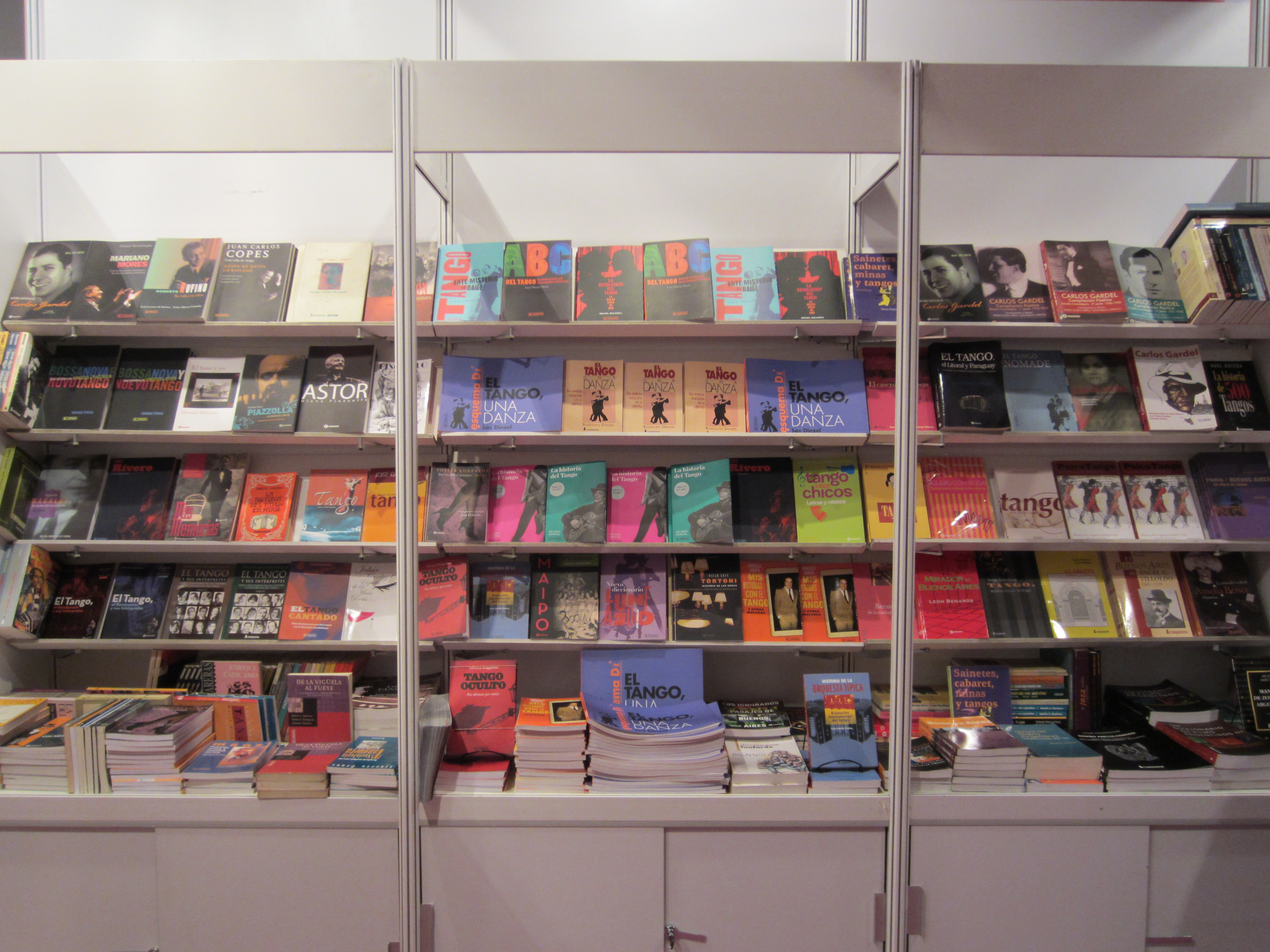
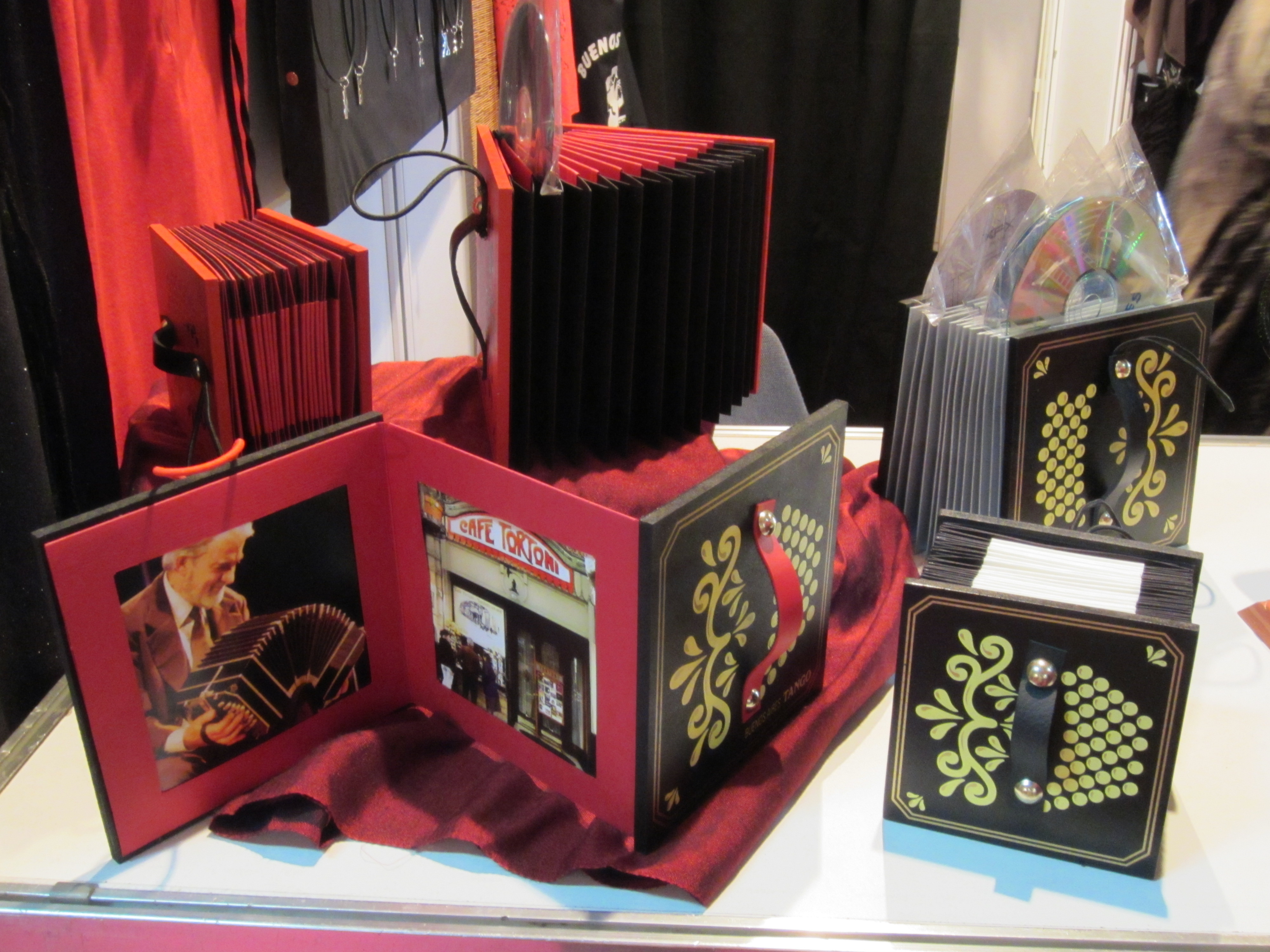
And there’s other cool stuff there,  books on Tango and little bandoneon photo and CD holders.  Yes, they are so cute, I had to get one.

bandoneonitos
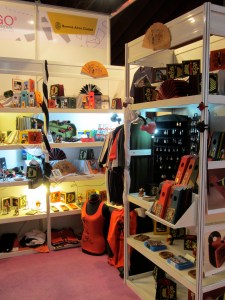
tango trinkets
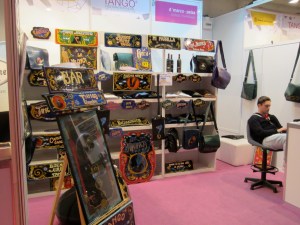
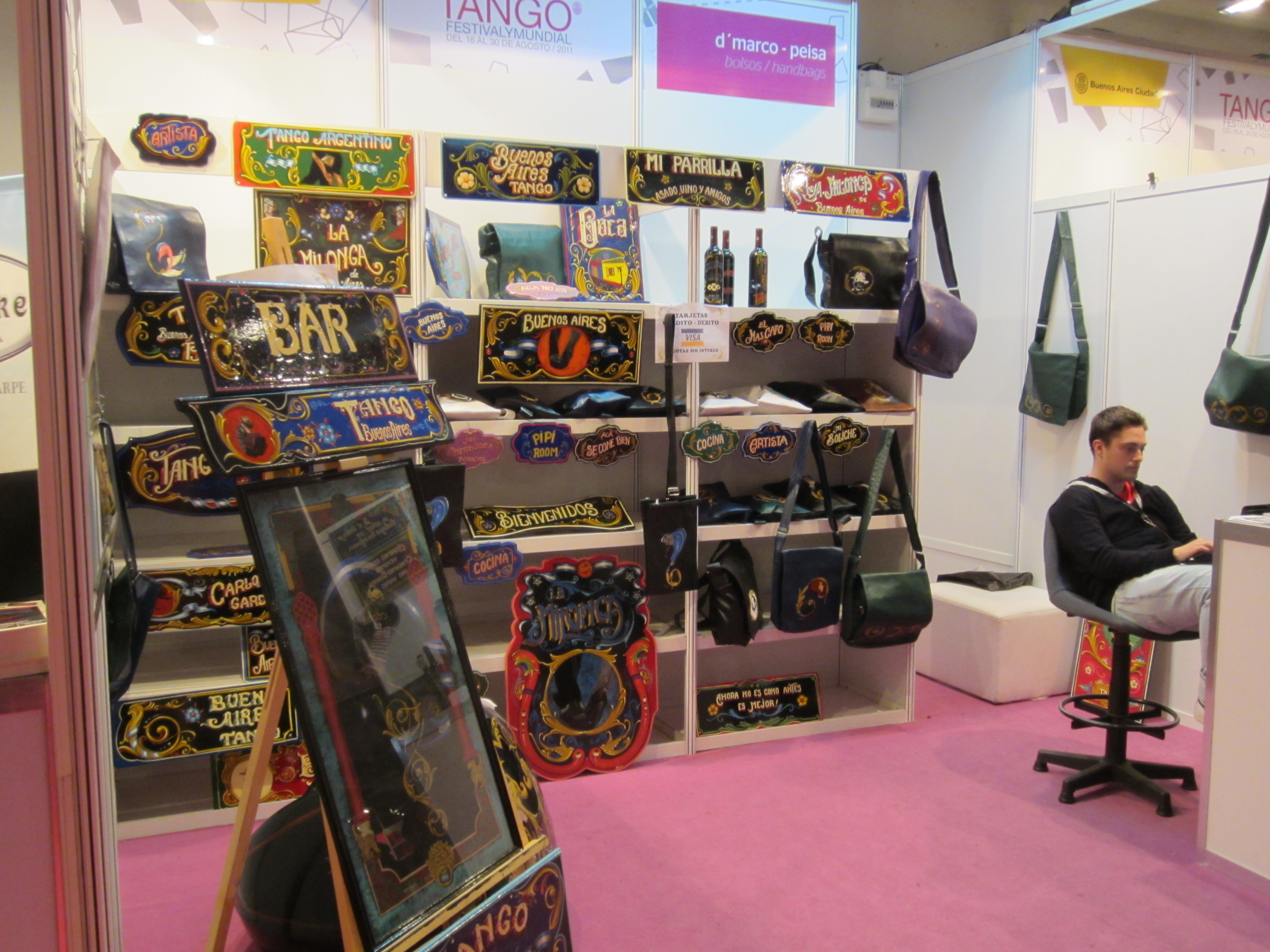
handpainted signs Buenos Aires style

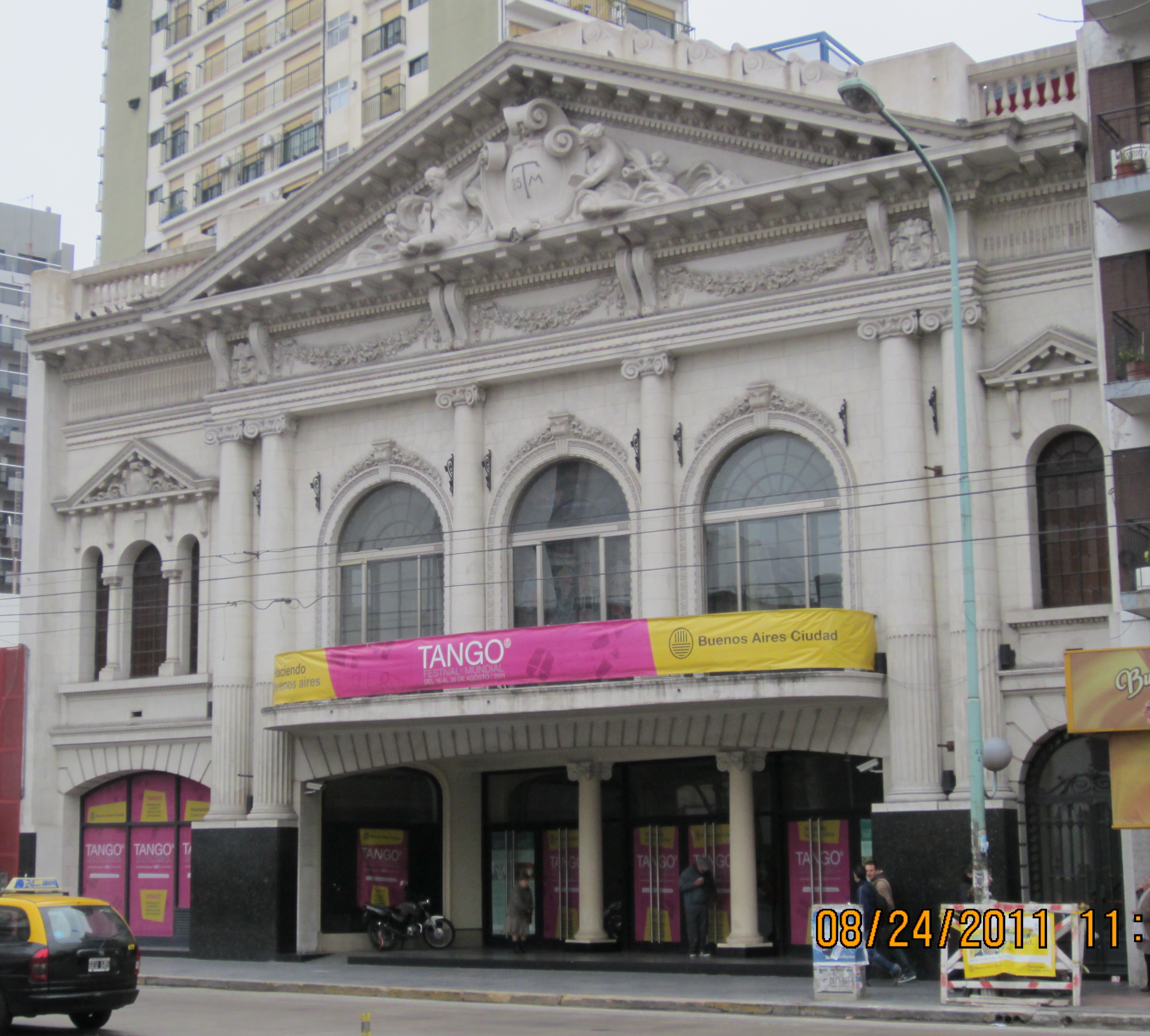
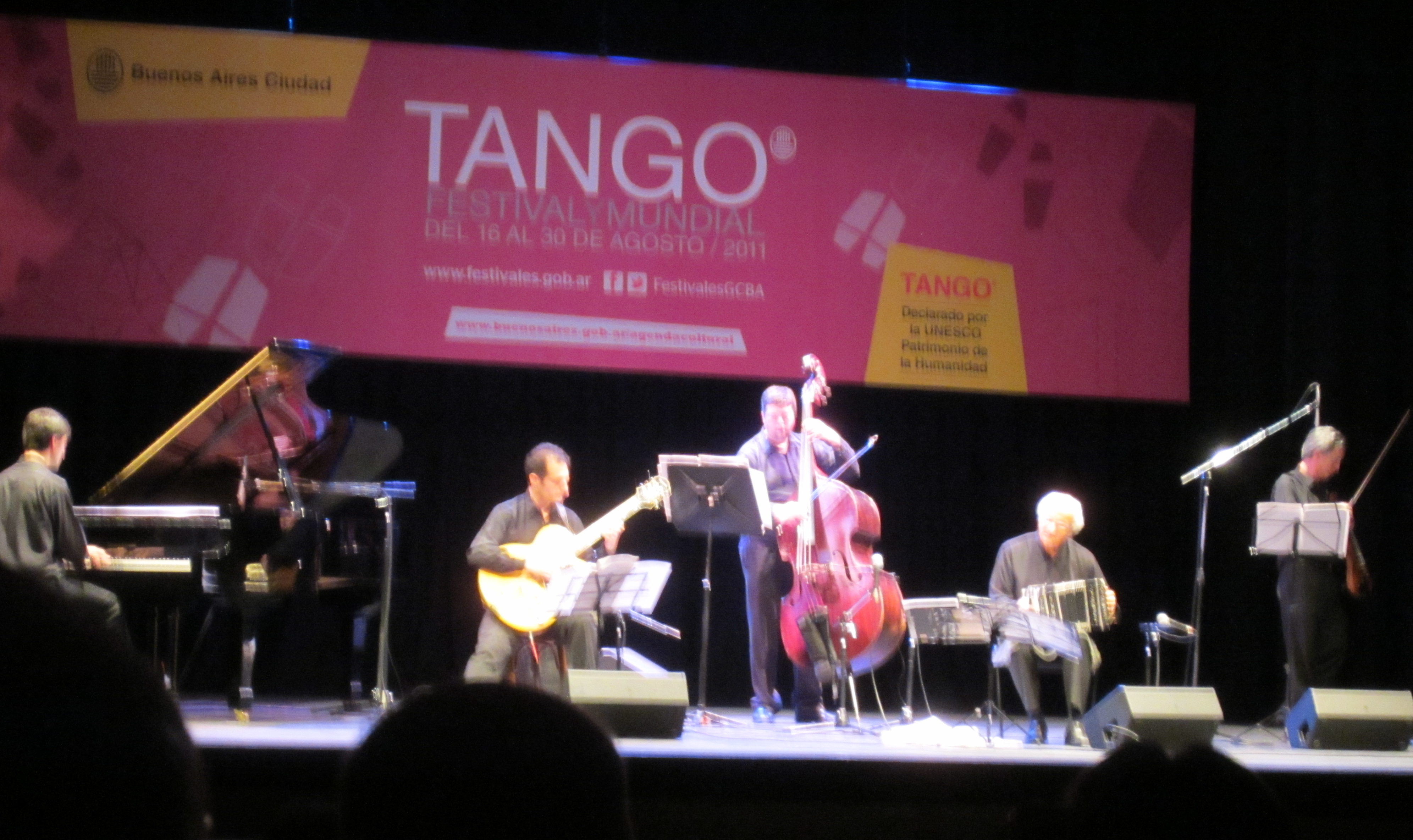
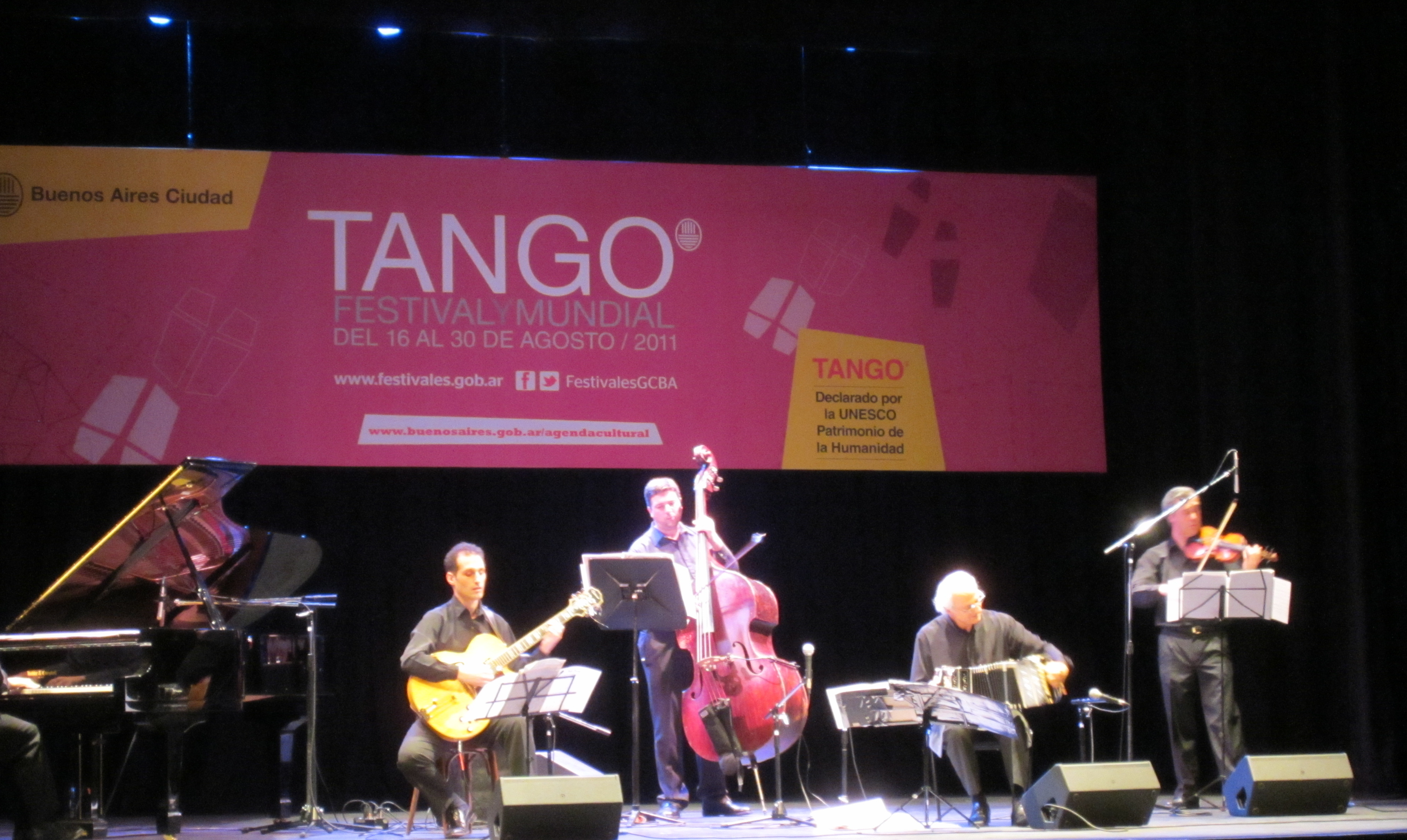
A few days ago we went to the historic Teatro 25 de Mayo to see  Quinteto Nestor Marconi.  Here is a photo of the historic hall:
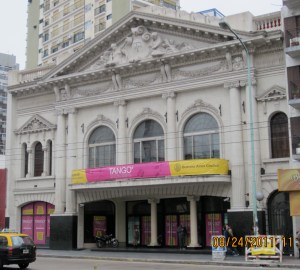
Teatro 25 de Mayo

Nestor Marconi is a world famous bandoneon player, one of the few surviving musicians of the generation of 20th century Tango.  Marconi played in the orchestras of José Basso and Enrique Mario Francini — Armando Pontier.  He was bandoneon soloist with the philarmonics of Oslo, Montreal and Toulouse, partnered with Roberto Goyeneche in the film Sur, and performed with the renowned pianist Martha Argerich, amongst many other notables.  Marconi is truly a living legend of Tango.
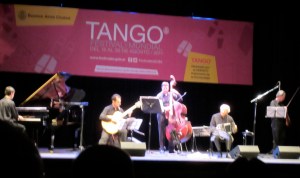
Quinteto Nestor Marconi

From left to right, pianist Leonardo Marconi, son of Nestor (he is really amazing!);  Esteban Falabella, guitar;  Juan Pablo Navarro, contrabajo;  Nestor Marconi, bandoneon;  Pablo Agri, violin.
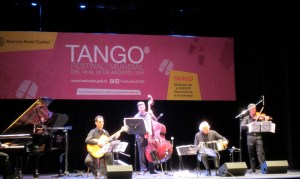
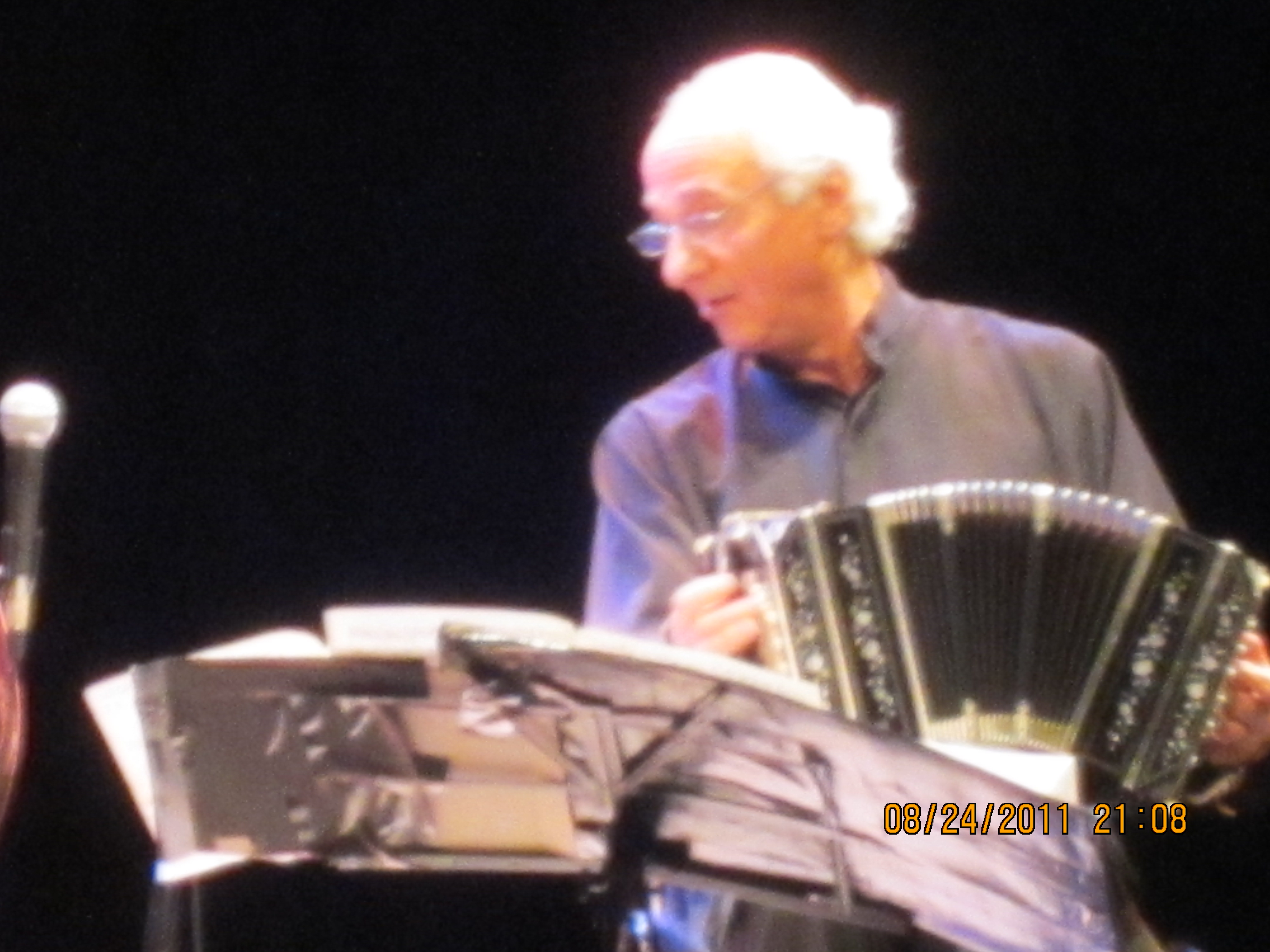
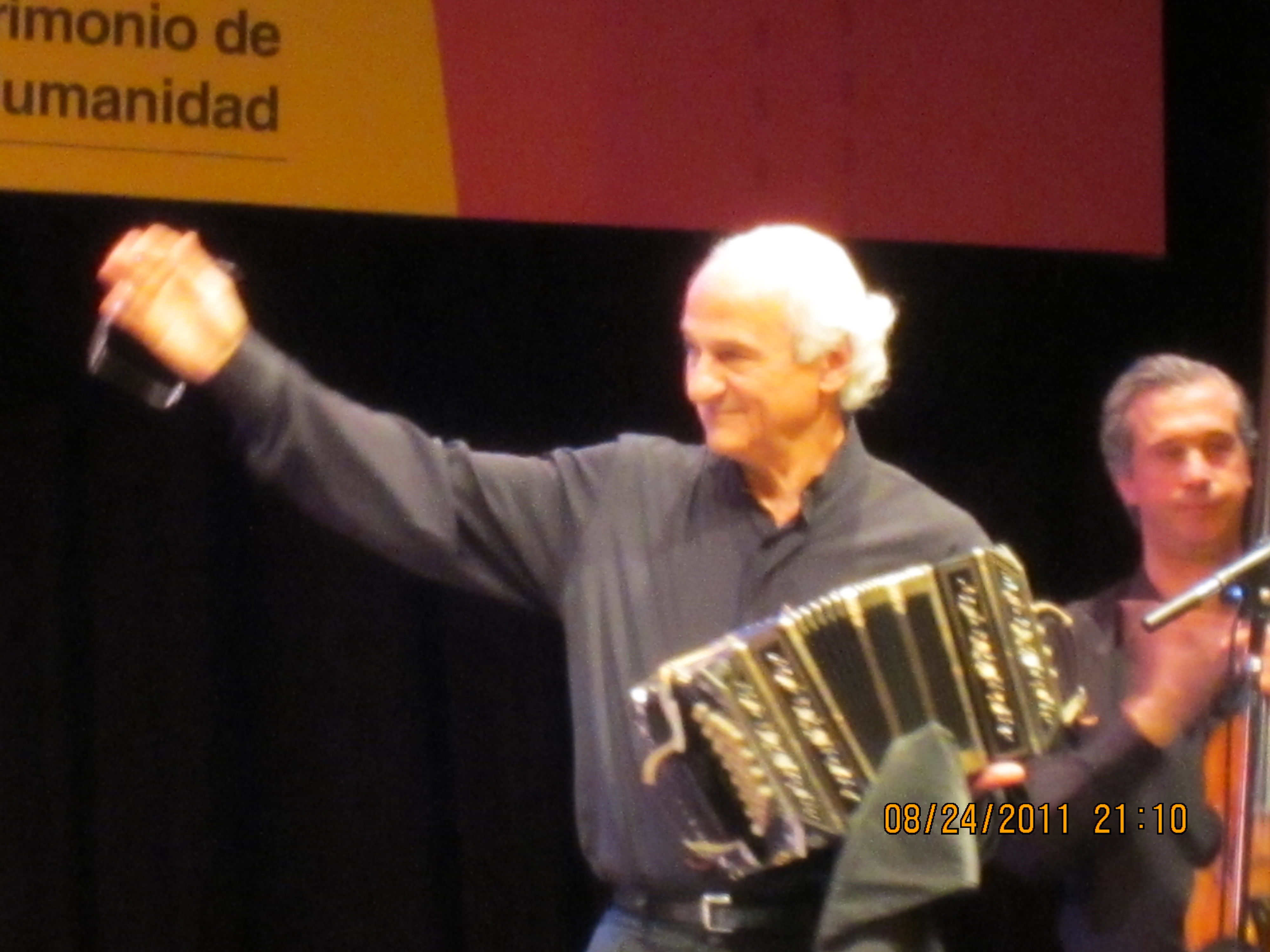
These guys are all virtuosos.  Like, this was the best live tango music I have ever heard.  It doesn’t get any better than this!   I sneaked these photos with no flash, Ben was my accomplice (his camera).  Here are the best ones of Nestor:
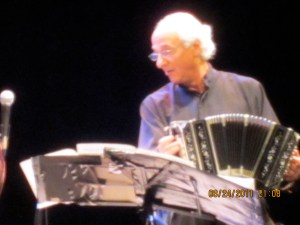
Nestor Marconi

Quinteto Marconi opened with El día que me Quiera, a long version that began with the melody of the Gardel arrangement but then began to weave in strands of Piazzolla-like meanderings.  OK, I’m no music critic, so I won’t try to pretend.  Just let me say that the  quintet played a selection of classic tangos by Piazzolla, Horacio Salgán and Bardi in their fantastic nuevo style, and a selection of Marconi’s compositions.  They ended with a hauntingly beautiful version of Adios Nonino, one of my favorite songs.  The sound was fabulous, the solos were amazing, it was all perfectly perfect.
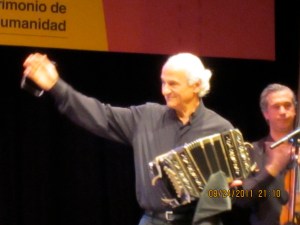
Nestor Marconi, 24 august 2011

Yesterday I had a conversation with Verónica Alegre, a tango teacher, about the many ways that tango impermeates Buenos Aires.   Tango is the breath of the city, the air that porteños breathe.  She said you can’t really know tango unless you’ve walked the streets, sat in the cafés, danced at the milongas till dawn or your feet just can’t take another step, whichever comes first.  If you can’t make it all the way here to see for yourself, I suggest listening to Piazzolla’s Hora Cero (Zero Hour, Astor Piazzolla, 1921-1992).  It’s the name of a song as well as the title of one of his CDs.  In this tune you hear the heartbeat born of the second half of the twentieth century.  His work embodies both gritty urban sounds and polished, heart-breakingly transcendent melodies.  I would describe it as a fusion of traditional tango with jazz.  You hear traffic, sirens, the subway rumbling through: it’s all part of the rhythm of the city, the rhythm of tango.  And not just the noise of the streets, but the movement of the people who inhabit this unique city.  Verónica reminded me that the way people sit in a café and chat over coffee is part of the essence of tango.  The expressions on people’s faces as they talk, as they joke; the way they walk, the way they kiss (couples here kiss wherever and whenever they feel like it; how cool is that?).   It’s all part of the seductive rhythm of the city, the nightlife, the sounds and rhythms of tango.  Piazzolla took the tango he’d grown up with in the 30s and 40s, what we think of as the Golden Age of Tango, and morphed it into a new sound.  Ben noted that Gershwin’s An American in Paris is a similar reflection on a new landscape.  Each generation always reinvents their own expressions, recreates their world view.  In Piazzolla’s music there is dissonance, but it works to create the whole.  Just like not every street in Buenos Aires is beautiful, not every tree is green, no sidewalk is without a few cracks.  A perfect reflection of an imperfect world, our beautiful problematic world, our wabi-sabi world.  Some of us want to escape to another era (have you seen Midnight in Paris, Woody Allen’s latest?  Great flick!), but at some point one realizes that it is what it is.  Piazzolla moved on from that point, and created a new era in tango.
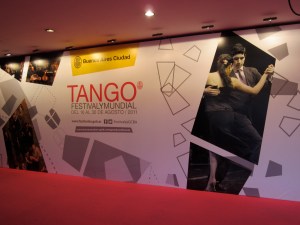
billboard at the Expo Center

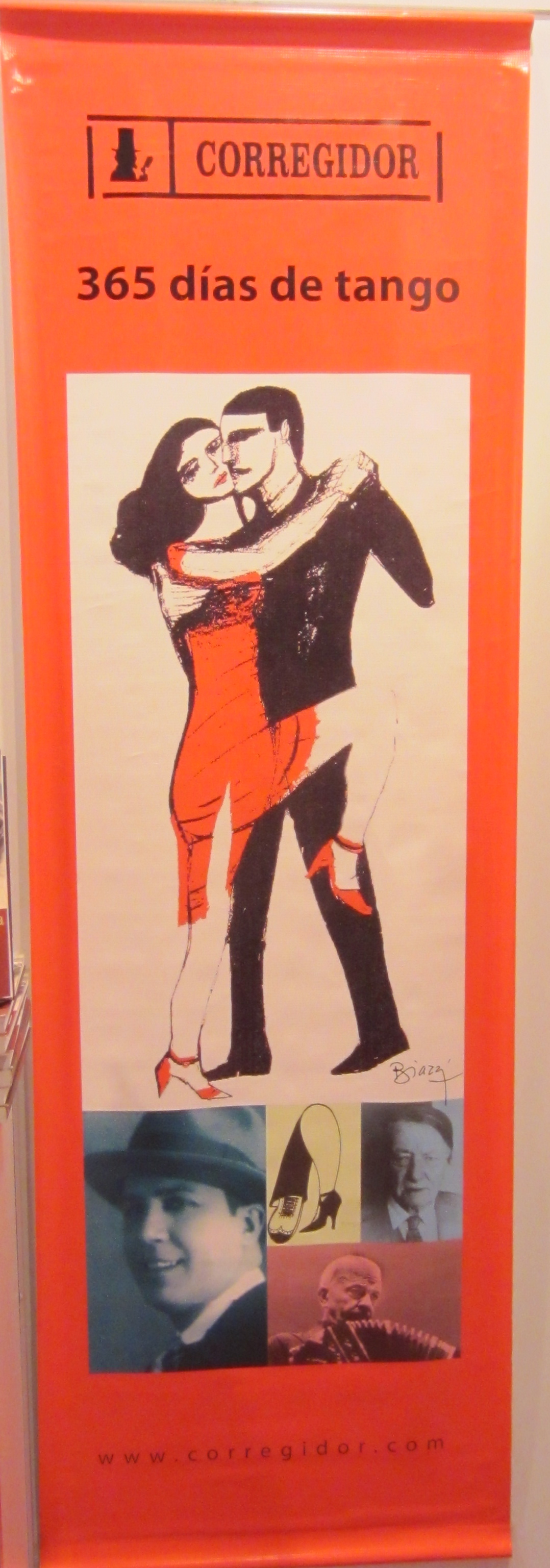
I’m going to end this post with a poster for my friend Roxy, who completed 365 days of tangoing every day; she’s now moved on to 1,000 days of…  more tango?  I think, and a month or two in Buenos Aires this fall.  ¡Felicidades, home girl!

Bravo Roxy! You completed 365 days of Tango!

My next post will be about the finals in Salón Tango, including a stunning performance by Juan Carlos Copes.  Who will be the world’s best tango dancers in 2011?
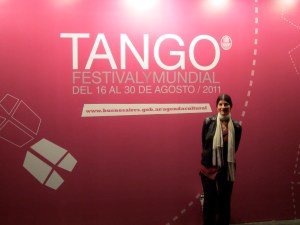
Ciao from Buenos Aires!
Canyengue, anybody?

This weekend we took a 4 hour canyengue workshop with Marta & Manolo.  We had taken a dozen classes with them in years past, but of course we forgot most of it.  Tango teachers count on people’s almost complete lack of recall; it keeps them in business!

Marta Antón & El Gallego Manolo

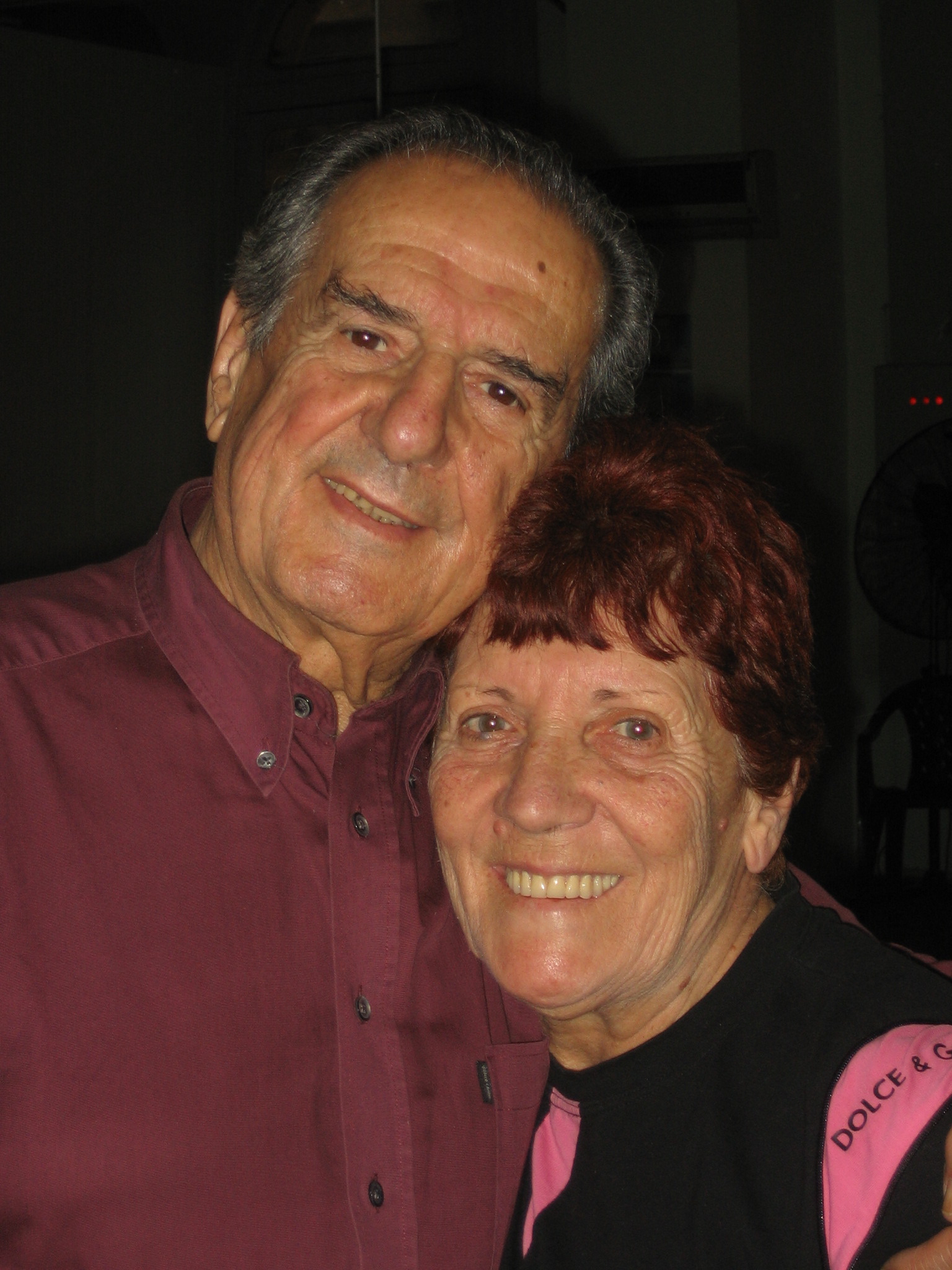
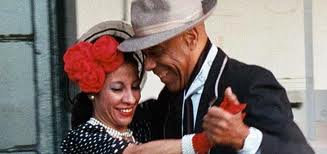
Marta Antón &  El Gallego Manolo have been dancing tango all their lives.  They specialize in canyengue, a dance which preceded tango. Canyengue was danced by prostitutes and other riff-raff  like sailors and stevedores in dockside cabarets and in the arrabales (sketchy areas on the edge of town) in the early 1900s.  In the old days it was considered sinfully provocative and sensual; in other words, body contact.  The word canyengue is of African descent, with the ye pronounced porteño style; blacks in Buenos Aires pronounced it caniengue.  The term caminar canyengue (canyengue walk) comes from the way the tough guys of the era walked.  Like, the ultra cool arrogant strut.  If you got it, flaunt it!   This type of walking is also called caminar arrabalero (the arrabales, as I mentioned, being the old neighborhoods, the fringes of BsAs back in the day, like Tita Merello in the movie Arrabalera [1945]).  You have to understand that, in tango, walking is not just walking.  A good tango walk is worth its weight in gold.  Everything else is built upon the walk.  I’m talking about a grounded, fluid walk.  It shouldn’t be any different from your normal walk, so long as you’re not a penguin.

Marta & Manolo today: still lookin' good!

Marta & Manolo have their own style of teaching.  They never line you up and have you do exercises, and they hardly ever put guys on one side & girls on the other, practicing the respective footwork until it’s time to try it out together.  No, they just tell you to start dancing and they come around and help you out more or less randomly.  It’s not a teaching style that works really well for everybody, but it does provide some 1-1 teacher time, which is of course extremely useful.

We have also had the opportunity to study with Facundo Posadas whom, as you tangueros know, also dances canyengue and talks about its history.

Facundo Posadas

Facundo is about the same age as Manolo who is in his 70s and has been dancing canyengue (and tango) since he was a slick kid from the barrio (gallego means Spaniard).  If you listen to canyengue you will recognize it as older versions of tangos that you already know from the 1930s, 40s & 50s.  In Buenos Aires you can go to milongas where people dance canyengue.  MOCCA is the acronym of their community: Movimiento Cultural Canyengue Argentino, and Marta & Manolo are its founders.

Canyengue dancers Lukas & Karolina from Berlin

Marta & Manolo spent 11 years touring all over the world, from 2000 to 2011.  They lived and taught in Hanover, Germany for 4 of those years, where Marta learned to speak German.  She also speaks Italian, a little English, and even less French.  Despite being in their 70s Marta & Manolo still teach several days a week, like our friends back home, Norm & Anne Tiber. Before they taught at EAT (the Escuela Argentina de Tango) they were teaching at another dance studio (there’s lots in Buenos Aires.  More dance studios per capita than any other city in the world!  I think).  Octavio, the jefe of the tango school, was telling me the other day that he happened to walk into their class when it was just ending, in the midst of fervent applause and tears from the 25 or 30 students. “Qué pasa?” he asked.  The students explained that Marta & Manolo were dancing the way they remembered their parents and grandparents dancing,  The kids were overwhelmed with a sweet mix of appreciation, nostalgia and full hearts.

are we stylin' or what?

I had the same feeling today.  Ben and I, and another student (a Brit on her way home from the Middle East), were listening to Manolo talk about how it was in his day, growing up with tango in the 1950s.  He said they really dressed up in those days.  They wore jackets and ties; they were really dapper and fastidious.  Their toughest critics were older brothers and cousins.  When Manolo would get dressed to go to a milonga, his older brother’s friends would look him over.  “Nene,” (kid, baby) they would say, poking him in the shoulder, “you better look sharp!”  Before looking around to ask a girl to dance, he would straighten his tie, check his cuffs, trousers, hair; then he would give the cabeceo, the “dance with me?” nod to the girl.  He always kept a folded handkerchief sprinkled with cologne in his left palm, between his hand and the girl’s.  When the dance was over, he would escort her off the dance floor back to her seat.  And if he danced more than 4 or 5 dances with the same girl, the older brothers’ friends would come up to him, poke him in the shoulder: “You better watch out, nene, her cousins saw you dancing with her!”  But before he began going to milongas, his older brothers and cousins made him pass his “exams.”  They invited one of their girlfriends, a seasoned milonguera (tango dancer) over to the house.  Manolo had to dance with her.  He was terrified!  He was so frozen up he could hardly dance!  She was a good sport, though, and he finally loosened up enough to dance her adequately around the pista (dance floor).  Finally, he could tag along to the milongas, and not embarrass himself or his family.

Manolo said that the first time he ever danced with Marta, almost 40 years ago, he was really intimidated.  But when the dance was over, she looked at him and said, “Eres el mejor!”   (“You’re the best!”)  His heart melted!  But she apparently played it cool, because it took him another 16 years to win her over.  Once, after one of her tango performances, he presented her with six (6!) dozen roses. Evidently, she wasn’t too impressed with him at that moment; she tossed the roses in the trash! Years later, during an interview in Spain, the incident of the six dozen roses came up.  How did Manolo feel when she deconstructed his offering?  “La muy hija de puta!” he said.  No need to translate that, my readers know their bad words in Spanish.  The Spanish paper wrote: “when Manolo says ‘hijo de puta!’ it’s a term of endearment!”

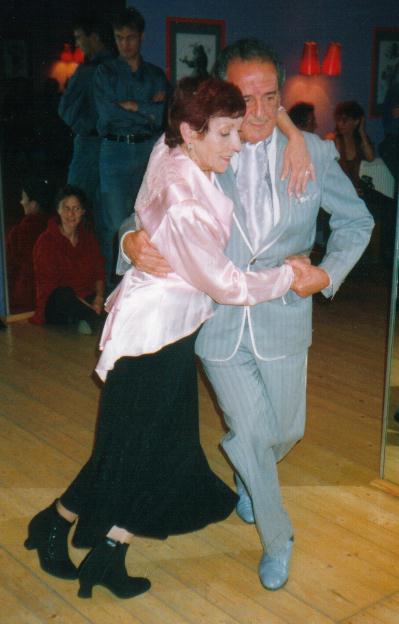
Marta & El Gallego back in the day!

When Marta heard him telling the story today, she walked over and joined us.  Manolo was positively radiating from the telling.  His outburst of feeling was contagious, and my eyes filled with tears.  “Porque lloras?” he asked me.  (“Why are you crying?”)  Marta asked me if I was okay; they were really concerned for a few seconds. I told them it was just tears of joy feeling their happiness!  Everyone laughed and Manolo said that a person who allows themself to express their genuine feelings is very fortunate.  And now I feel like part of the family… we have laughed and cried together.

Canyengue Addicts Anonymous!

The last advice Manolo offered, (and this is not just for you guys out there, the same goes for us girls, I think…) is that a man has to marry twice.  The first time is to practice, and the second time to enjoy.  Practice being a good partner, and hopefully you’ll get it right the second time around (or the 3rd or 4th . time?).  And speaking of practice, when Ben & I get decent enough at canyengue, I’ll post a photo!  I promise!  We are also taking a really fun Chacarera and Zamba class on Thursday nights: stay tuned for more!  (note: Zamba is not Zumba!)

*Special Note to my Readers:  Thank you so much for all the emails you’ve sent me, and the beautiful comments you’ve posted!  My readers are the best!!  You can subscribe (for free!) to my blog, which means you’ll get an email notification every time I publish a new post.  Just go to the bottom of the blog and you’ll see what to do.

Over and Out from Tangolandia!  Ciao!

Barrio Norte

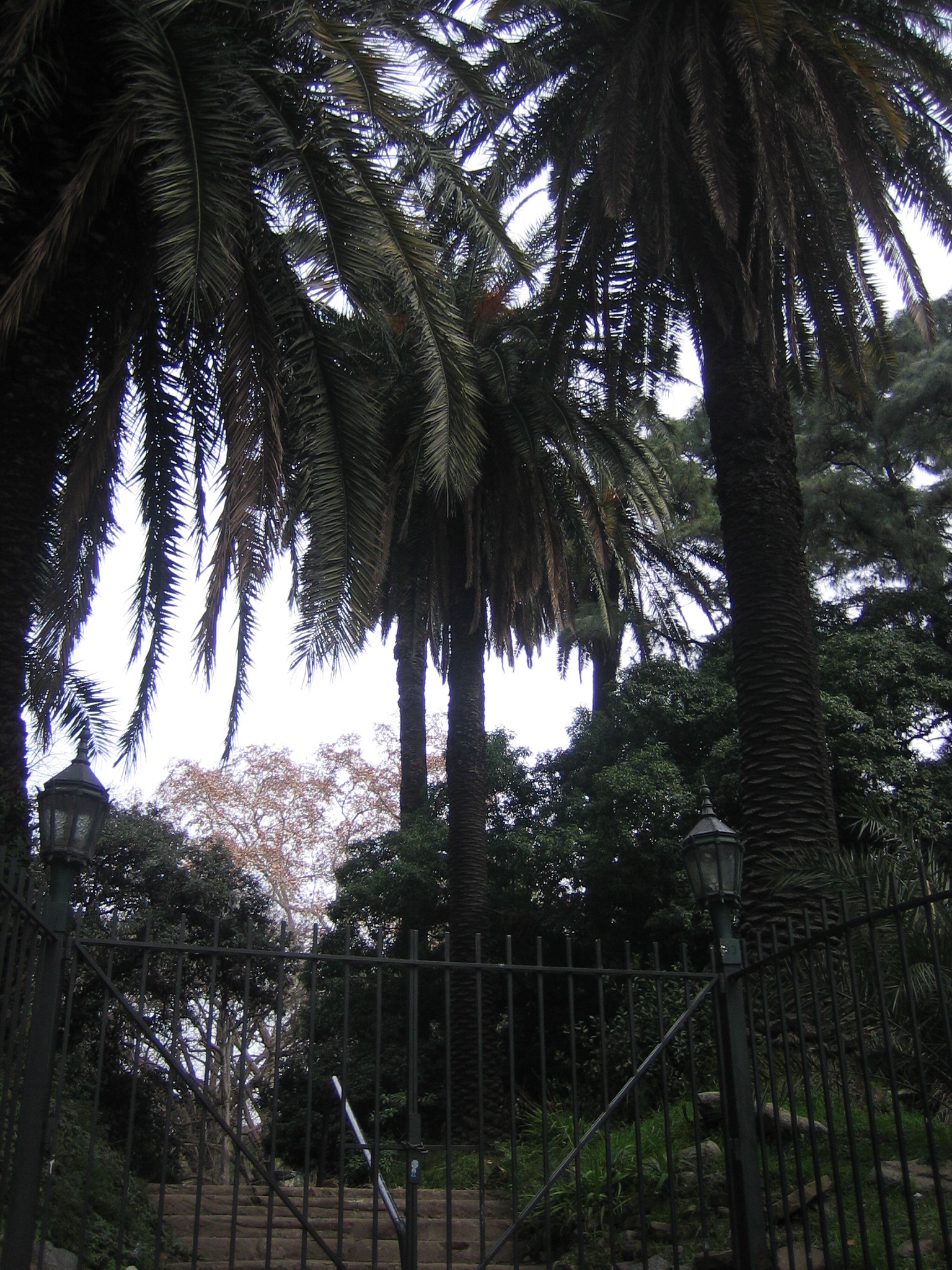
Good morning from Barrio Norte.  Also known as Palermo Botánico.  The invisible line between my neighborhood and adjoining neighborhoods is open to interpretation and negotiation.  We are half a block from the Botanical Gardens:

el Botánico

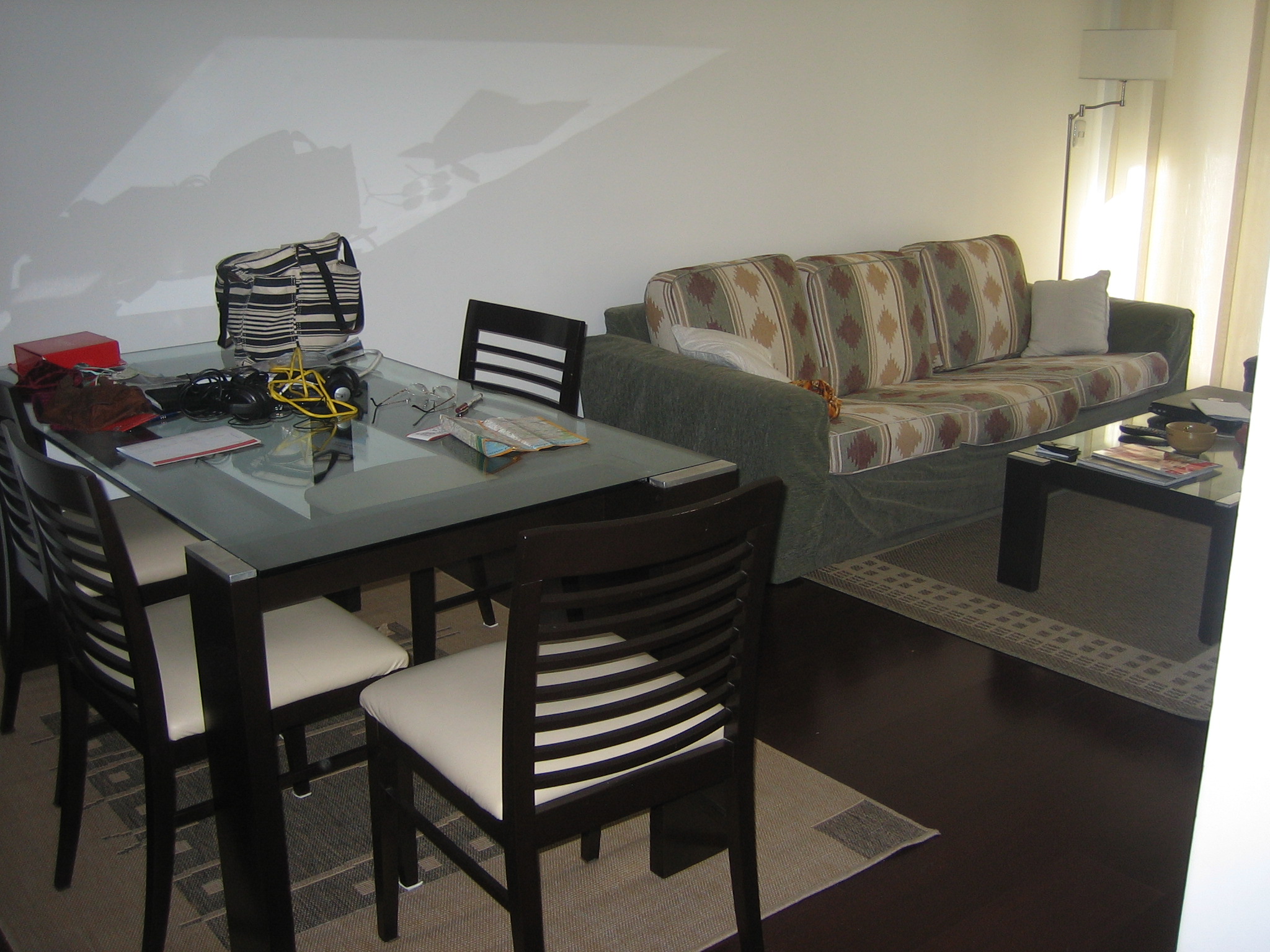
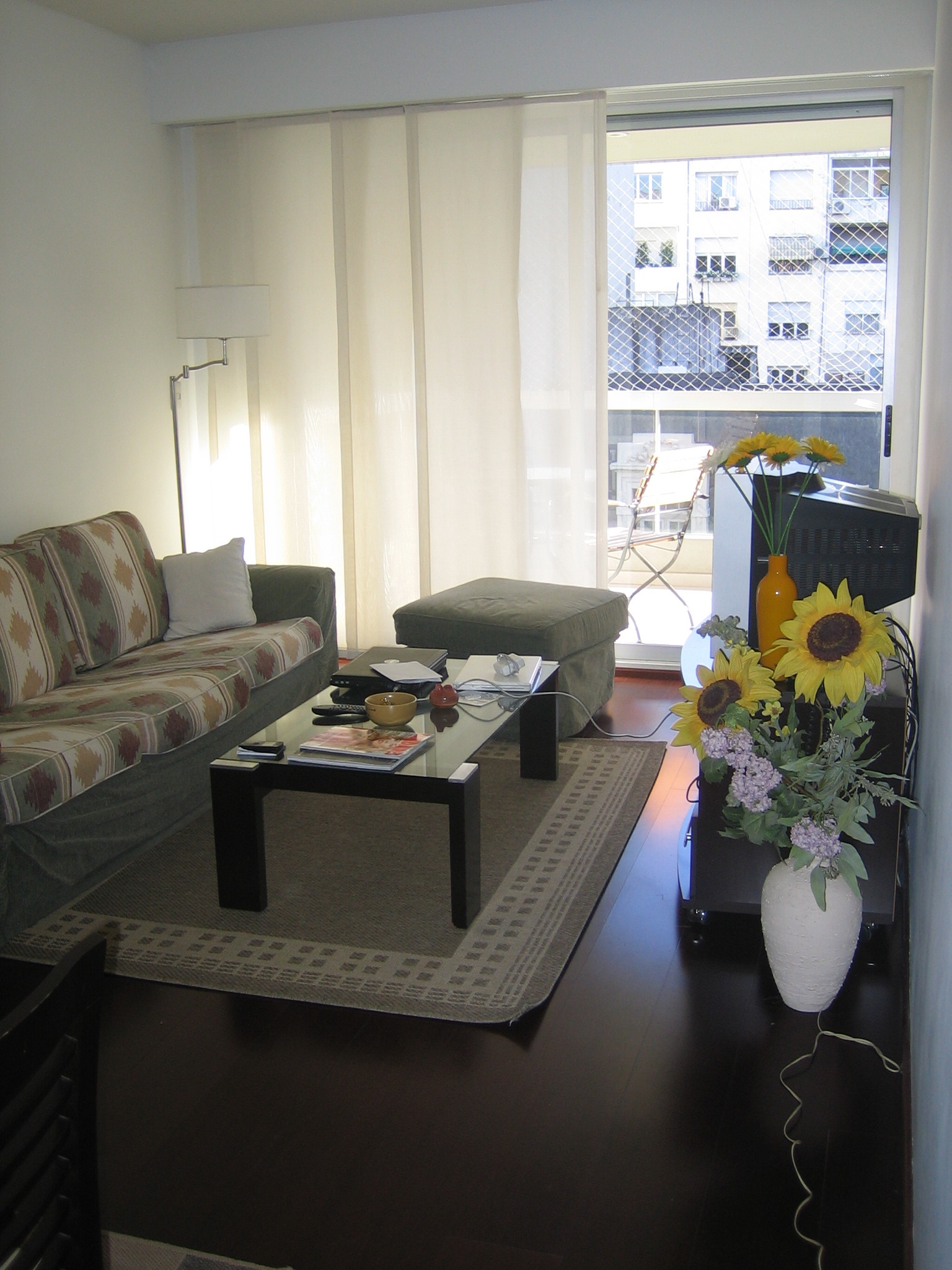
Our apartment is awesome, though sadly lacking in Art.

dining area

Since I took that photo we moved the table up against the wall lengthwise to give us a small dance practice area.  The living area:

home sweet home Buenos Aires!
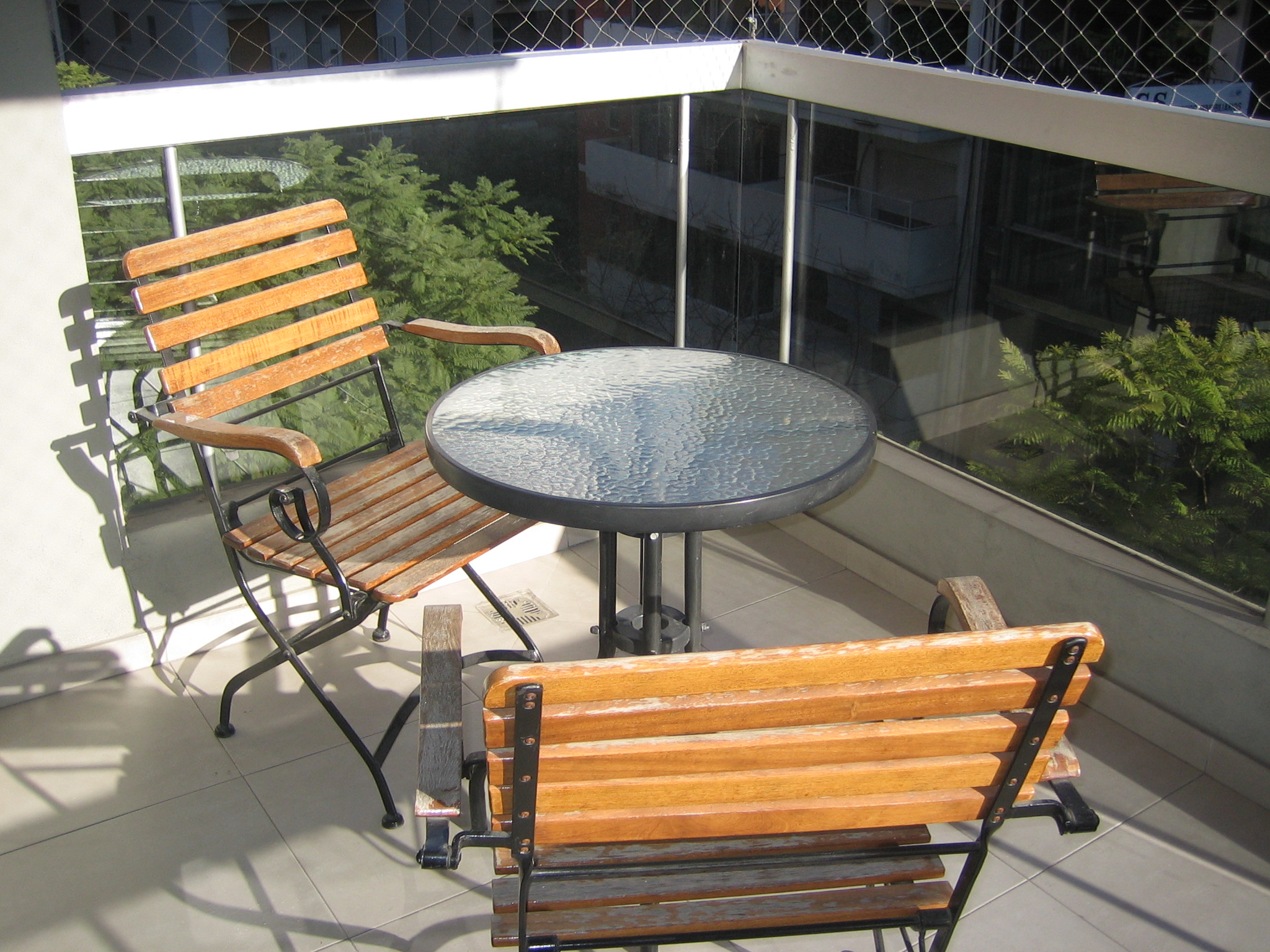
Our landlady says the flowering trees at the front of the building have beautiful pink blossoms all spring!  Jacarandas, I think she said.  But this week has been downright cold, dipping into the upper 40s at night.  Brrr!!!  At least we’re not in Patagonia.  This little balcony will be perfect for sipping those mango mojitos this Christmas!

our balcony

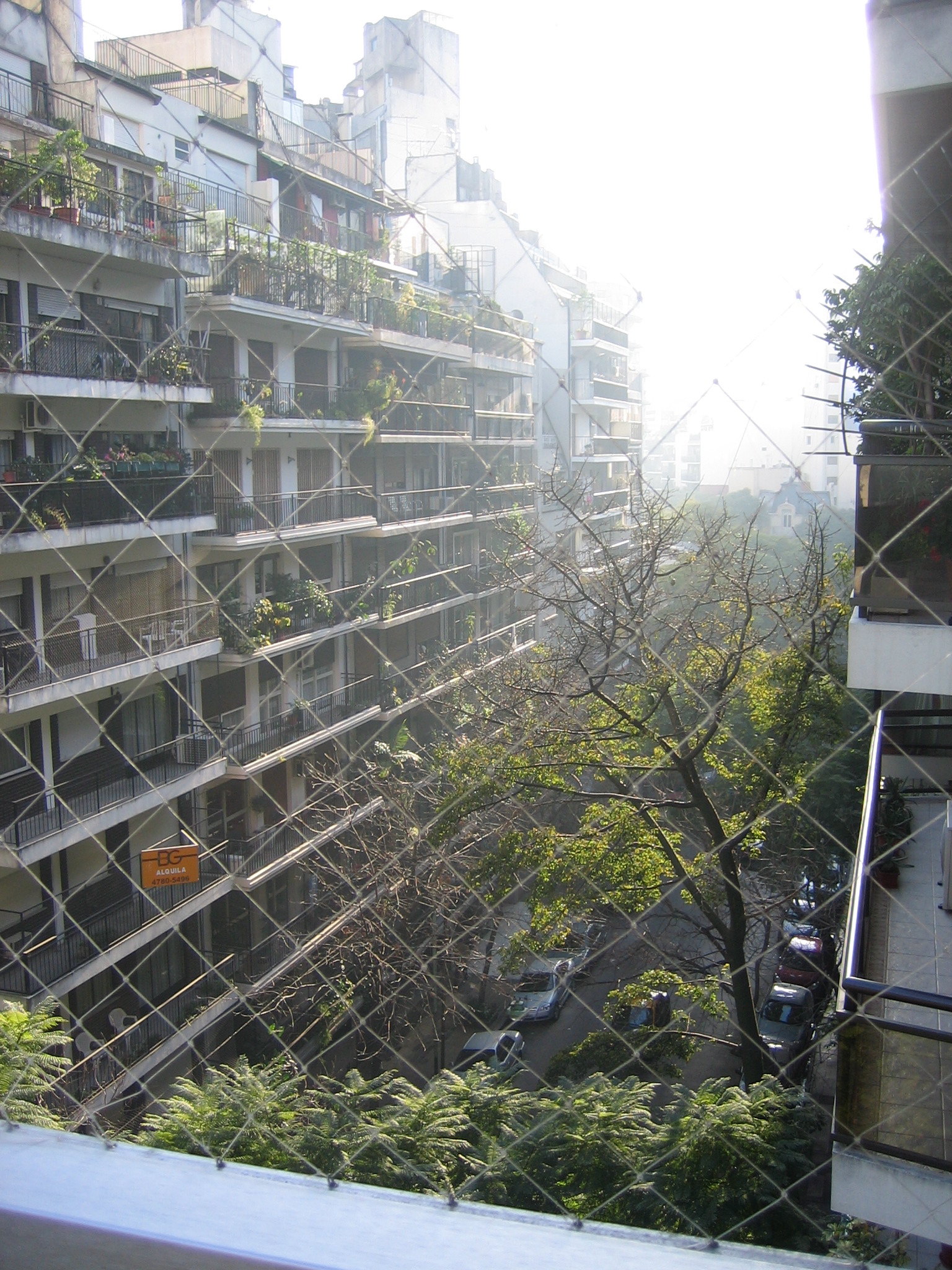
And, not last or least either, the view of the street from the balcony.  Despite being a low-key, residential street, Ugarteche can be pretty darn noisy!  If we keep the tv tuned to the soccer channel it blends with the traffic and it all evolves into a pleasant white noise (what kind of evolution am I talking about?  the backwards kind… i.e. almost everything since they invented petroleum products, gunpowder, and those darn computers).

Ugarteche in winter

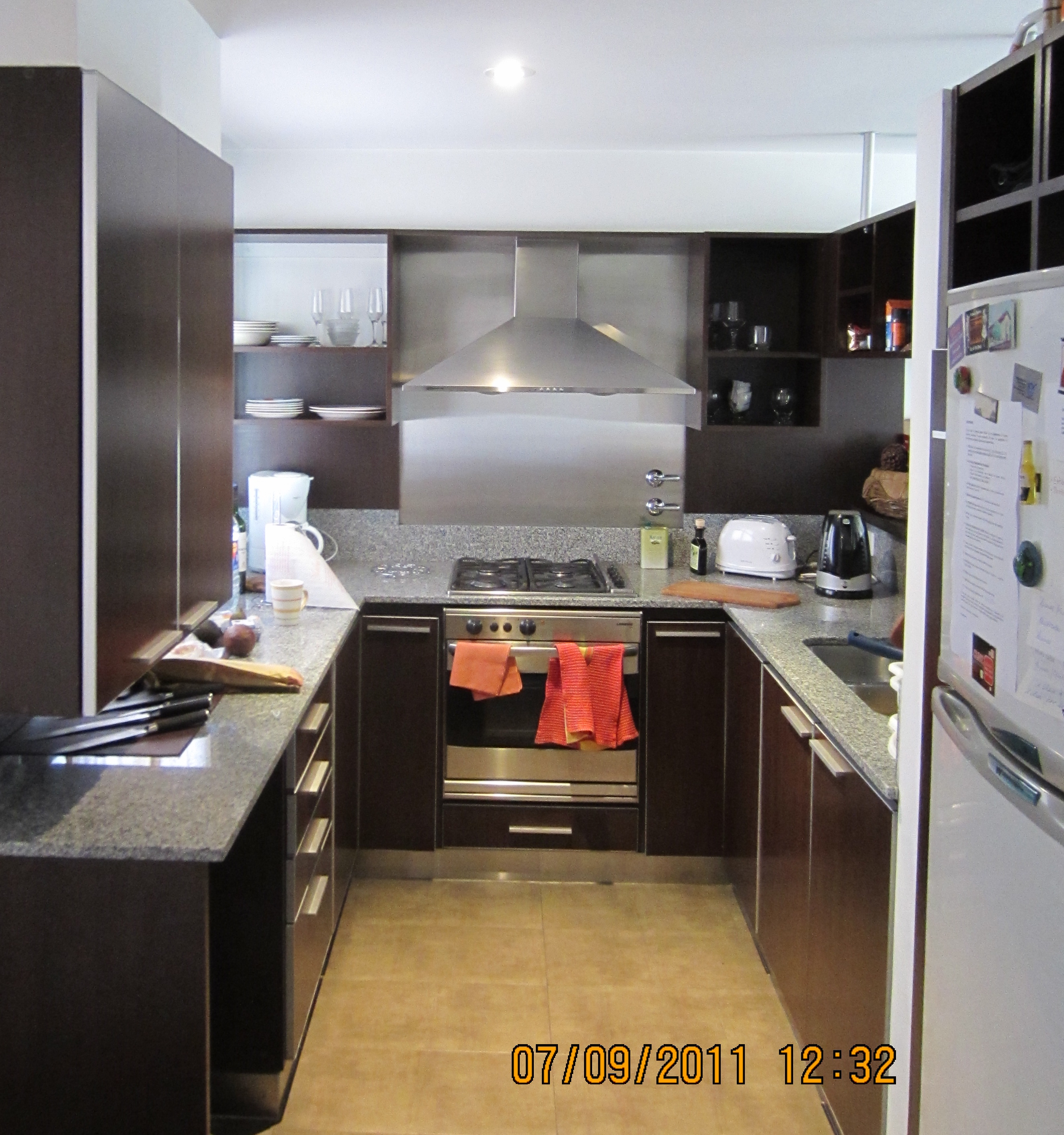
Here’s where we cook.  On the left is a window & to the right a pass-through to the dining area. The cooktop is gas, and there’s a real oven.  The vent hood actually works, too, unlike the one at my ranch.  That comes in real handy when you have a guy that is such a fabulous cook…

our beautiful kitchen

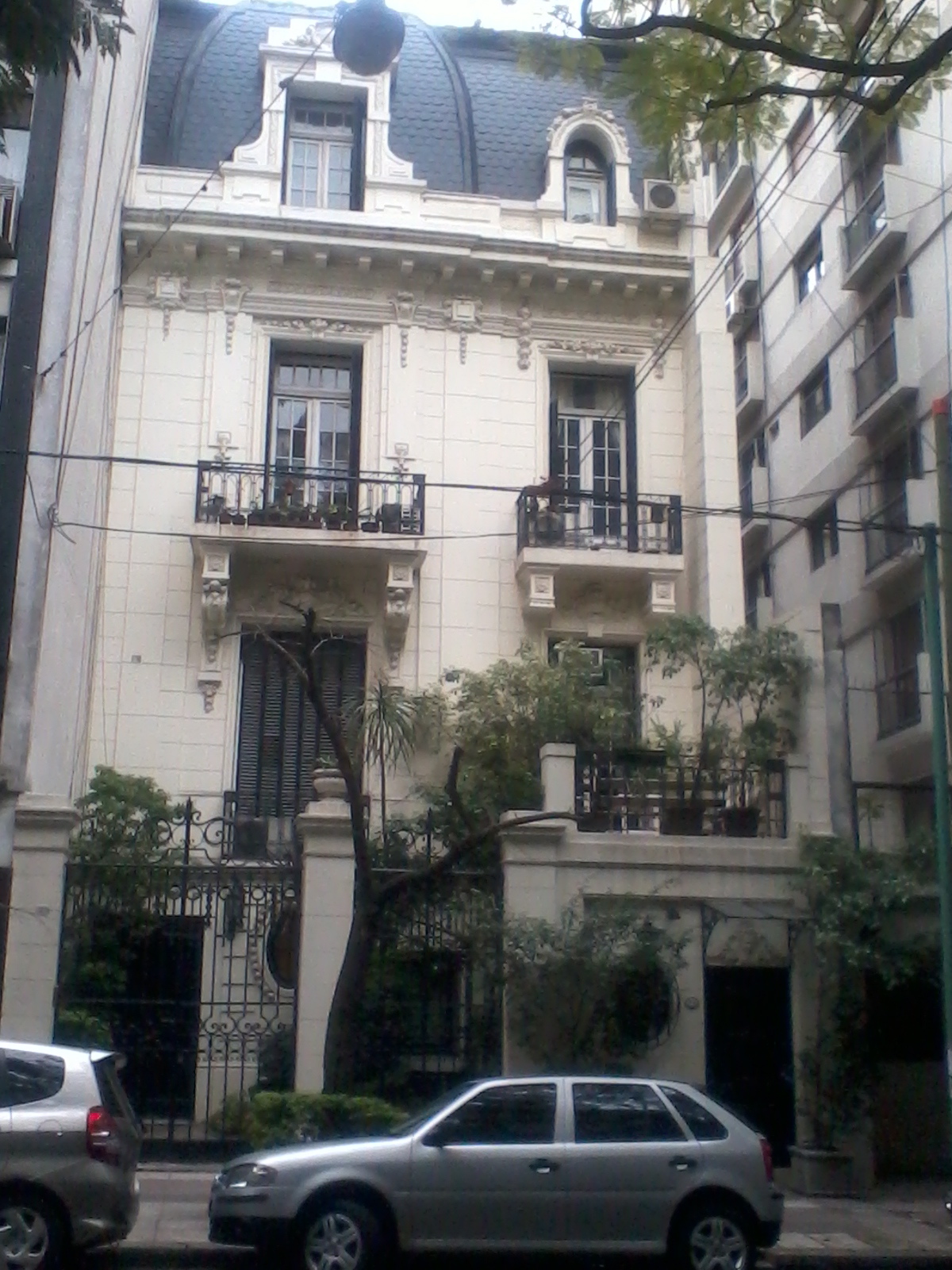
Across the street is an adorable French mansion flanked by 10-story apartments:

We walk everywhere!  We don’t have a car or even bicycles. We take the subway to go downtown, and one of these days very soon we’re going to take a bus ride out to the Mataderos district where dwells the legendary tango shoe maker extraordinaire.  Although all the walking we do is great exercise (as if we don’t get enough dancing Tango!) it is not without risk.  Crosswalks are a target zone for humans.  The few bike lanes we’ve seen offer no protection whatsoever from moving vehicles.  Bicycle riders, motos, Vespas, strollers, little old ladies, no one’s safe!  When you’re behind the wheel, you have the right!  Homicidal taxi drivers are not to be trifled with, and anybody riding a bicycle must be a suicidal maniac!  However when the traffic is backed up, like during rush hour, a bicycle could be transcendent.

Rideshare stand in the Plaza Italia

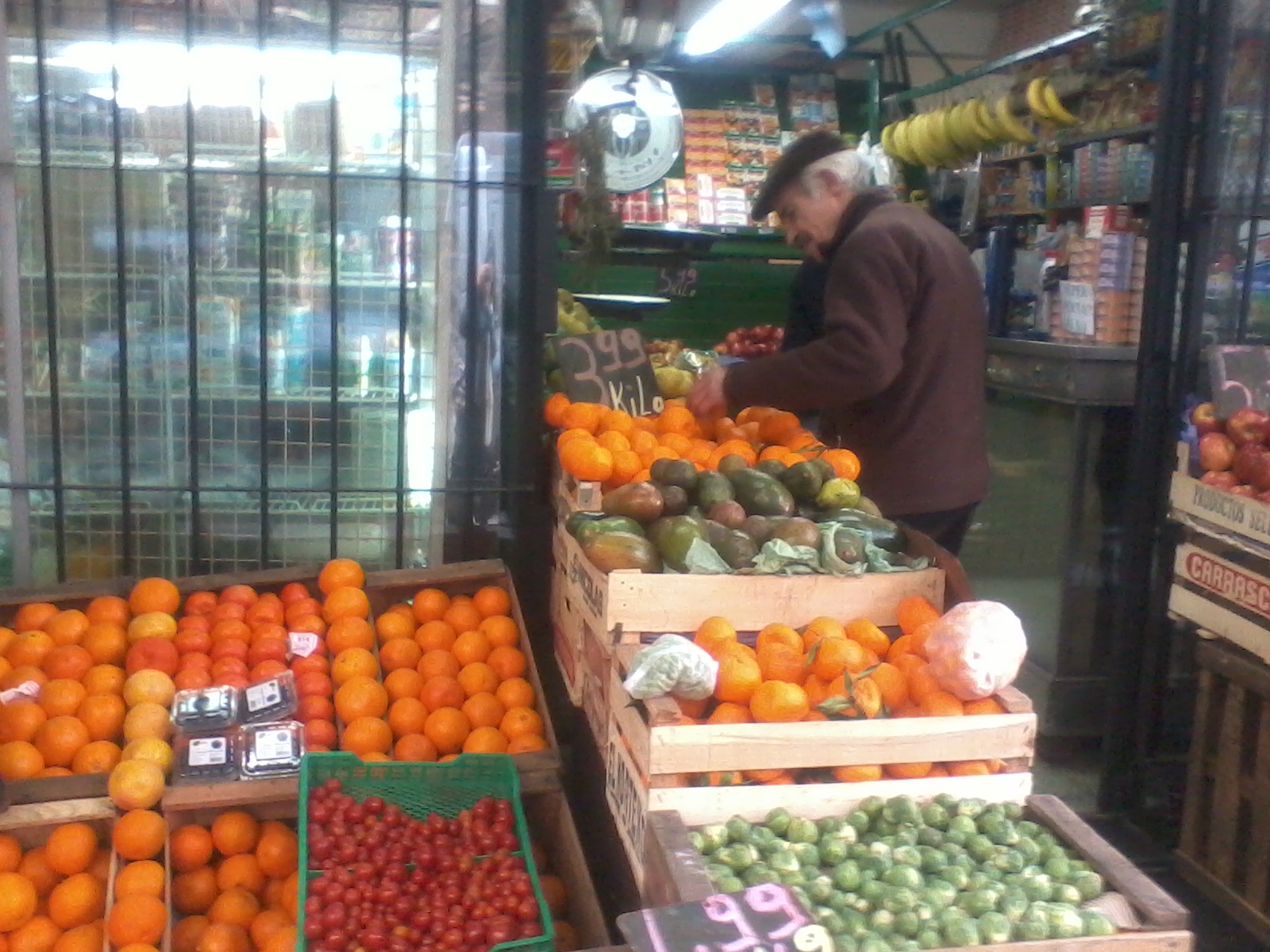
Okay, let’s go straight to food.  We have a great fruit & veggie place just around the corner.

the produce man

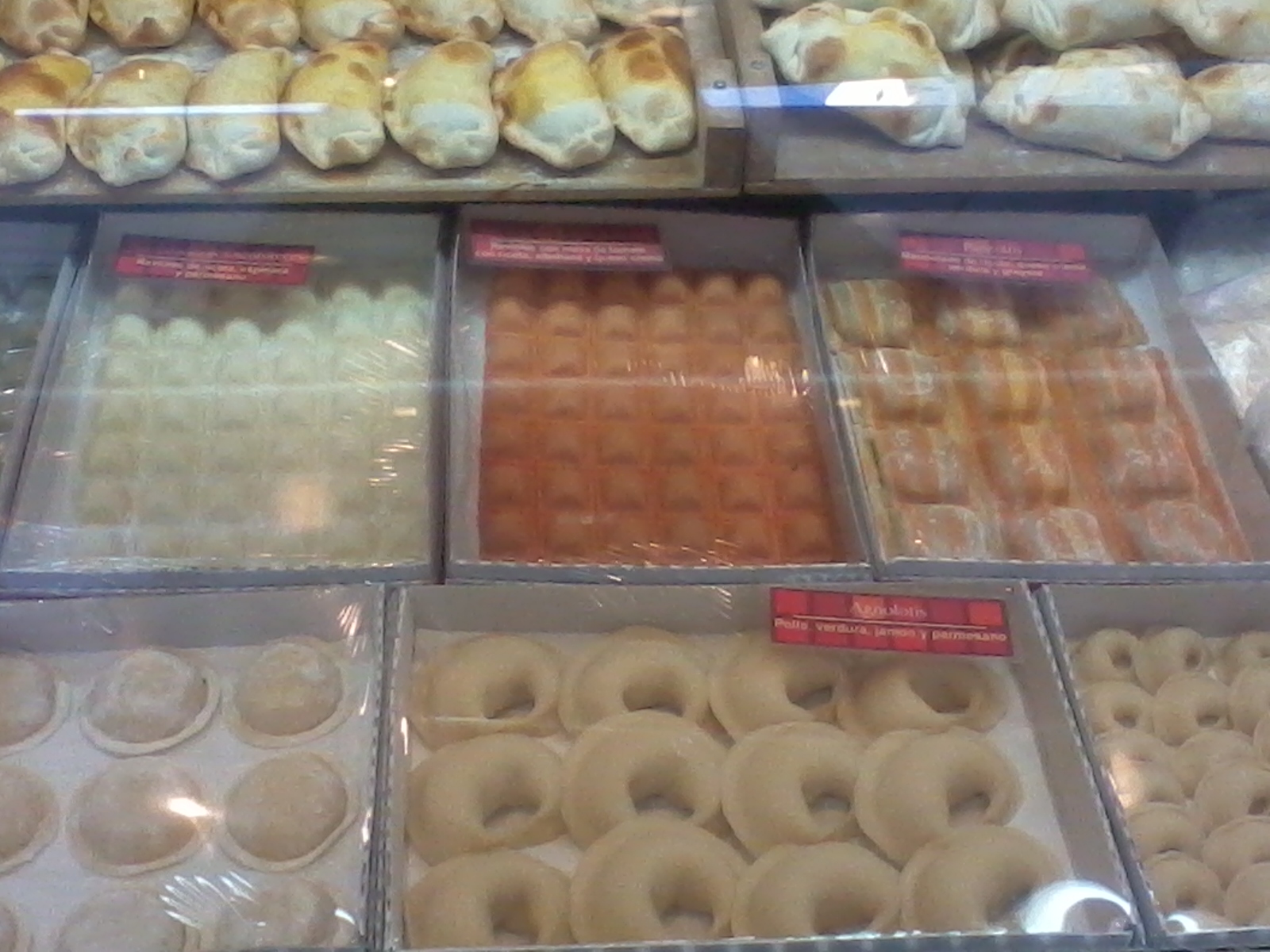
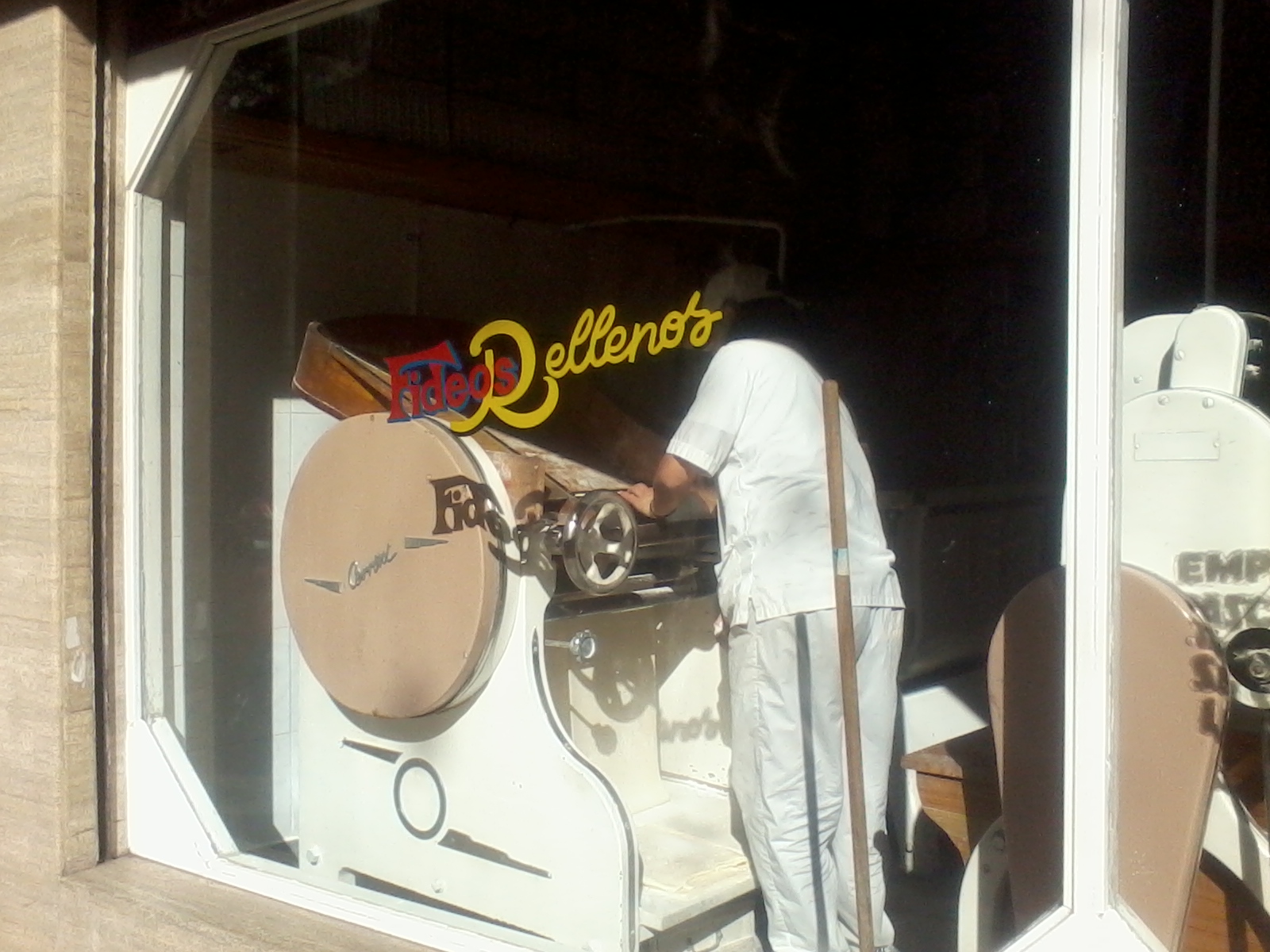
Freshly made pasta is available in pasta shops with a variety of fillings.  We bought a pound of fresh ricotta-stuffed rigatoni the other afternoon for only $3 (special of the day).  Please note the empanadas on the upper shelf.  Empanadas are really yummy too.  Ben wants to take an empanada-making course here in Buenos Aires so that when we get back to California and he opens his café-restaurant, he can serve homemade empanadas along with fresh artisan bread and plenty of café cortados.

pasta fresca

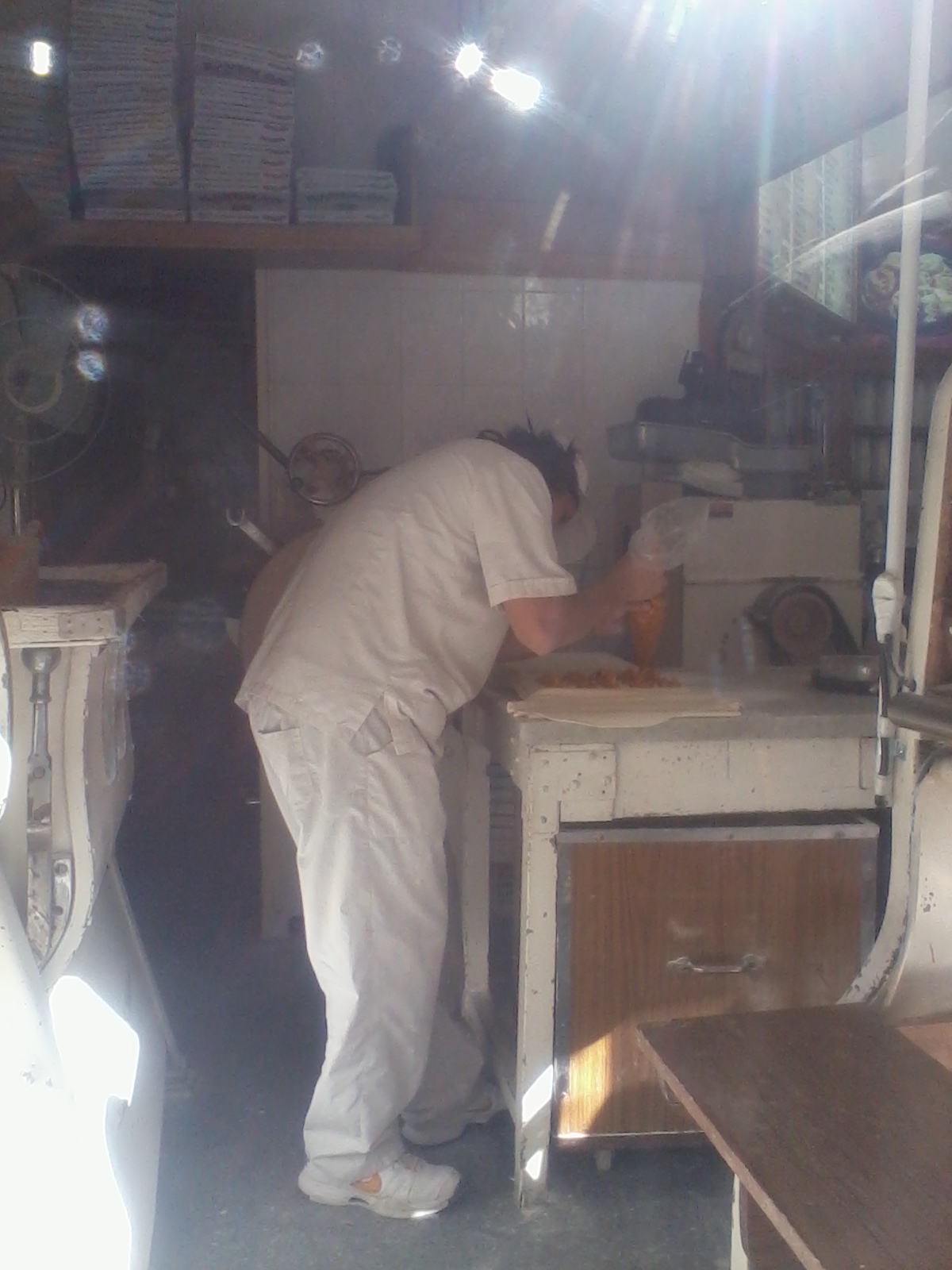
Here’s the young ravioli-maker caught in the act at El Raviolón, on the corner of French and Sanchez de Bustamonte:

the Ravioli maker

butternut squash filling

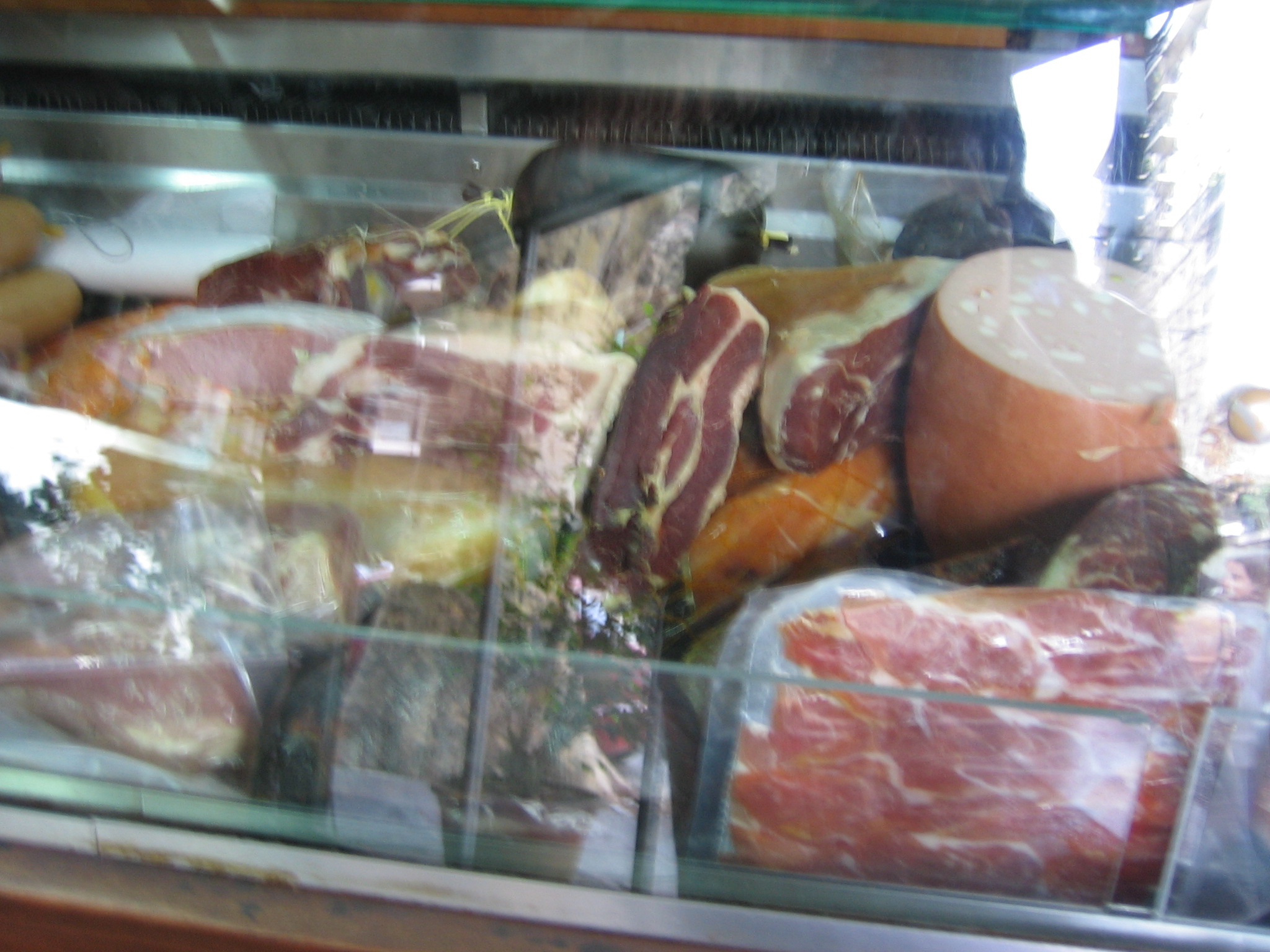
To add to the amazing fresh food available within blocks of one’s apartment, there are also lots of delicatessans, this one is our favorite for its impeccable prosciutto imported from Italy and its faultless Serrano ham imported from Spain.

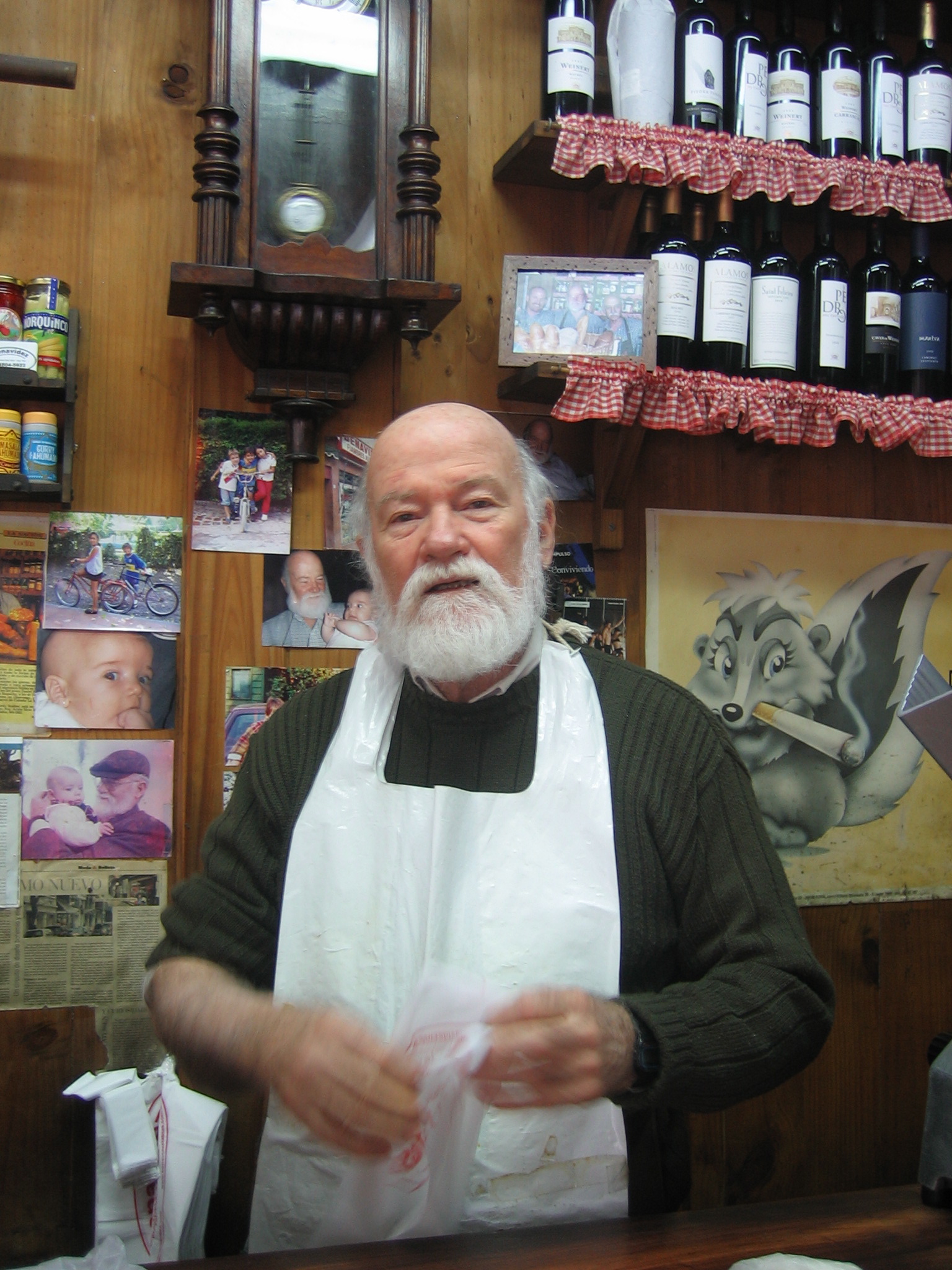
Fiambres Benavidez

Sr. Benavidez looks like he could be Santa Claus or a biker from Sturgis, but even though he’s not smiling in the photo I swear he was a second before and the second after.  He is  friendly and likes to joke with his customers.  He has a basket of fresh bread every day but Mondays (cause the panadería takes Sunday off); not just any ol’ bread, but really good artisan stone-hearth baked bread, from baguettes to pan integral (whole wheat) to ciabatta (my favorite Italian bread) and pan del campo (country style).  They cure their own ham (it hangs from the ceiling) and also have wine, cheese,  jams and condiments.  Just walk in the door, the aroma is dazzling, and if you look hungry, they give you samples to help you make up your mind.

Señor Benavidez

Like most shops, they are open in the morning, closed for lunch/siesta from 1 – 5 pm, and then open again till 9 or 10.  Restaurants don’t open till 8 for dinner, and stay open well past midnight.  You are never given the check until you ask for it… even at a streetside café.  Relax, you’re in South America!

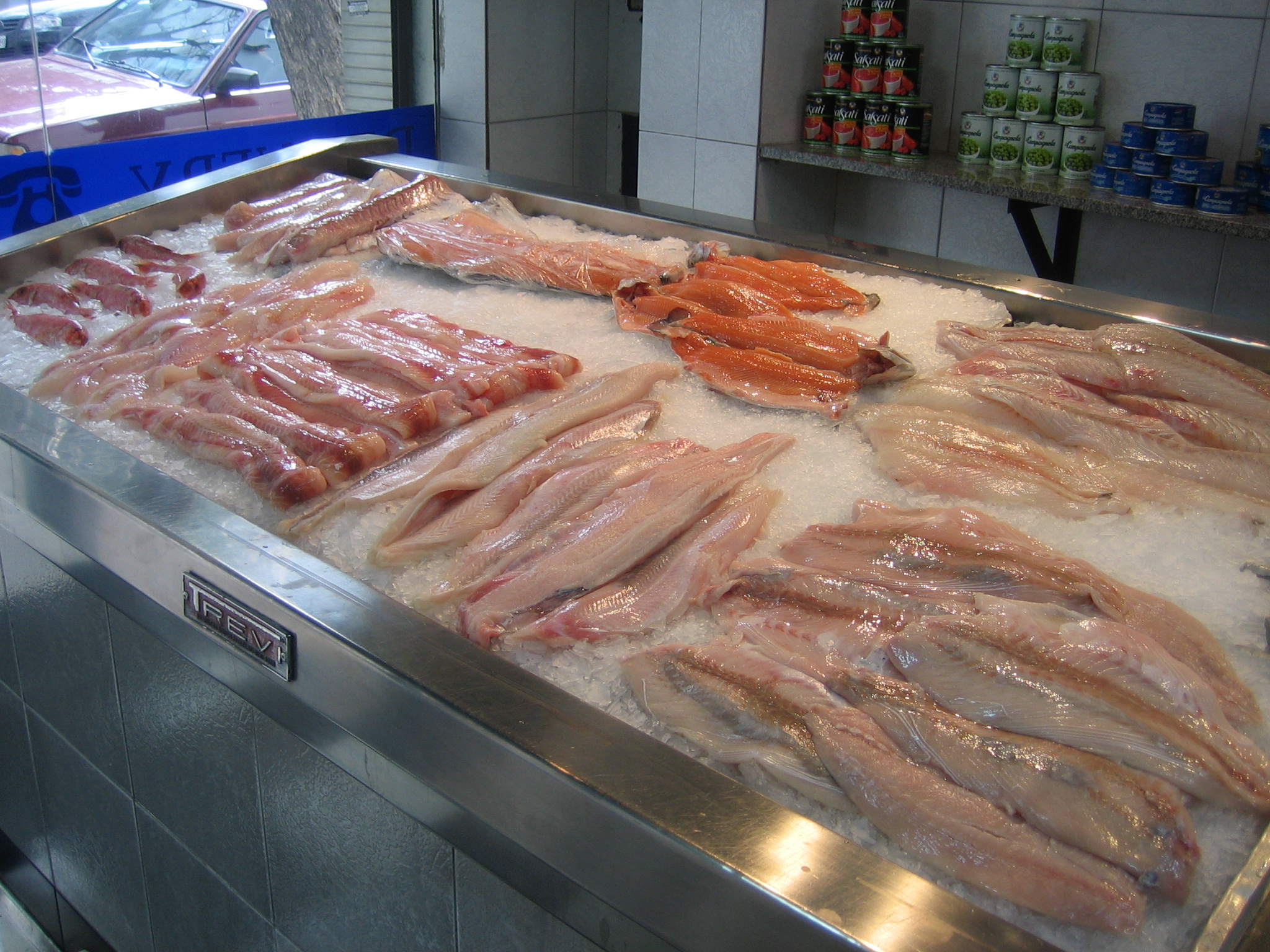
a fish market on Ugarteche

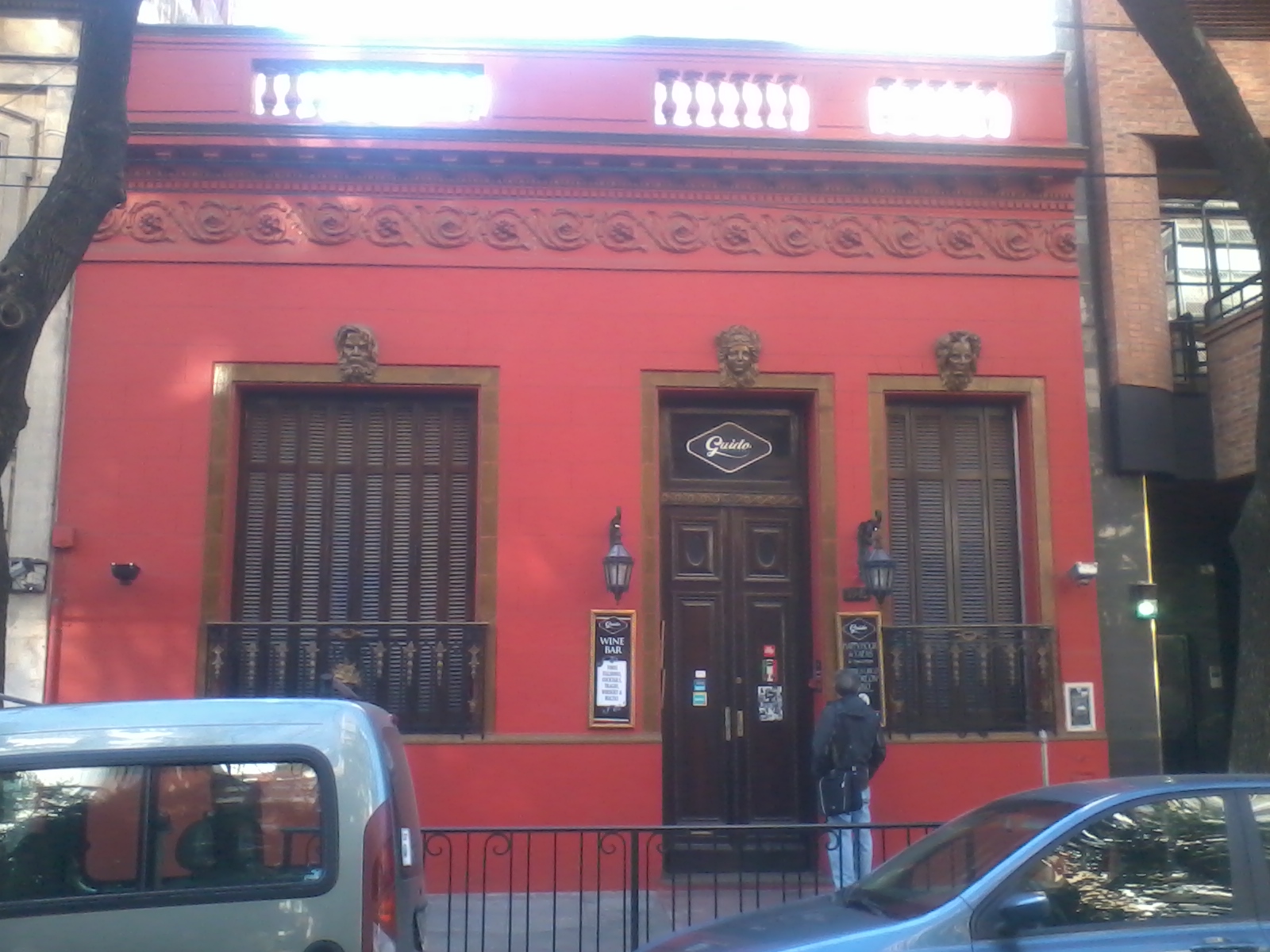
This gorgeous chili-pepper red facade is Guido’s, a restaurant & tapas bar.  Unfortunately it wasn’t open when we walked by… way too early!

Ben at Guido's

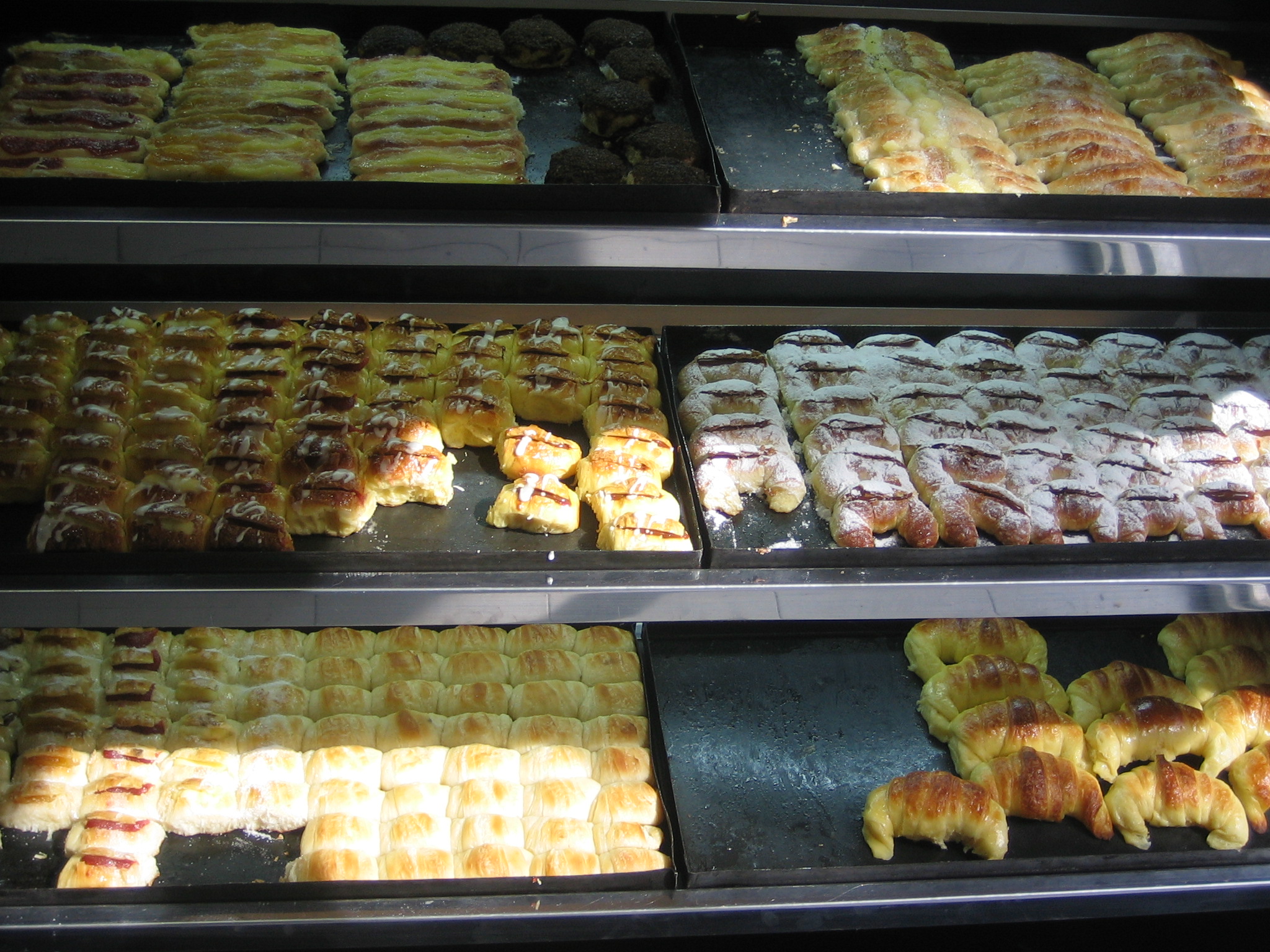
And you can’t escape medialunas to go with your coffee.  They’re available everywhere.

all kinds of medialunas!

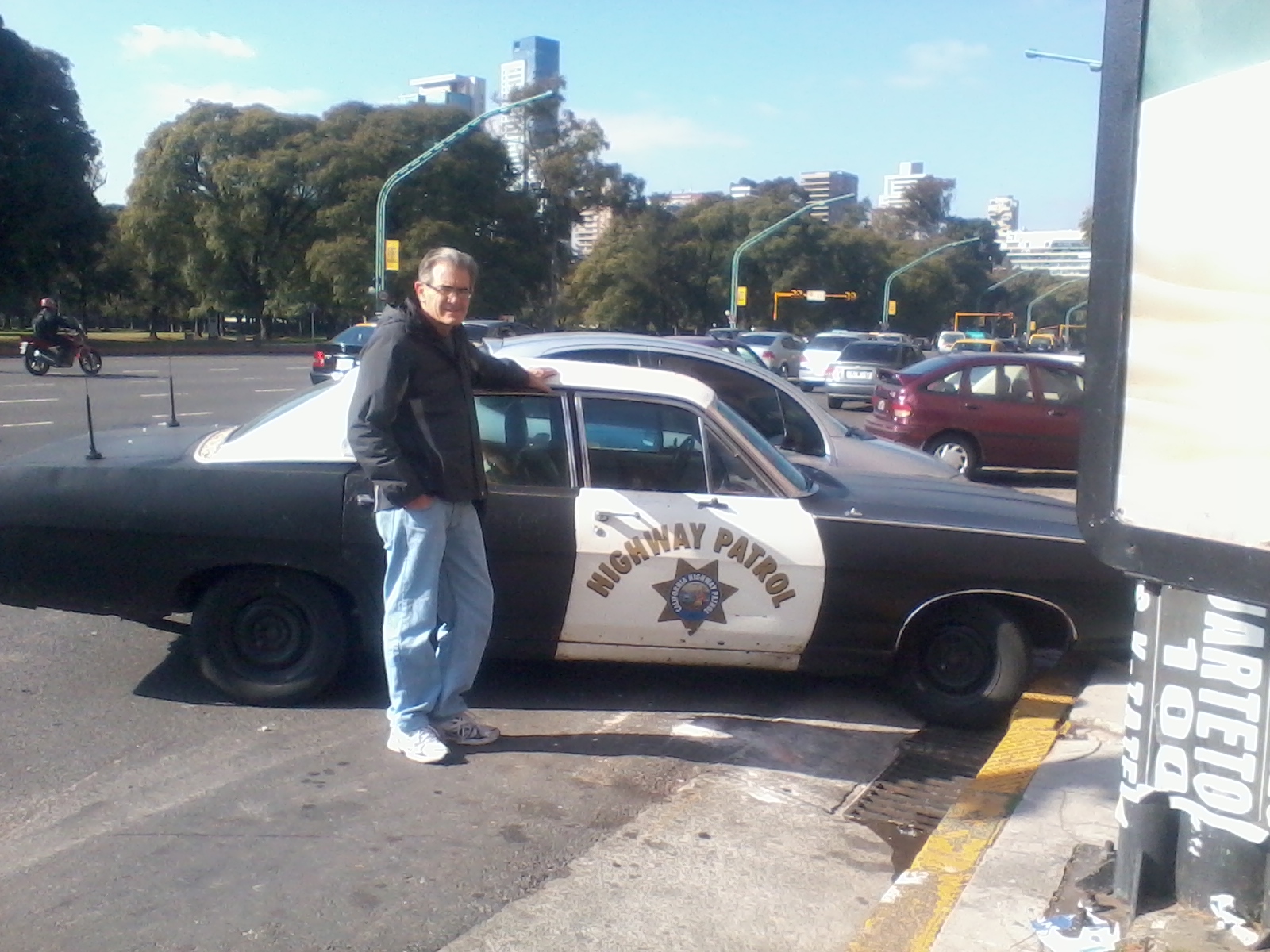
I know this post is way too long but there are a few more pix that are begging to be flown.  We came across this thrashed but apparently still running ’66 CHP cruiser on our scenic march to the Museo de Bellas Artes (a superb collection of art from medieval to post-modern and admission is free).  The red & blue lights are mounted on the dash.  Will the owner please contact me?

Chippie Ride and the Lawman

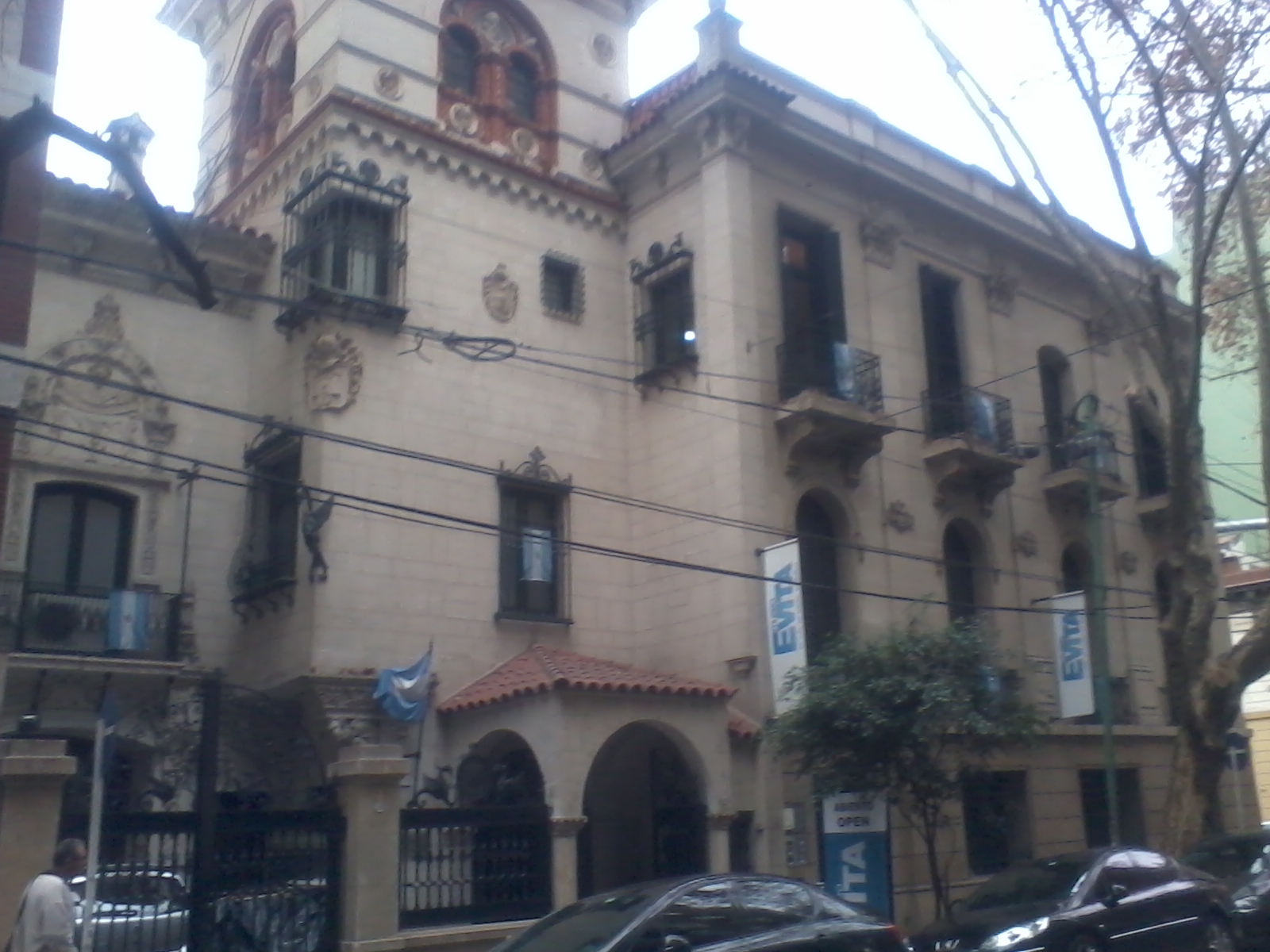
We also spent a few hours touring the Evita Museum.  If you haven’t heard the Evita Perón history lesson, just download the Madonna-ized version.  This historic home/orphanage is really something.  Some of her shoes are on display, definitely a chick-attraction.

Museo Evita

On one of our previous trips to Buenos Aires we had an apartment next door, and we kept telling each other we were going to check it out, but we never got around to it.  Too busy with tango classes in the afternoons and milongas till 3 or 4 am.  This time around, we’re taking it a bit more easy, and making time for some sight-seeing.

the Tango Zone

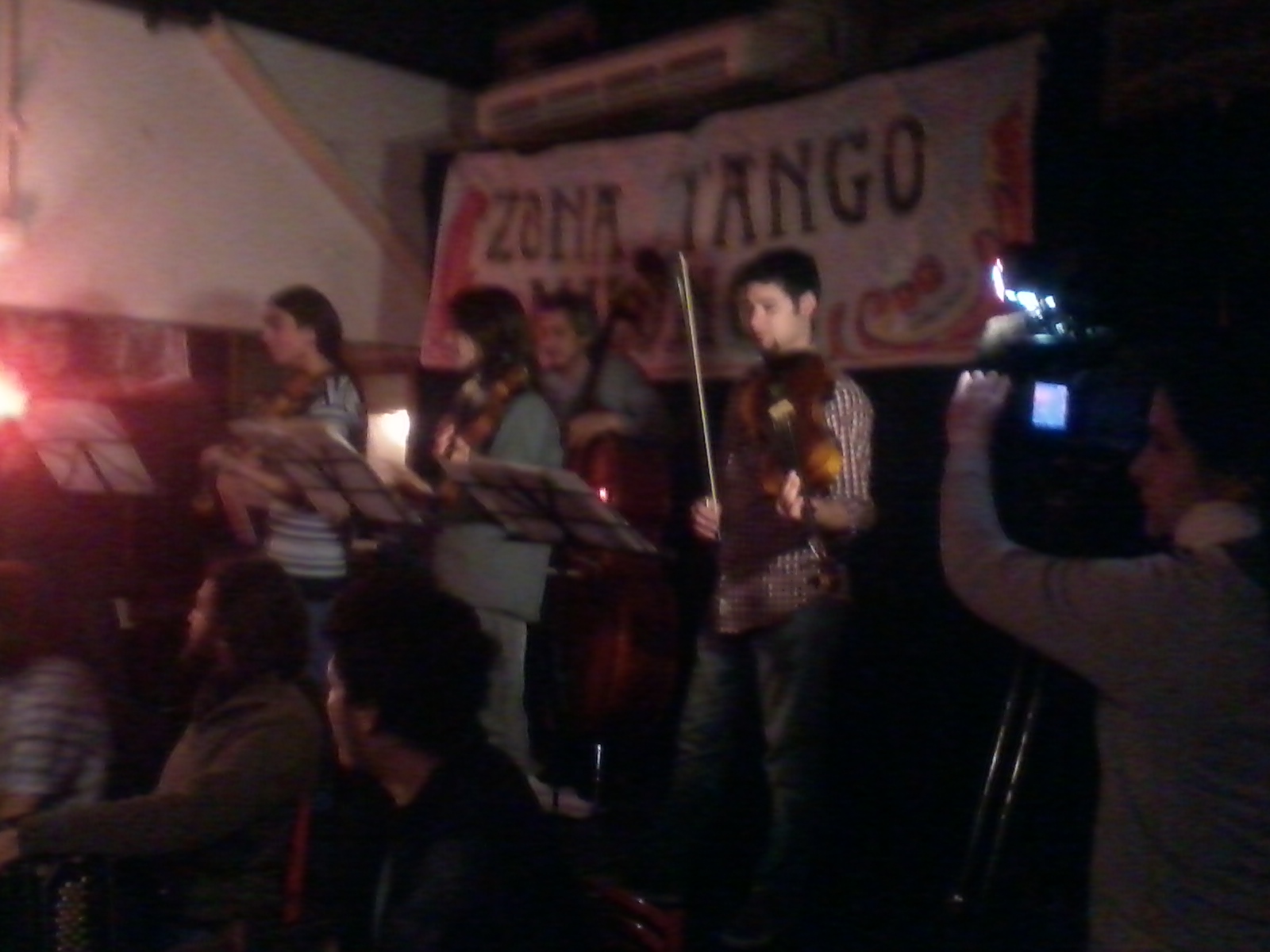
What an amazing week of live tango music!  We must be in the cosmic tango zone, because we stumbled — metaphysically if not literally — into a milonga called Zona Tango in the Balvanera barrio.  A kind of offbeat, rundown area, a funky gritty milonga in a space owned by the Carboneros Genovese Argentino.  Italian coal miners from Genoa?  Founded in 1905.  The tango zoners appear to be mostly under 30, hip, cool youngsters, lots of ponytailed guys & beautiful young women, a few middle-aged hipster intellectuals, the usual lefty mix.   A group of leather-jacketed Fonzie types were standing, beers in hand, in one doorway.  (Are they here for the music, I ask?  Of course not, says Ben, they’re here for the girls!)  No scarcity of men who can dance in Buenos Aires!  “The odds are good, but the goods are…. dark and handsome!”
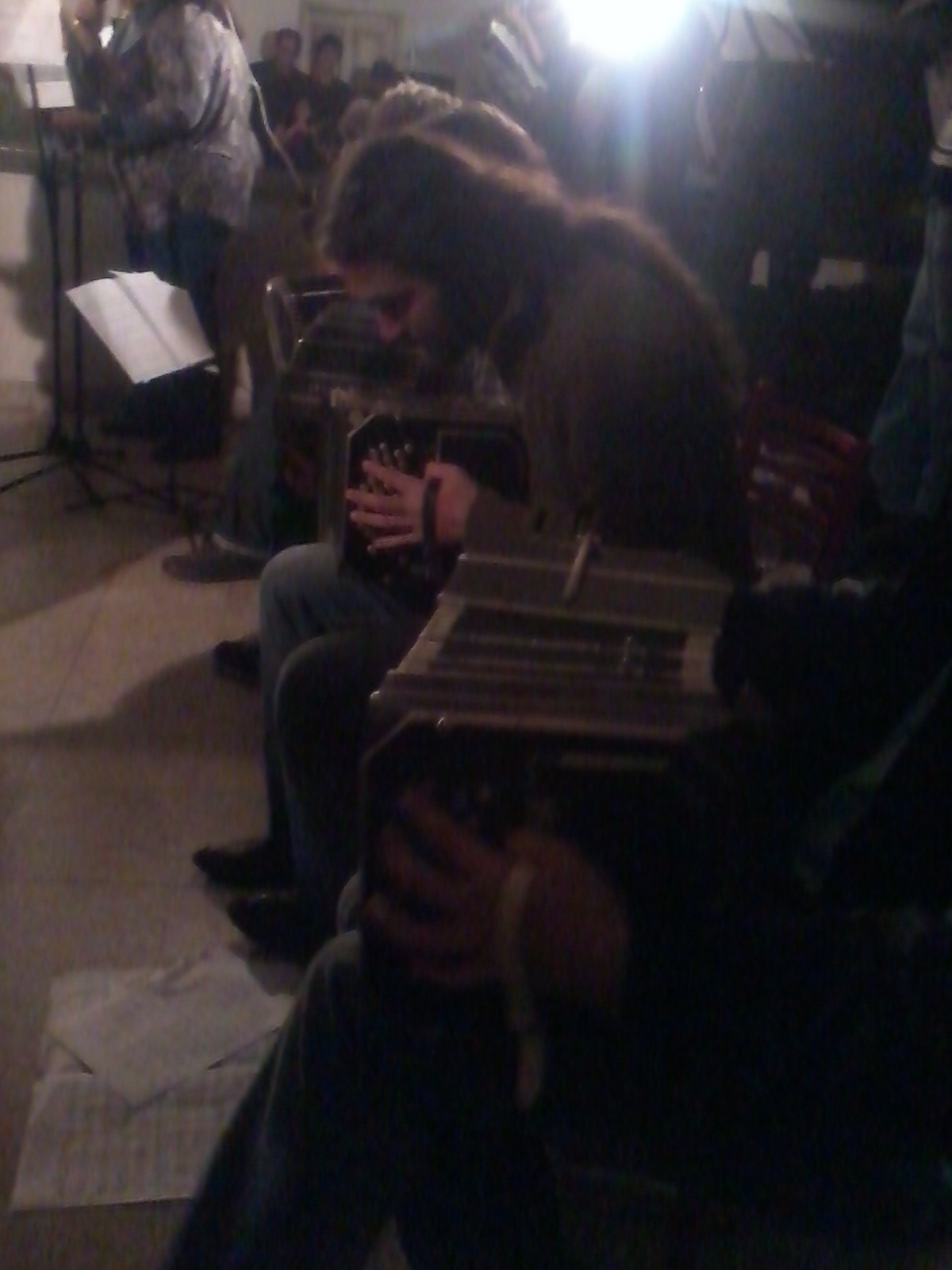
The dancing was mostly traditional tango, vals and milonga, but with the exuberance of youth and nuevo flavor, so crowded it was almost a meleé, but with a happy, high-energy vibe.  When the orchestra finally started (’round midnite) the crowd was electrified.  The musicians were so young!  The lead violin (of 4 violins) looked about 16.  The group included 4 bandoneons, bass fiddle, guitar, keyboard, and two singers: a guapíssimo youth (translate:  good-looking guy) and a rockin’ mama.  She reminded me of a latina Janis Joplin, lungs on steroids.  Great music, some of it original, t all of iintense and passionate.  There was a whole contingent of Colombians there, and a Mexican who lives in Paris, in BsAs visiting his daughter who also tangos, of course.

the 4 bandoneon players in action

Around 2:00 am we had to get off the dance floor because Ben didn’t have enough elbow and body-blocking technique to keep his girl dancing safely around the floor (like a soccer player keeping defenders off the ball as he’s heading for the goal), though still feeling friendly and in the spirit of La Zona Tango.  I’m not sure when Orquesta Típica la Vidú stopped playing, we left at 2:30, tired but happy.

Friday night we met some friends at La Baldosa, a beautiful tango club in Flores, a barrio about 12k to the south of this huge metropolis.  Our milonga teachers Gabriela Elias & Eduardo Perez host this weekly milonga.  We arrived early (9 pm) to take their class which started an hour late.  (Buenos Aires time!)  They are such awesome teachers!  Gabriela  is one of the judges of the yearly international Tango competition.  They  returned last week from a workshop and performance tour in Italy.  Tango teachers seem to go back and forth to Italy like you or I would go to SF or LA.  Most Argentines are of Italian descent, the rest are Spanish, with a spattering of other nationalities, like the spots on an Appaloosa.  A “criollo” is a person of mixed Euro and indigenous blood, born in South America.

Orquesta Sans Souci

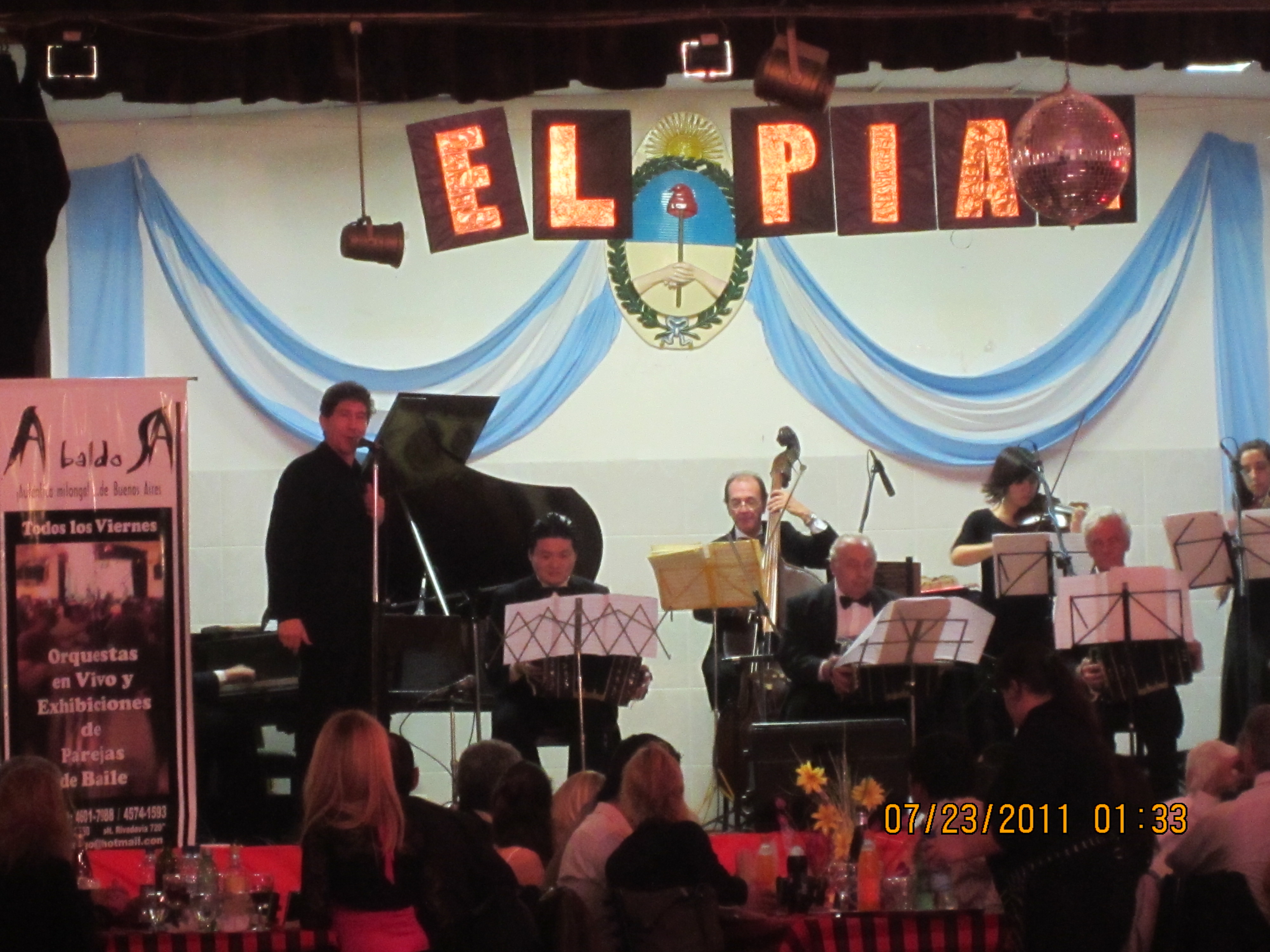
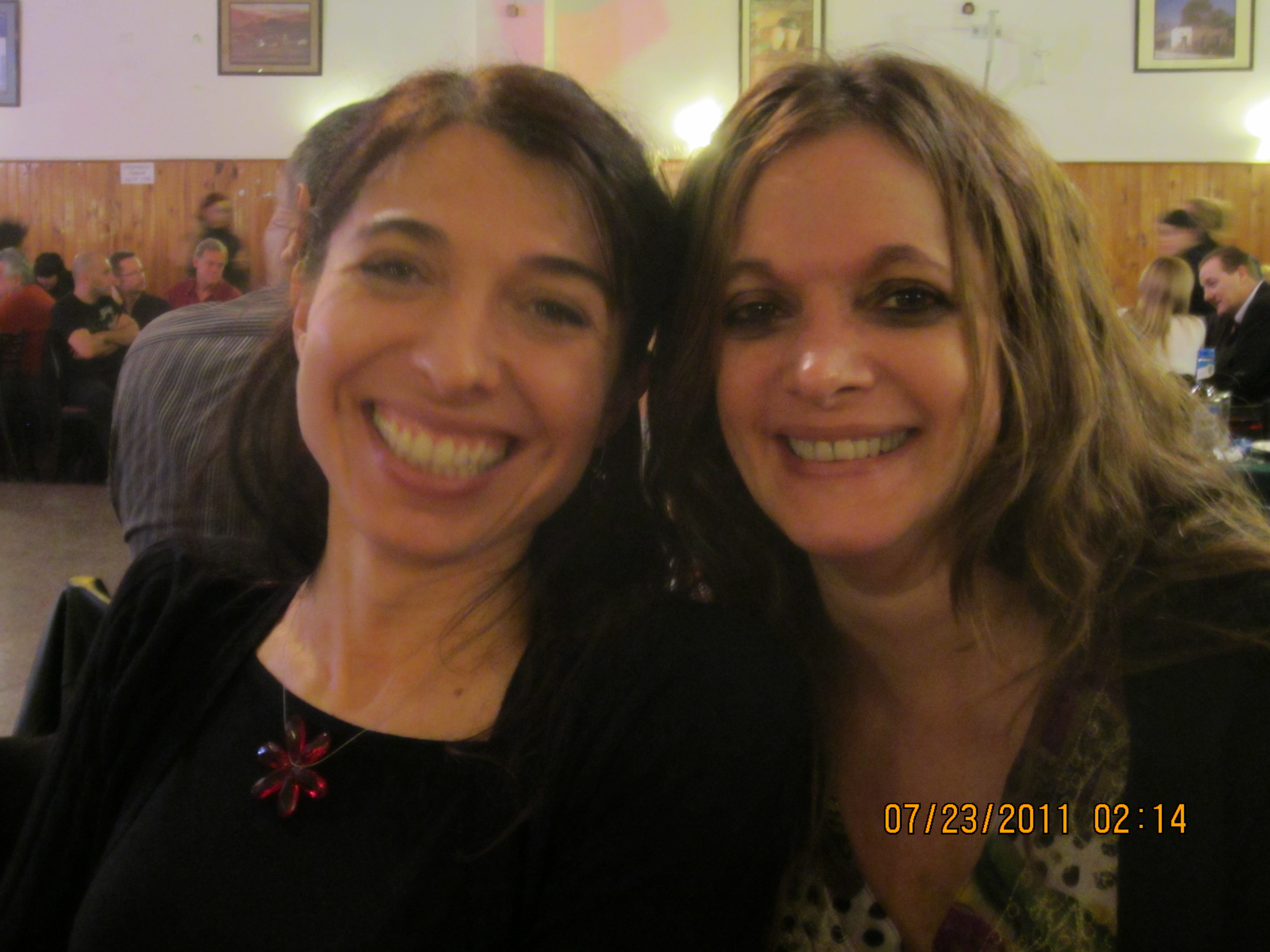
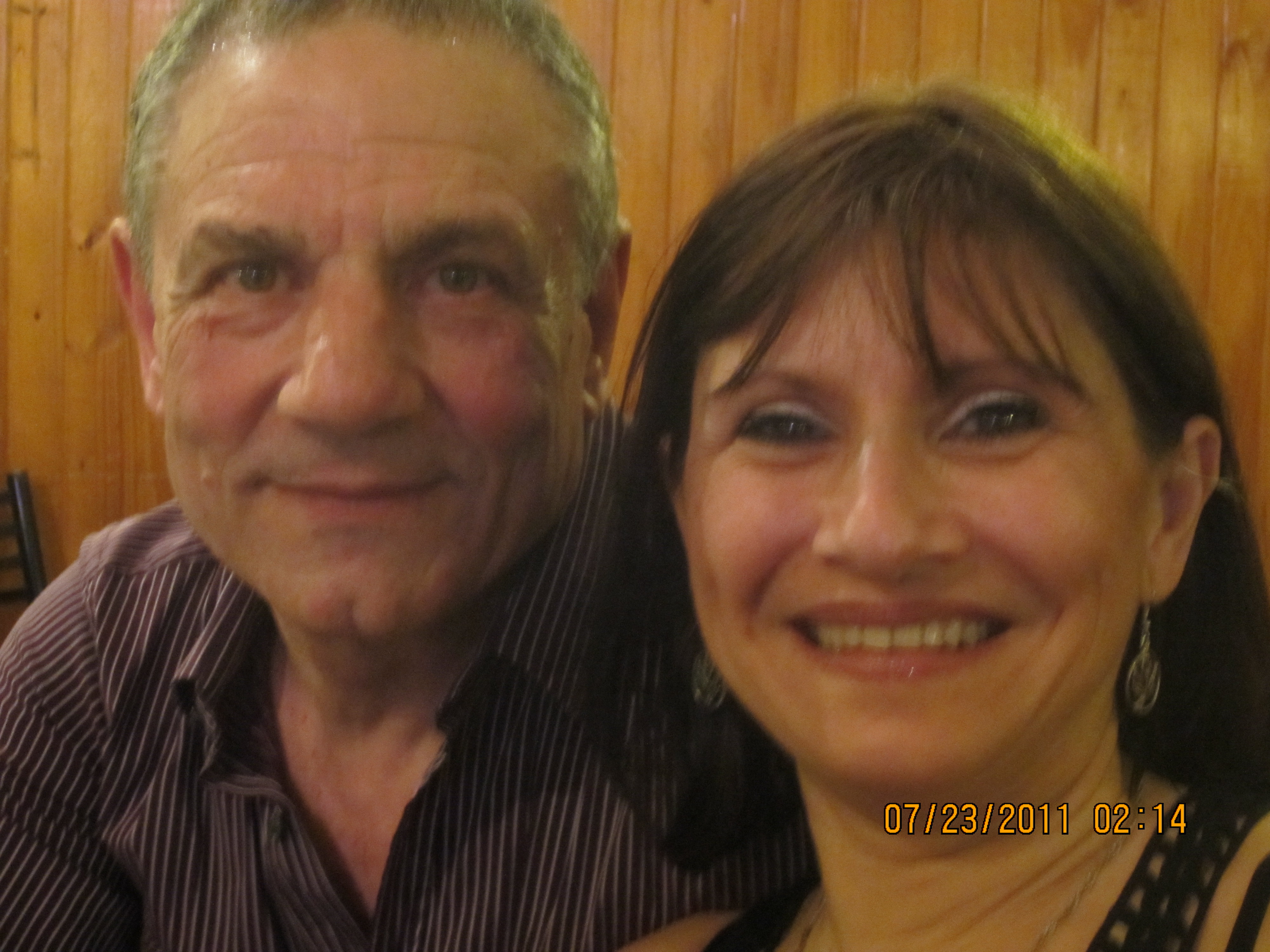
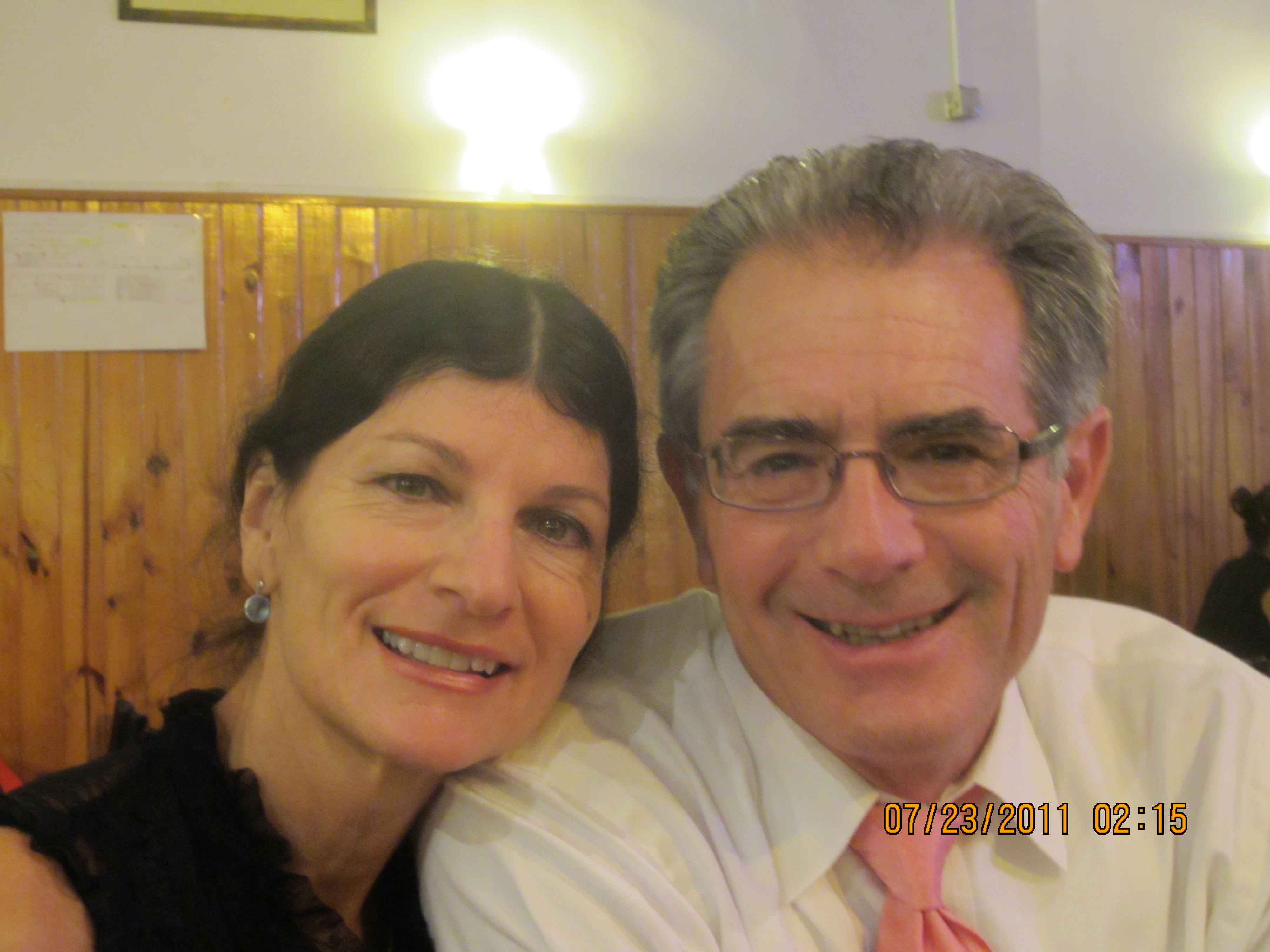
At La Baldosa we were delightfully surprised by yet another random act of divine benevolence.  One of our favorite tango orchestras was playing:  Orquesta Sans Souci!   Three bandoneons, 4 violins, piano, bass… and their awesome singer, el Chino Laborde,  himself son of another tango singer.  So happy to hear them again.  They evoke the style of Miguel Caló, from the 1930s & 40s.  We danced, and shared a table, a bottle of very decent Malbec (22 pesos a bottle)  and conversation  (between tandas) with our good friends, the beautiful poetas Silvina and Marisa, Marisa’s husband Salvatore (they spend part of the year in Italy, the rest in BsAs), and a new friend, Nuria.

Nuria & Silvina

We met a couple of years ago after exchanging 16th century style poetry on the losFansdePapito website ( fan club of tanguero Jorge Firpo).  The site thrived for a few months on some absolutely phenomenal poetry, in the style of Garcilaso, but eventually collapsed due to an invasion of people we didn’t know hacking in from god knows where.

Marisa & Salvatore

The show was over when the orchestra quit playing and the rock’n’roll break started off with Creedence Clearwater.  After 5 hours of tango we were done!

Today we’re taking it easy.  We decided to forego the 2-hour canyengue class in favor of allowing our bodies and minds to recuperate so we can go out to yet another milonga this evening!!  Next blog will be lots of pix of the city and our neighborhood.  Ciao from Buenos Aires!!

Ben y Willow

No, it’s not all about the shoes!!

The only time Buenos Aires quiets down is when there’s a soccer game.  Traffic evaporates.  As I write, the score is 1 – 1, Argentina vs. Uruguay, Copa America semi-finals.  Being next-door neighbors means fierce rivalry.  Oh-oh, now they’re going into overtime.  Loud noise bursts from neighboring apartments at every critical moment of the game.  Argentines are passionate about soccer, just like they’re passionate about tango.

Tango is the heartbeat of Buenos Aires.  It was born here, and it still thrives.  UNESCO calls tango a national treasure.  Tango is rich, sultry, elegant, compelling.  What can I say about it?  My understanding is paltry compared to those who have grown up with it.  Let’s just say that the more you get into it, the more you see that it’s a huge genre of music: complex, orchestral, radiant, an entire world unto itself, with a long and fascinating history that is has been experiencing a resurgence since the 1980s.  What brings most people to that first tango class — is it the music? or the dance?  I don’t know, but once you get into it, it becomes an addiction.  A beginning dancer — a principiante – learns a vocabulary of different steps & moves which, the leader (usually a guy, but not always) puts together improvisationally as he dances.  There are no fixed choreographies in tango.  You have to practice long enough for the moves to be imbedded in your muscle memory.  After the long and awkward early learning stage (aka Tango Hell) you begin to put the moves together fluently and expressively.  Your inner response to the music is channeled through your outward expression.  Now you’re really dancing!

Let’s say you’re a woman, like me, and you don’t have the skill, the opportunity, or the desire to lead.  But the music moves you.  You are supercharged with an energy that begs to be unleashed.  In the best of worlds, you’re dancing with a partner who is equally electrified, and the chemistry between you leads to a fast-paced, dynamic interchange.  But this is not always the case.  Your partner may feel the music in his or her own way, and you must try to follow him.  After all, he leads each step you take.  That’s a basic premise of the dance.  Some teachers refine the idea by calling it an invitation.  The man invites you to take a step, you can choose to follow that lead, or not.  This brings me to my point that, for a woman, tango is all about trust and surrender.  A woman has to allow herself, to give herself permission, to be touched, held, and positioned in ways that never occur in any other social environment, and may seldom occur even in an intimate environment.

Let’s assume you accept being led, perhaps in a way that is new and maybe out of your comfort zone.  As you begin to move together, you may need to channel some of your impulsive energy into the dance floor, and surrender to your partner’s interpretation of the music.  Your energies will blend, and approach harmonic convergence.  OK, I’m having a little fun here, but it’s true. You are approaching the celestial realm of tango.

Of course this happens.  It’s really so elementary, so fundamental to tango.  The follower acquiesces to the leader’s interpretation of the music.  You are dancing through his lens: his eyes, his body, his feeling.  It’s a merging, an intimacy that can be absolutely blissful.  Two become one, for a few brief moments.  Time and space collapse around you.  You and your partner exist in a timeless bubble, alone in the universe, but not alone.

One night in Monterey I danced with a complete stranger.  It was clear from the first few steps that our styles were very different.  He seemed hesitant.  His lead was far from bold.  Memories and images flashed through me, and I compared his lead to riding a horse with an extremely sensitive mouth.  With my sometimes driving dance style, I had to back off a few notches.  I had to chill out and let my body listen for the lead.  He was humming the music softly to himself, and after the second tango, I began to make contact with his subtle but tangible lead.

We got in sync and I began to enjoy what I thought was a slow-motion tango.  He told me he had his own way of interpreting the dance, that he danced more to the melody than to the beat.   By the end of the tanda, I was having a lovely time.  We parted at the cortina, but a little while later, the DJ put on a milonga and this same partner rushed over to me.  My boyfriend mentioned it later, I hadn’t noticed, just looked up and there was the same guy, asking me very politely to dance.  He milonga’d so differently than he tangoed!  “I love milonga,” was all he said, and swept me off in a pulsating rhythmic close embrace that was close to perfection.  At one point we had our hands on each other’s shoulders, our bodies so crushed together that to have a set of arms outside our axis of balance was too distracting.  Clearly the milonga beat, with its afro rhythms, called up another side of this man.  I was completely seduced and enthralled.  After that tanda I had to sit one out to catch my breath and feel my own, separate self again.  In tango, each partnering creates a new dynamic.  If you’re lucky, it can help you evolve your understanding of the dance on many levels.

Tango is subtle and ephemeral.  It can only be approximated on film.  While watching tango is inspiring, it’s not dancing.  Each dance exists somewhere in time and space and cannot be recreated, like the moment of falling in love.  People who habitually get stuck in their emotional baggage, who can’t shake the past, might not enjoy tango.  Every moment is new and unpredictable, but your familiarity with the music balances out the equation.  The music grounds you and allows you to let go, like an invisible guiding hand.  One of the joys of being a follower is this not knowing.  It’s very Zen:  beginner’s mind.  You have to let go completely.  Don’t try to anticipate the next step.  Allow yourself to be taken by surprise!

Willow with legendary Tango teacher Raúl Bravo

We are so fortunate to be able to study tango with Raúl Bravo.  At 77, he has not yet learned to slow down on the dance floor!  There are very few maestros of his generation still around & still teaching tango — he’s been at it since 1955.   Raúl is totally unpretentious and a dazzling dancer.  Gracias, Maestro!  Check him out on uTube!


SF to South Carolina

My name is Willow and  this is my tango travelers’ blog.  I travel with my companion & dance partner Ben.  Dedicated to all of our friends & loved ones who insisted we keep you up to date on our adventures!

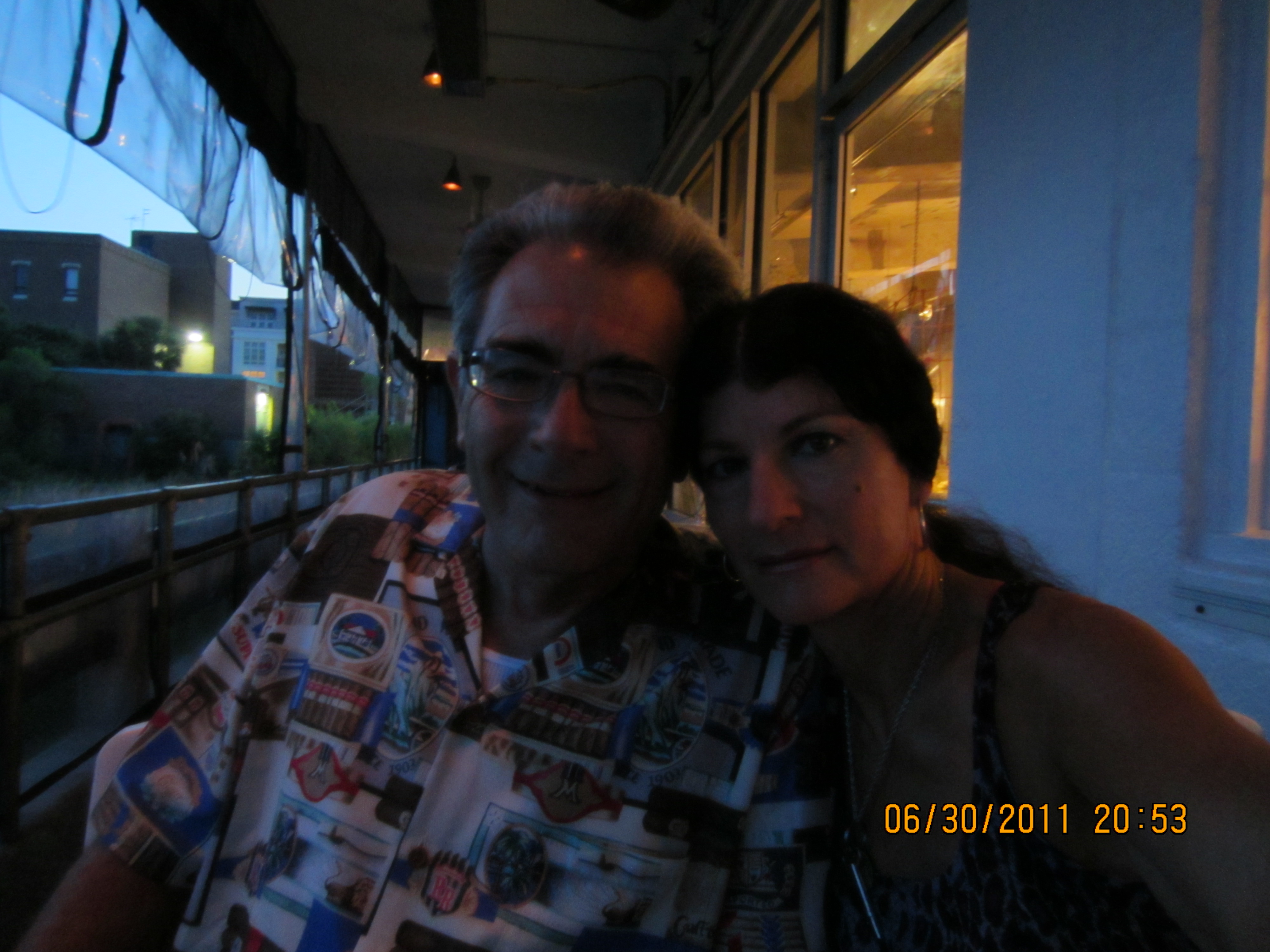
Our last night in SF:

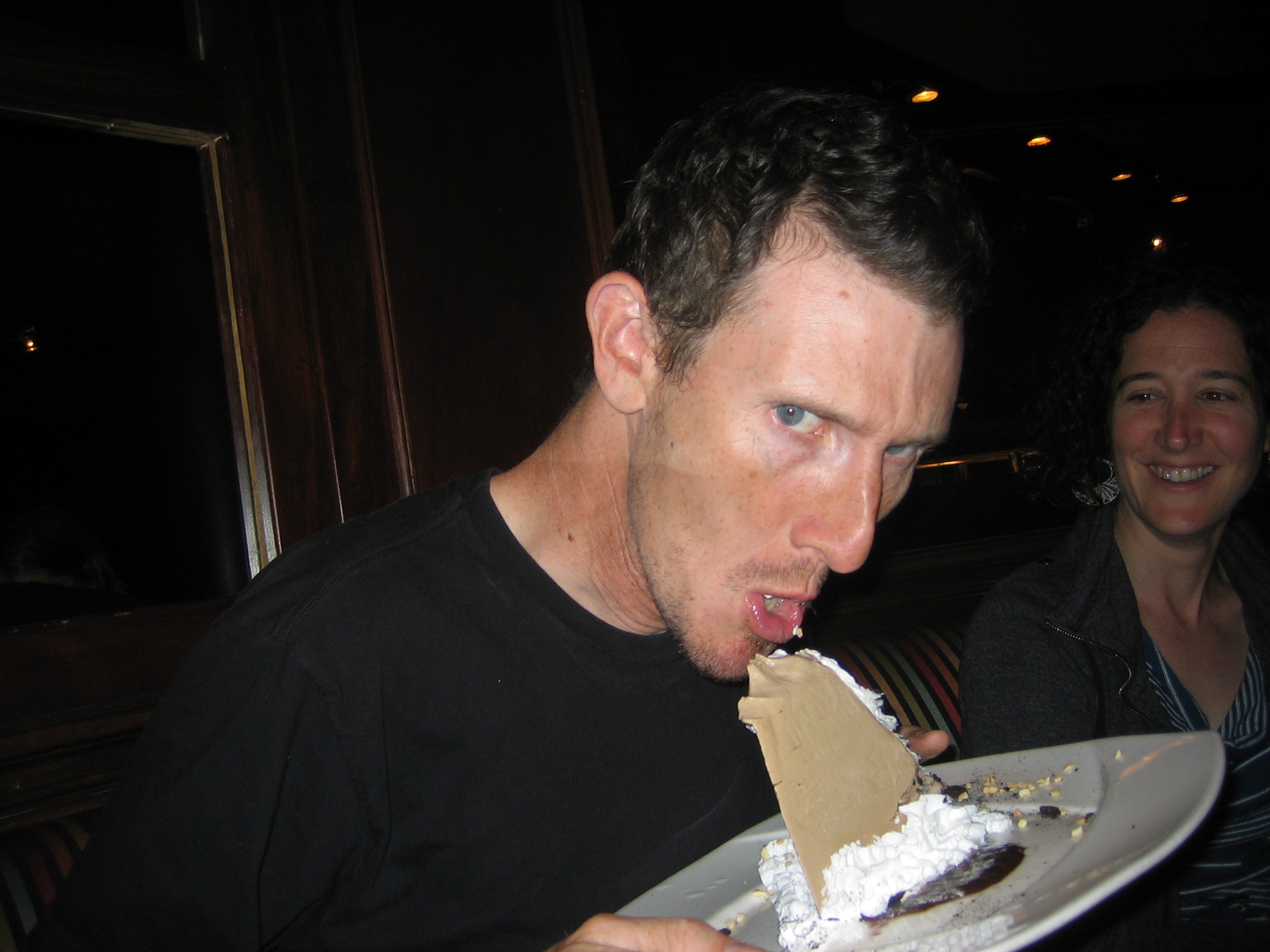
Sending us off are my son Ode eating a celebratory Mud Pie:

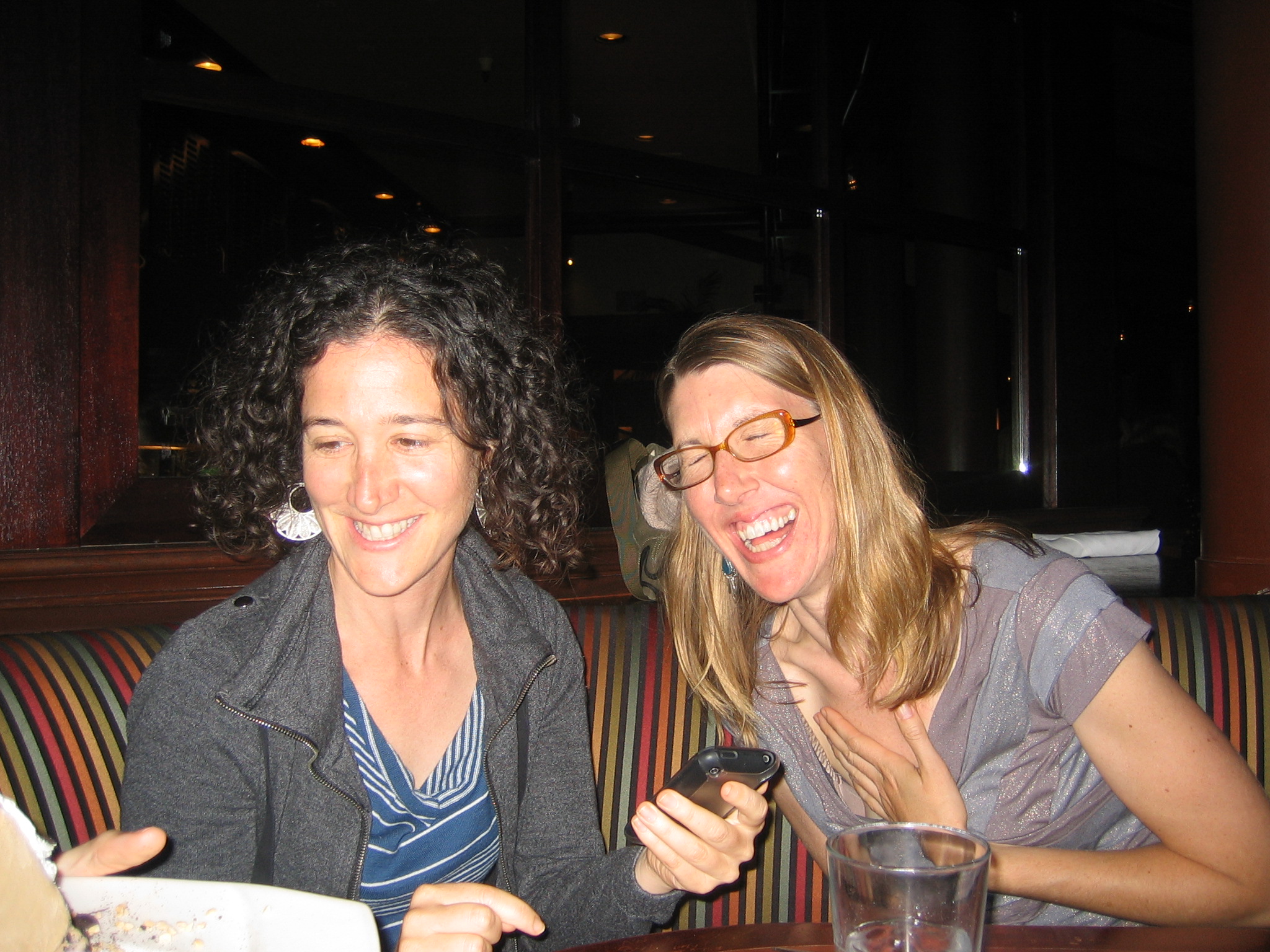
And my daughter Autumn (on right: a master blogger herself and my inspiration) and  Ode’s girlfriend Dana (on left):

Yes, they will make him share!

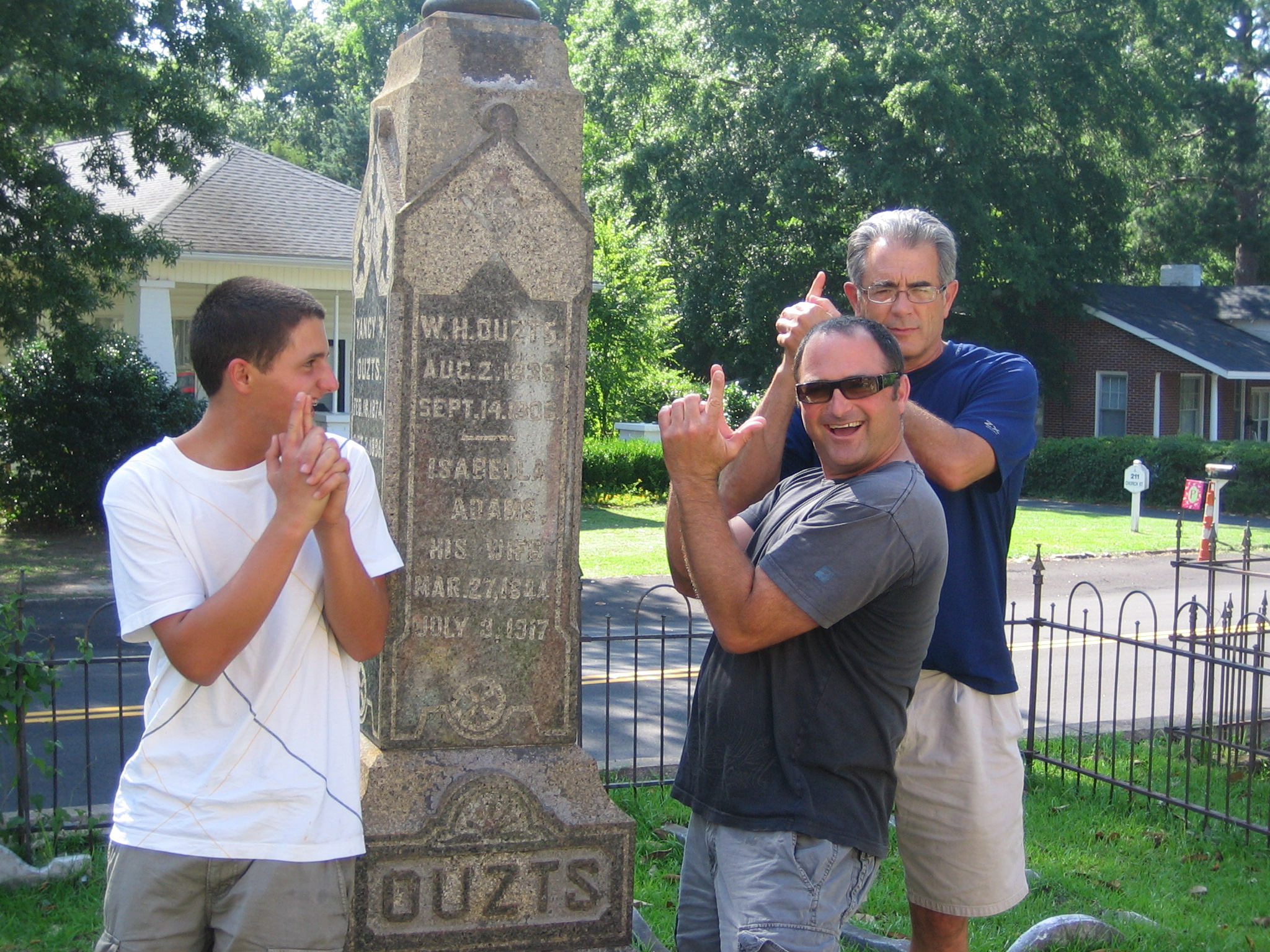
But I have to go back in time, because before we left for Buenos Aires we had a blissfully hot, humid & salty 10-day family vacation in South Carolina.  This is the Hall gang at the grave of Ben’s illustrious grandpa William Outz who was sheriff of Edgefield County for 30+ years:

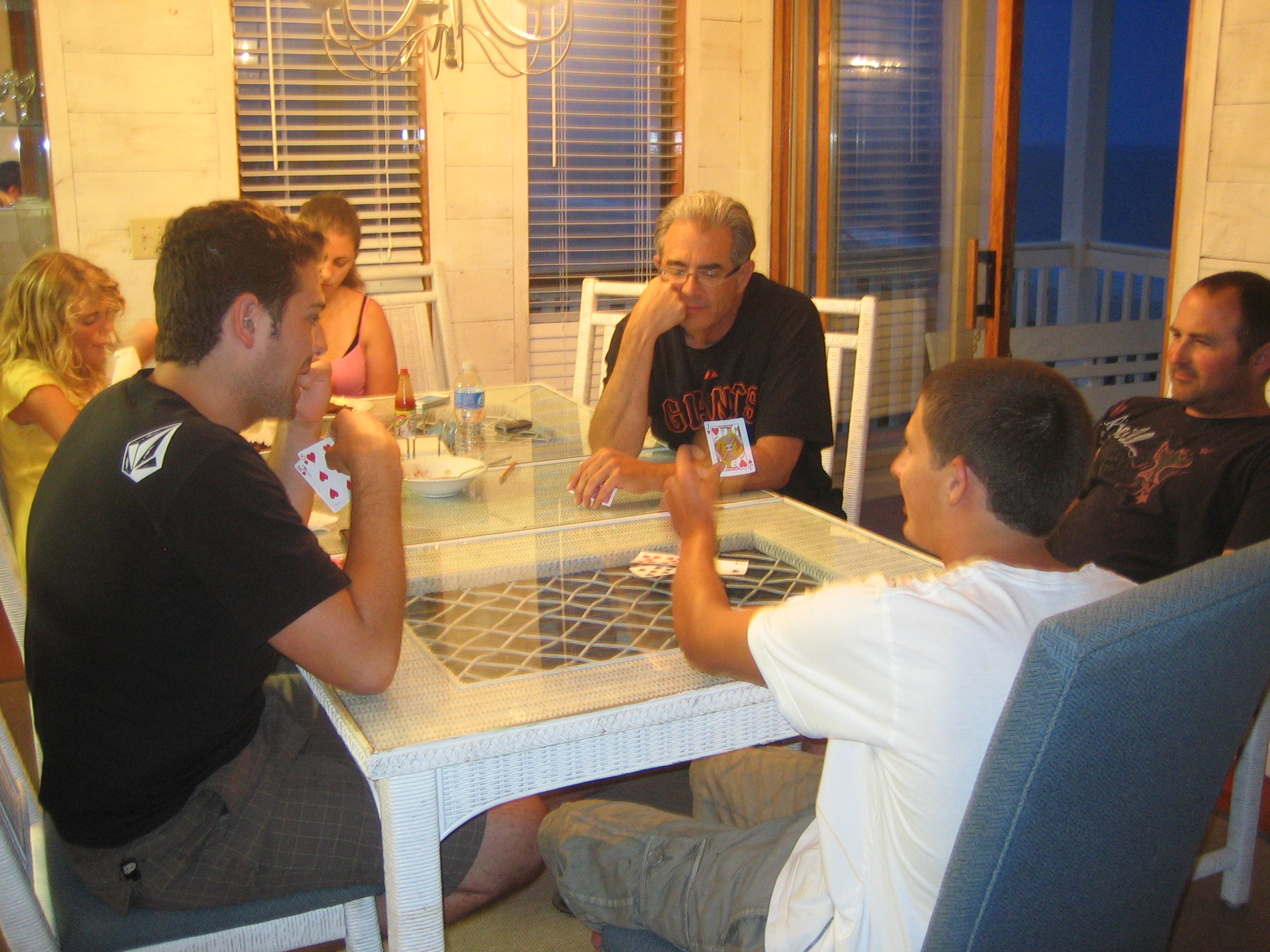
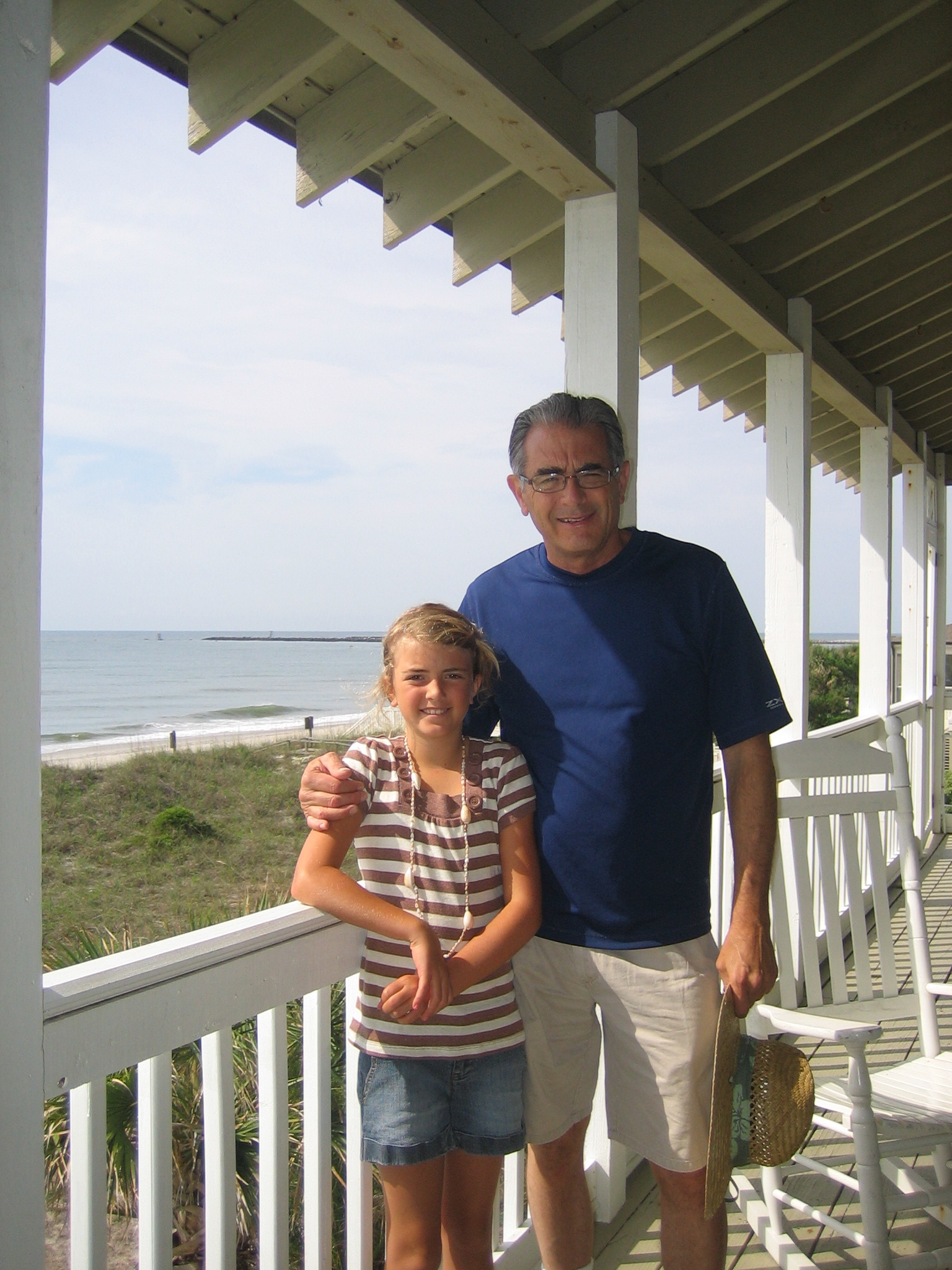
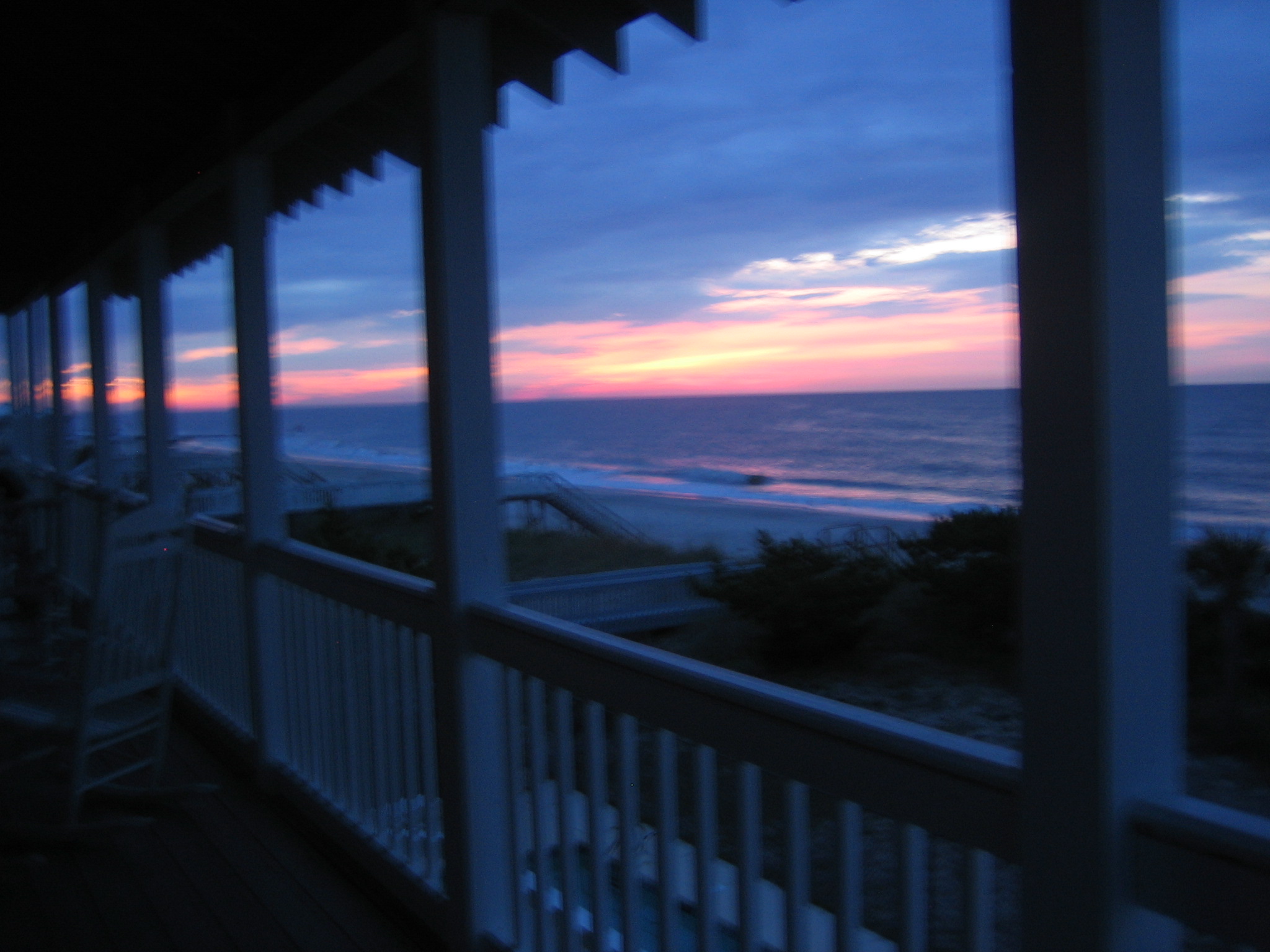
We splashed, swam, played, cooked, played cards & lounged on the beach for a whole glorious week.

It was so hot & humid that stepping outside instantly fogged up your sunglasses.  I loved it!  Much fresh seafood was consumed, and many variations on pico de gallo were prepared only to disappear immediately.  A group of 14 can really put the hurt on the food!

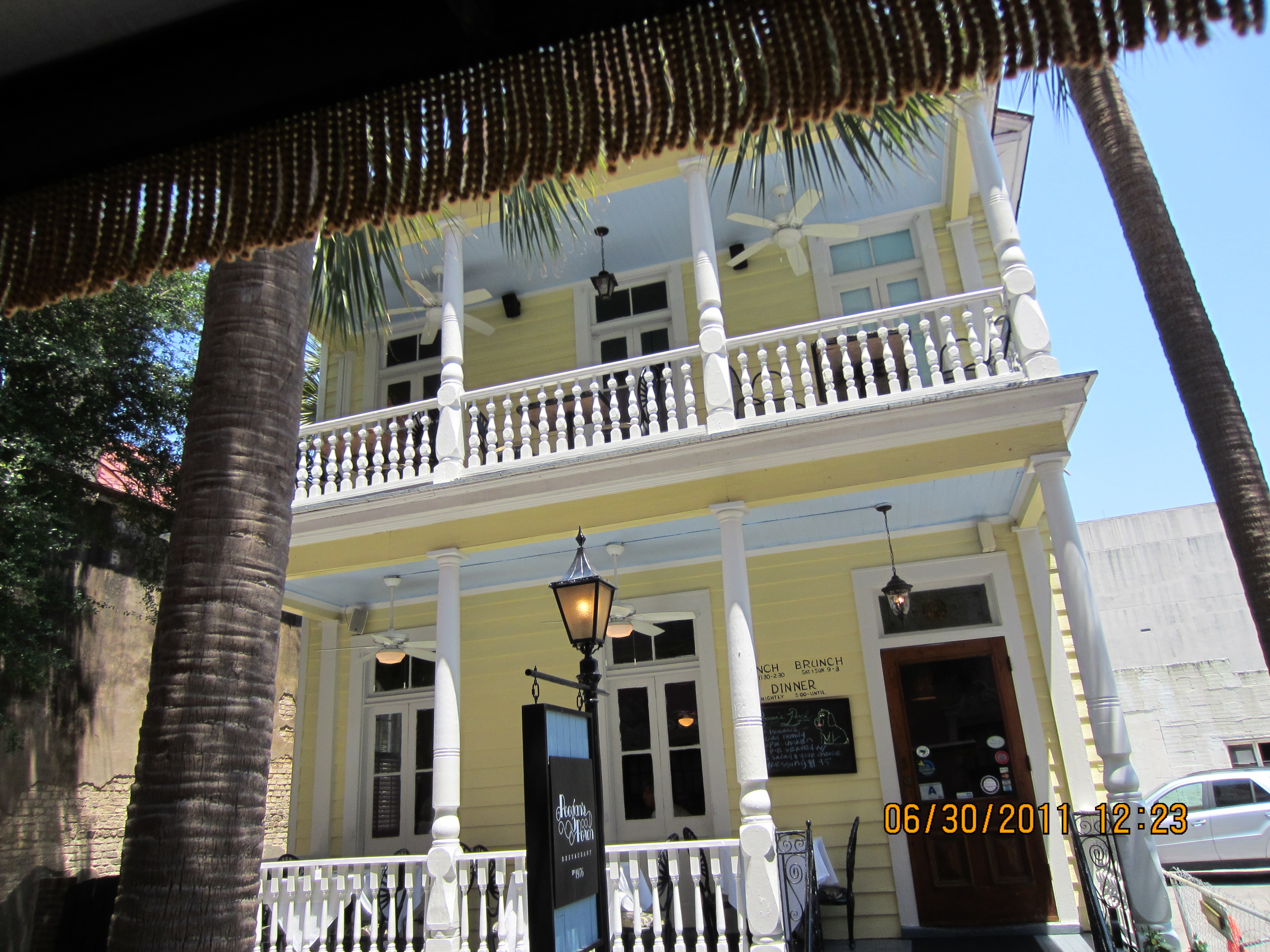
After our week at the beach we spent two days & nights in beautiful, historic Charleston.  What an amazing city!  We did the horse carriage tour of the historic quarter:

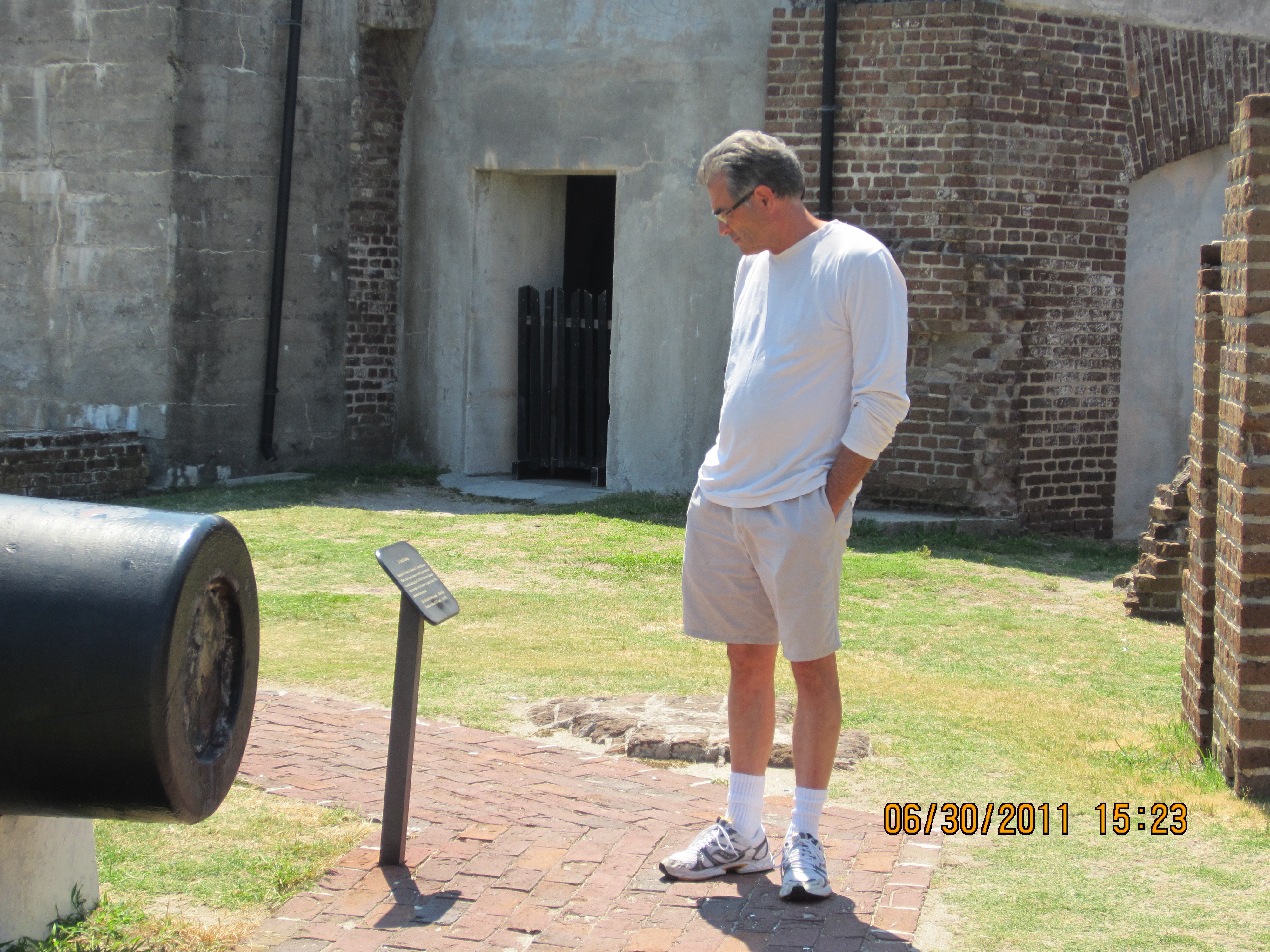
took the ferry to Fort Sumter (first shots fired in the Civil War):

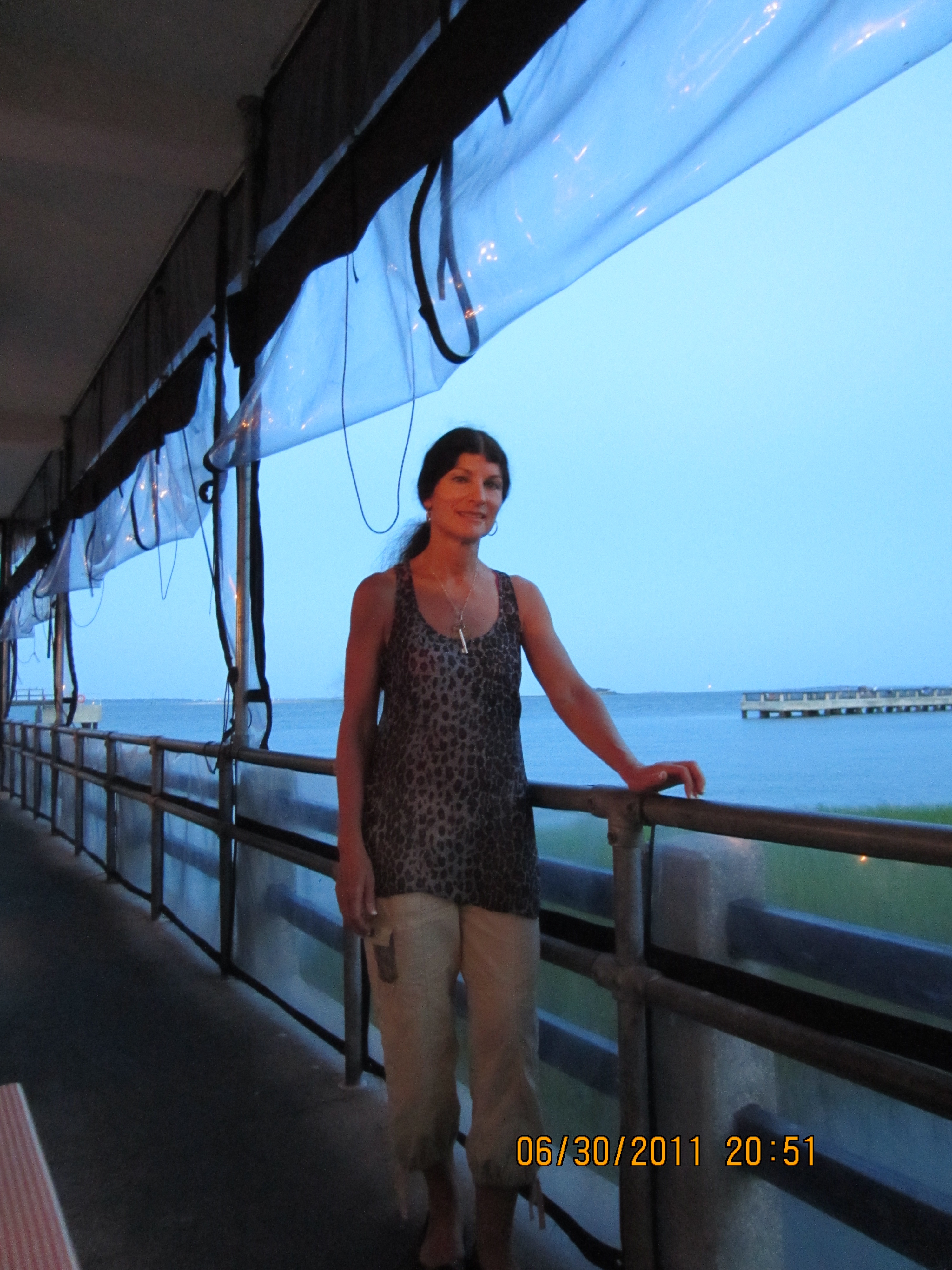
browsed the French Market, took a bike-taxi ride to a seafood place right on the waterfront where the food was to die for!  and the setting!  a balmy, tropical, night:

Before heading back to the West Coast we went to a milonga (a tango dance party) out on Folly Island, on the edge of the wetlands that border Charleston.  Where else can you find such a unique blend of art, history, tango (and great jazz and blues), cultural mixing, ocean & wetlands?  I would go back to that town in a hot second!  Even though you can’t buy a drink in the historic district on Sundays.

We finally left SF after spending half the night in the airport, trying to catch a few winks with other random fellow travelers in the check-in area which of didn’t open up till 4:00 am (of course the airline told us to be there at 3).  Arriving in Miami mid-day, we left our carry-ons at the airport and took the bus to South Beach.  We ate yummy Cuban food (plátanos fritos!) while a thirst-quenching thunderstorm moved in, passersby crowded into the little café, and the sound of the rain beat a habanera on the roof…   I sucked down a mango mojito and Ben had a beer.  Yet another Paradise found!

Later, about 4 hours after our flight was due to depart at 9 pm (Ben calls it a clue when there’s no plane at the gate), LAN flew us to Buenos Aires.  (Travel Tip: LAN is definitely the best way to go to BsAs.  Roomier seats, more leg room and they feed you!)

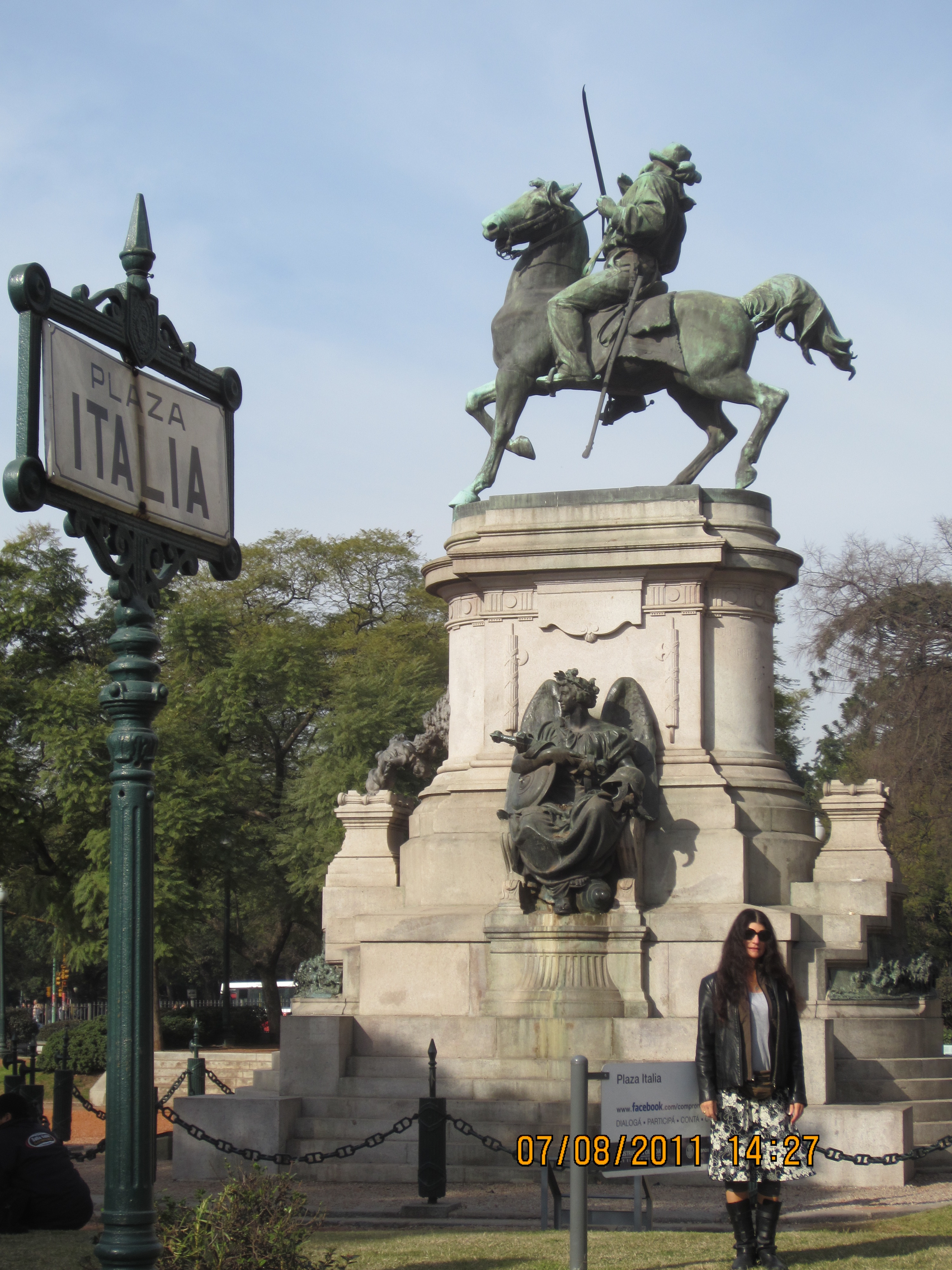
I will leave you till the next post with a photo of the Plaza Italia, a few blocks from our apartment in the Palermo Botántico neighborhood of Buenos Aires:

Ciao! y hasta la próxima.  Next post will be all about Buenos Aires!
Hello world!
Welcome to WordPress.com. After you read this, you should delete and write your own post, with a new title above. Or hit Add New on the left (of the admin dashboard) to start a fresh post.

Here are some suggestions for your first post.

  1. You can find new ideas for what to blog about by reading the Daily Post.
  2. Add PressThis to your browser. It creates a new blog post for you about any interesting  page you read on the web.
  3. Make some changes to this page, and then hit preview on the right. You can alway preview any post or edit you before you share it to the world.