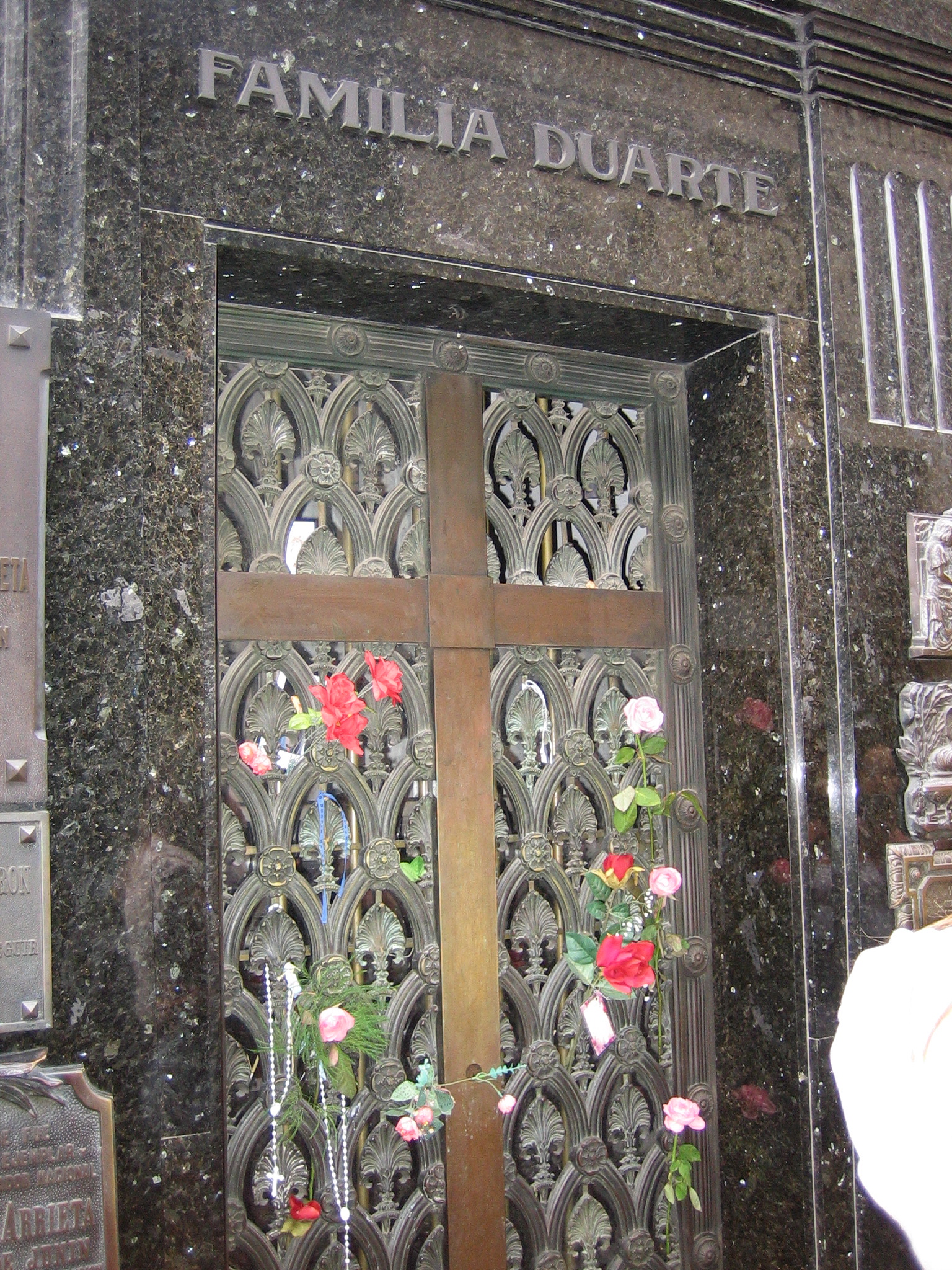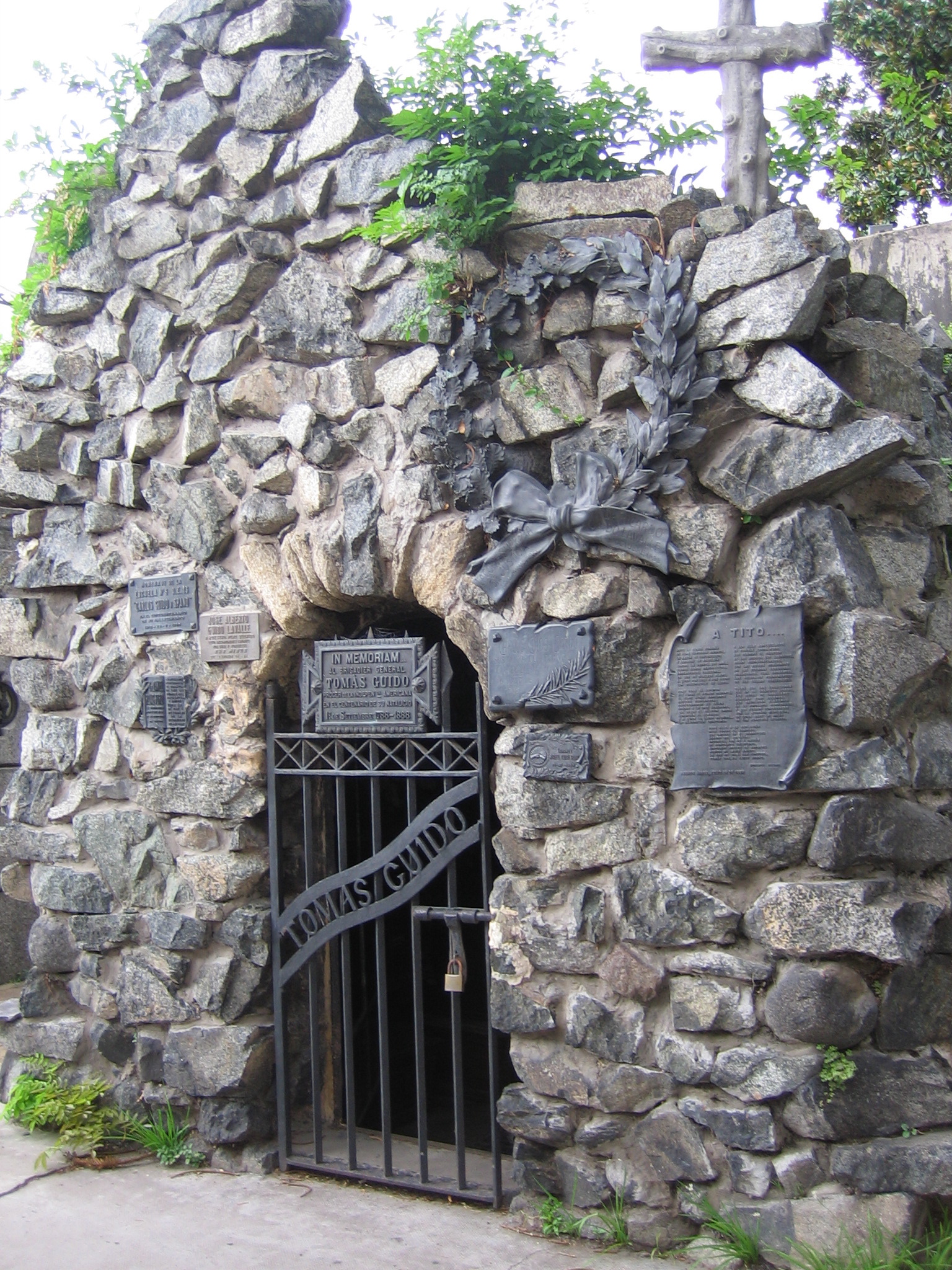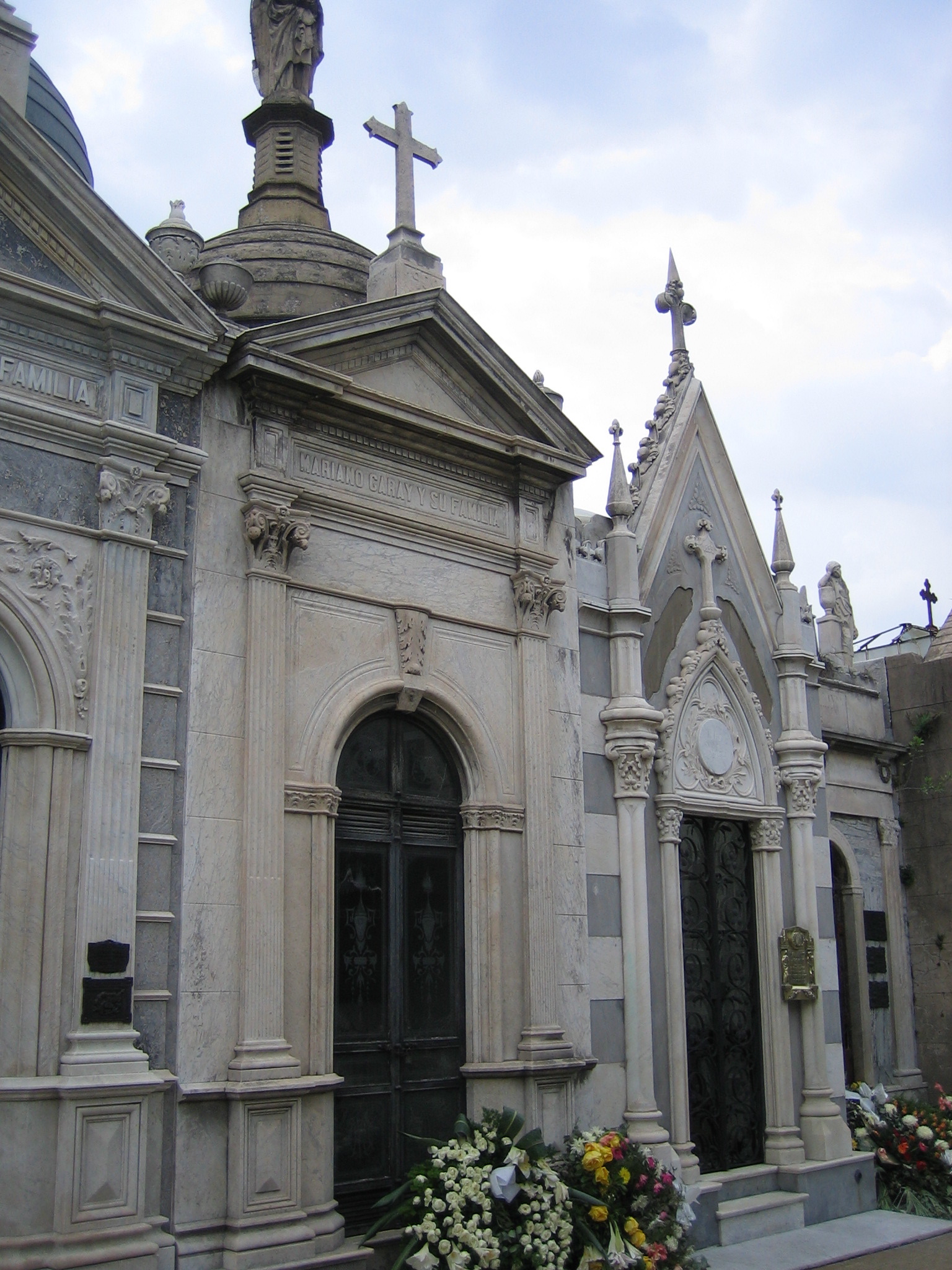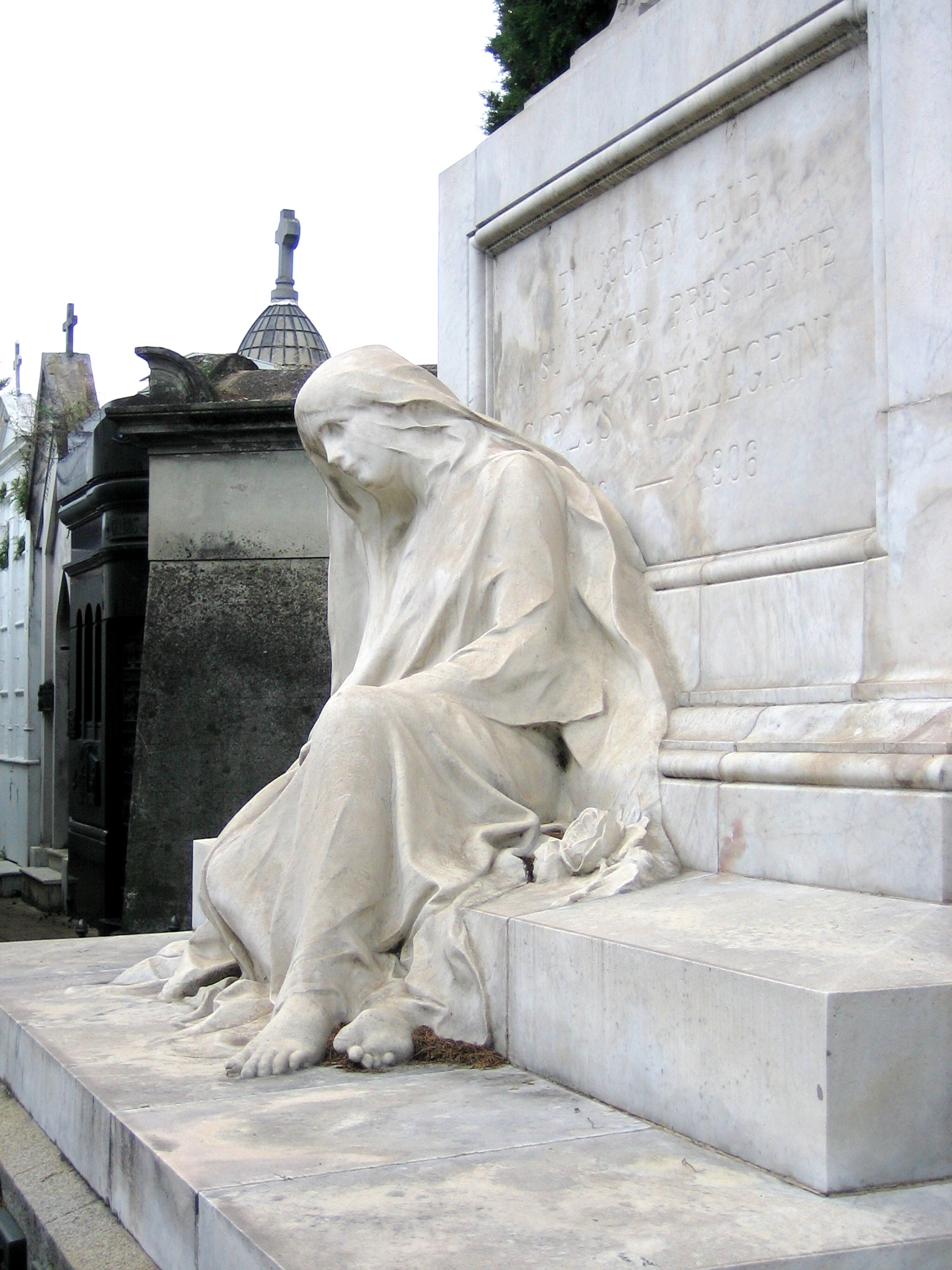
Recoleta’s City of the Dead

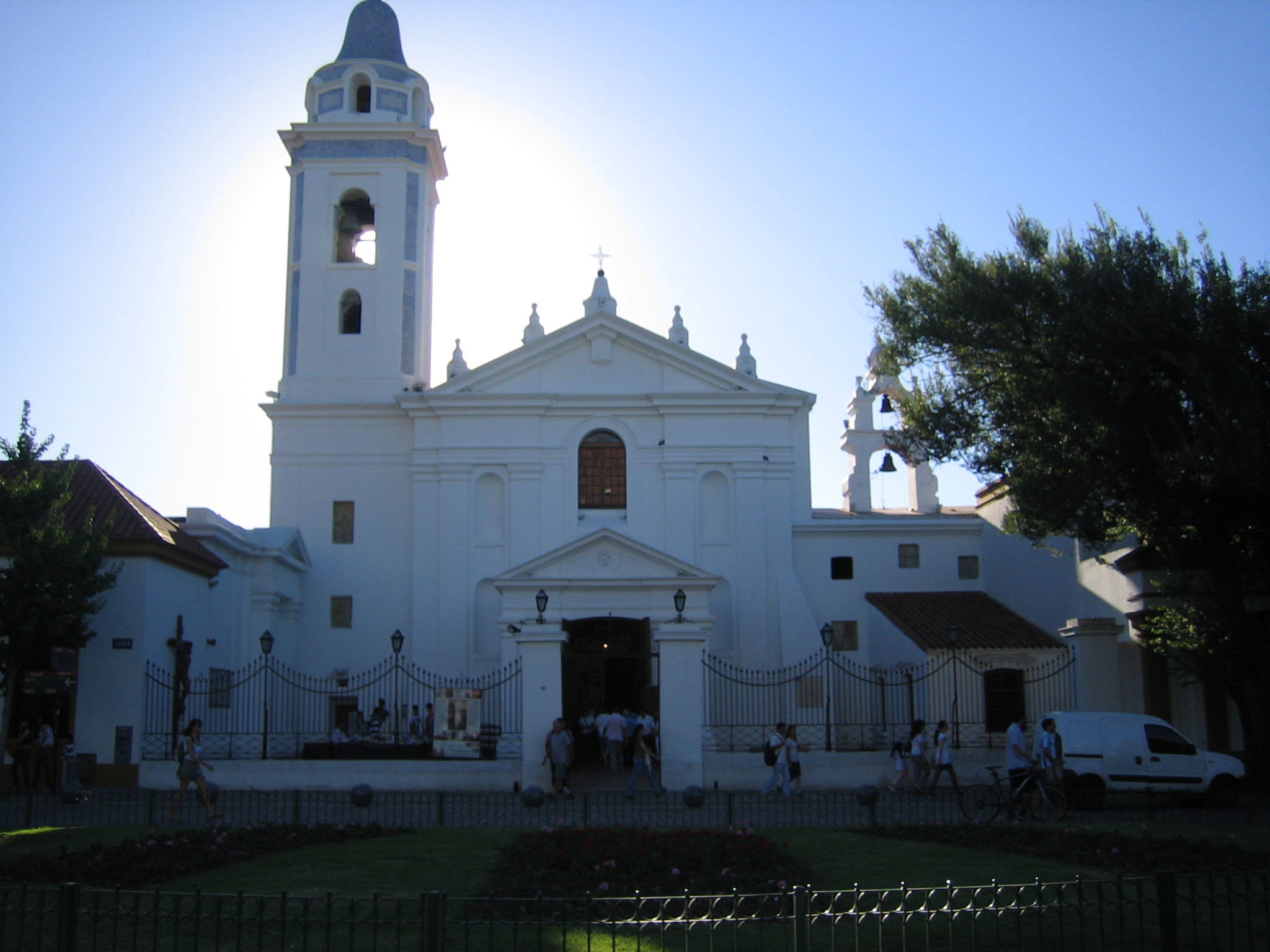
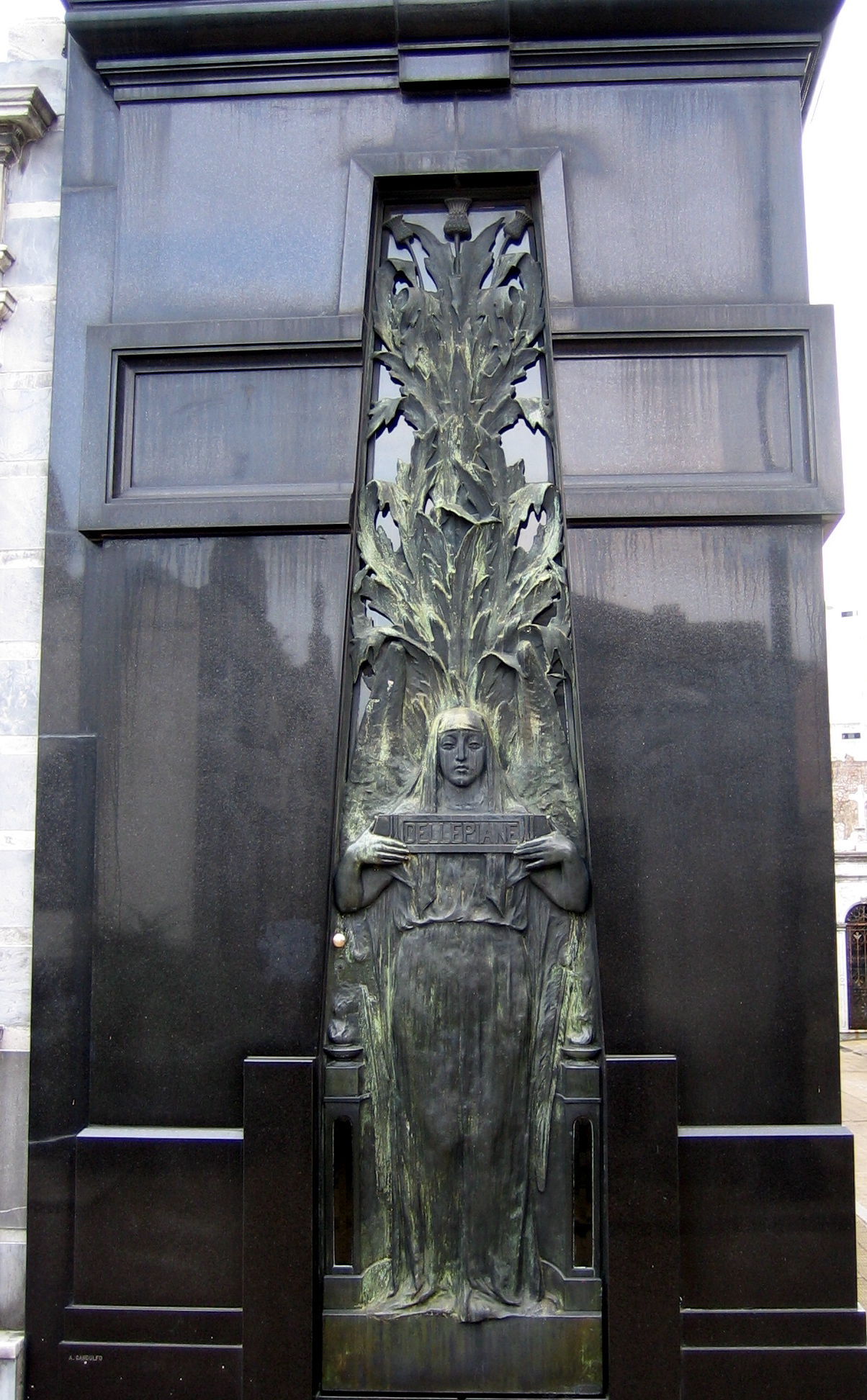
Good morning everybody!  Wake up, let your Light shine, and brush away all those dusty cobwebs!  On a beautiful Buenos Aires day we decided to explore the Recoleta Cemetery. The portal to the Recoleta Cemetery is Nuestra Señora del Pilar, built in 1732 by the friars of the order of Recoletos Descalzos.

When the order was dissolved a hundred years later, the convent garden became the first public cemetery of the city of Buenos Aires. The portal to the cemetery is imposing:

Portals can be rather overpowering, and the giant “REQUIESCAT IN PACE” was no different. But at least it wasn’t that portal… you know, Dante’s portal. The one that says “Abandon all Hope, Ye Who Enter Here.”

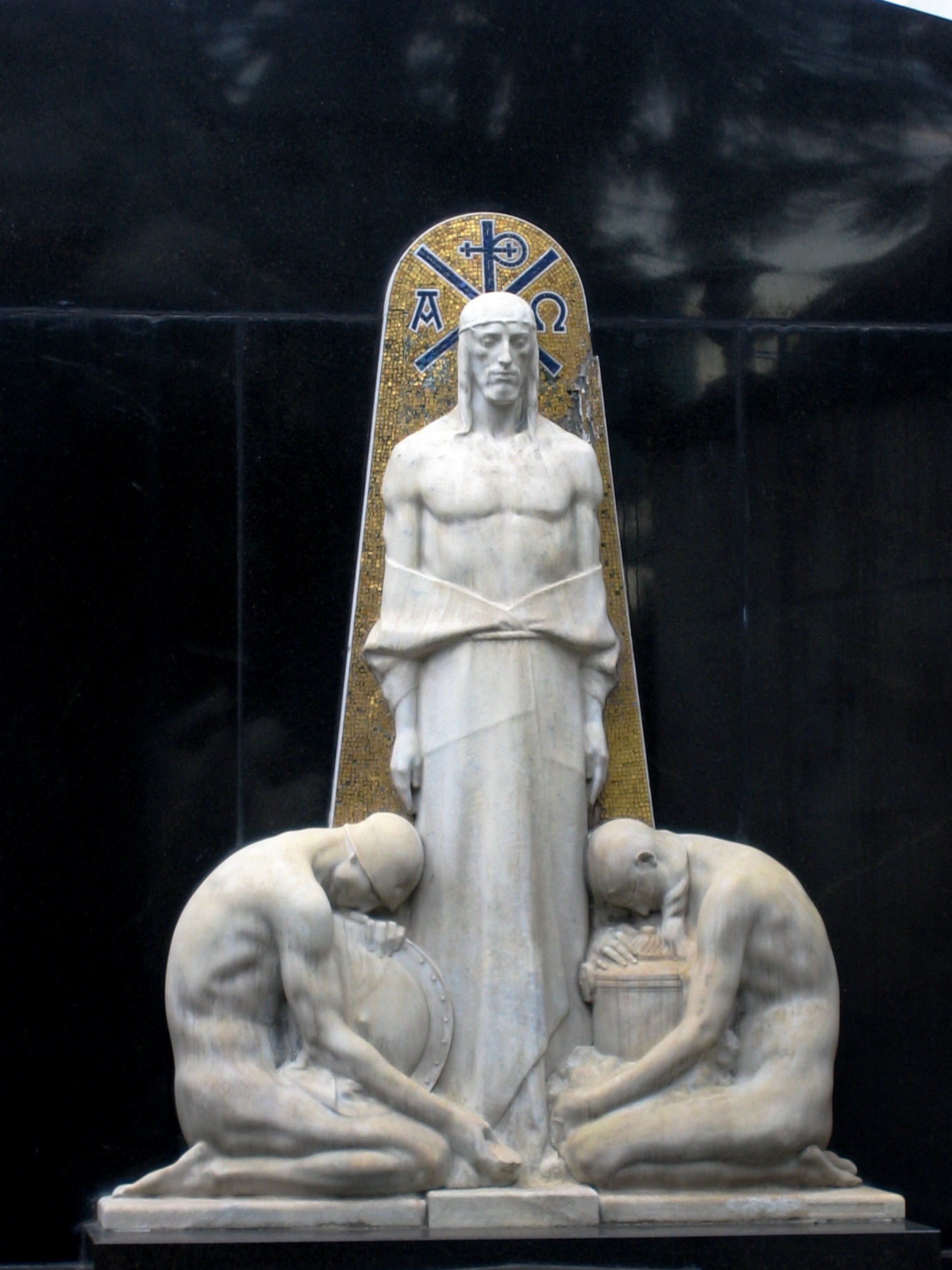
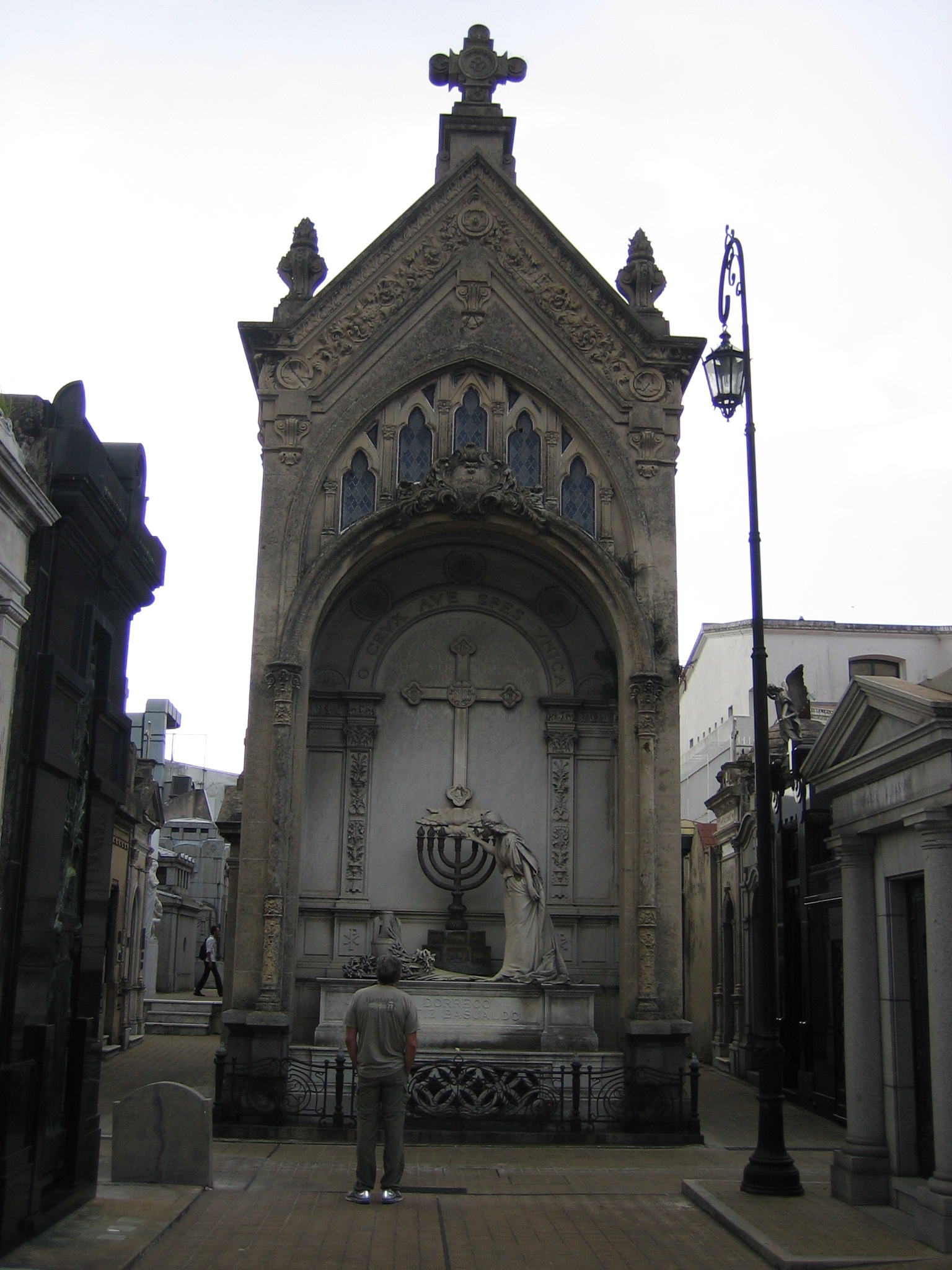
Somebody pulled his hoodie down over his arms! Juxtaposed here with symbols of religion, servitude, and the possibility of immortality, the image with two kneeling figures is quite stunning.

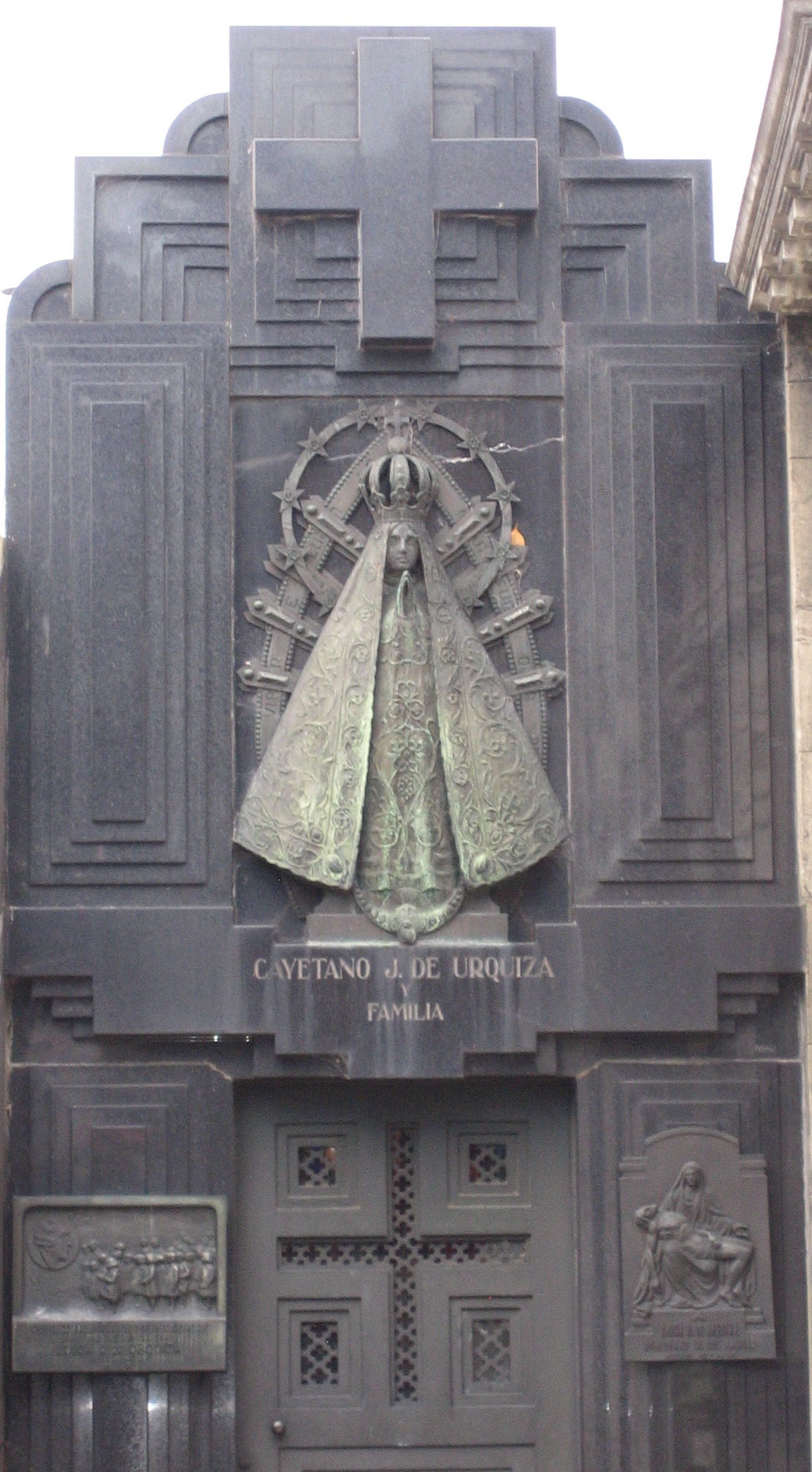
a watchful presence

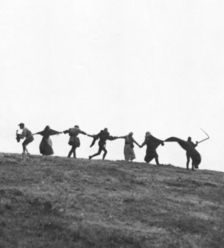
Though you might find sadness here, there is also a feeling of lightness, a sense of reconciliation. Things lighten up, as you are taken on a visual tour of last resting places for your earthly body, if not your immortal soul. My favorite movie on the theme of death is Ingmar Bergman’s classic The Seventh Seal, filmed in 1957. The knight plays chess with death, hoping to win some extra time. He’s depressed, disillusioned, and trying to make it home from the crusades to see his family again. Will he really cheat death?

But the knight does cheat death: the hooded reaper is so intent upon their game he doesn’t notice the innocent young couple and baby slip away. The knight has traded his life for theirs.

beautiful

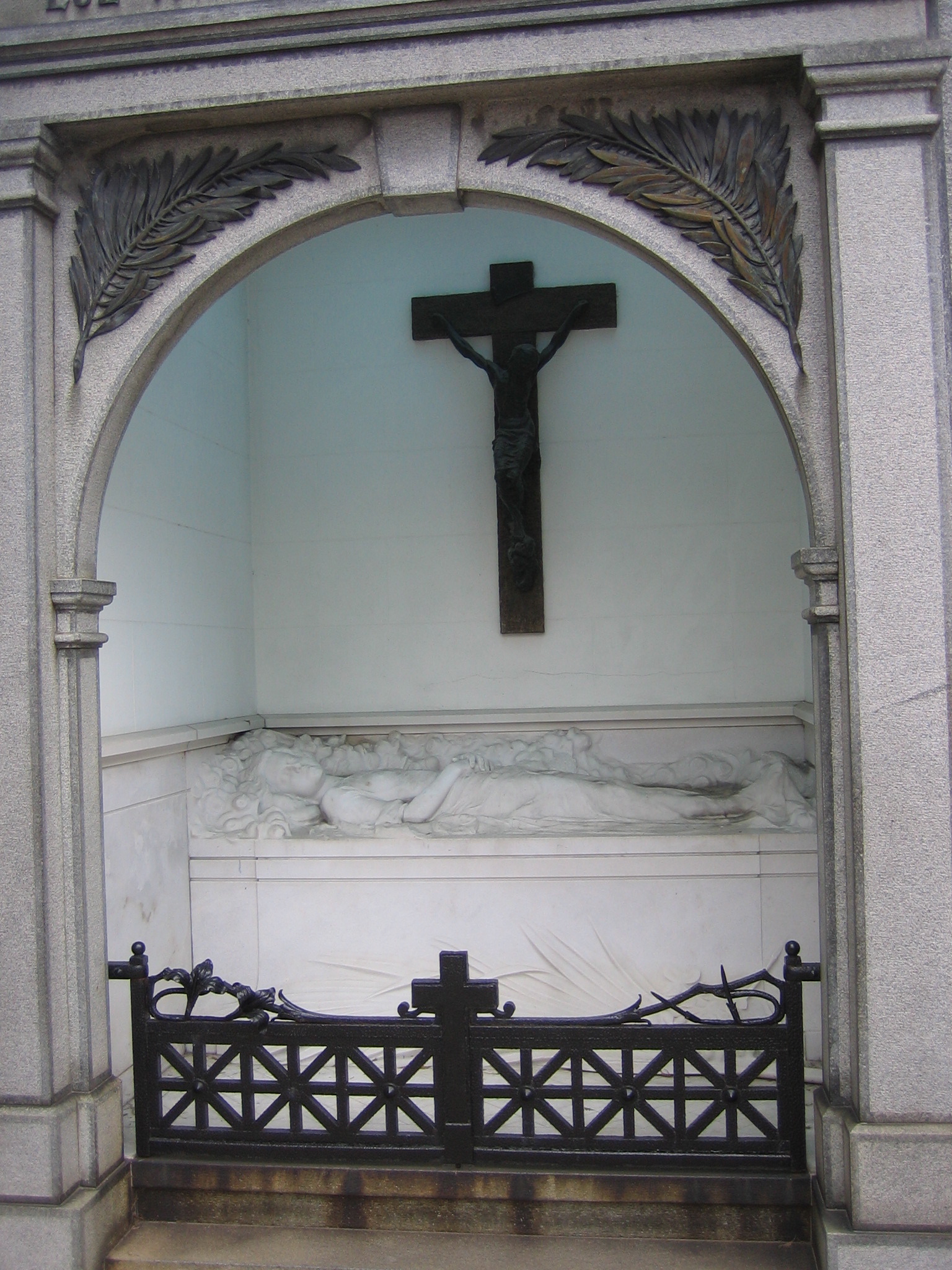
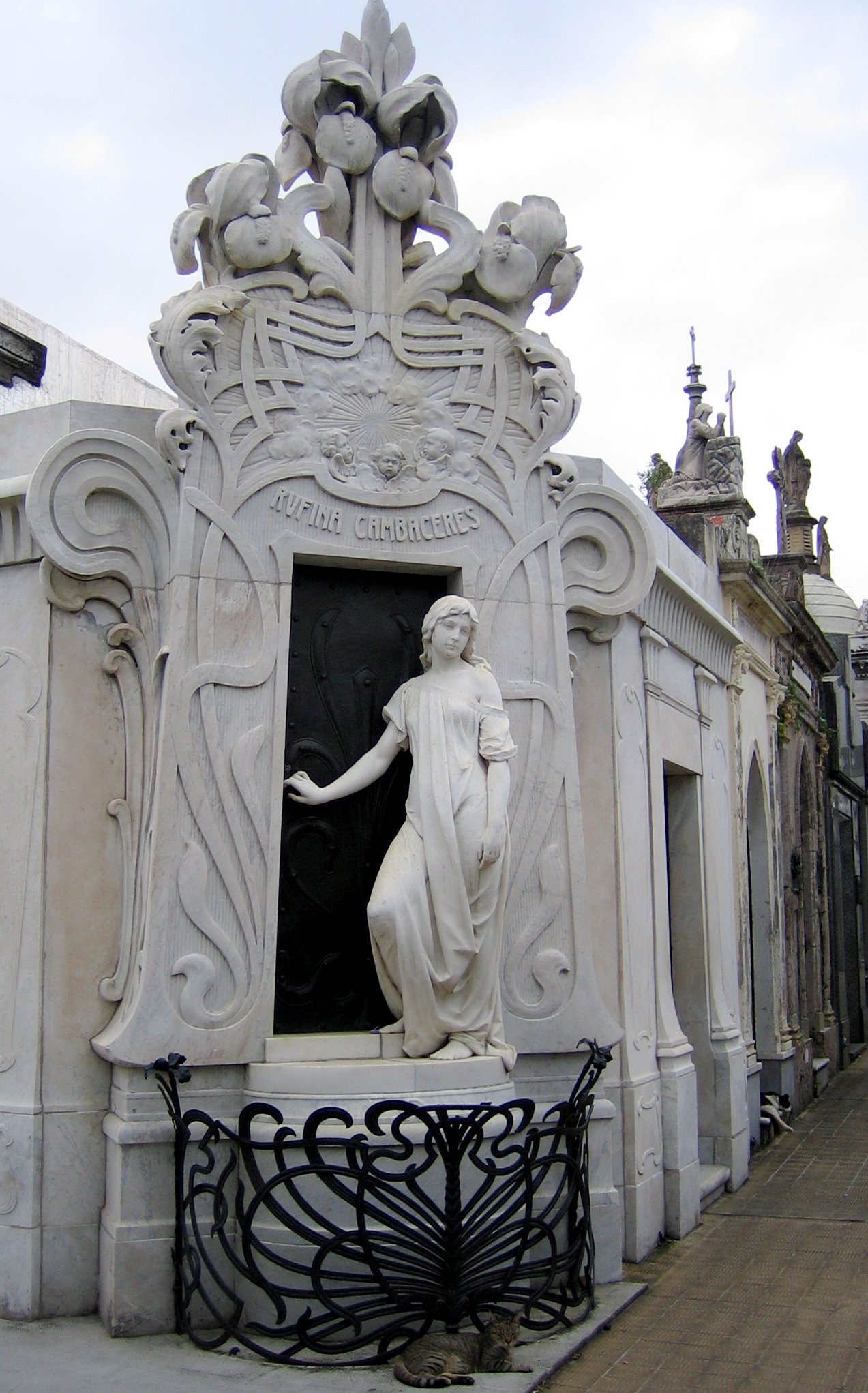
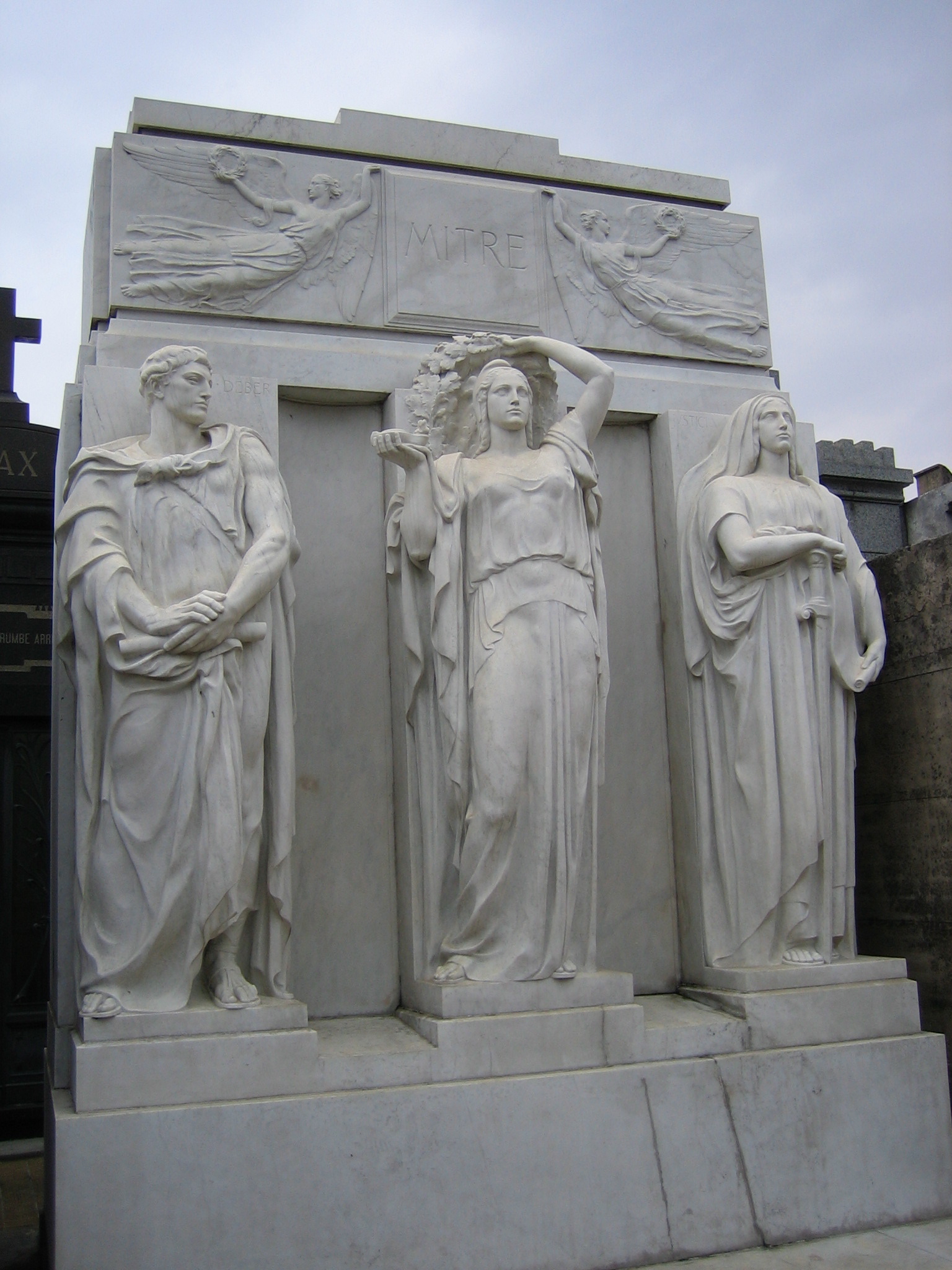
These art deco tombs are streamlined and modern. Looking at them gave me a more detached perspective on death and dying. But this one pulls on your heartstrings: a young girl.  There she is, immortalized in marble.  If you step inside and look up, there is a blue stained glass skylight, and the light shining through is rapturously blue, the bluest blue, a celestial blue.

young girl's tomb

The viewer feels the anguish of losing a child. The more beautiful the sculpture is, the more heartbreaking!

see the cats?

a dead end

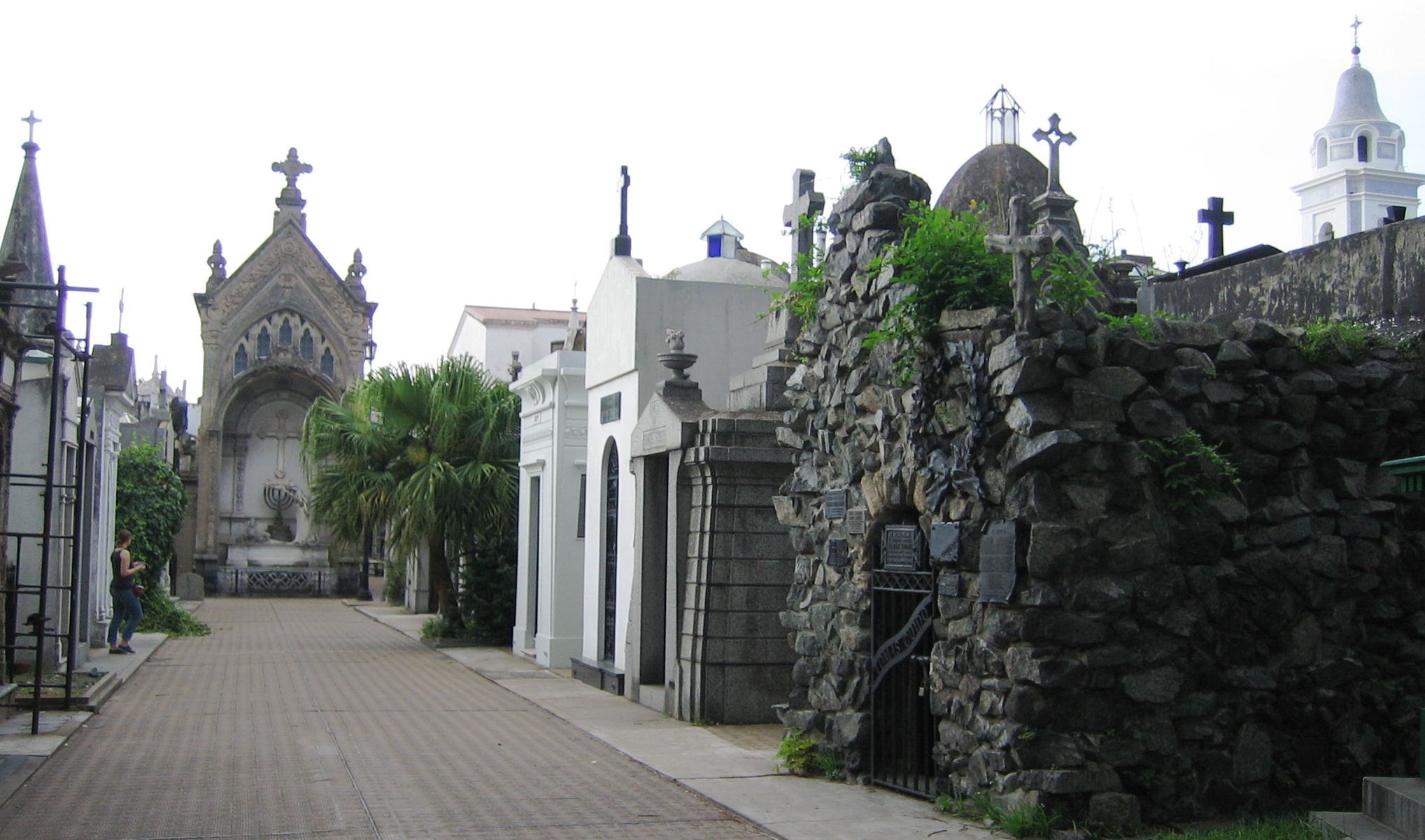
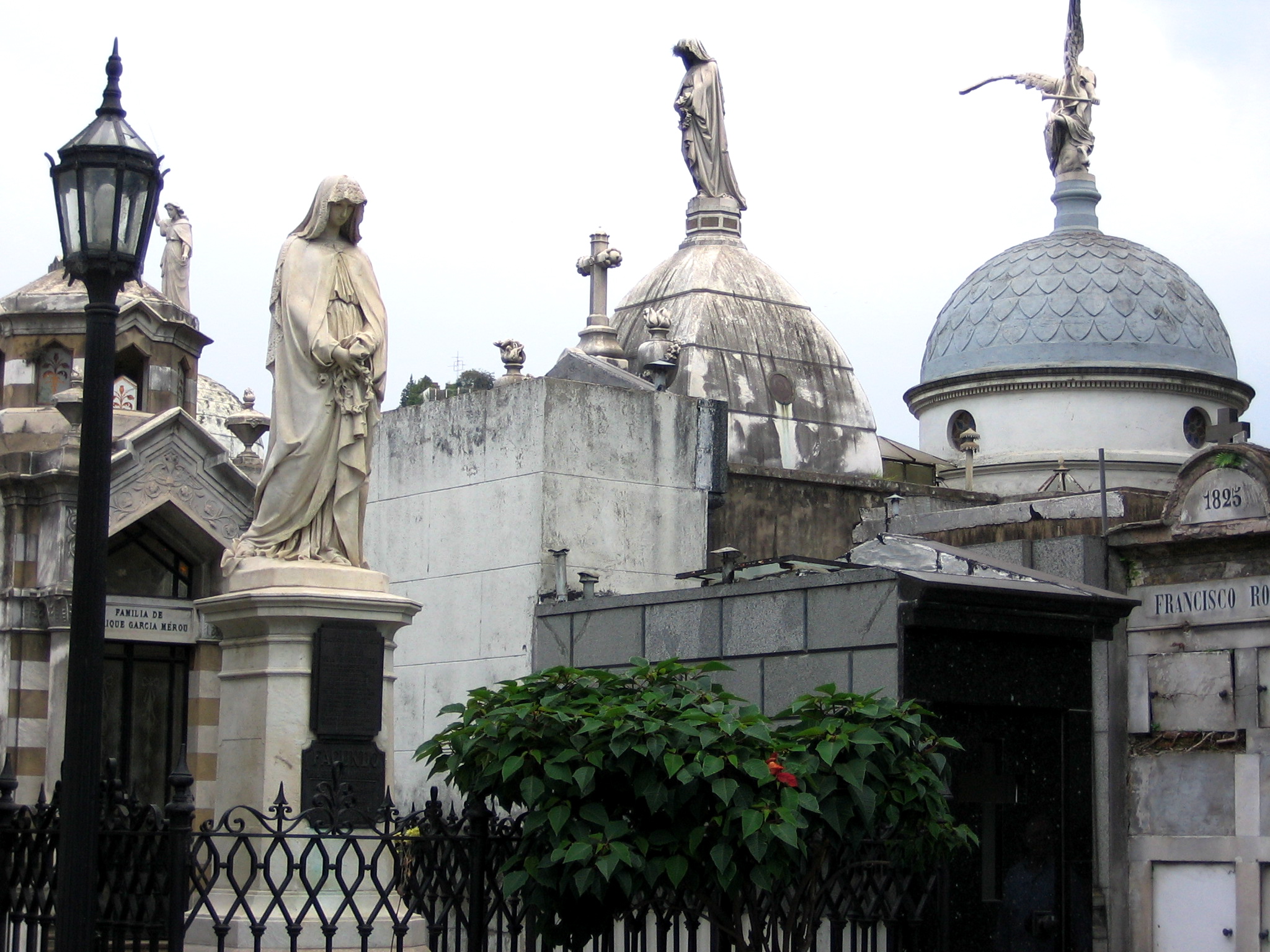
The crowded streets of the city of death, busy with stone saints, angels and likenesses of the dwellers below, do lend a certain spirit of solidarity. Even if your bones are resting 6 feet below, you’re not alone!

gothic spire

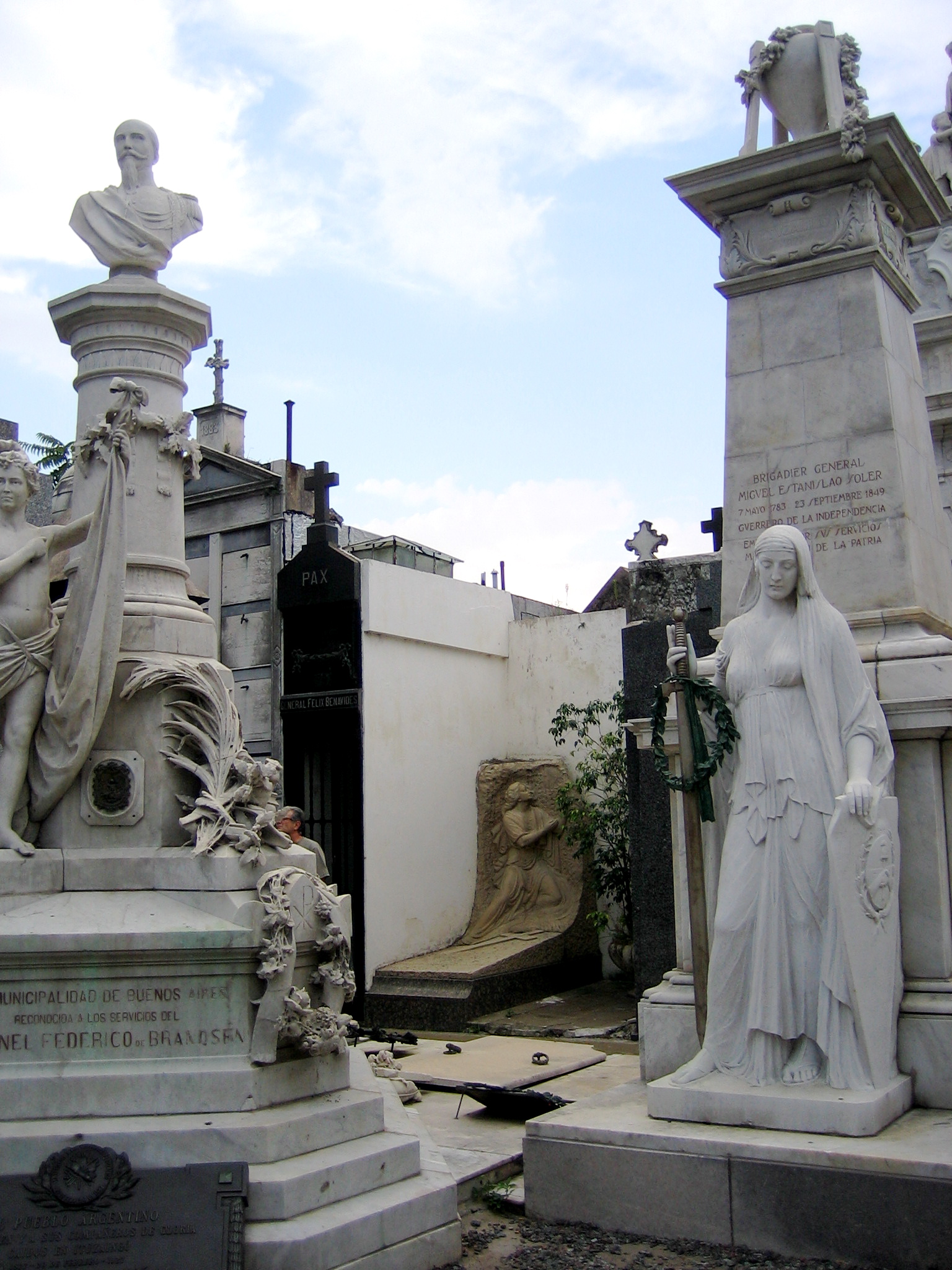
And you’re in the exalted company of the old guard: generals, presidents, statesmen, doctors.  Rich dead guys.  And their families.  The previous couple of centuries’ most esteemed citizens.

Ben at the chapel

The sculptures and statuary abound with angels, wise ones, laurel wreaths and holy palms.

three guardians

This intersection practically needs a stoplight!  Do angels ever have mid-air collisions?

City of the Dead

So many guardian spirits!  Amongst depictions of life’s toils, struggles, rewards and recognition.

busy neighborhood

I find this very personal interaction visually compelling.

conversation with an angel

Eva Duarte Perón found her final resting place here, though Perón is buried elsewhere.  Evita’s body took the long, scenic and wierd trip home. You will find the longest lines and prettiest offerings at her tomb.

Evita's tomb

But Kristina, la Presidenta, in her efforts to be placed upon the same cloud, consciously and opportunistically evokes Eva’s image daily. So I’m not sure how rested Evita is feeling!

Tomás Guido's cave

This rocky cave-tomb reminded me of the 49ers (NOT the team! please!). I mean the gold panning whisky drinkin’ ones! Those raucous, smelly, flapjack flippin’ miners who married mules and coined the phrase “Whiskey’s for drinkin’, water’s for fightin’ over!”

Fandango in Alta California!

church street

You see many colors of marble in the cemetery, though black and white seem to be the most common.  I get the feeling this guy left someone behind who really missed him:

pensative

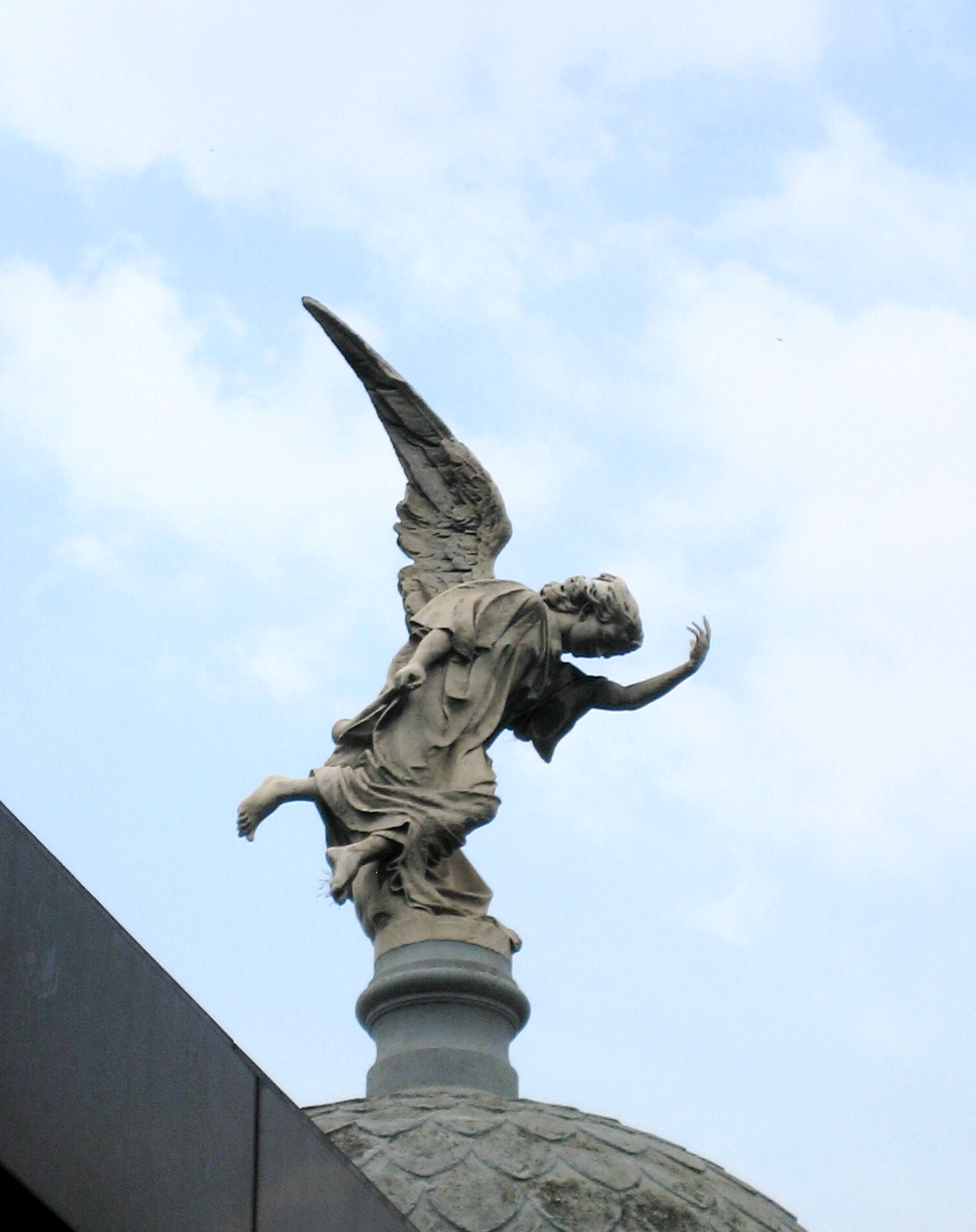
I haven’t quite figured out what this angel is signaling; let’s go? your time’s up? c’mon? Andale!

solitary angel

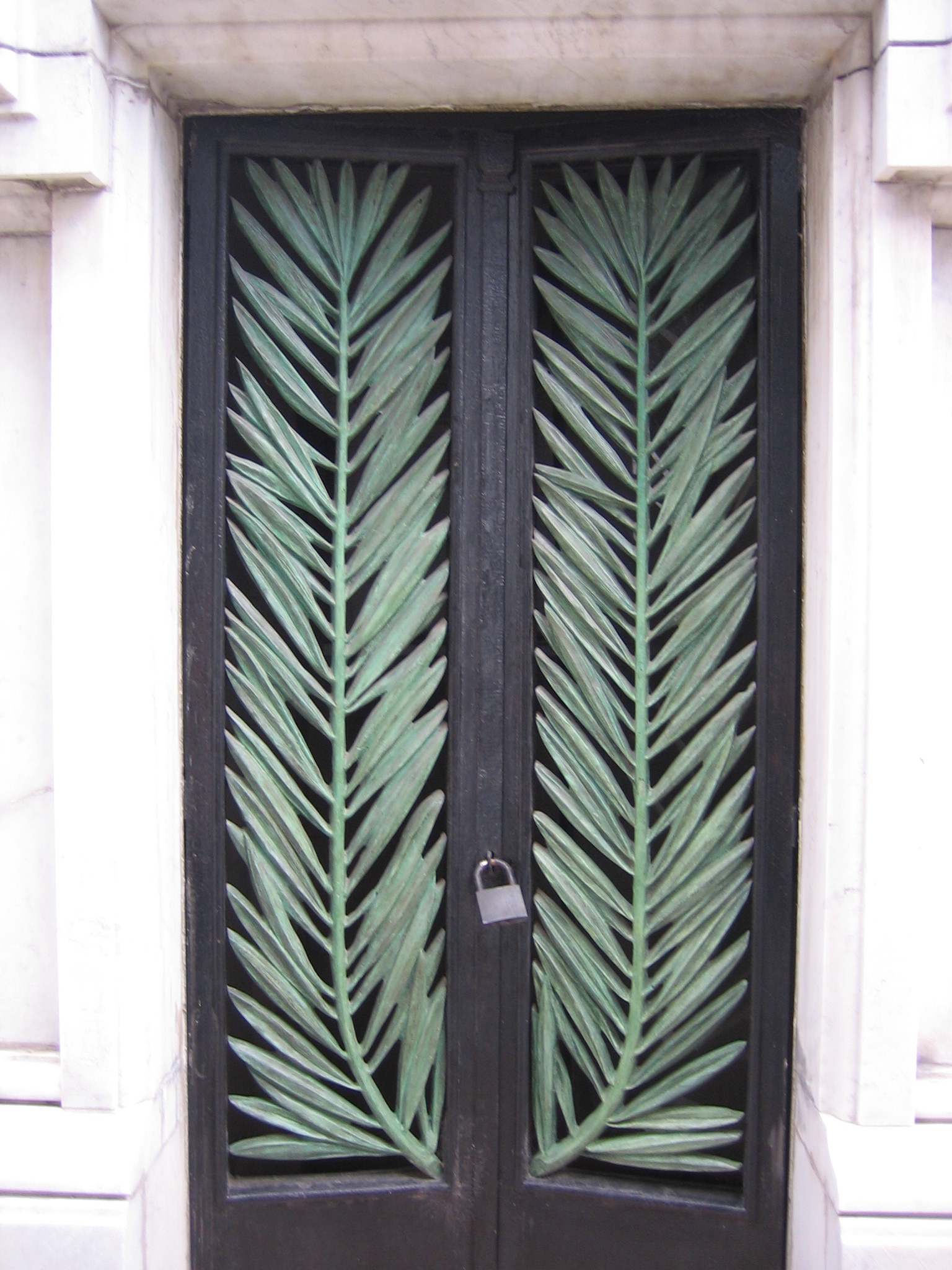
This one with the palm fronds is hard to decipher:

palm doors

But the lock on the doors is no mystery. Keep out! This means you!

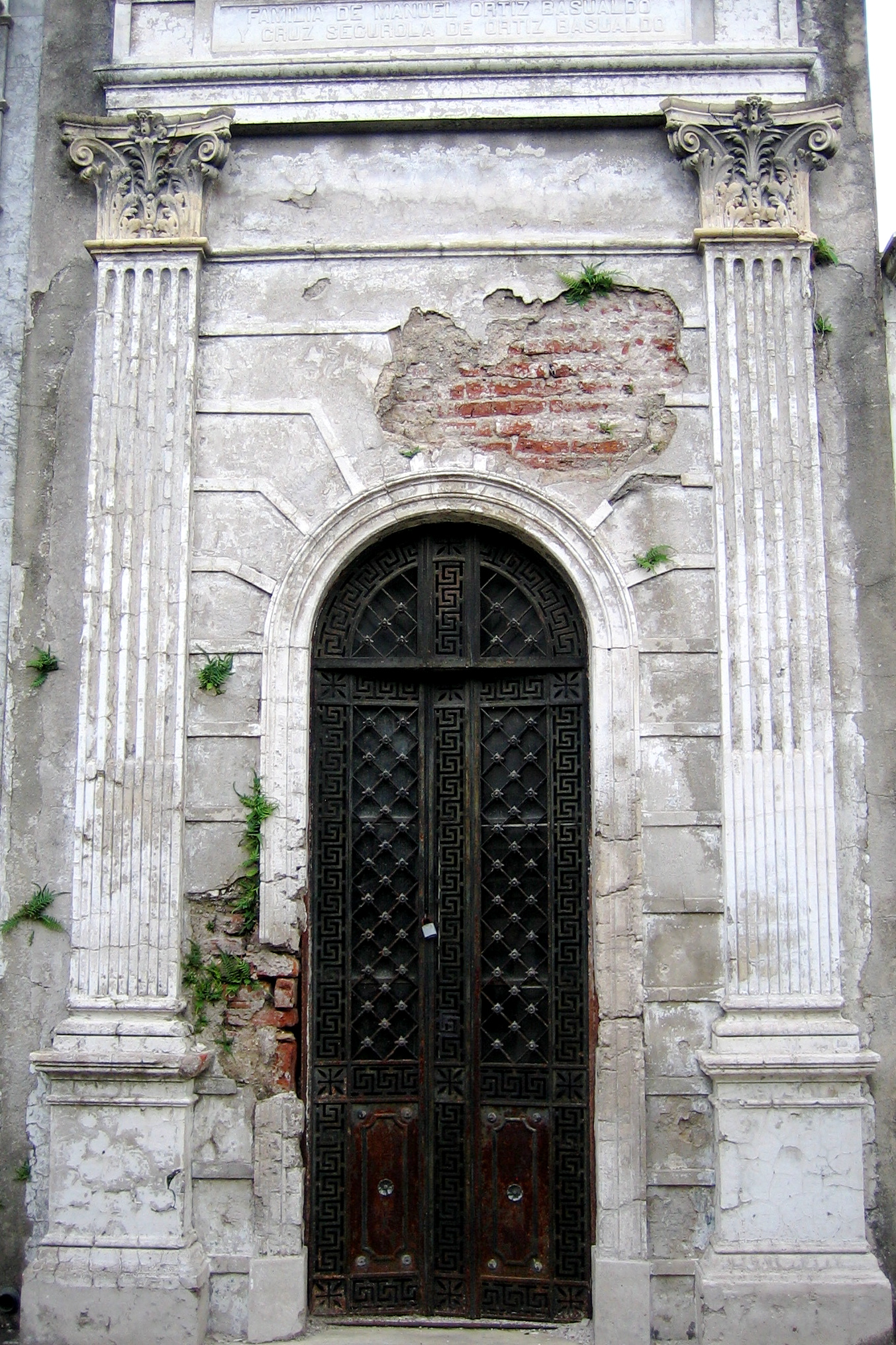
uncared for & crumbling

These neglected tombs make me think about what might have happened to the relatives. Are they all dead? Live in another country? Too poor to spend money on restorations? How sAD.

uncared for & overgrown

When will your time be up?

Our fear of death keeps us from living, not from dying.

a spirit emerging, free at last!

If you were to die today, would you be happy with your life?

Not to worry, eternity will be so relaxing!

Ciao from Buenos Aires!

Colonia: Love and Struggle

We took a day trip across the Río Plata to Uruguay.

Why must we torture ourselves?  Yes, riding the slow boat to Colonia is not for everyone. But we have to get our visas renewed every 90 days or Argentina might banish us! Perish the thought!

Seriously, if you don’t renew your visa before your 90 days are up, you could be charged a hefty fine when you exit the country. Apparently, this fine used to be so laughable (about 30 bucks) that it was actually cheaper to pay it when you leave the country, cause you can spend a lot of plata going across the river and back, especially if you stay in Uruguay for a few days. But with all the expats thumbing their noses at migración, guess what? Last I heard, they upped the ante to $400… who’s laughing now? No prob, we’ve learned there’s always a financial solution to every bureaucratic problem in Argentina.

Show me the money, honey!

We took the slowest, cheapest ferry (about 3 hours and 40 bucks each way) to Colonia. You can relax, read, walk around; the seating area is the size of a movie theatre, with comfy, wide reclining chairs, a snack bar and café, and the best part is…. you can go upstairs for fresh air in your face!  I won’t bore you with a photo, just use your imagination… white boat, blue sky, brown water, multi-colored tourists. The best part was on the way back: we had an astronomer on board. The lights of Puerto Madero sparkled across the water  as we craned our necks on the upper deck looking at visible planets in the inky sky – Jupiter, Mars, Venus – and constellations: the Southern Cross, Orion, the Pleïades. Beautiful!

The tall guy and I find Colonia relaxing: small town, cobblestone streets, outdoor cafés, and plenty of shops selling tourist trinkets and locally made items. We know a great steak sandwich place, and there’s some pretty nice restaurants as well. You can climb to the top of the lighthouse, walk on the wharf, kick back on the waterfront…

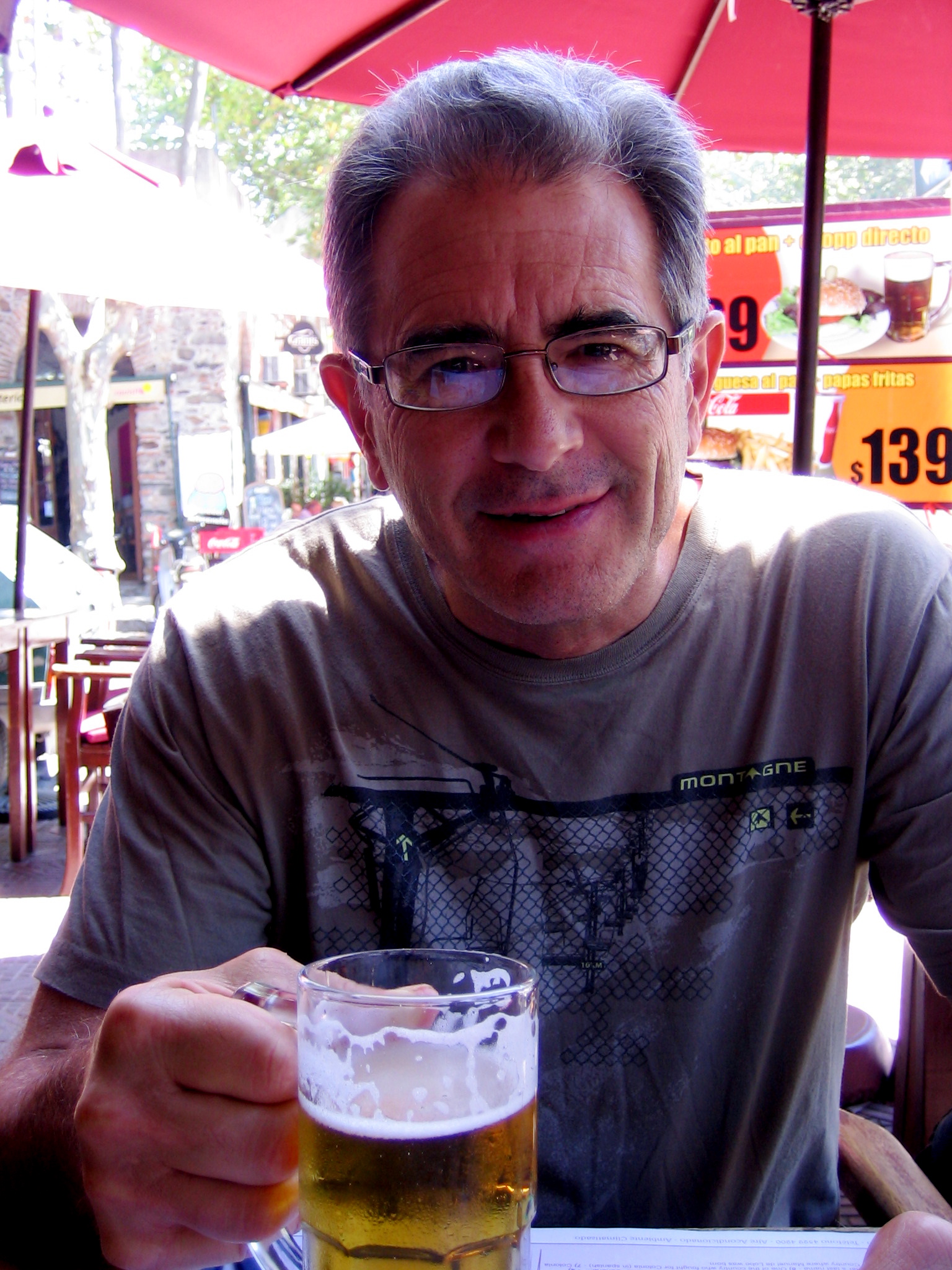
he likes a shady spot and a cold one

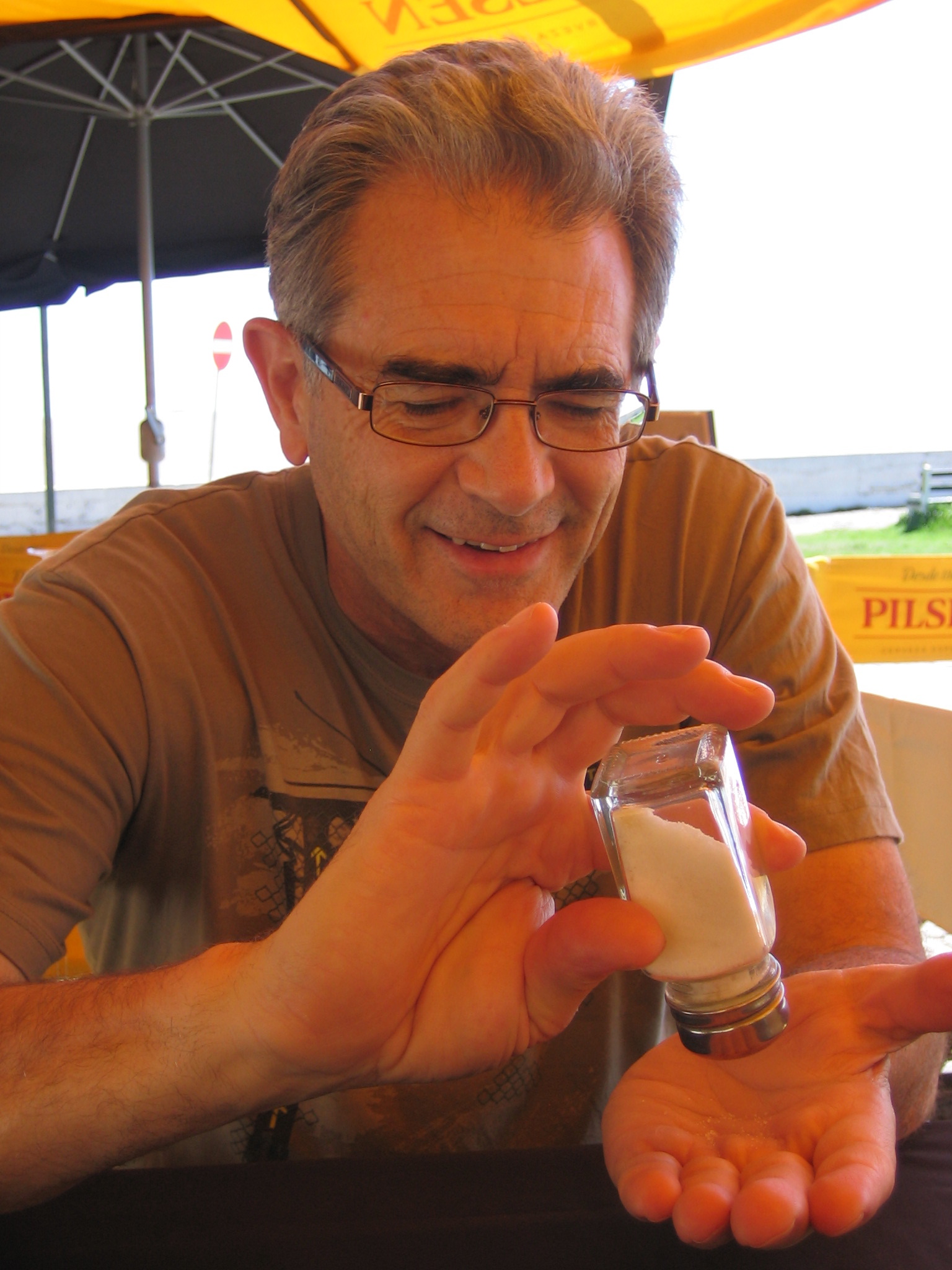
I told him about an old Italian ritual where you toss salt over your left shoulder to keep evil spirits away, and he figured it couldn’t hurt!

a salty dog ritual

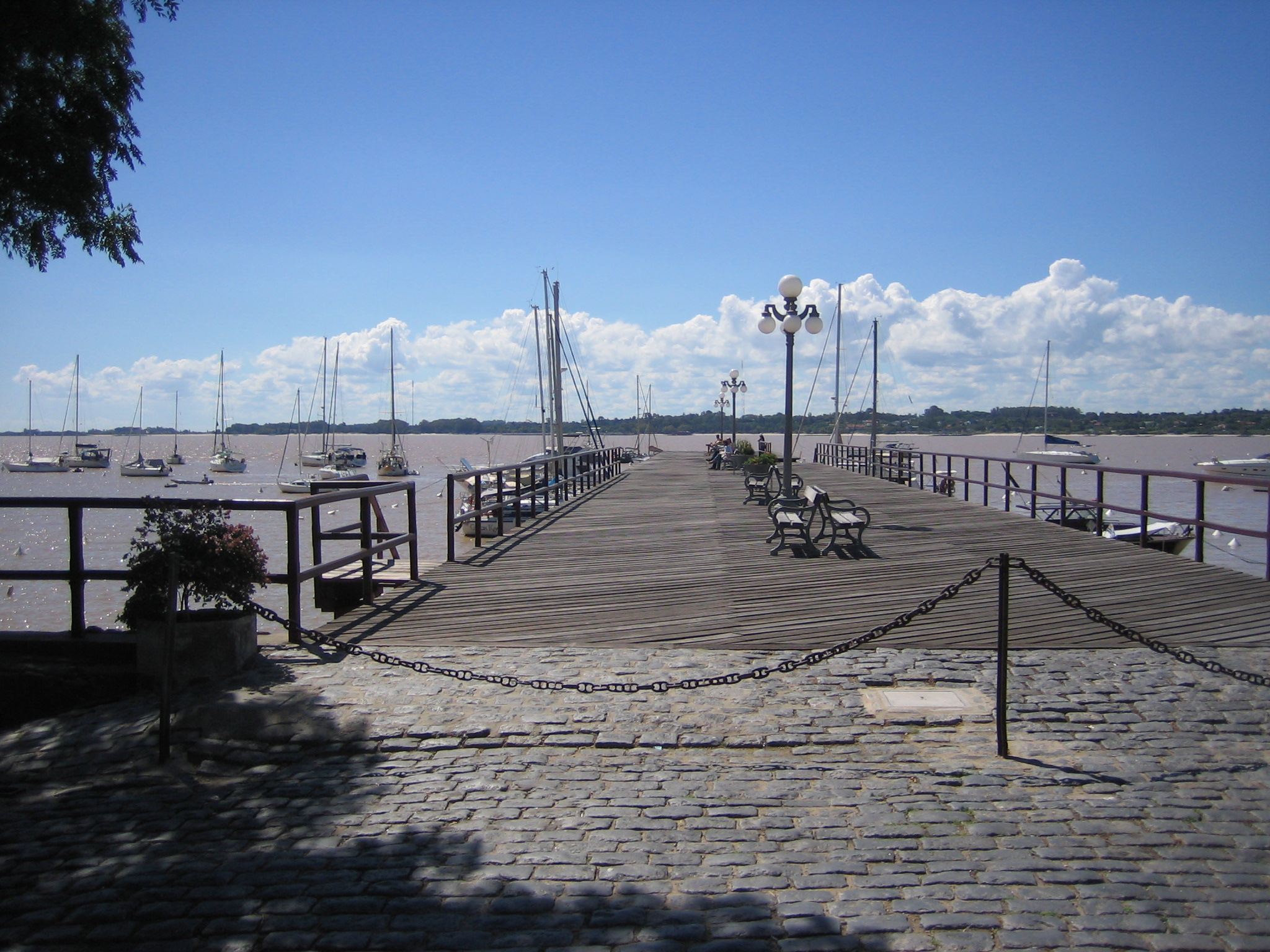
the pier

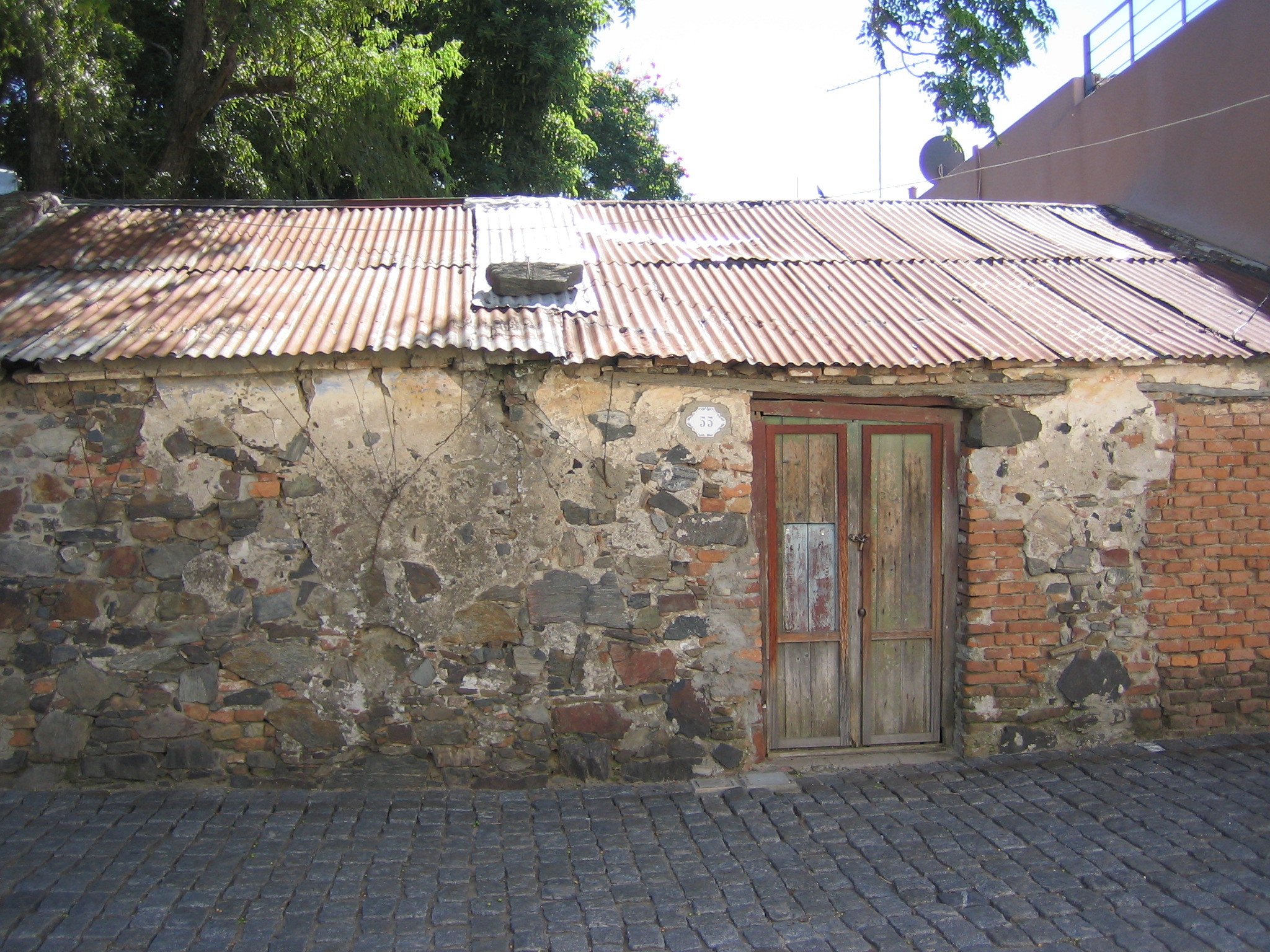
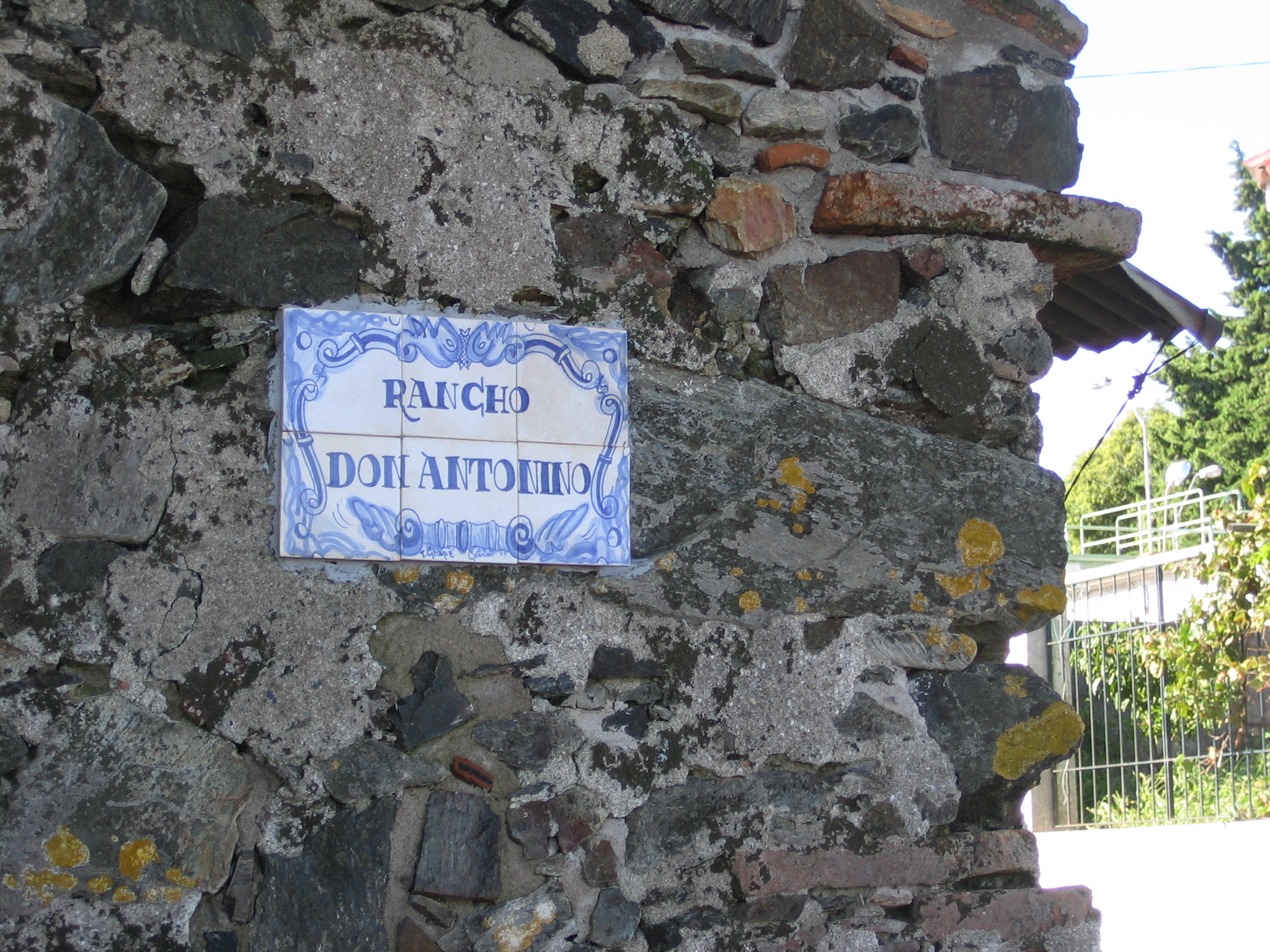
We came across this barely standing old stone bodega, right across the road from the rocky part of the beach, around the point from all the tourist hangouts. A big rock is holding the roof down, and a spider’s web of what looks like baling wire keeps it more or less anchored to the walls. No code violations here: this is Uruguay! Around the side is a pretty tiled name:

Rancho Don Antonio

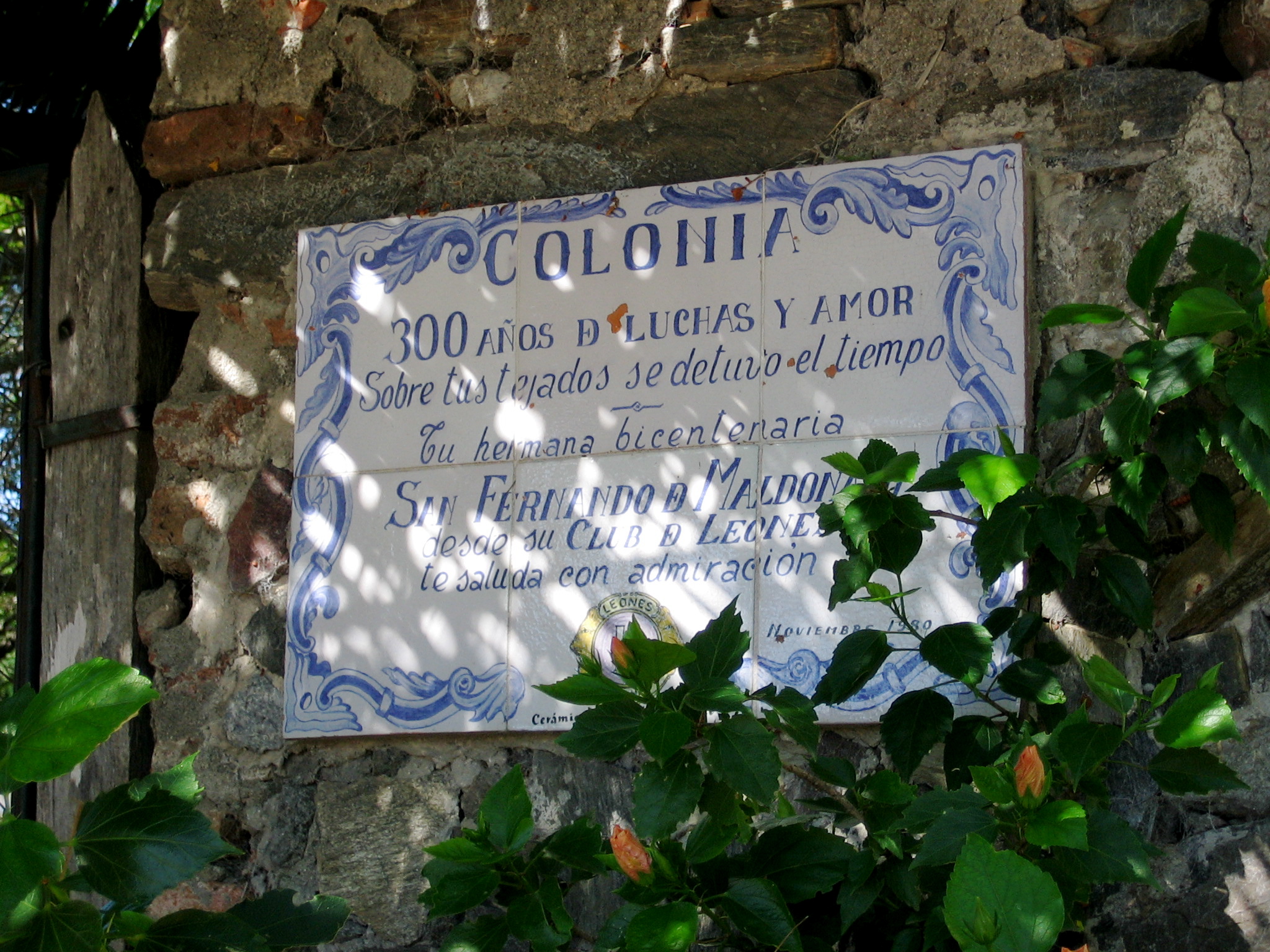
The lovely tiles on another stone cottage (below) were installed on the 300th anniversary of the founding of Colonia (1680), dedicated by Colonia’s sister city San Fernando Maldonado. Nothing like a poet to remind us that the basic themes of human existence really haven’t changed: “COLONIA: 300 years of Love and Struggle… Over Your Rooftops Time Stood Still.”

LUCHAS Y AMOR

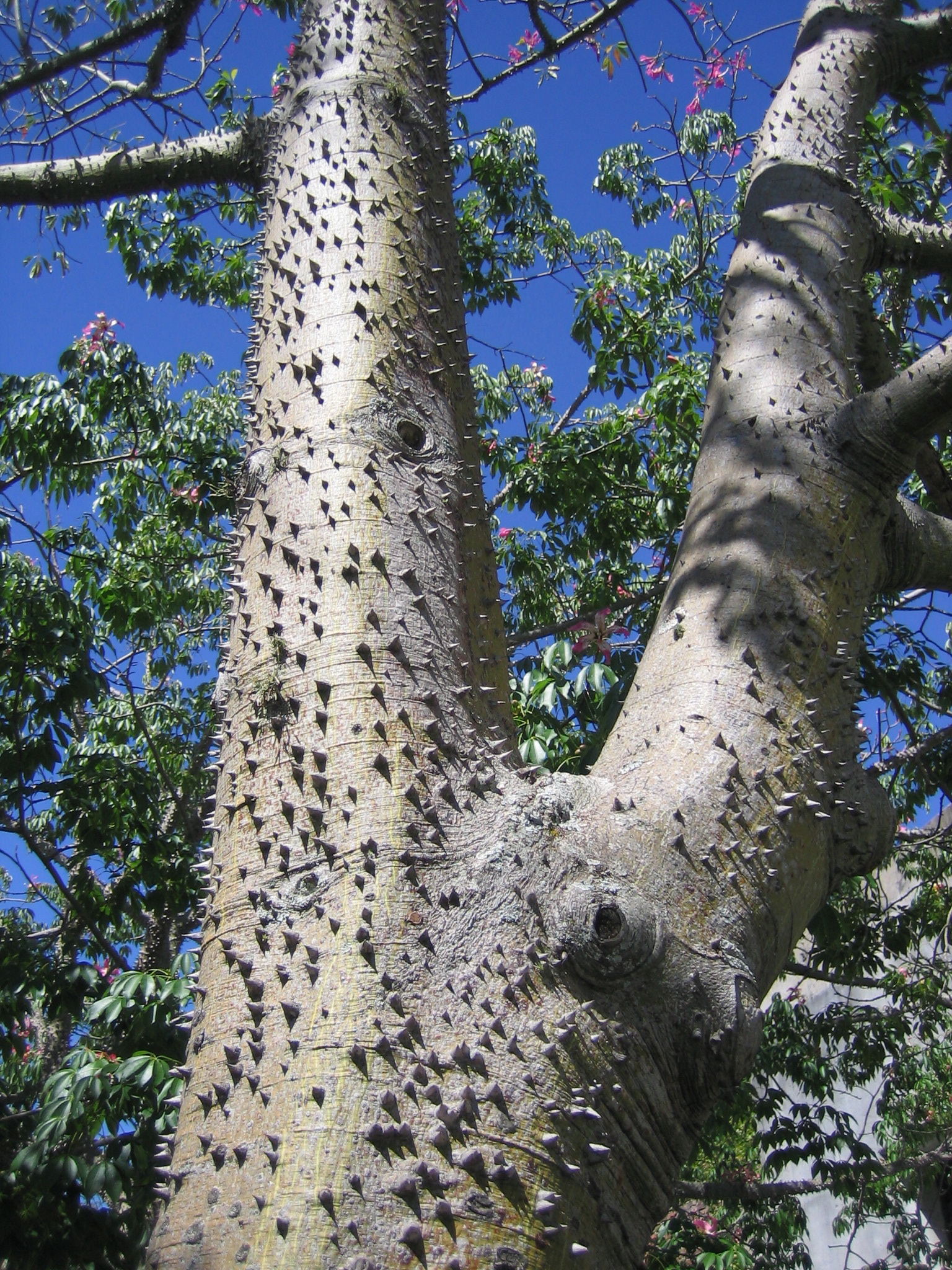
Does all that water flowing under the bridge lead back to the same source? Some call it karma. Like, paybacks. Those with highly-tuned survival instincts have developed impenetrable armor to protect us from the sharp spears of love and the oppressive chains of the daily grind… like this tree: Ouch!

I have NO idea what kind of tree this is!

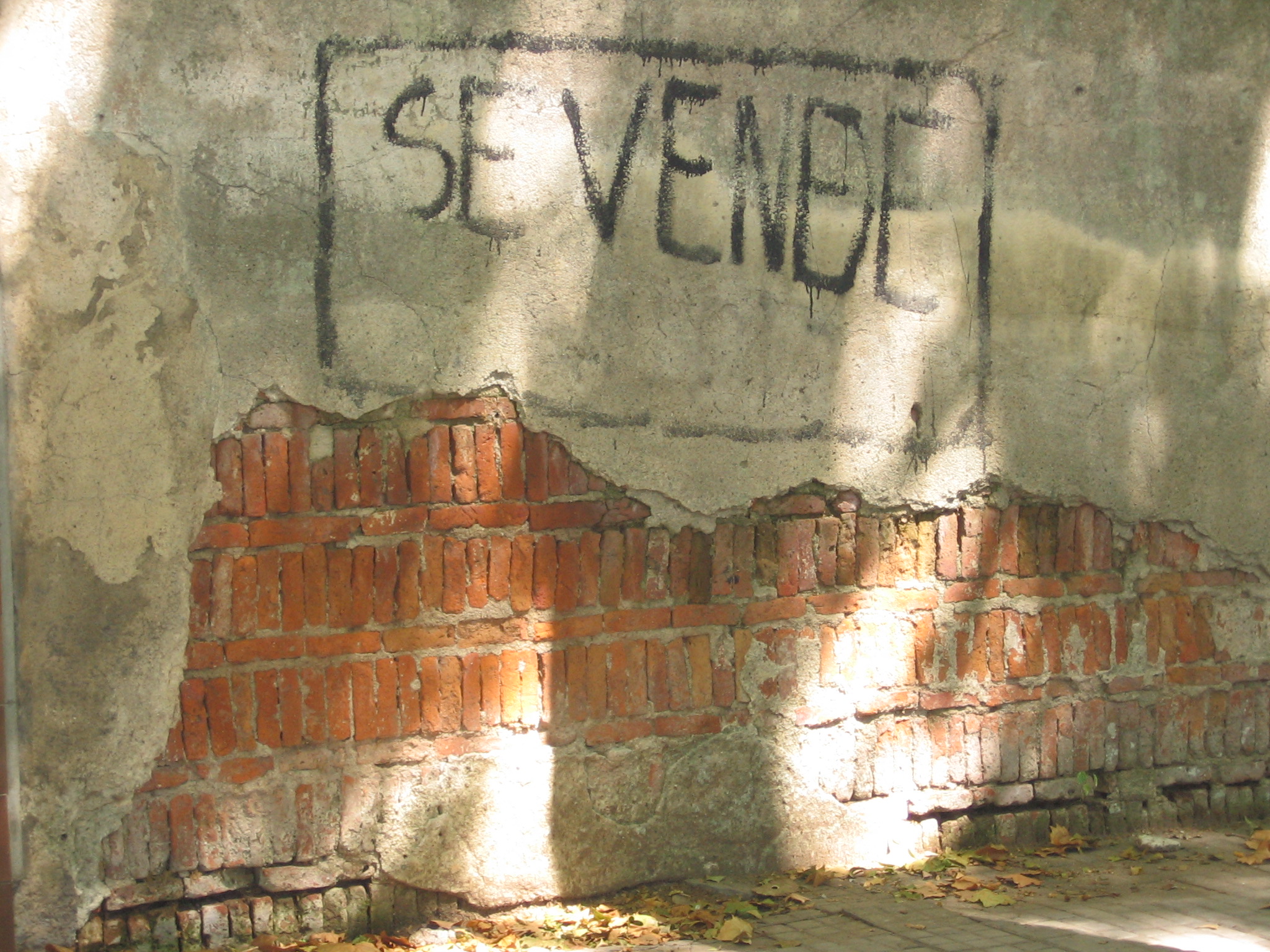
OK, no more philosophizing. You can work it all out on the dance floor, anyway. Isn’t that where tango takes us? To each of us, from each of us, your own particular place of harmony? Polishing that diamond in the rough? Here’s an example of letting go of stuff you don’t need anymore:

a vacant lot for sale

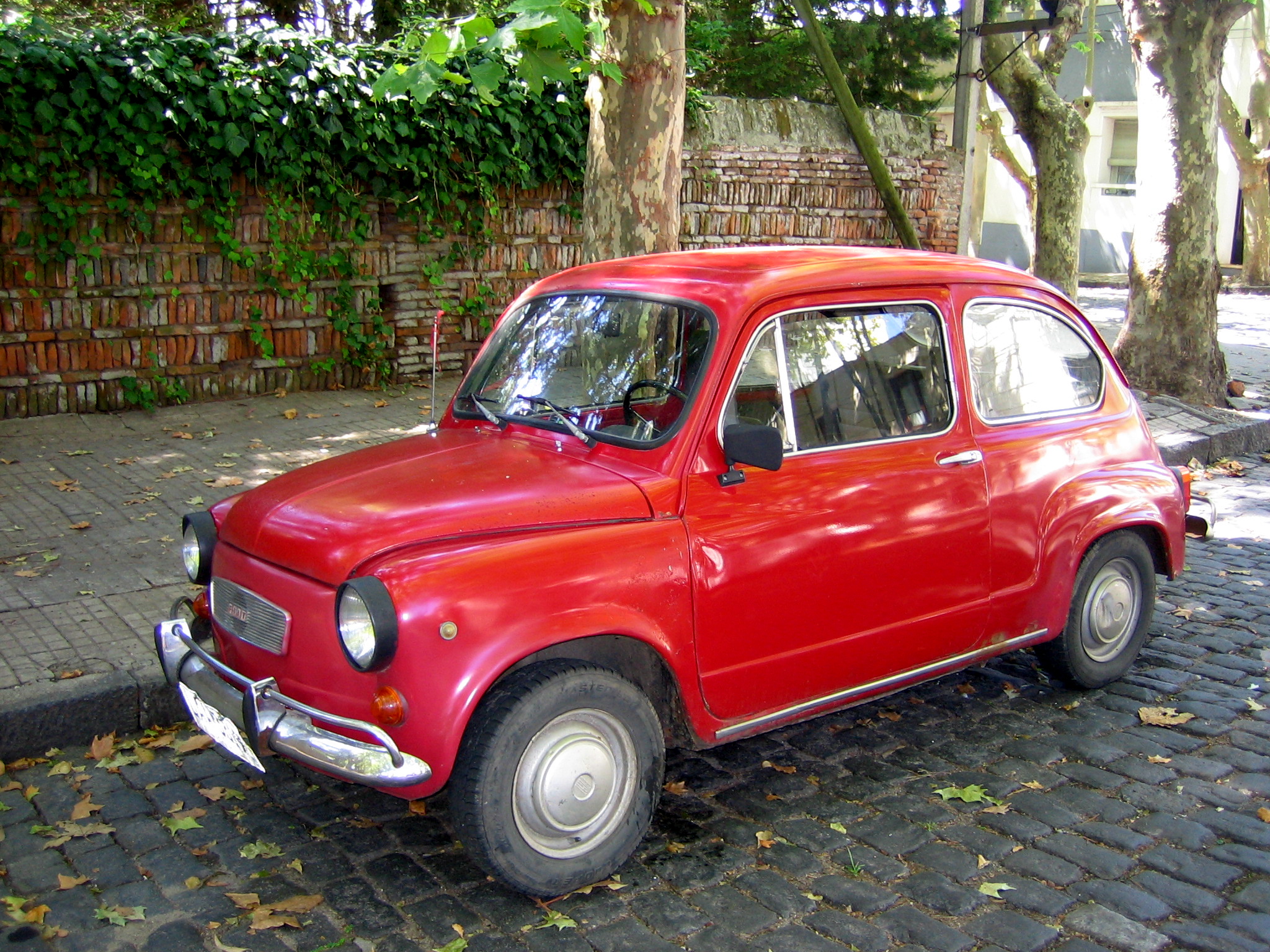
 Some stuff just gets better with time, if it’s taken care of:

like this adorable red Fiat!

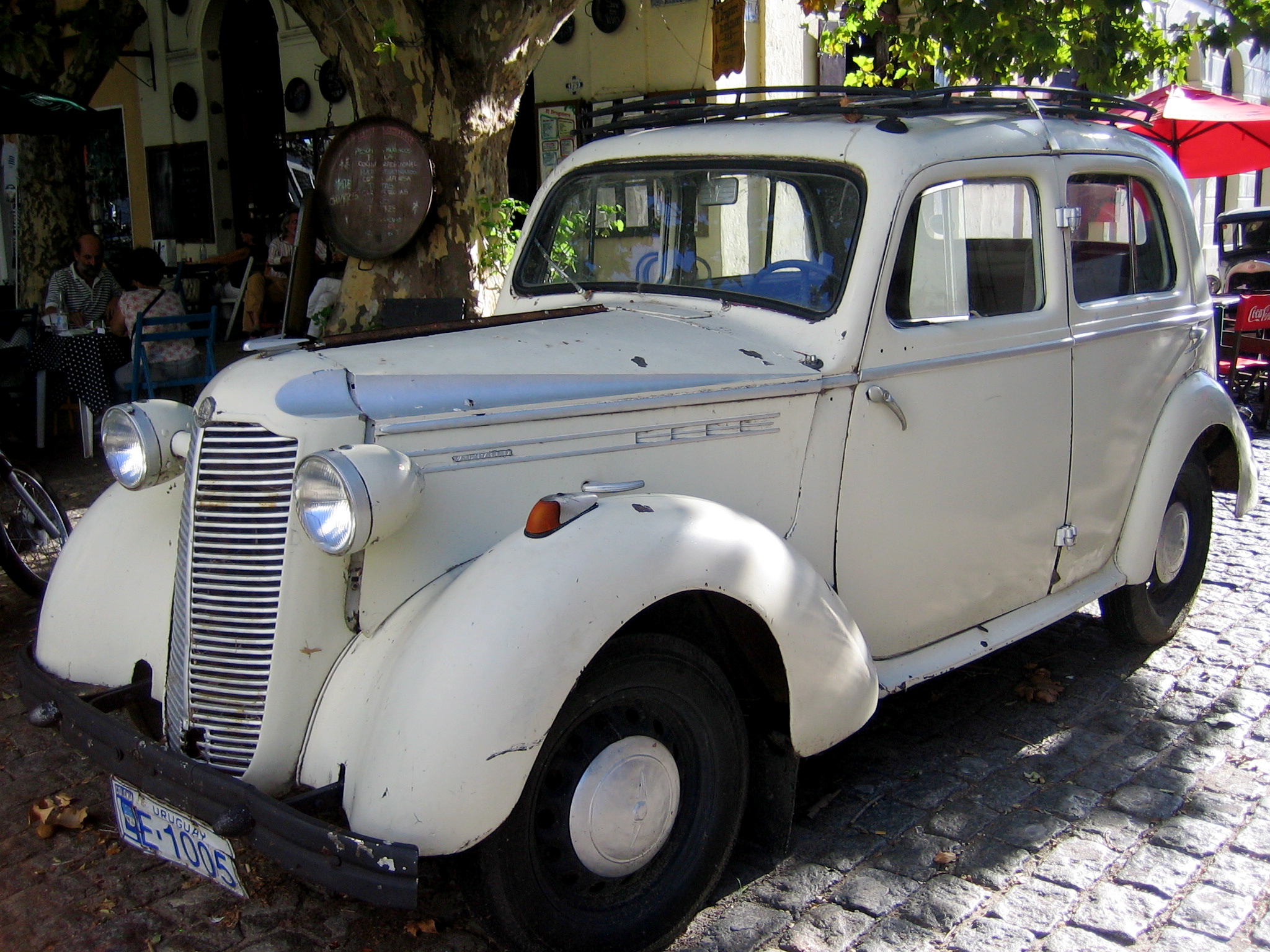
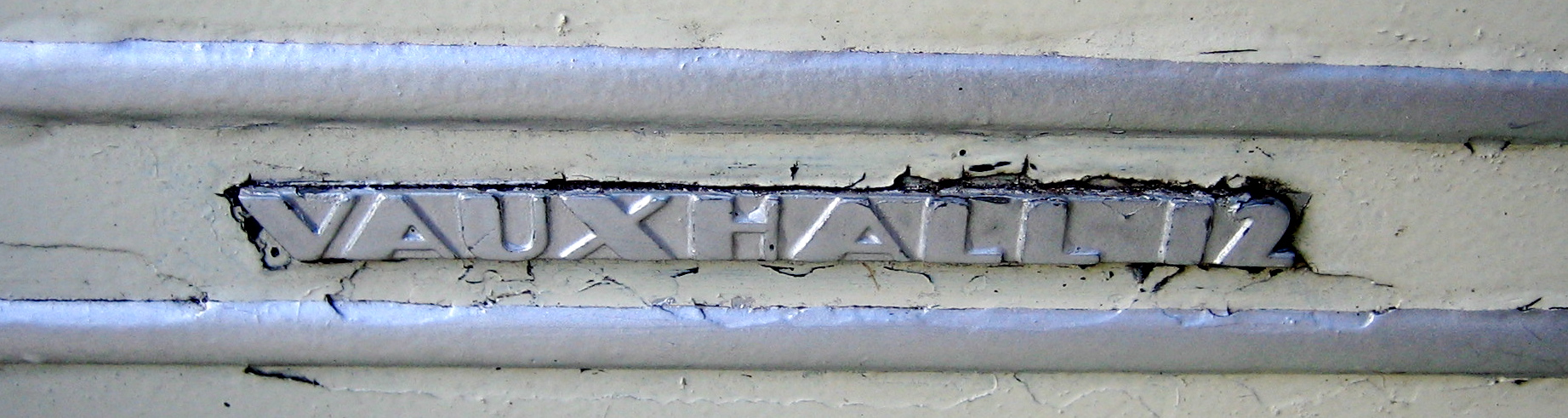
Vauxhall 12 - 1946

I’m not really sure about the production date of this vintage ride, but definitely before 1947… anybody out there have a clue? Let me know! Meantime you can pull up a chair here in Colonia, relax, and…

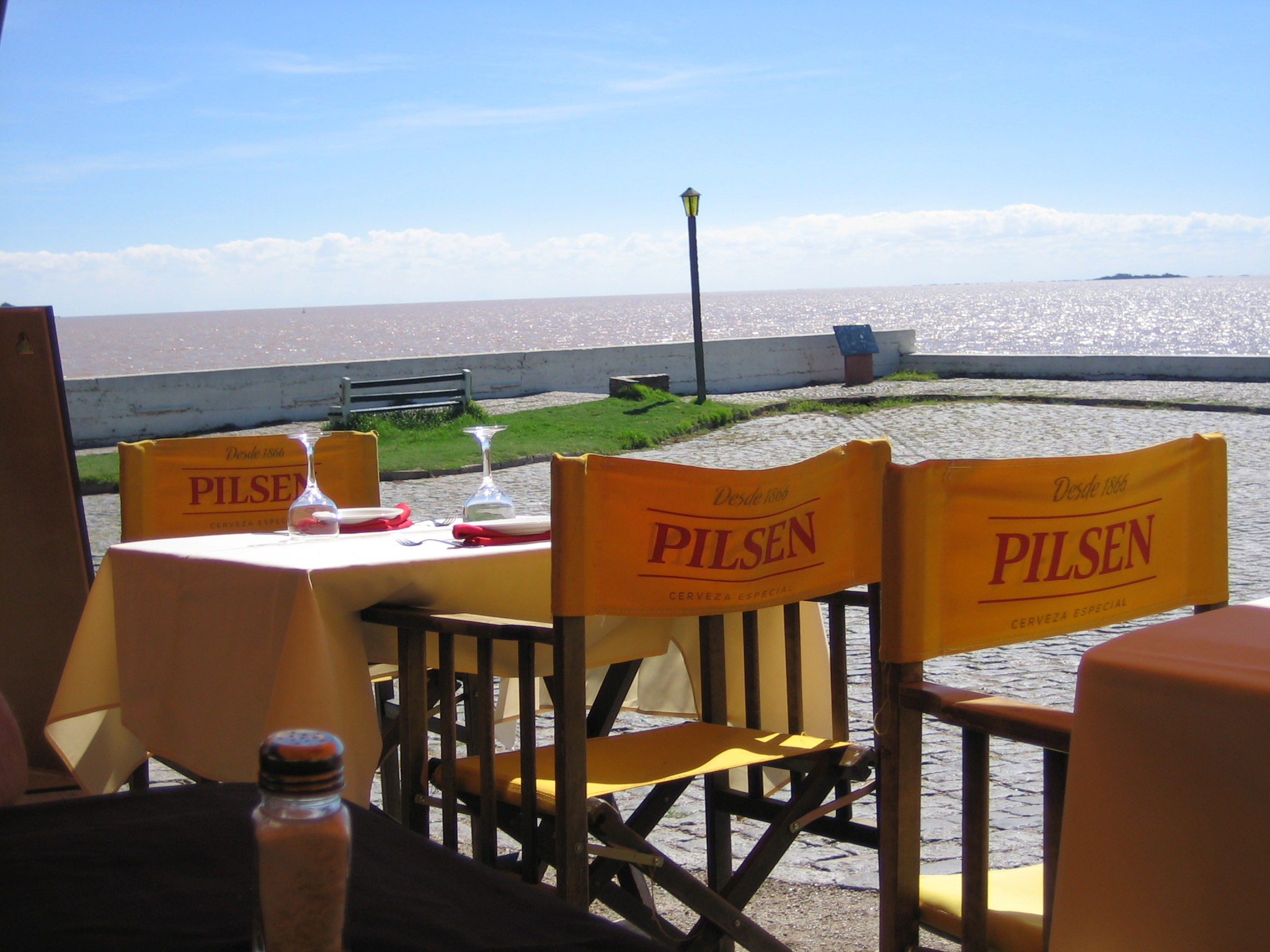
reprioritize your priorities!

I did!

Last minute thoughts and updates:

Friday night we were at Sin Rumbo with some friends and in walked in some awesome Bay Area milongueros: Marcelo Solis and his lovely wife Olga.

We hadn’t seen them since the workshop and milonga at Val and Mary’s last year in Pismo Beach. Great dancers and good people. We spent a few minutes catching up. And I finally got a smartphone snapshot of our friends from Villa Urquiza: Ytalo and Mercedes. This couple lives around the corner from Sin Rumbo, and have been dancing tango since they met and married 60+ years ago. They can still cut a rug!

Ytalo and Mercedes Sánchez

Last wednesday we also had the pleasure of seeing Facundo Posadas and his beautiful dance partner Ching-Ping. They took a table next to us at La Nacional; we visited.  We have taken classes with Facundo in Buenos Aires, New York, San Francisco, LA, and Sacramento. The guy gets around! (Hey! So do we!) He’s a living legend fabulous milonguero!

Tangueros from all over planet earth are in Buenos Aires this week for CITA: Congreso Internacional de Tango Argentino. What does that mean to you?  Well, if you’re here, you know that milongas which are always crowded become absolutely impenetrable! Let’s hope you’ve been practicing dancing with your partner in less than one square meter!

Ciao from Sueño Porteño in BsAs!

BA FLAT FOR RENT: a friend of mine from Italian class has a 2 bdrm 2 bath apartment for rent in Buenos Aires, a very nice flat in the neighborhood of Caballito, for a year or more, he and his wife and young daughter are taking an extended vacation with his wife’s family in Andalusía. Gustavo can be reached at: gustavogonzalezboccia@hotmail.com.

Living in Tango Paradise

Who is this guy?

I predict that Leonel Messi will be the first official consecrated and sanctified SAINT OF SOCCER!!  I don’t mean a hundred years from now, I mean, LIKE SOON! Within his and our lifetimes! Because he has a gift straight from that upstairs-place, you know, HEAVEN!!  You heard it here first! 

If you’re addicted to Tango, you’re probably interested in all things Argentine, and no doubt you already know about Leonel Messi, Argentine soccer star. Messi, currently playing for Barcelona, is golden. This kid has already made more goals than just about every soccer player in the history of the sport and, at 24, is likely to top that list before 30. Messi is not just a great player, he’s magical. He moves the ball effortlessly around, under, over and through the other team’s defenders, like Clint Eastwood shooting down 5 outlaws before they even have a chance to draw. He’s famously unpretentious, not a showoff, not a bully, just a super nice guy. Once he has the ball and is closing in on the goal, he’s not a one-man show.  He always kicks the ball to his teammates, setting them up for their own goals, but ready to take over and slide one in, and those poor goalies, they just can’t read him, and are always caught off guard. Some people have a sixth sense, others are just barely managing five, but Messi has a soccer sense! We love watching him play with his favorite toy, a soccer ball.

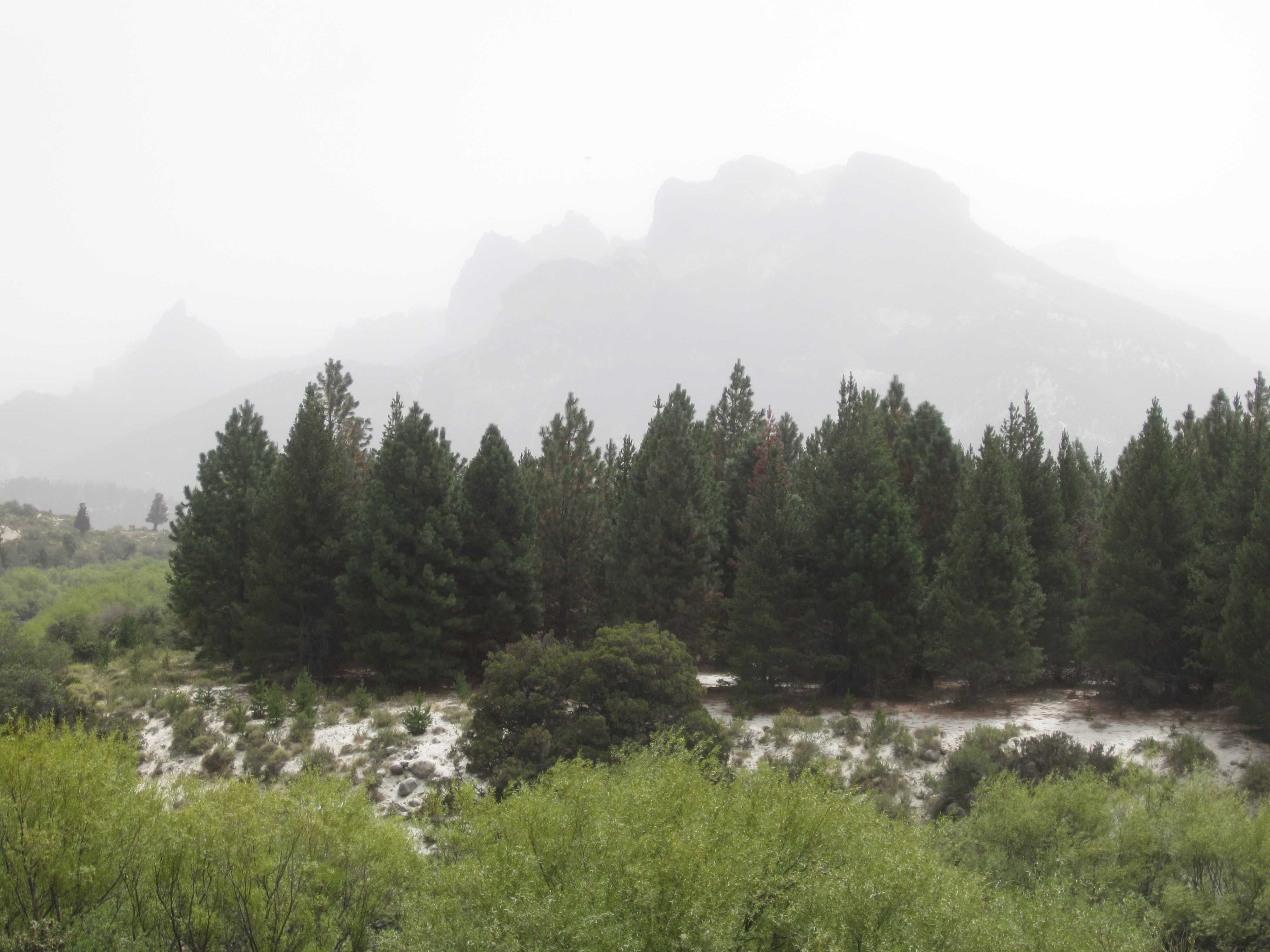
Uh-oh!  It’s back to that old story for a moment, yes, the ashes from volcano Puyehue, just across the border in Chile. Before we left Patagonia we took a day to drive the 7 Lakes Circuit, starting in Bariloche heading northwest. And we did drive part of it, but due to the volume of ash in the air, not to mention the bumpy dusty gravel roads, we only drove through Villa Traful, so shrouded in ash you could barely see the lake, and on to Villa Angosturas, the epicenter of volcanic fallout. Villa Angosturas is still struggling to clean up. They hauled away several feet of ash, but it’s hard to finish the job when the volcano burps and spits out another ash plume every few weeks. Tourists, the area’s main cash crop, are still visiting the lakes but their numbers are way down from previous years. In the above photo you can see for yourself. Ashy landscape en route to Villa Traful: visibility almost nil!

Hotel Llao Llao with volcanic plume

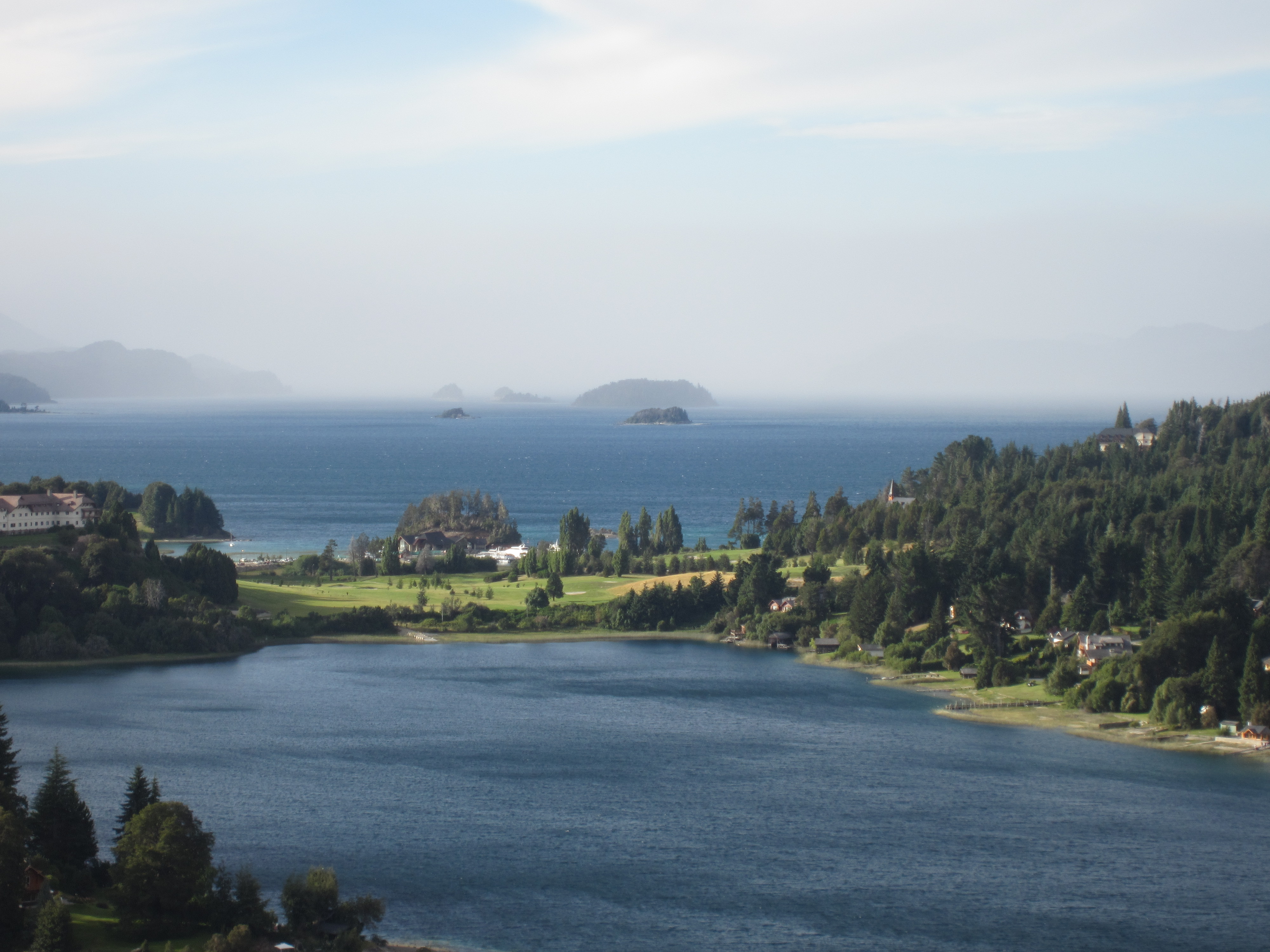
In this photo Hotel Llao Llao is to the far left on a hill. Looking across Lake Nahuel Huapi you can see a giant plume of ash. It looks like fog, but it’s not! We watched this particular plume move in our direction for about 24 hours before it enveloped us. The following day it moved on, the sky cleared, and just a trace of ash remained.

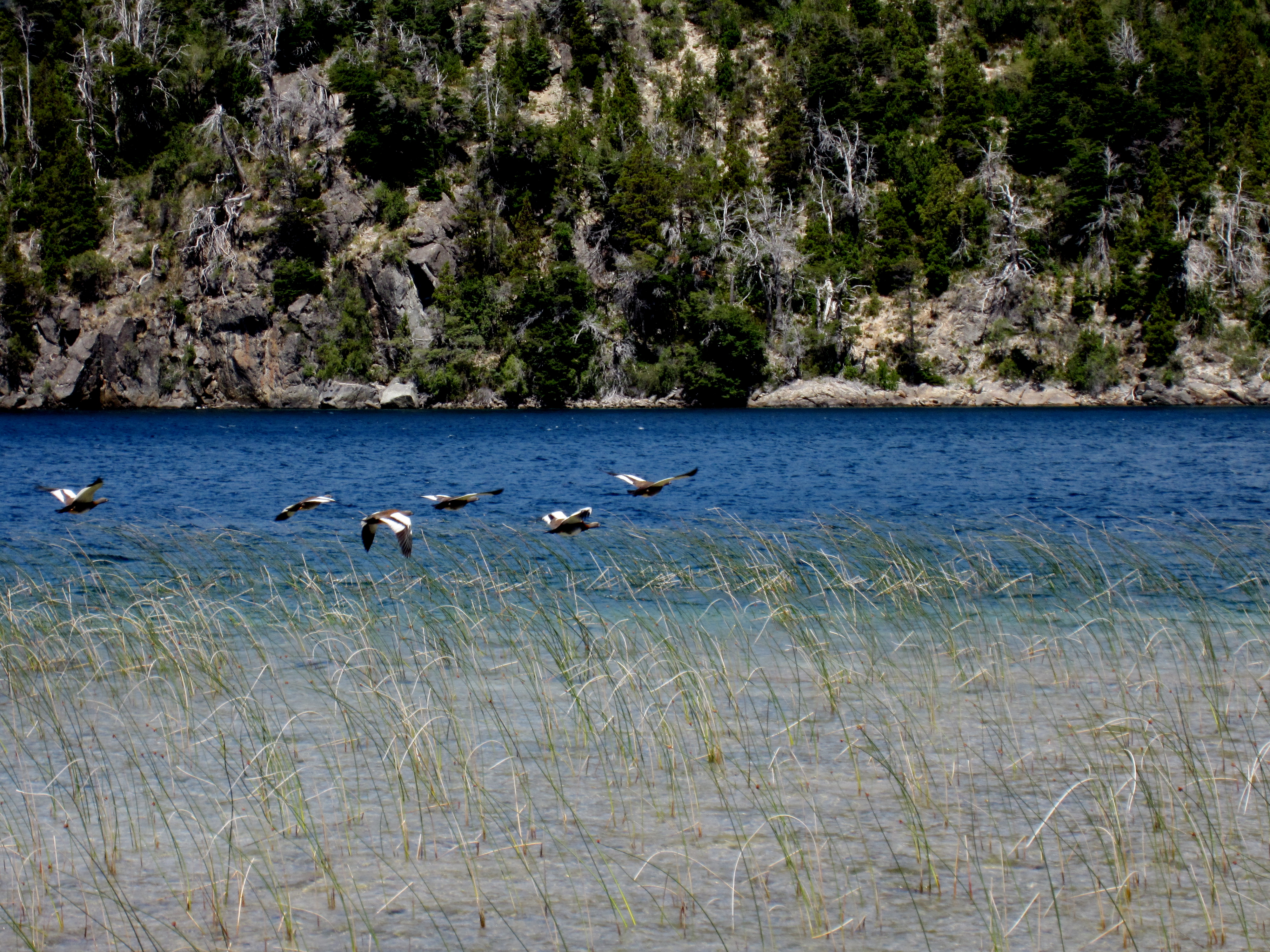
Patagonian ducks at Lago Moreno

Wild ducks were still playing house on the lakeshore, and we  took a nice walk through the Arrayanes forest to the lake pictured above. The sky was clear!

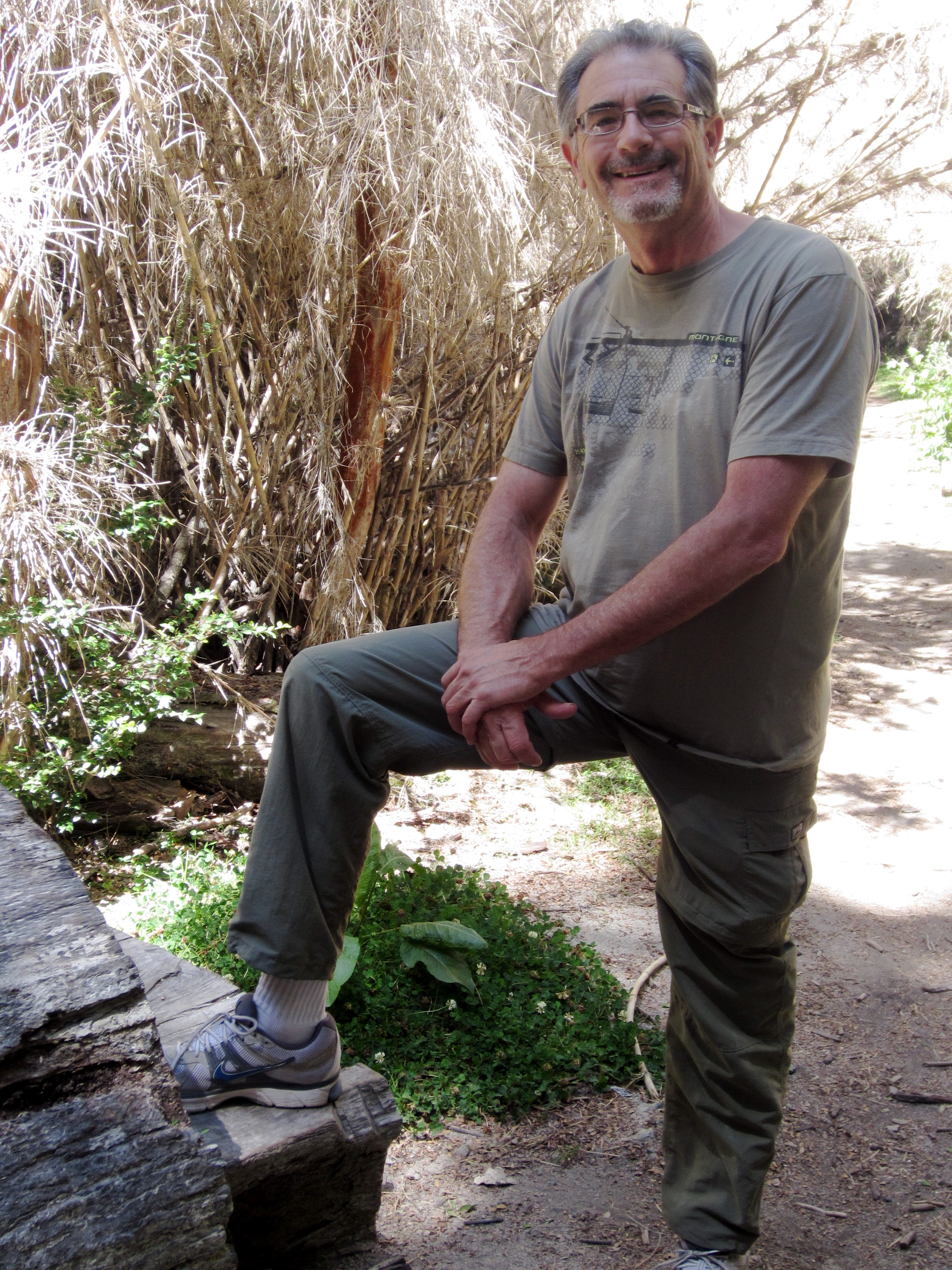
Ben in the Bosque Arrayanes

The tall guy was playing around with growing a beard, and he tried several versions which were unusual, distinctive, and even playful. Wondering how he looks now?

happy and beardless: it was collecting too much ash!

Finally back to the mecca of Tango,  we went dancing at Sunderland with good friends from San Luis Obispo!

me, Ben, Val & Mary

Do we miss our friends from the Central Coast? YES! Did we miss Buenos Aires when we were in the mountains? Yes, but we liked the quiet. Did we miss our apartment? No, not really. Did we miss a lot of tango classes? Yes. Did we miss dancing? YES!!! It’s tough to be a tango addict out in nature. Did we miss the lovely summer weather in Buenos Aires? Definitely! 80°F and humid, with frequent thunderstorms, is close to perfection. 85 – 105°F and dry with no rain for months (back home) is also very nice, but not as thirst-quenching. 65°F and windy (Bariloche) I can do without! But the cabin we stayed in was super nice: Balcón al Lago, Llao Llao.

Back in the city we have some great friends, and boy do they put on some great parties!

Dolores & Guilermo singing on a wabi-sabi guitar!

the girls are ready to go dancing!

Back in Tango paradise, we plugged into the city scene like a set of jumper cables suckin’ down juice from the Infinite Source of all Power: Tango. If you’re tired, stressed, lonely, got a headache, restless legs, whatever your issue, chances are Tango will set you straight. You know how sometimes you need to be around a crowd, even if you don’t know anybody, just to feel human again? Well I feel that way too! I prefer dancing at milongas that are not well lit. I don’t like to feel watched. There are some milongas in Buenos Aires where people dance to be seen: Salon Canning, Niño Bien, Confitería Ideal, Sunderland, Porteño y Bailarín. But I prefer the ones where you can be anonymous, like la Viruta, Sueño Porteño, Maldita Milonga, Café Vinilo, Círculo Trovador, Sin Rumbo, La Baldosa, El Tacuarí, Lo de Celia.  To name just a few. I prefer to dance with my partner, connect to my partner, connect to the music, the musicians, the floor, the community of dancers going ’round and ’round.  Then you can experience the bliss of joining the harmonious whole, the fantastic exotic universe that is Tango. You are just another pair of bodies moving around the dance floor, moving to the same beat and compás, that syncopated beat, the heart of Tango. It’s a healing, harmonious space where the music and your partner hold you close. You close your eyes and just dance.

••• Hey everybody! I hope you like my new web design, it will be even better when I figure out how to customize it. I plan to have 3 columns instead of 2. For now, baby steps!

••• Pretty soon I will no longer send out a notice to my readers. Just click the follow button to continue to receive an automatic notice when I post a new story.

••• And now you can post comments, they are visible on the home page, and I will reply! Va bene?

Ciao from Buenos Aires!

Patagonia: Estancia San Ramón

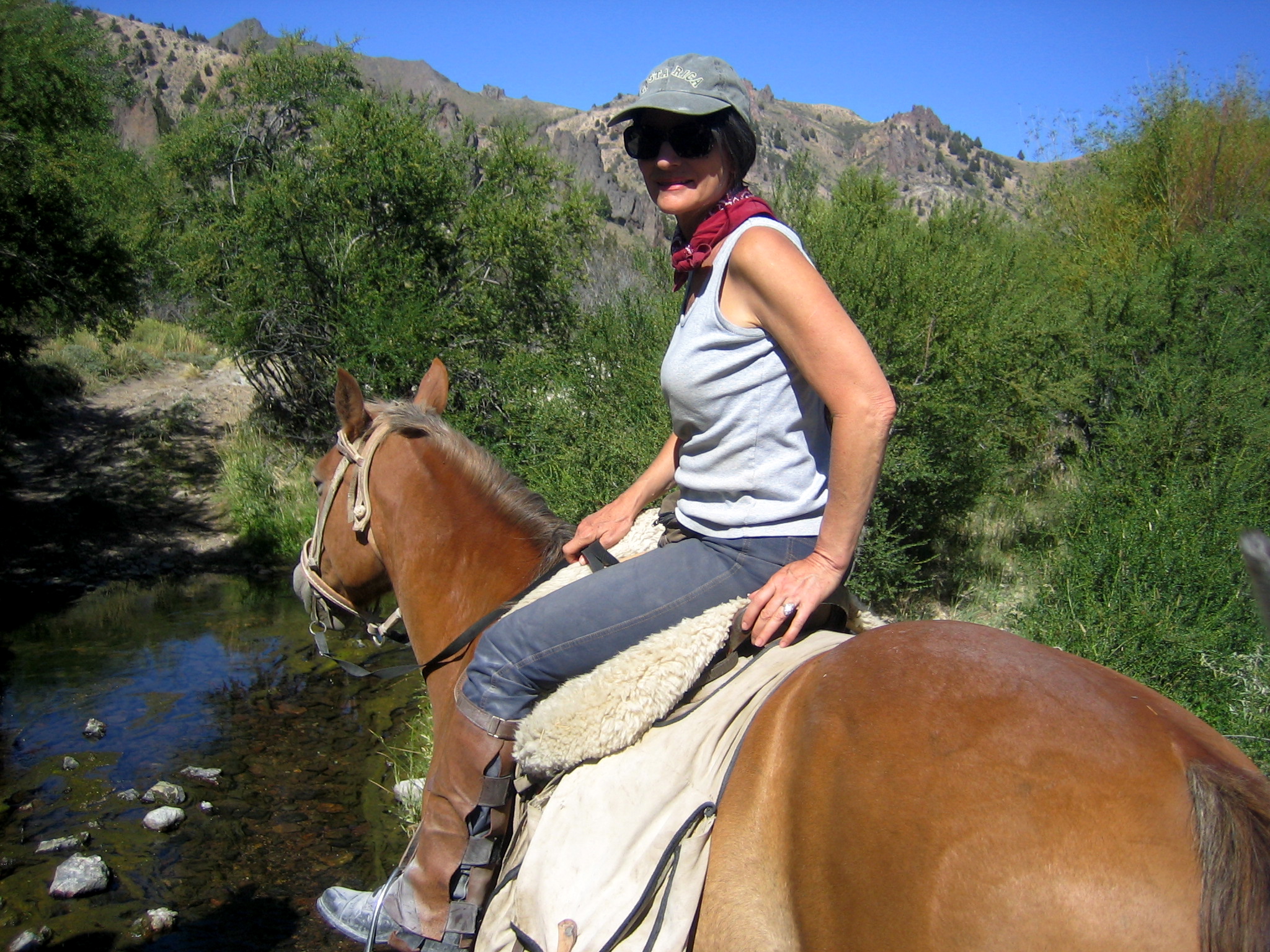
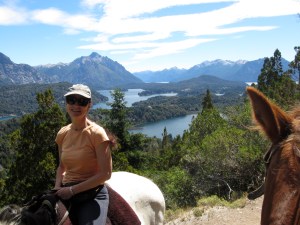
Patagonian cowgirl

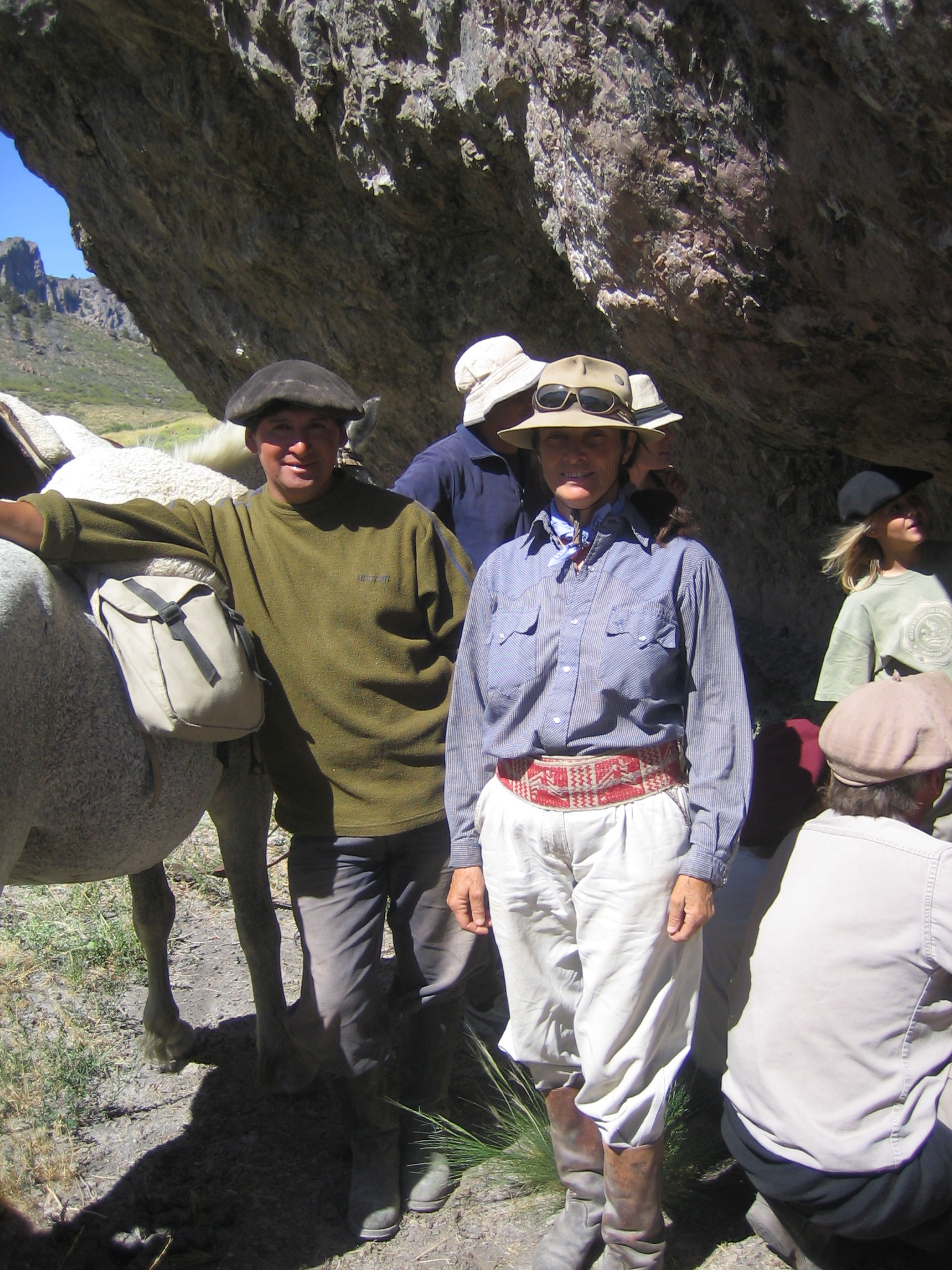
The sun was shining and hot with no hint of wind the day I went riding with Carol Jones. Carol is a genuine gaucha who grew up on Estancia Nahuel Huapi, across the lake from Bariloche. She inherited the ranch from her grandpa, Jared Jones, who was the first white man to settle in the area. He arrived over a hundred years ago, whether heading towards Patagonia or running from Texas, I couldn’t say. But this sureña cowgirl is the real deal: a life lived from the back of a horse. Carol was ranch-raised and began riding and helping out with ranch chores when she was 5 or 6. Her grandpa Jared had seven sons; so she had plenty of aunties, uncles and cousins to play with.

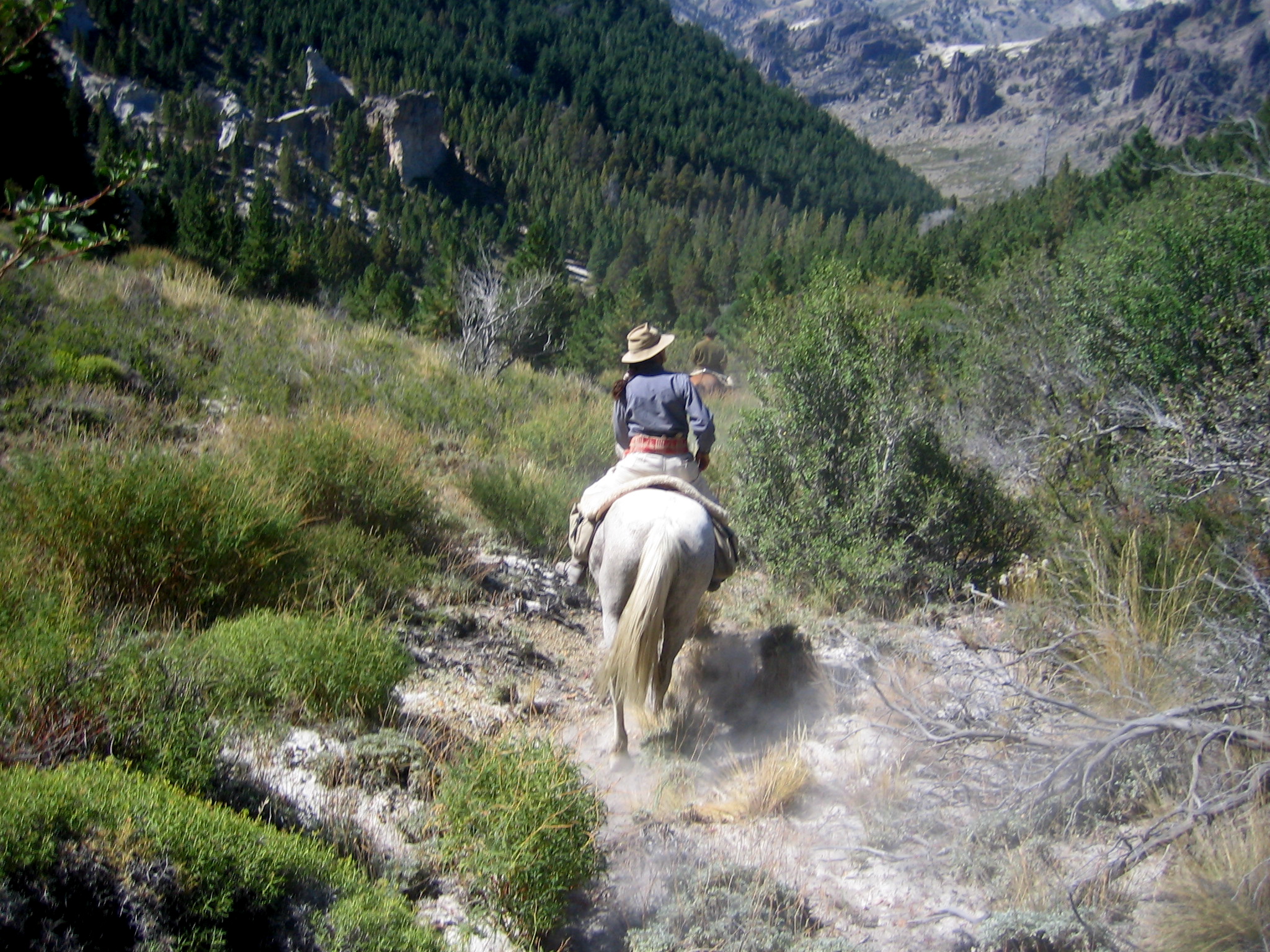
Carol on the trail (note the volcanic dust)

On account of the still-present and very visible ashes from volcano Puyehue, Carol had to move her livestock to another ranch the family owns higher up in the mountains to the south, farther away from the volcano. She’s already lost one horse who colicked from a gut full of volcanic dust.

After we hit the trail, Carol was happy to talk to me about local medicinal plants and discuss their uses. She says none of her horses have had shots or medical treatments except for herbal remedies, and they’ve all had exceptionally long lives – well into their thirties. She built up her knowledge of local plants and herbs through conversations with the old women whose families have lived in the area for generations. She knows which plants are which, and how to collect, store and administer the herbs to treat equine problems, and human problems too. Unfortunately, her horse’s ingestion of volcanic dust (by foraging on dusty plants and ingesting the dust) was not something herbal remedies could fix.

gearing up

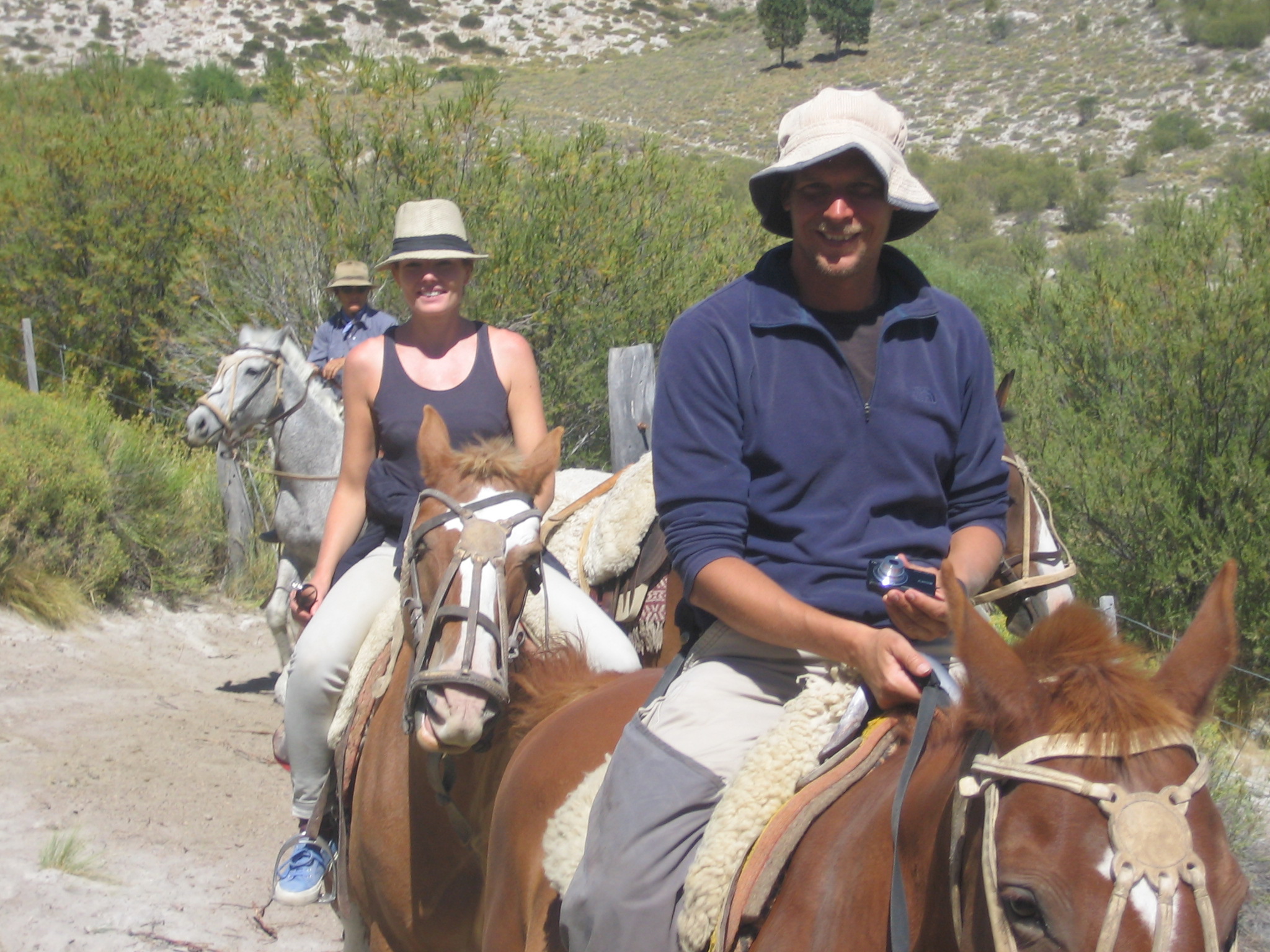
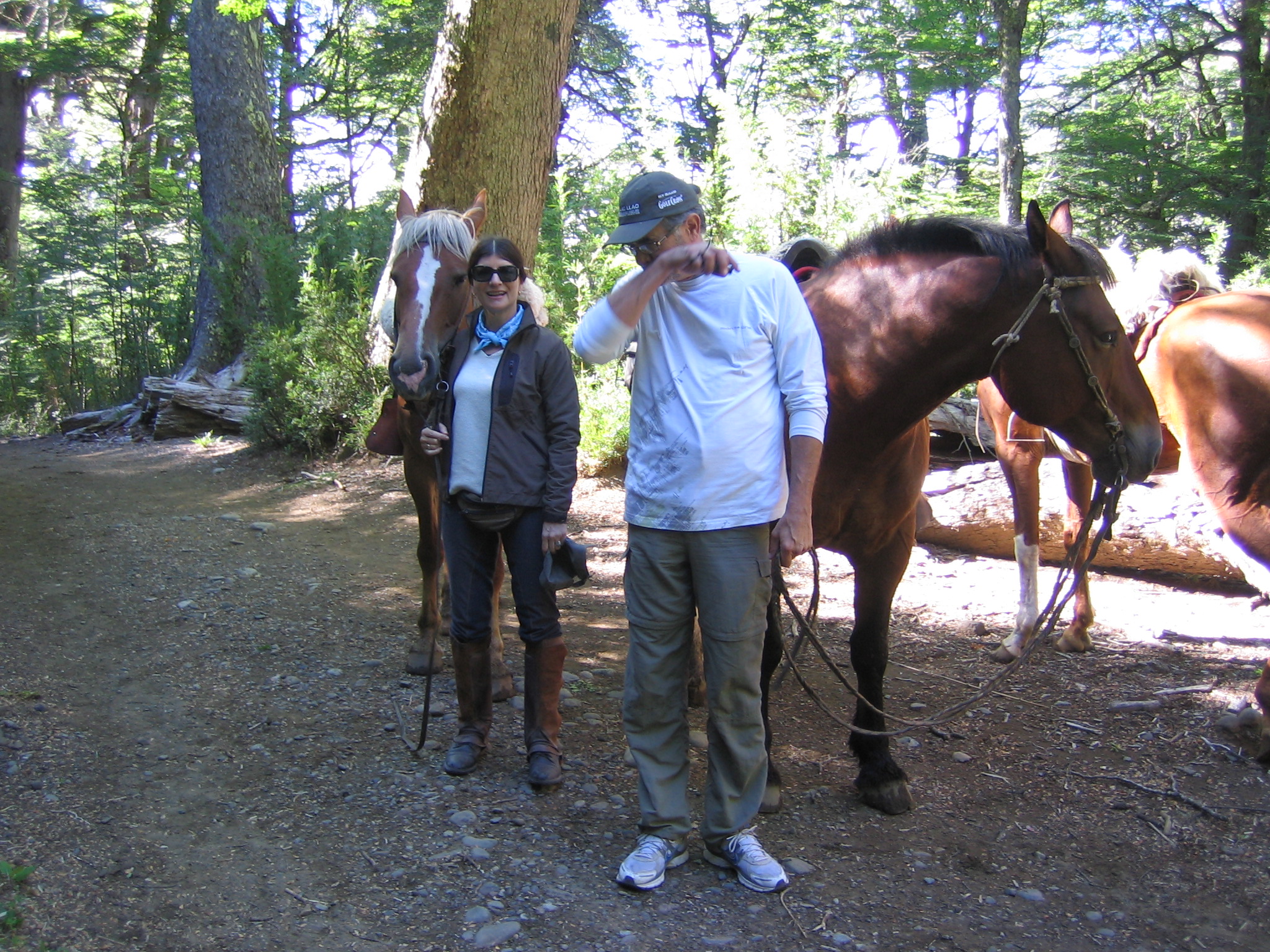
Carol and I drove east out of Bariloche to the estancia of a friend, Estancia San Ramón, where she keeps a few head of horse for these rides which bring in a few dollars, as she waits for the natural cycle to restore her pastures. On the way we picked up a young English couple that had signed up to go along.

young English couple

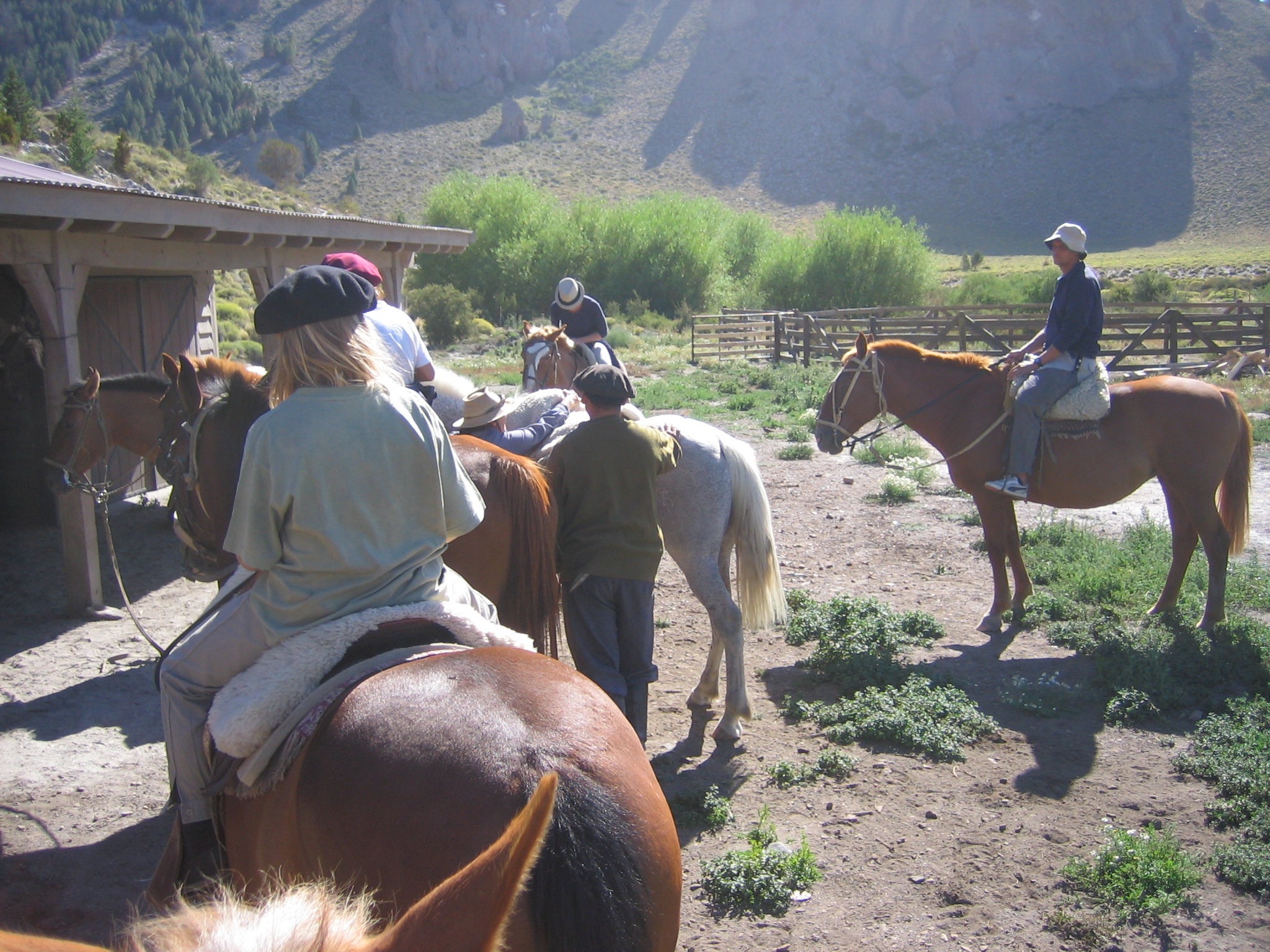
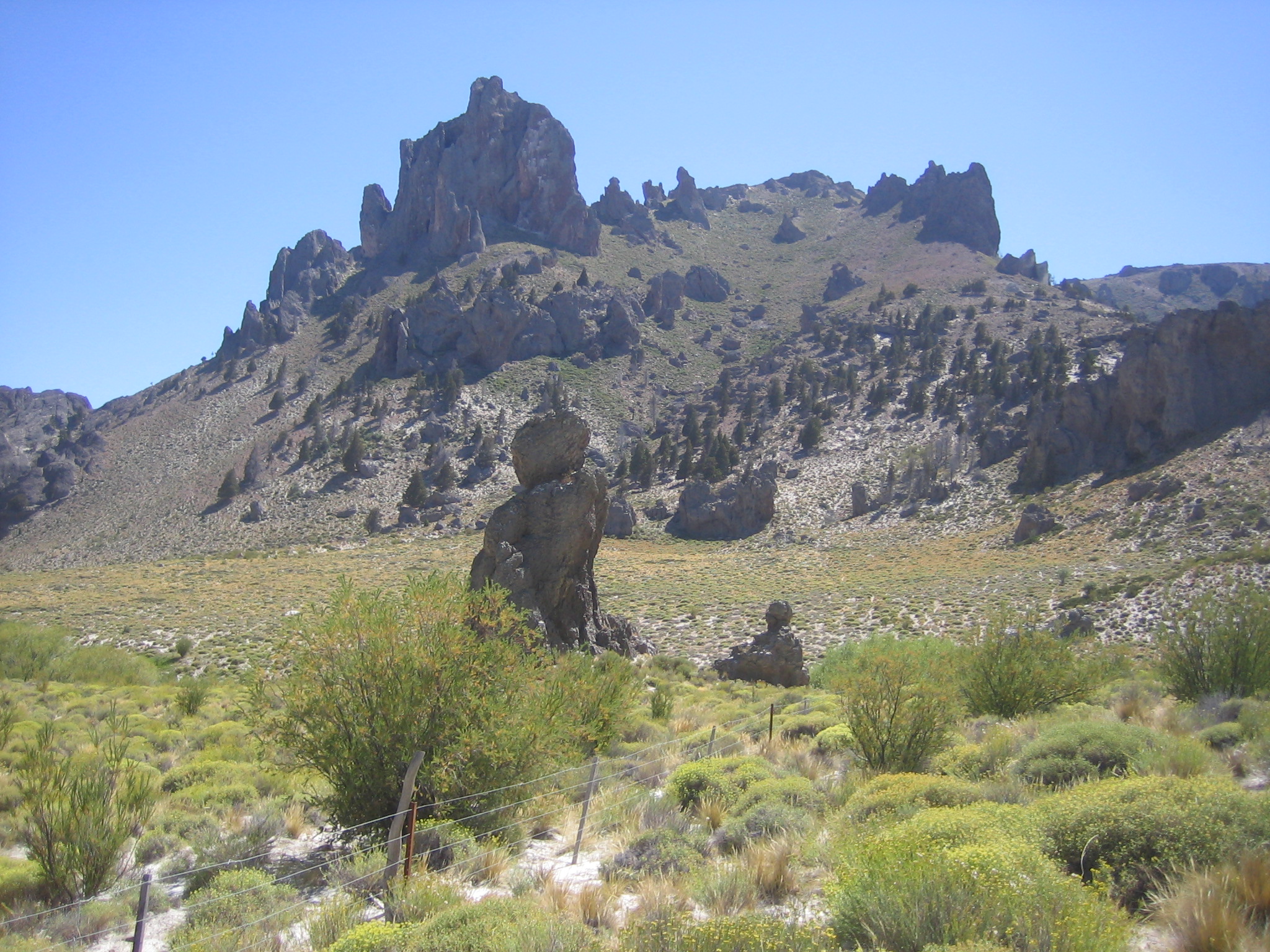
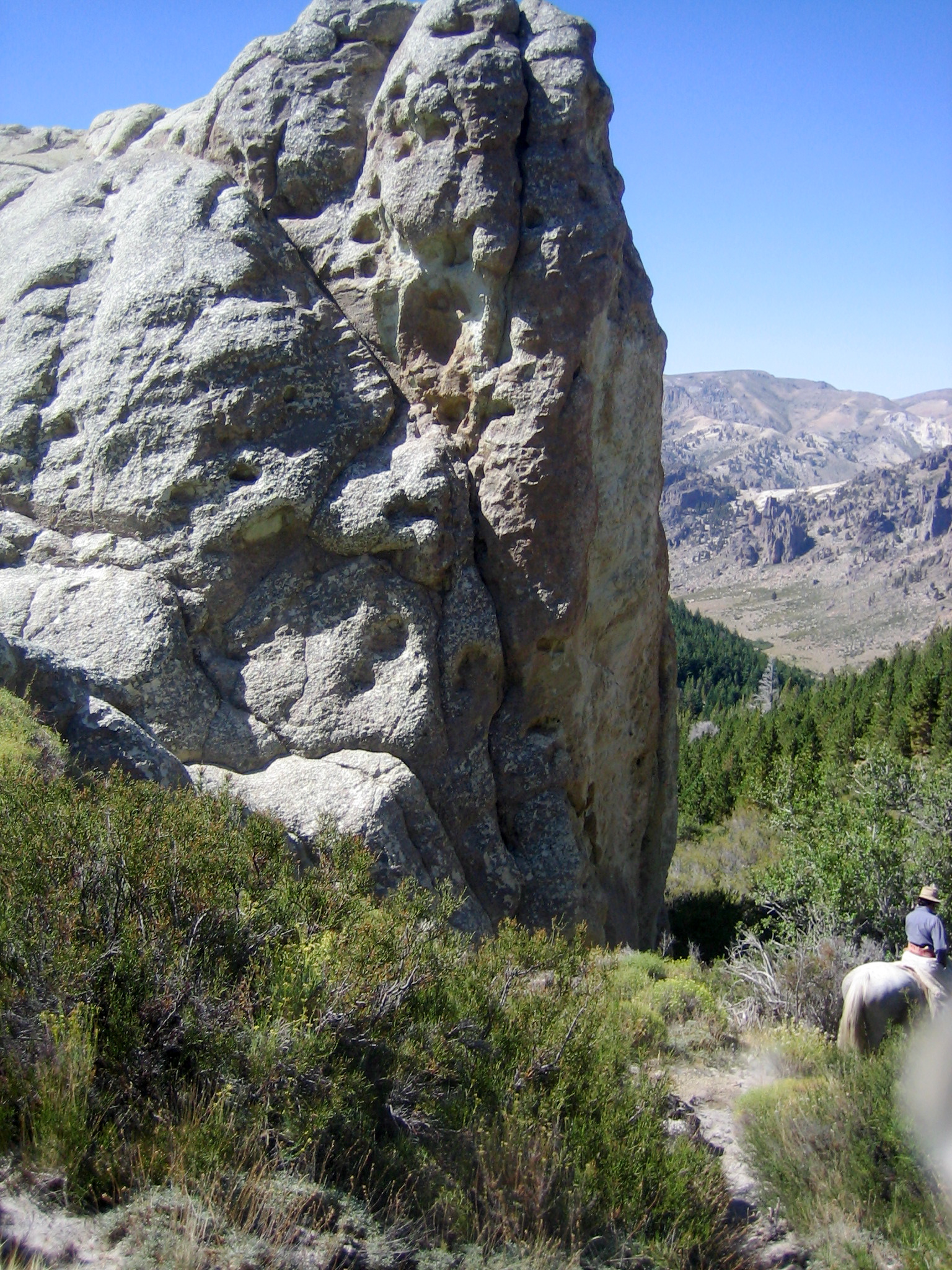
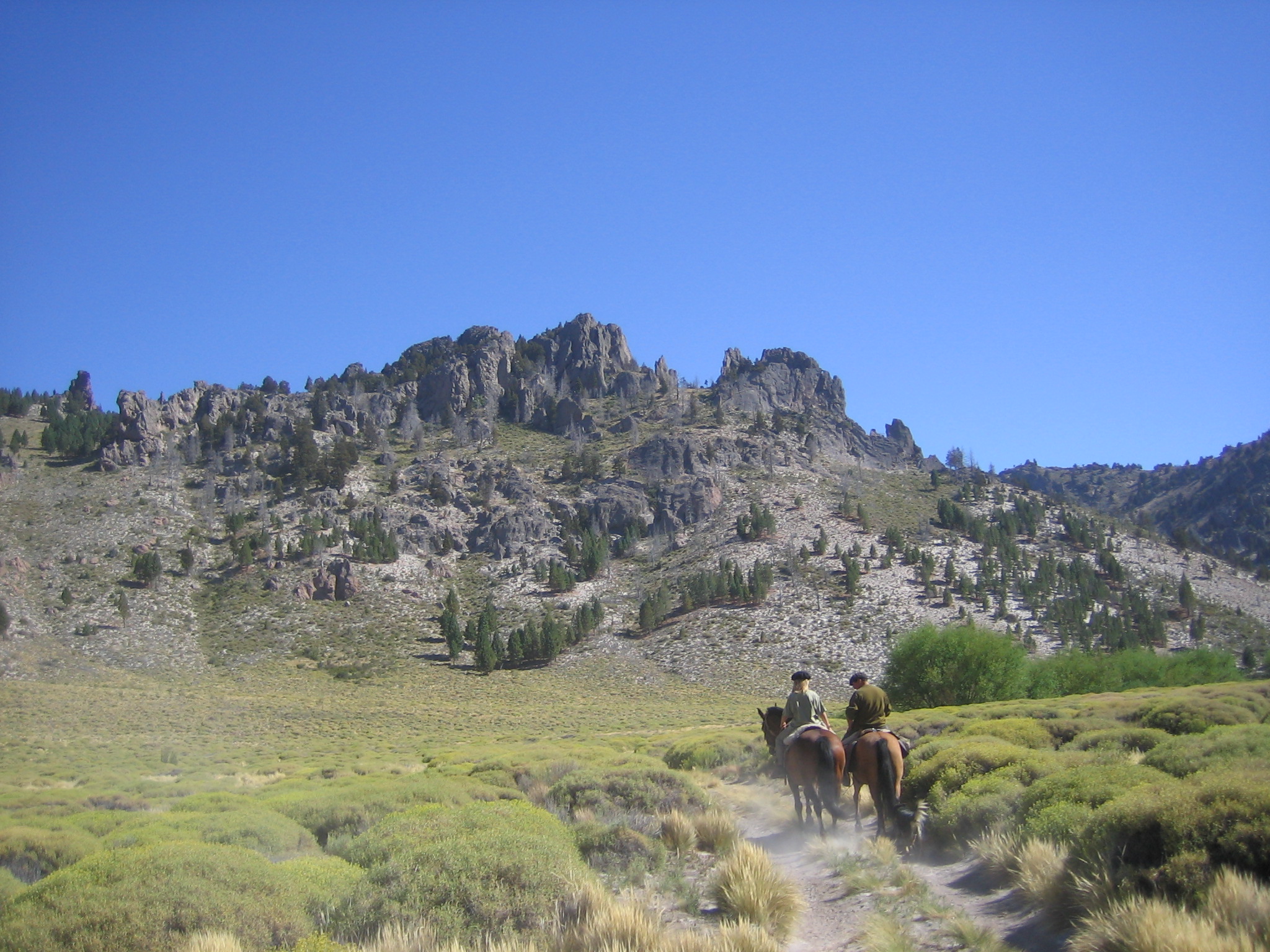
We saddled up with the help of Miguel, the gaucho in charge of the posta, the section of ranch that’s his to take care of, and where he lives year round with his wife and family. Also riding with us was the ranch manager, an Aussie, and his two boys ages 8 and 10. The jefe grew up working on ranches in Australia before transplanting himself and family to Patagonia. The English couple and yours truly made up the rest of  the group. We hit the trail before ten am and rode till six. The Estancia San Ramón is huge – 75,000 acres – which explains its amazing variety of rock formations, creeks, canyons, and high rocky peaks. There’s an old graveyard, too.

awesome hills!

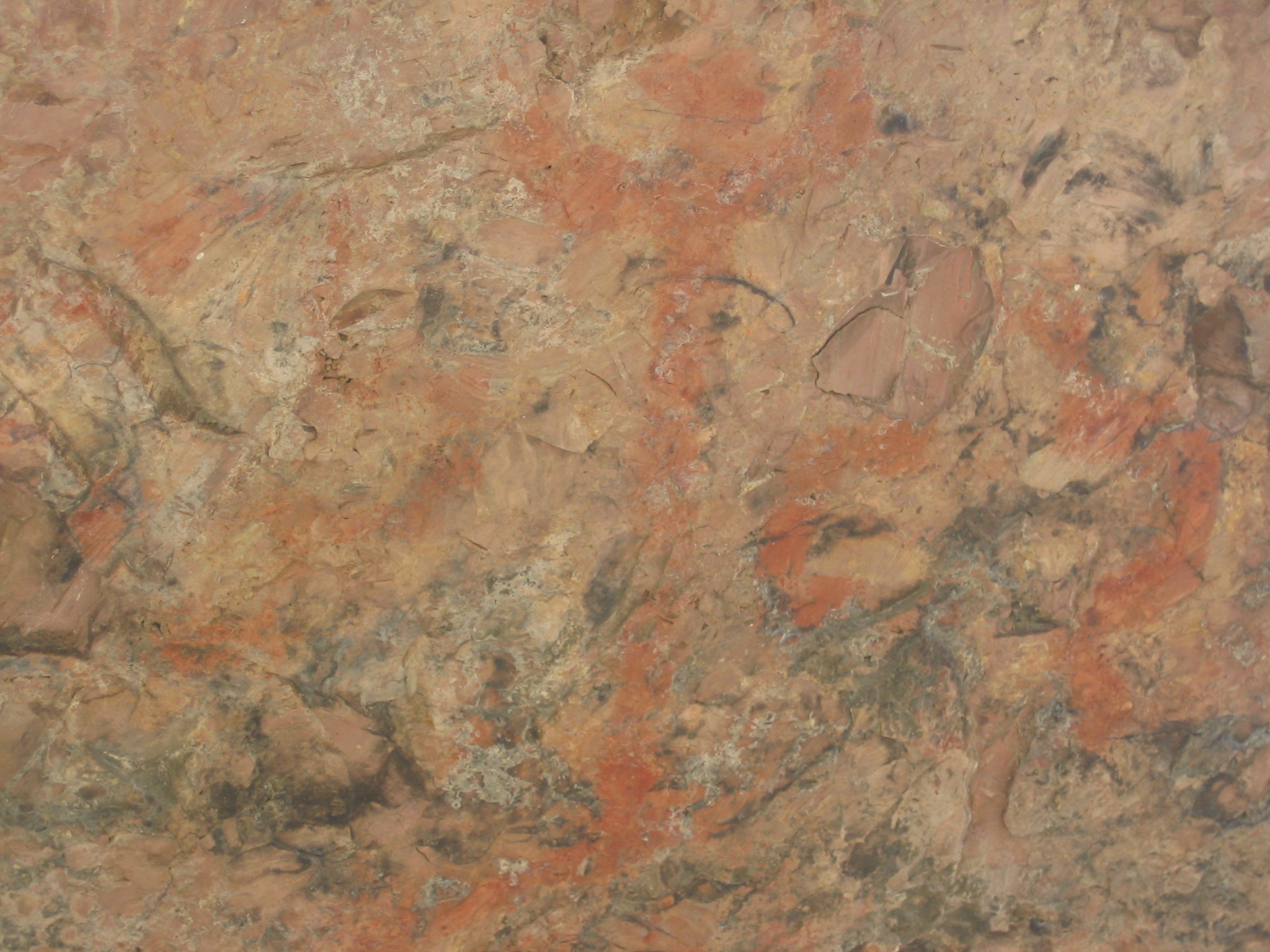
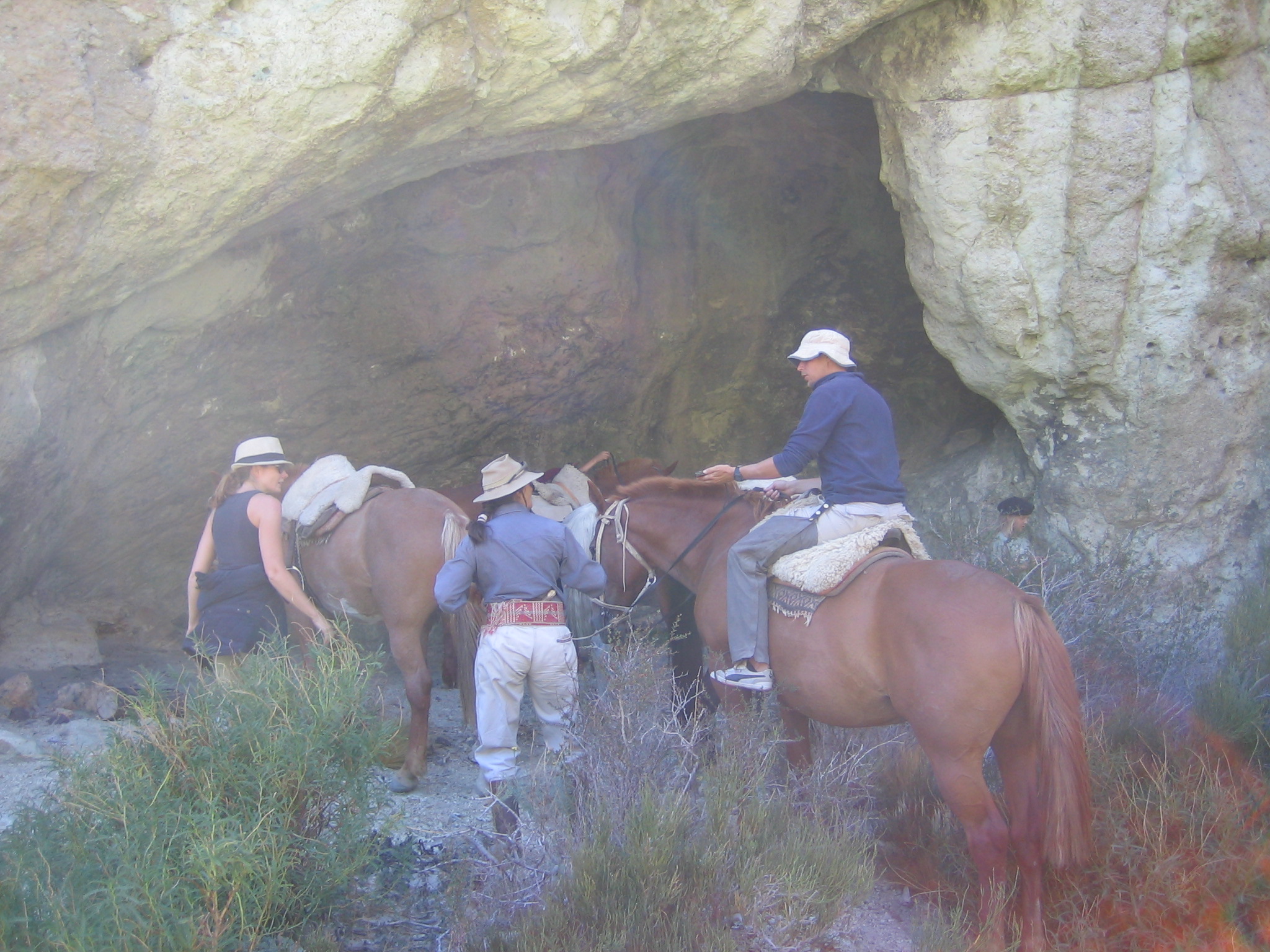
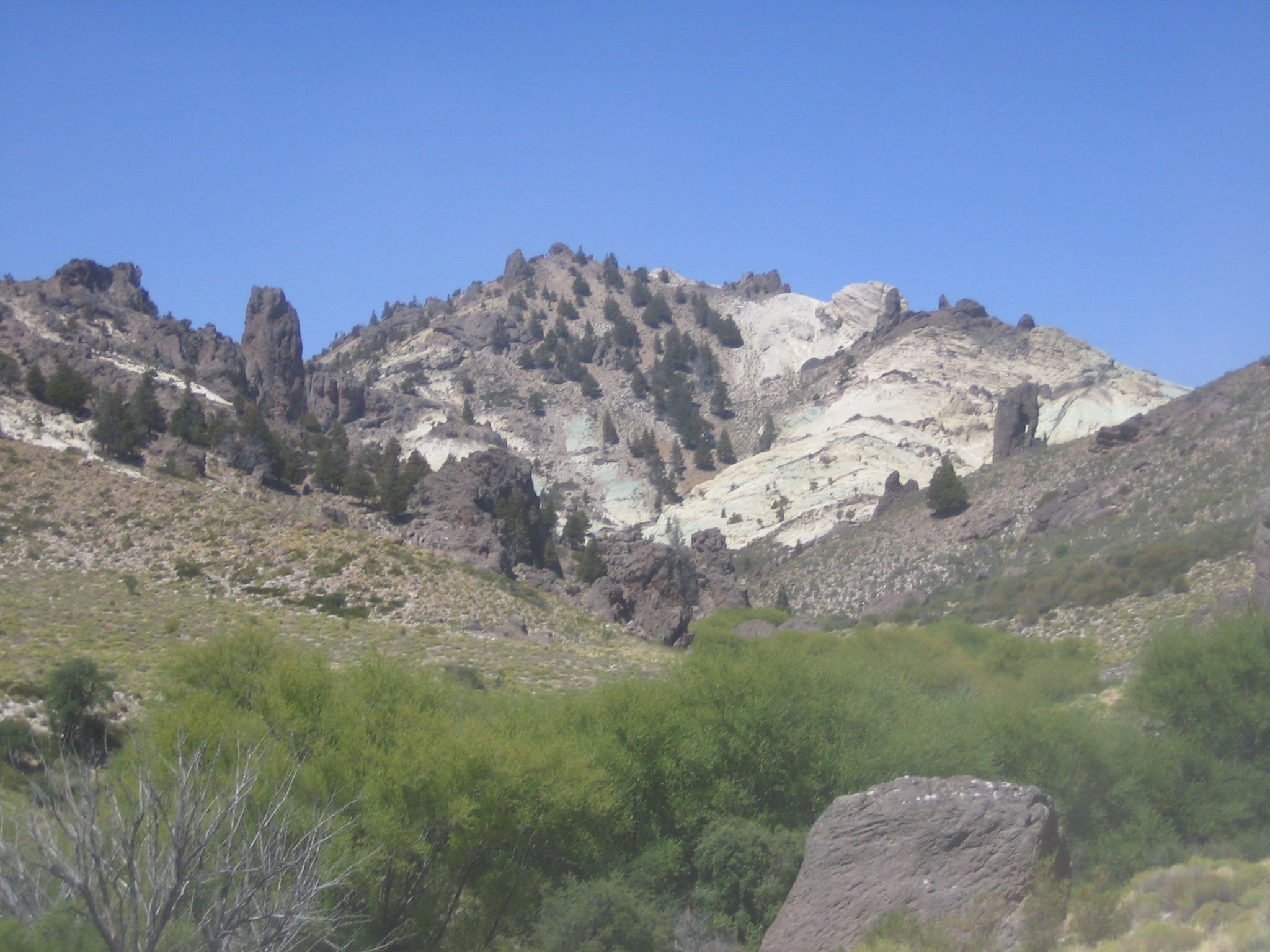
We saw red ochre Indian paintings on a rock overhang, and explored a cave.

Indian painted rocks

Carol and Miguel at the painted rocks site

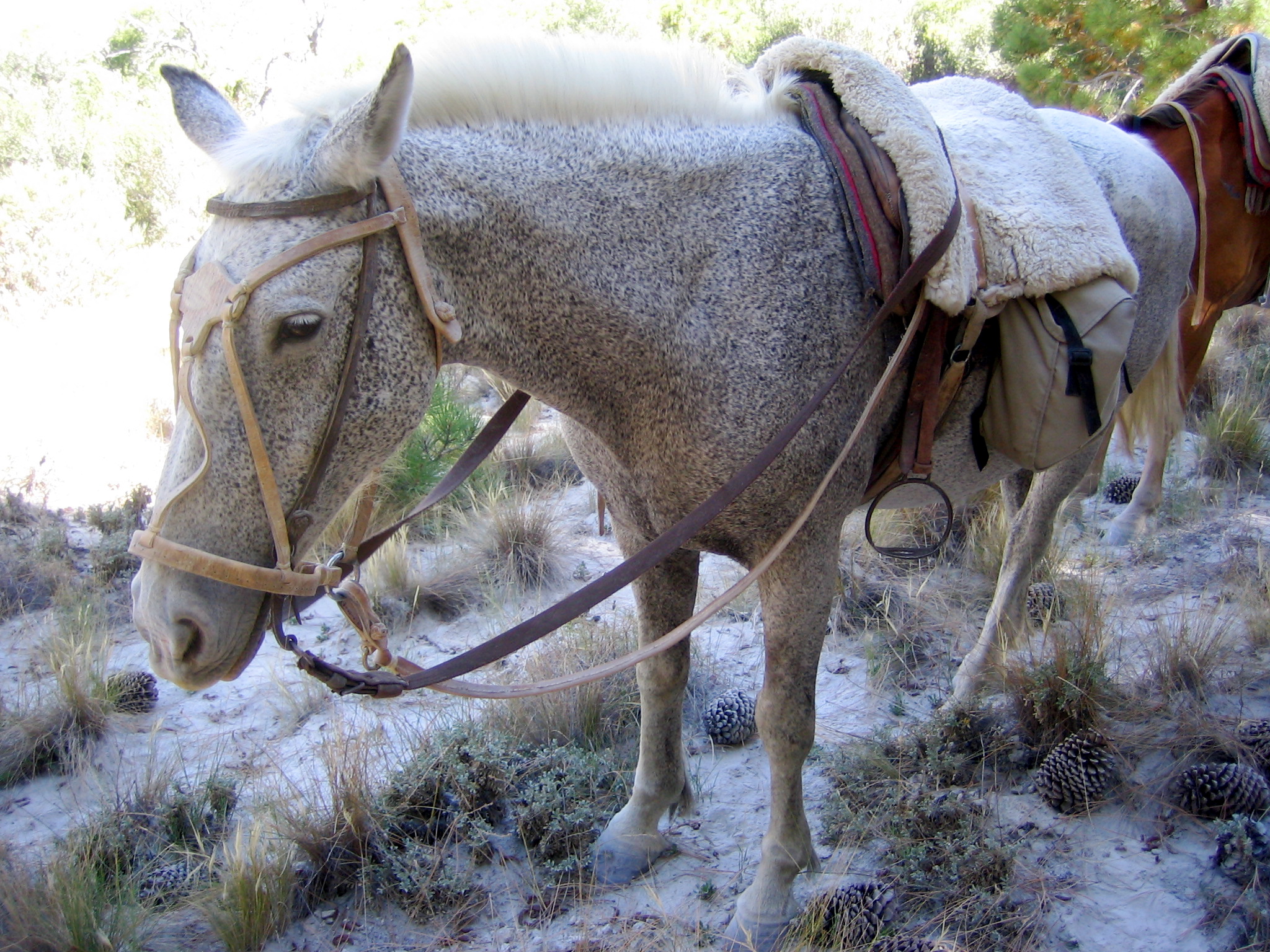
Patagonian gauchos wear berets!  Takes some getting used to, I admit. Can’t turn it upside down and use it for a horse drinking fountain, either. The little flea-bitten grey mare Carol was riding had quite the personality. Don’t let the sleepy demeanor fool you: definitely a boss mare!

I'm head bitch, bitch!

We climbed up, down and around the rocky hills and steep arroyos. The sky was the bluest of blues. And the volcanic dust was, well… everywhere.

the young cowboys

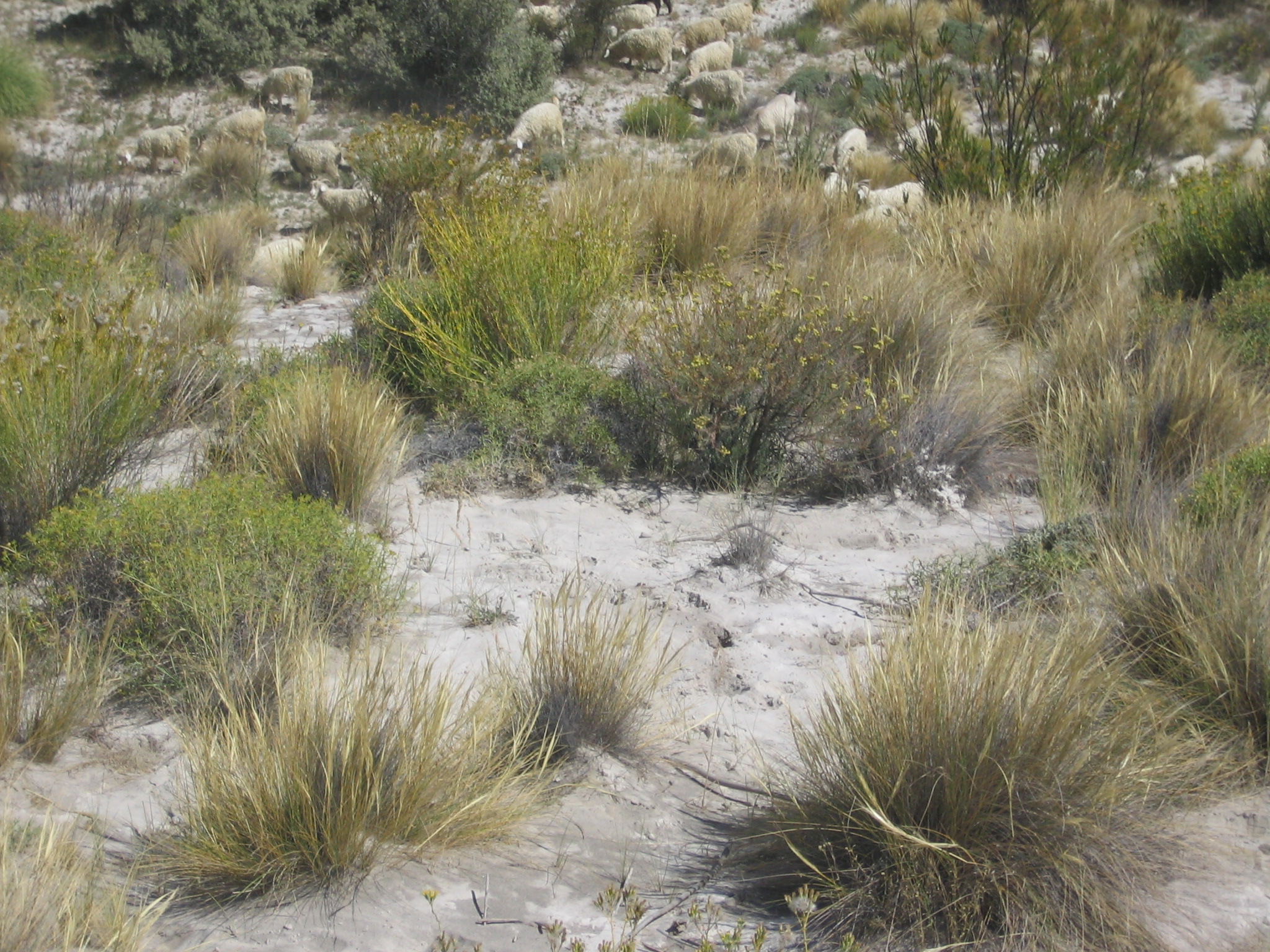
We rode past a herd of goats that I might not have noticed but for the tinkle of their bells. They paid no attention to us.

goats same color as the ash

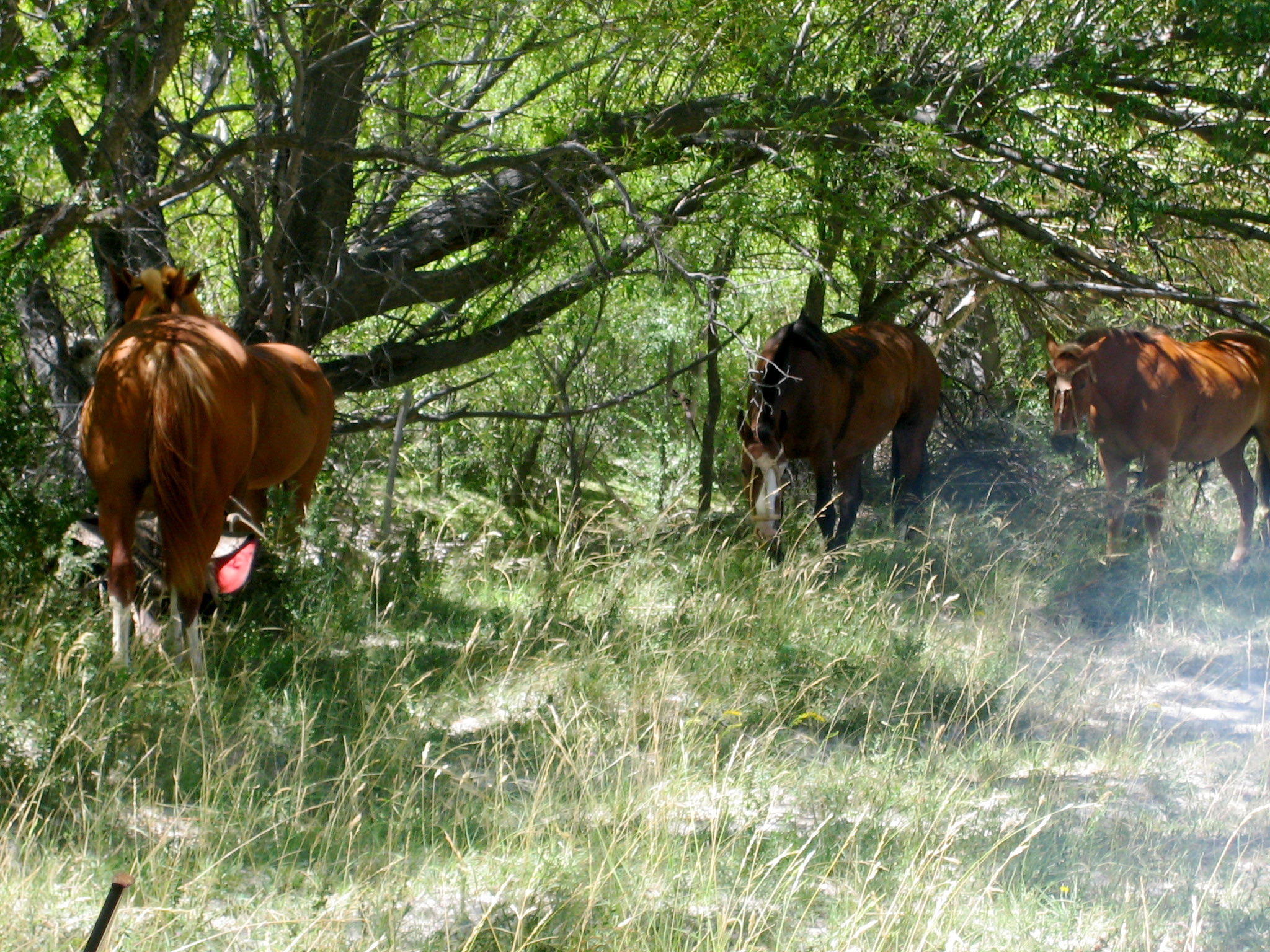
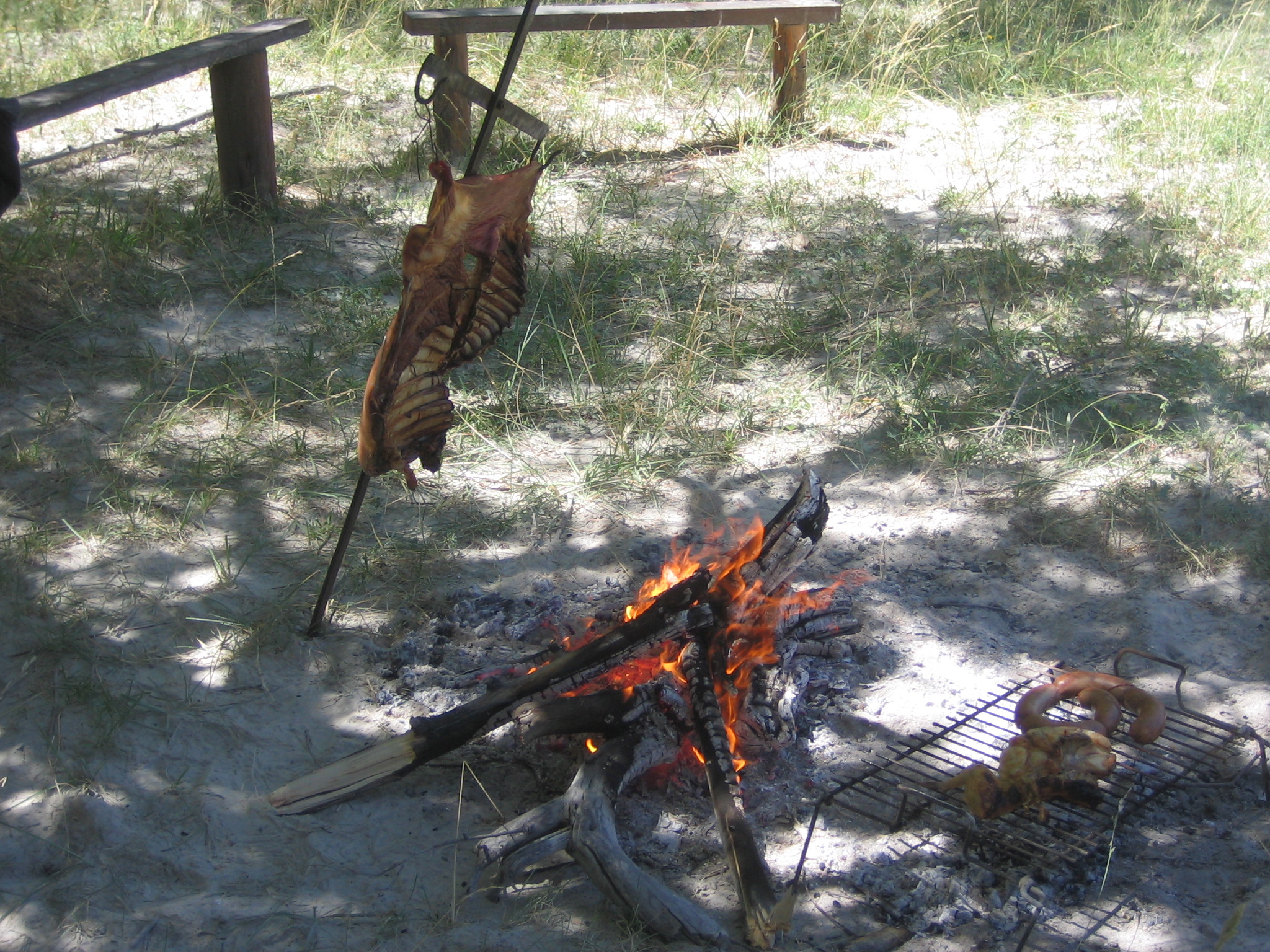
After a few hours in the saddle breathing trail dust we stopped by a creek in a lush little valley bottom. Miguel got the asado going. The horses were unsaddled and turned loose to graze the tall grass in the shade of the willows by the creek.

break time for the horses

Argentine barbecue

I loved the choripan; a piece of sausage hot and dripping grease straight off the fire, wrapped in a French roll. We fix it the same way back home, only we wrap the sausage in a hot tortilla. Mate was passed around, and I refilled my water bottle from the creek. This was my favorite time, I think, sitting around the fire enjoying good food and good company in a beautiful place.

Some more pix from the ride:

I'm really not a mule!

me and my trusty pony

dismounting to explore the cave

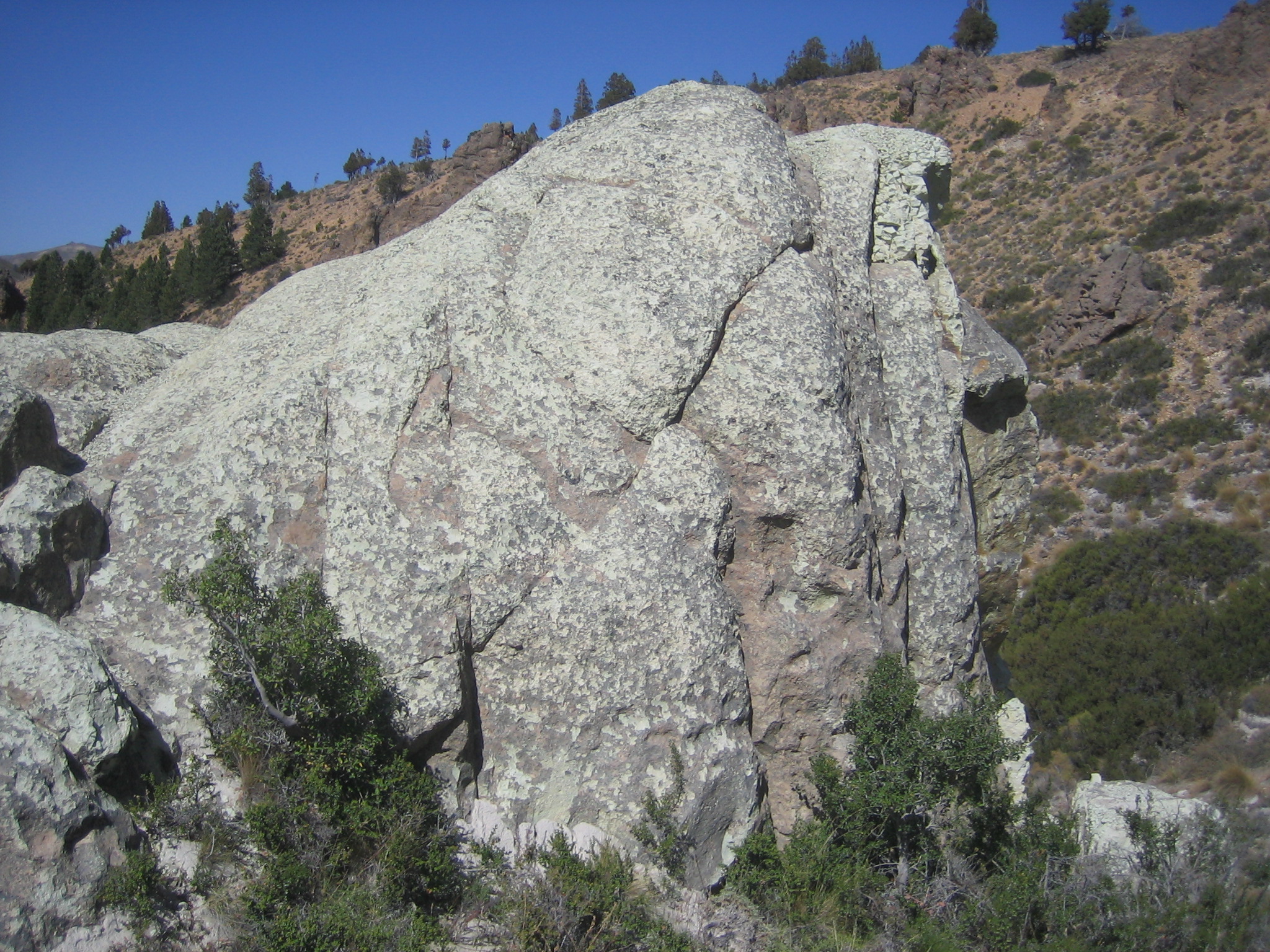
we saw strange looking green and white rocks

but no White Rock girl!

did the gods turn her into a rock?

here the trail descends sharply

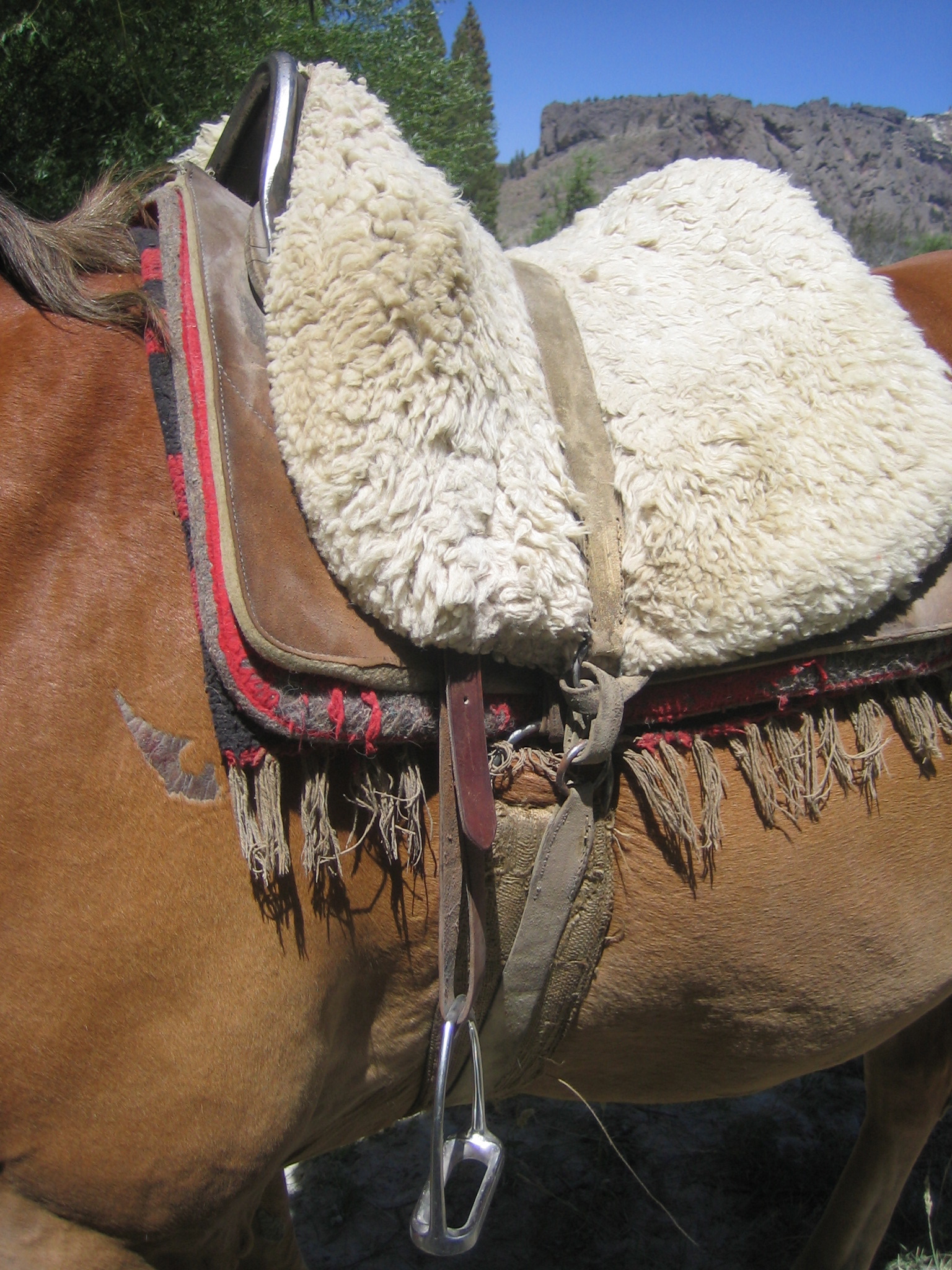
my sturdy saddle tree and cinch

really comfy with the sheepskin!

Carol told me a story about how she saved a horse’s life with help from the ant people:  One time she had a horse that was seriously ill and two different vets told her there was no remedy and no hope. But she had heard about a treatment using ant-dirt. Ants collect seeds and whatever else they can find to eat, digest it, poop it out, and then, in true harmonic harmony and sisterhood carry the residuals outside the kiva-like hill, where they are strategically and reverently placed in the ongoing, never-ending task of renovating the community housing project. So Carol collected some ant dirt from a nearby anthill, made it into a watery paste, and fed it to her horse. She didn’t say if her horse liked the goop she poured down his throat. But guess who made a complete recovery! I had heard of using gopher dirt to make ceremonial altars, but this use of ant dirt is new to me. Blessings be upon the Horse Medicine Woman!

I wonder if Edward O. Wilson, Pulitzer prize-winning author of On Human Nature, (famous ant behavioralist at Harvard) has heard of this use of ant dirt. “If all mankind were to disappear,” he wrote, “the world would regenerate back to the rich state of equilibrium that existed ten thousand years ago. If insects were to vanish, the environment would collapse into chaos.” Wow, this prof rocks the boat!

Edward Osborne Wilson

Now, I really don’t like ants, and if they invade my space I go on the warpath, but… maybe it’s time for me to renegotiate my relationship with the tiny critters. Should I be more ant-friendly? (except for the red fire ants?)

We finally reached the end of the trail. Miguel’s wife was waiting for us with maté and fresh hot Indian fry bread. I didn’t know they made that here! Made me feel quite at home. Served with honey and jam, it hit the spot!

the end of the trail is just a little ways...

And this post is almost over, too! But I must pause to wish my daughter Autumn a very happy birthday!

Happy Birthday Autumn!!

¡Felíz Cumple Autumn!  ¡¡¡Te quiero mucho!!!!

Ciao from Patagonia!

another day at Lago Moreno

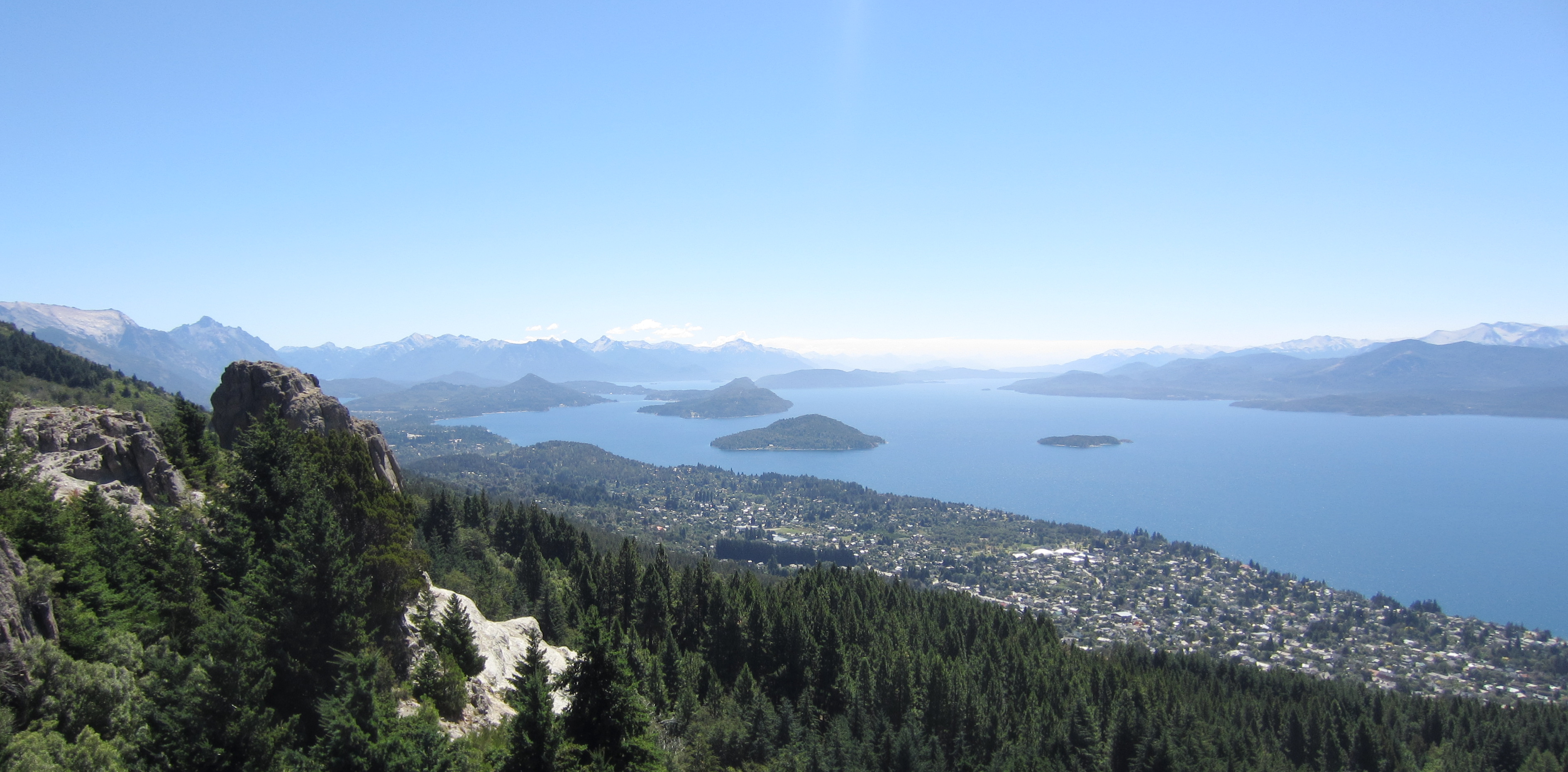
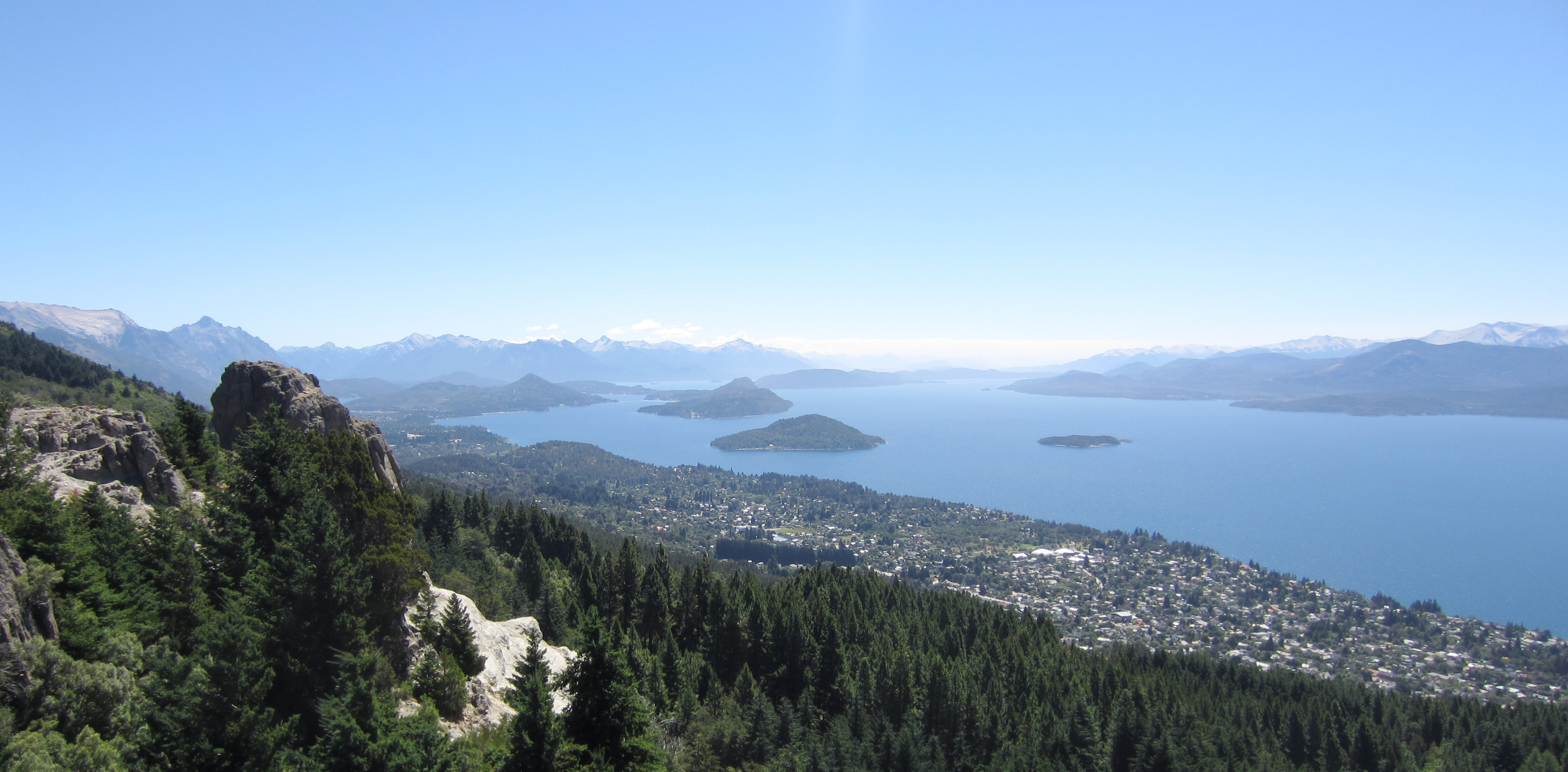
Bariloche and Lago Nahuel Huapi from Cerro Otto

CIAO FROM PATAGONIA!  Next week we’ll be back in Buenos Aires…. hasta la próxima!

Patagonia : Pampa Linda

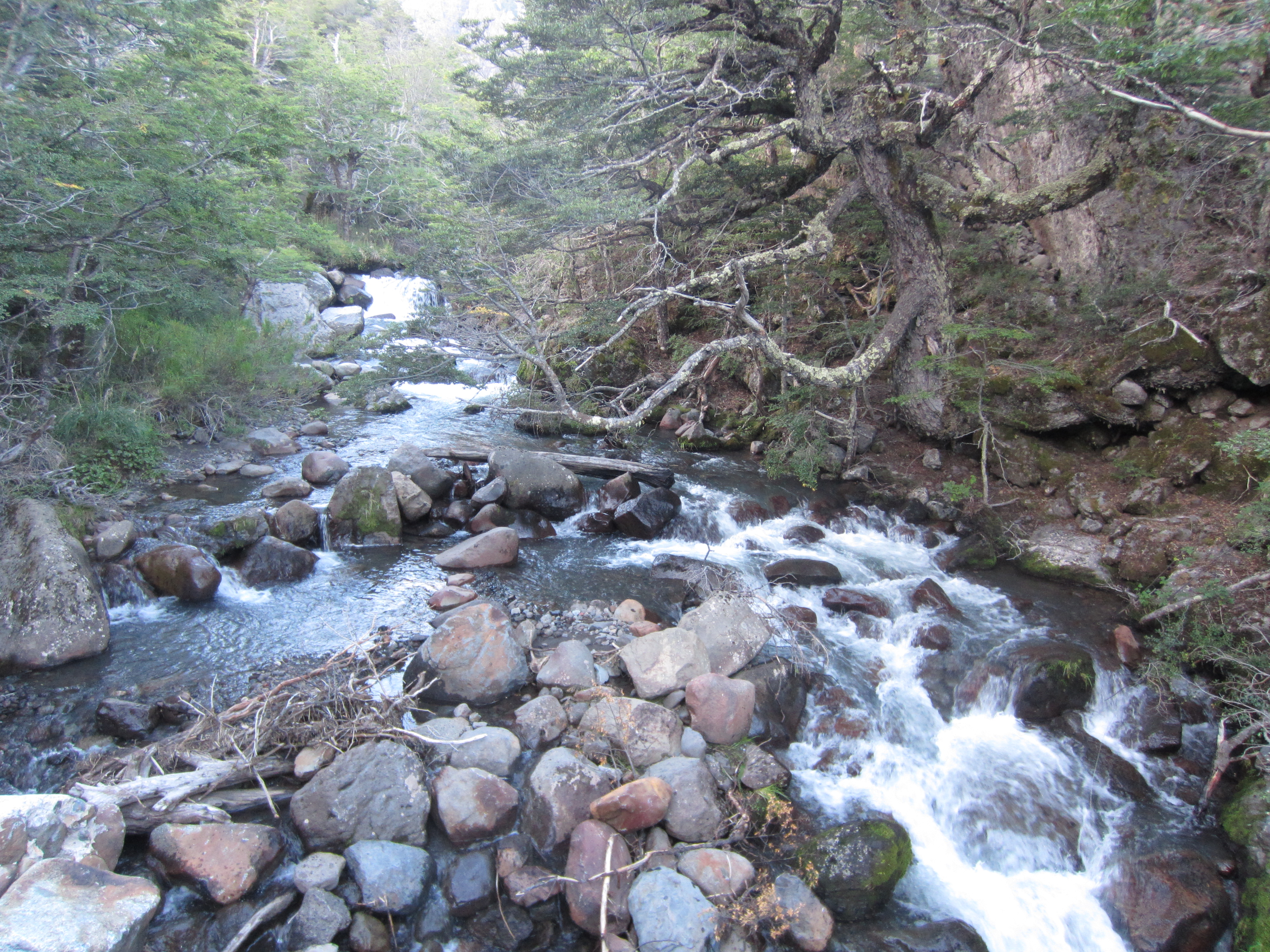
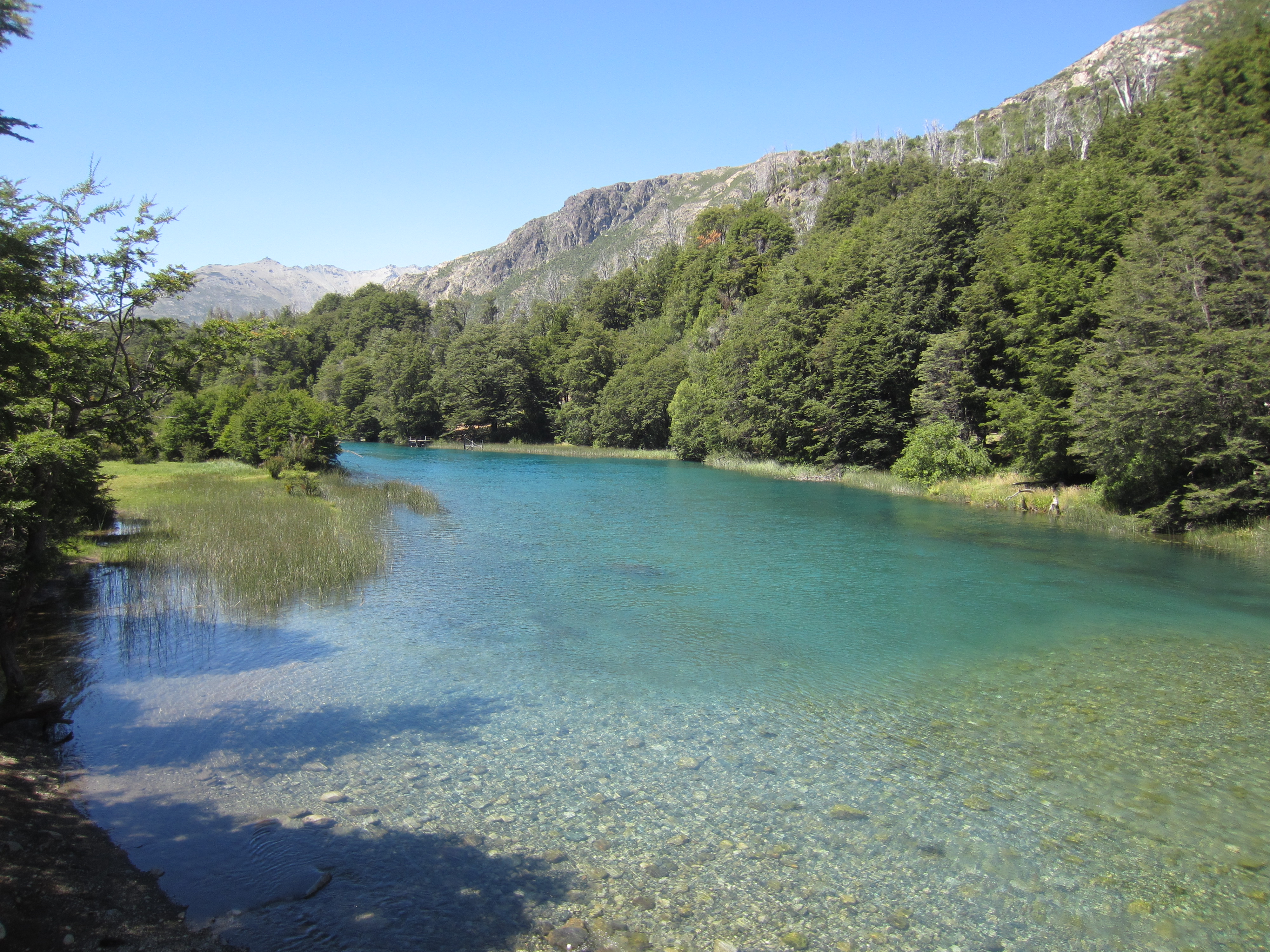
Río Manso near its source

A few days ago we went on an overnight adventure in the loftier regions of Park Nahuel Huapi. Heading southwest from Bariloche, we drove past Lago Gutierrez and Lago Mascardi, and then turned onto a gravel road, which we followed for a couple hours of driving slowly and cautiously on dusty roads climbing up and up the precipitous slopes. We finally arrived in Pampa Linda about 4 pm.

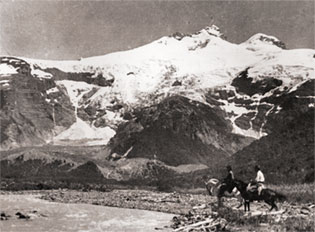
Pampa Linda in 1927

Río Manso on the drive up

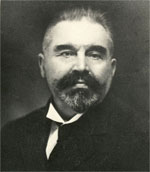
The history of Pampa Linda dates to 1907 when a Belgian doctor from Canada arrived in Bariloche.

the good doctor

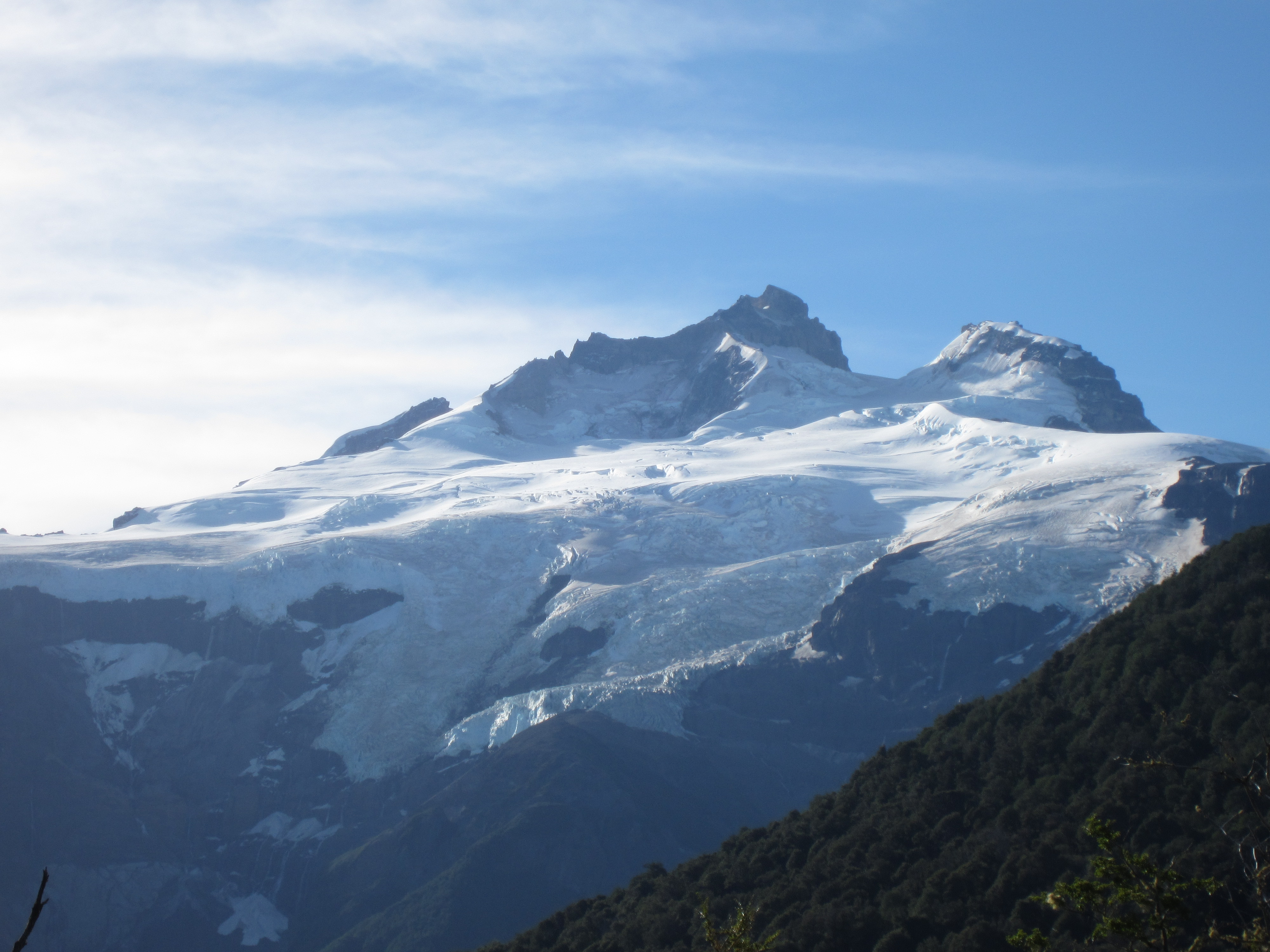
He was Don José Emanuel Vereertbrugghen, the first doctor to settle in the entire Río Negro province. Don José’s only son Benito grew up and moved a few miles away from Bariloche, to the valley that lies beneath the shadow of Mount Tronador. The “thundering mountain” was so named on account of the frequent crashing noises heard when masses of ice and snow slide down off the mountaintop.

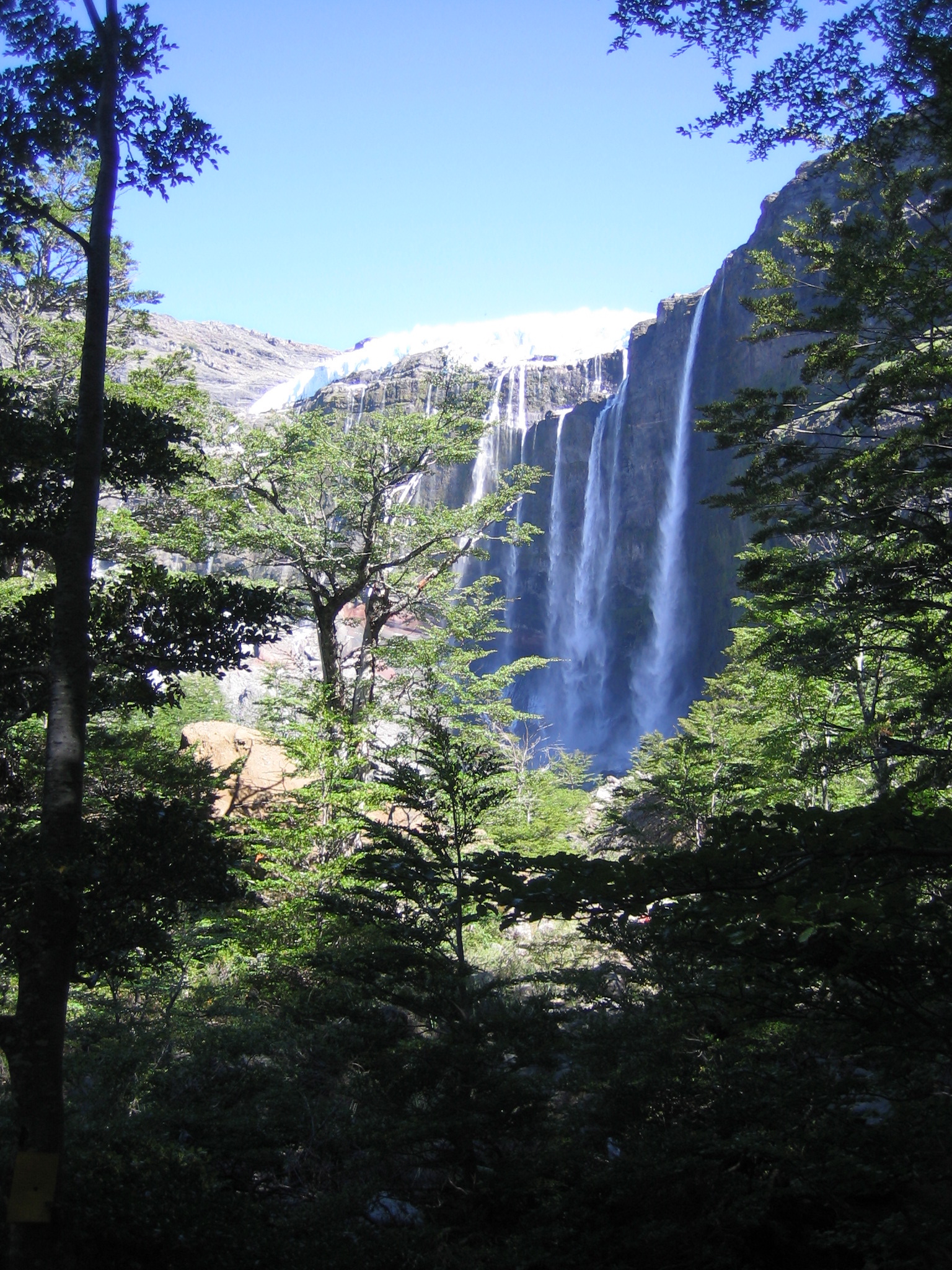
El Tronador has 7 glaciers

Benito was a born rancher. His life was all about horses and cattle, but he and his wife Clara were also very sociable and loved to entertain visitors. In 1929 they built an inn next to their modest home, calling it the Hotel Tronador. Benito and Clara’s guests were explorers, adventurers, sportsmen and fishermen who came by boat, and then on foot or by horse. Back then there were no roads in the area, and the National Parks would not exist until 1934. But after his first visit to the glaciers, Ezekiel Bustillo, National Parks director, pushed for the opening of a road into the Tronador Valley, completed in 1940.  The original Pampa Linda lodge, now the snack bar (the gettin’ place for burgers, beers and fries), was built in 1947. We stayed in the new lodge next door, built in 1993.

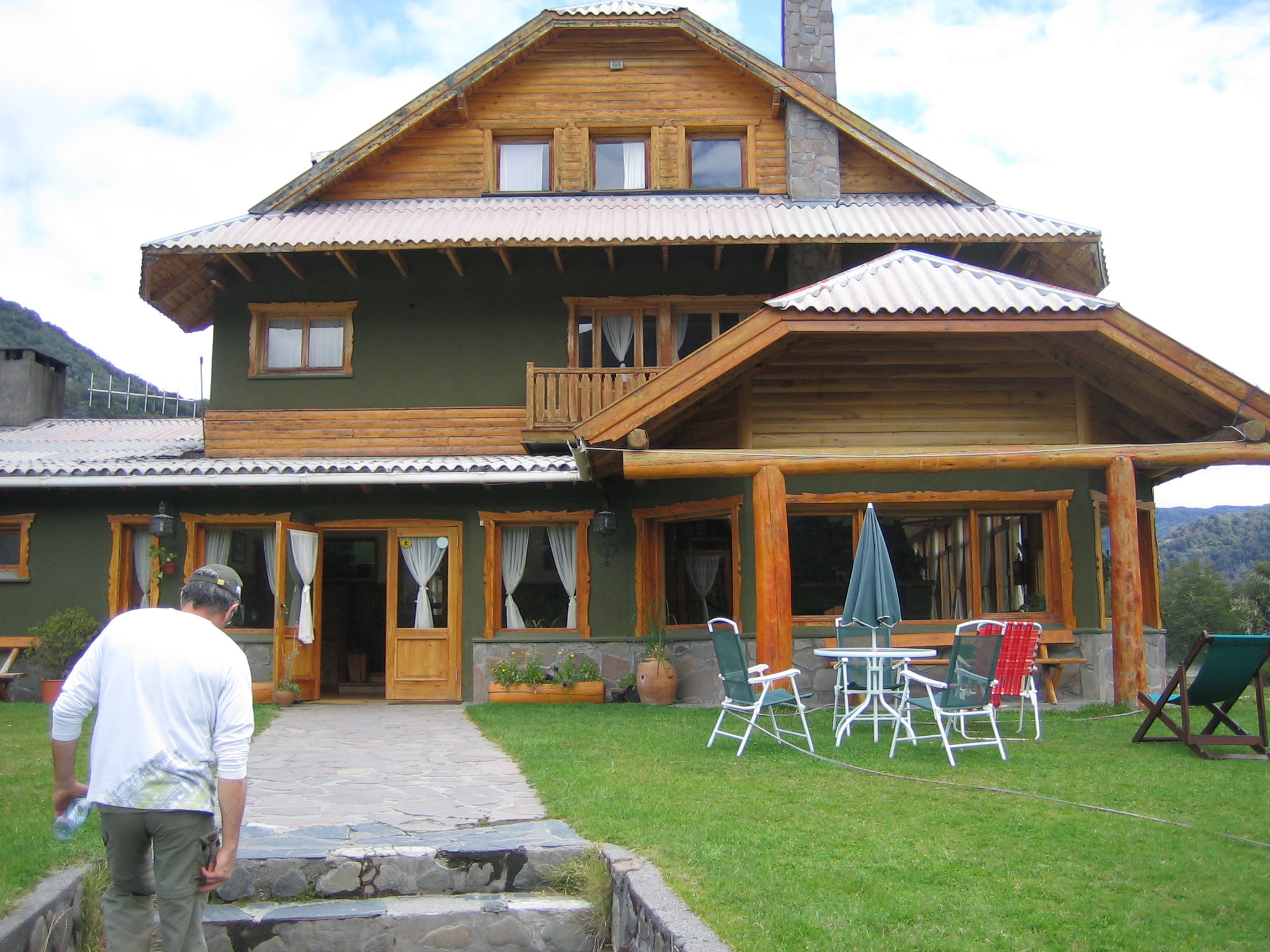
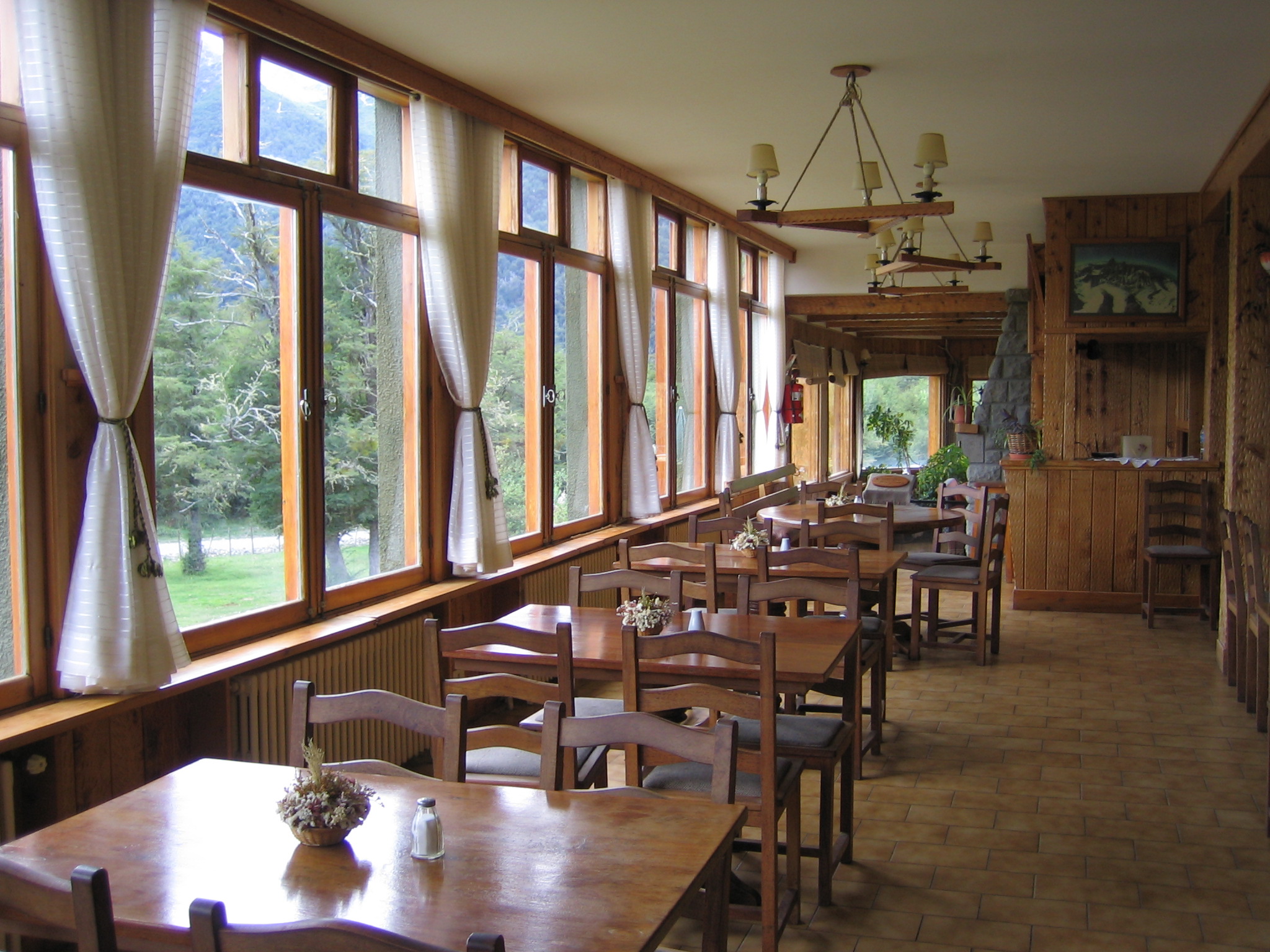
Hostería Pampa Linda

The dining room’s big enough to feed an army of hungry ridge crawlers, and the cozy lounge with big open fireplace is reminiscent of the Ahwahnee but not as grand. A very nice spot to kick back after a long day trekking in the wilds of Nahuel Huapi.

Benito and Clara’s granddaughter, Patricia, who is married and has a very busy 5-year-old boy, currently manages the lodge. The Tronador Valley has lovely, meandering meadows for grazing livestock, a few acres of which are open for camping, with showers, laundry, snack bar, etc. They grow fresh vegetables in season for the dining room, and have their own dairy cows for homemade cheese and flan. Lots and lots of trails are mapped out on the website with full descriptions and drop-down maps. [www.hosteríapampalinda.com.ar.]  There are a few Refugios in the high country, which are high-sierra cabins offering, literally, shelter from the storm, right up there amidst the glaciers.

another shot of El Tronador

The peak of Mt. Tronador [11,500 ft.] is the dividing line between Argentina and Chile. They say it is a dormant volcano. Is that anything like a sleeping dragon? Scientists believe it is not likely to explode in our lifetimes, but, heck, the volcano next door in Chile (Puyehue) sure blew her top a few months ago. I don’t think I’ll invest in any property within a hundred miles… would you?

Some pretty sights on the way there:

loose horse at Lago Mascardi

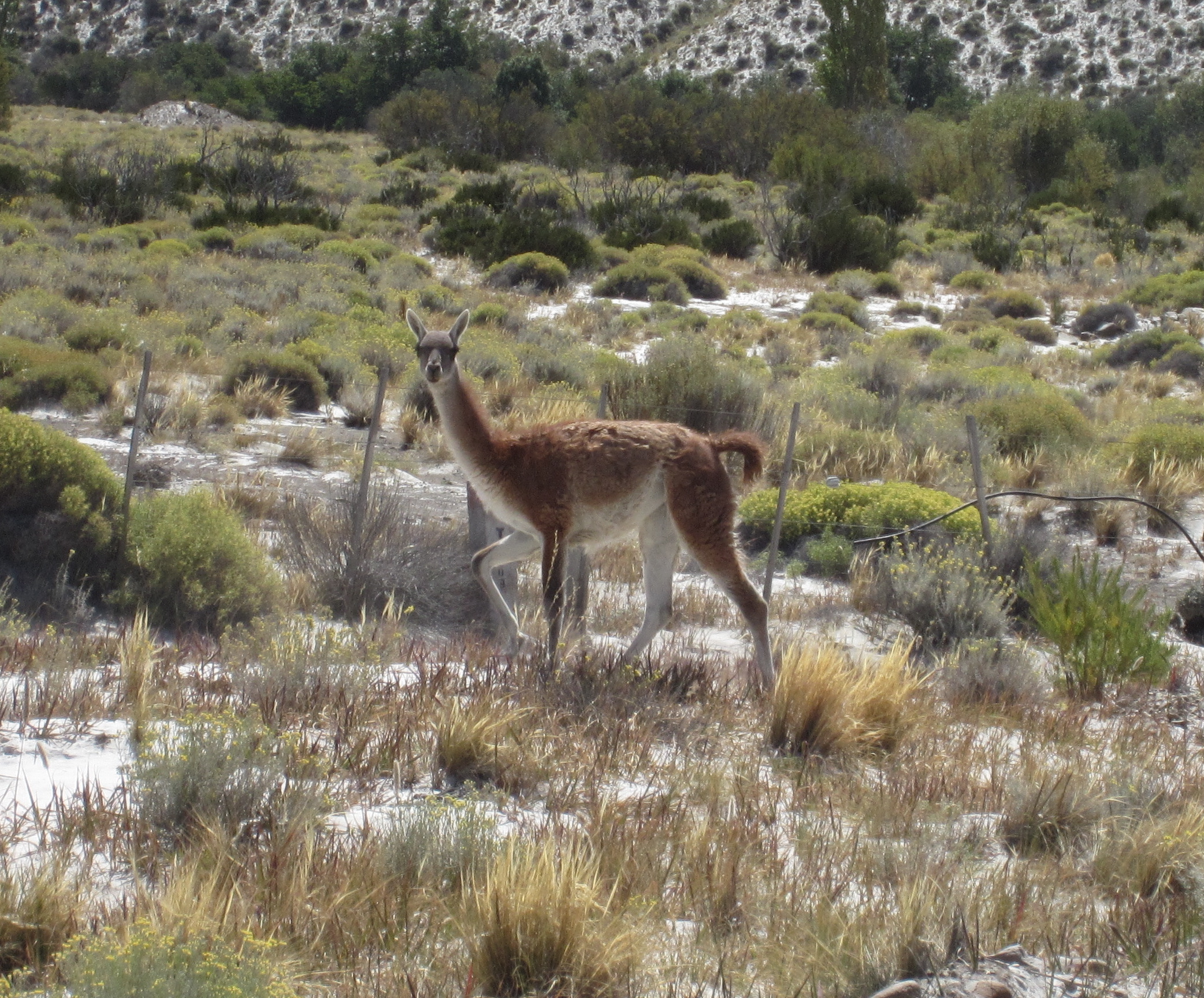
a wild guanaco, cousin to the llama

We drove in from LlaoLlao, a 5-hour drive, and rewarded ourselves with (of course!) burgers and fries at the snack bar. We checked into our room, which had an awesome and inspiring view of the mountain. We climbed back into the car just before the sun went down, and drove a few km up to see the Black Glacier.  Not exactly hard-core trekkers, are we?

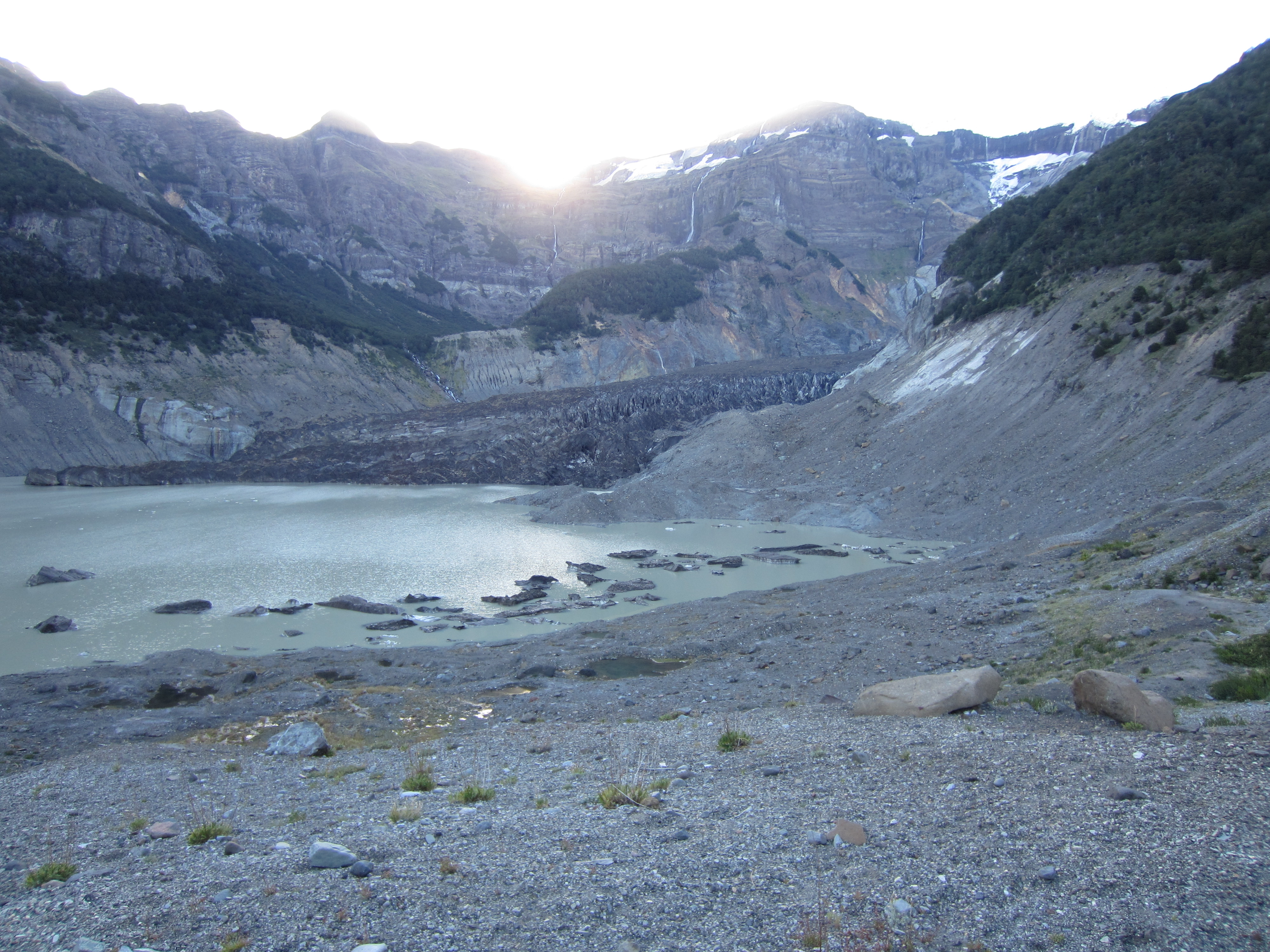
Black Glacier

The sun was getting ready to go down and when it finally slipped behind the crest we were able to get a few pictures of the glacier and the lake with floating dark icebergs, full of ground up rocks and dirt that gives it its color, and name.

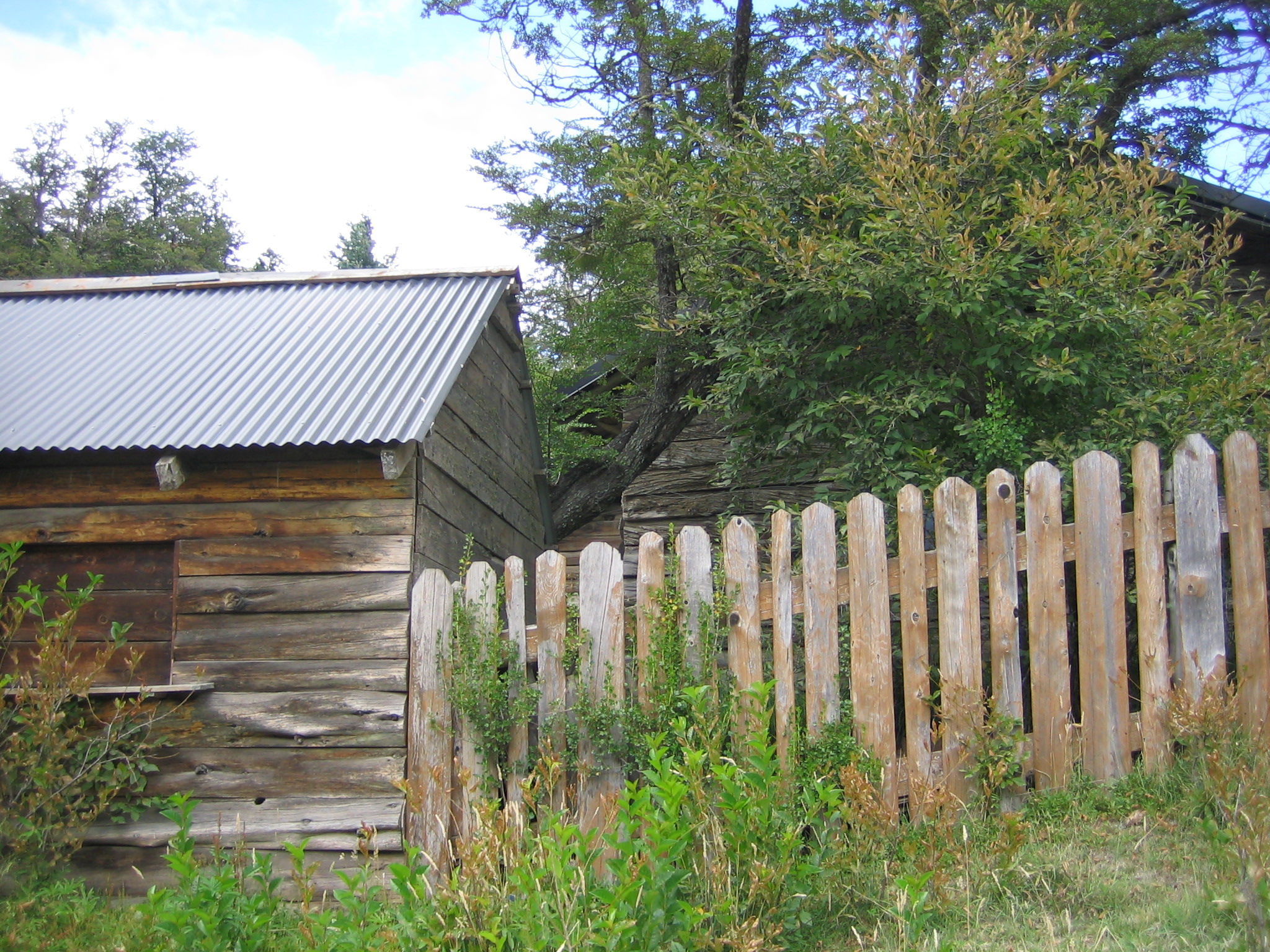
old cabins at Pampa Linda

Later that same evening we had dinner in the lodge. We had a table next to the window. The moon rose over Mt. Tronador, casting its bright light upon the mountain, and reflecting that beautiful glow down upon us. Later we sat on a couch in the lounge, next to the fire, and chatted with a couple who live in Puerto Madryn, farther south, on the Atlantic. They rode horses up to the Castaño Overo glacier, and then hiked on foot another 2 hours to the Otto Meiling Refuge. We did the same ride the next morning, but we went down the way we’d come up: on horseback! and took lots of pictures!

crossing Río Manso

We tied the horses in a little grove not far from the glacier, and walked to the lookout. We ate apples washed down with black coffee. The Río Manso, which emerges from the glacier, has strikingly milky green waters, due to its particular blend of glacial sediment. It is very cold and swift moving as it heads on down to the valley, and later flows past the continental divide into Chile, and eventually to the Pacific.

an awesome view!

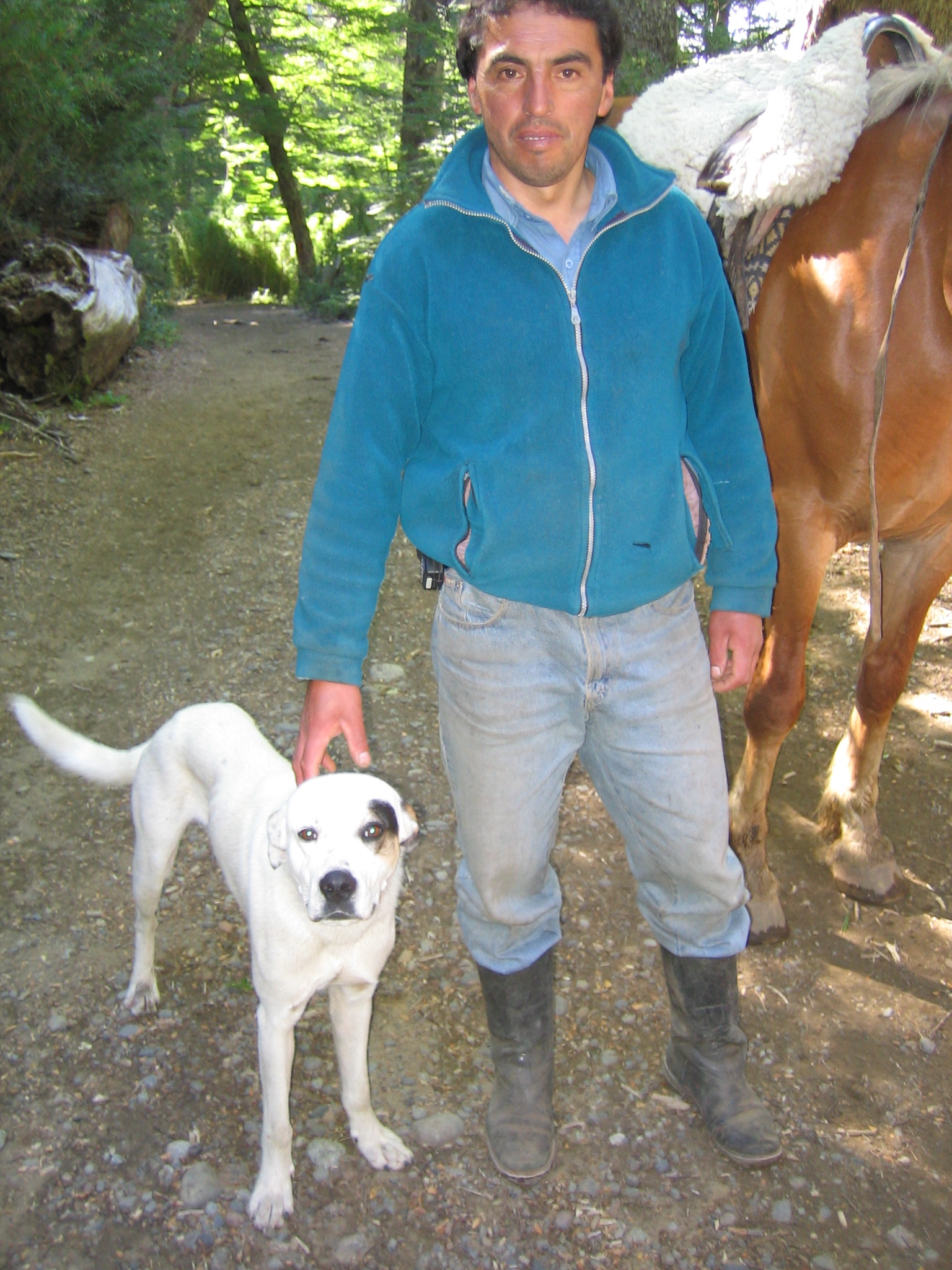
Our guide on the ride up was a Chilean named Miguel who works at Pampa Linda, and his dog Tronador (same as the mountain):

Miguel & Tronador

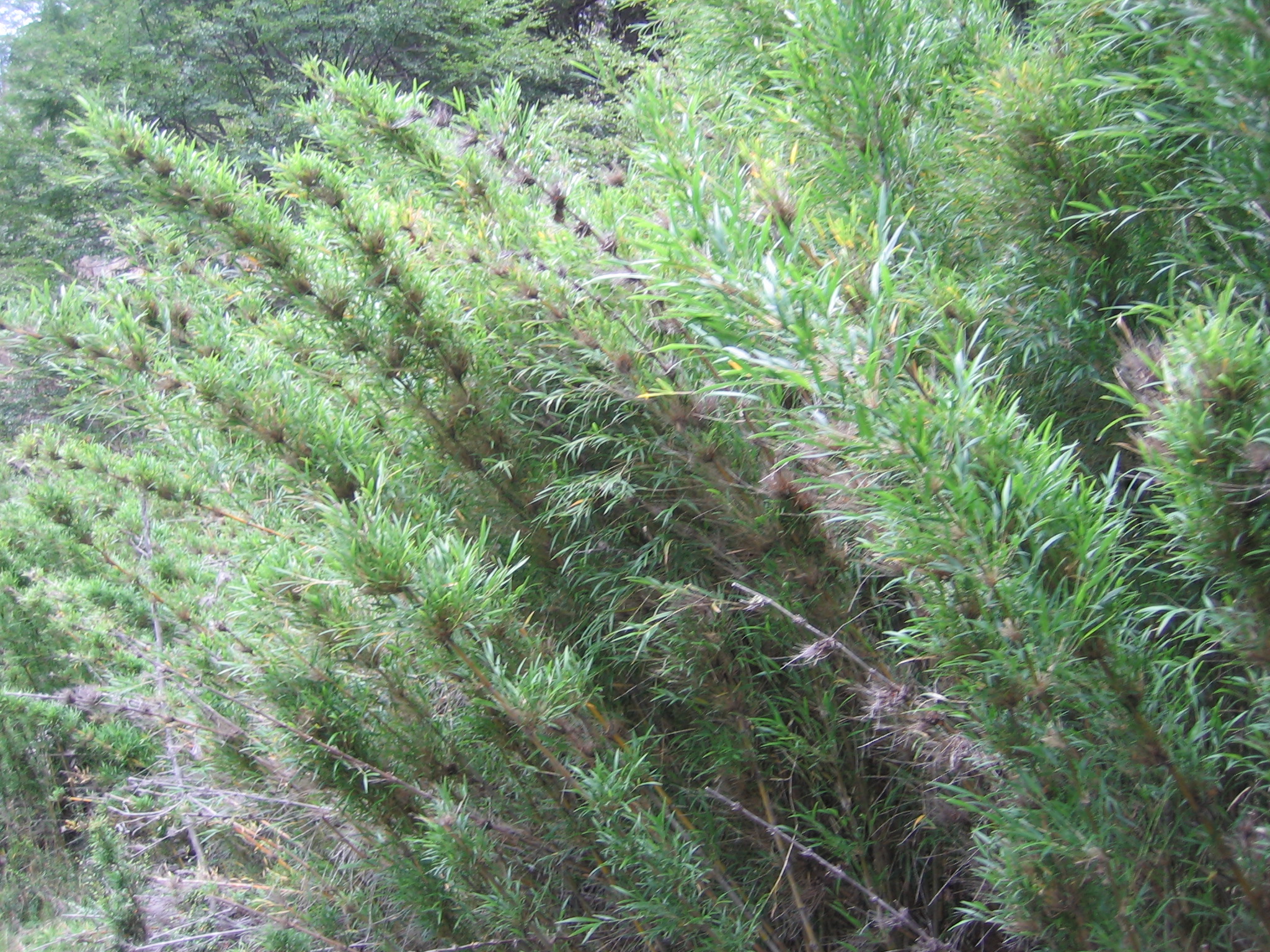
We learned that the caña verde that grows along the trails in the mountains is a kind of grass that looks like bamboo. It’s as if you’re riding through a drive-by feed store. Ranchers feed it to their horses in winter, dried and stored. How cool is that? My horse tried to snag a few bites as we rode along, but I whispered to him, “sorry darlin’, snack bar’s closed today.”

free for the grazing

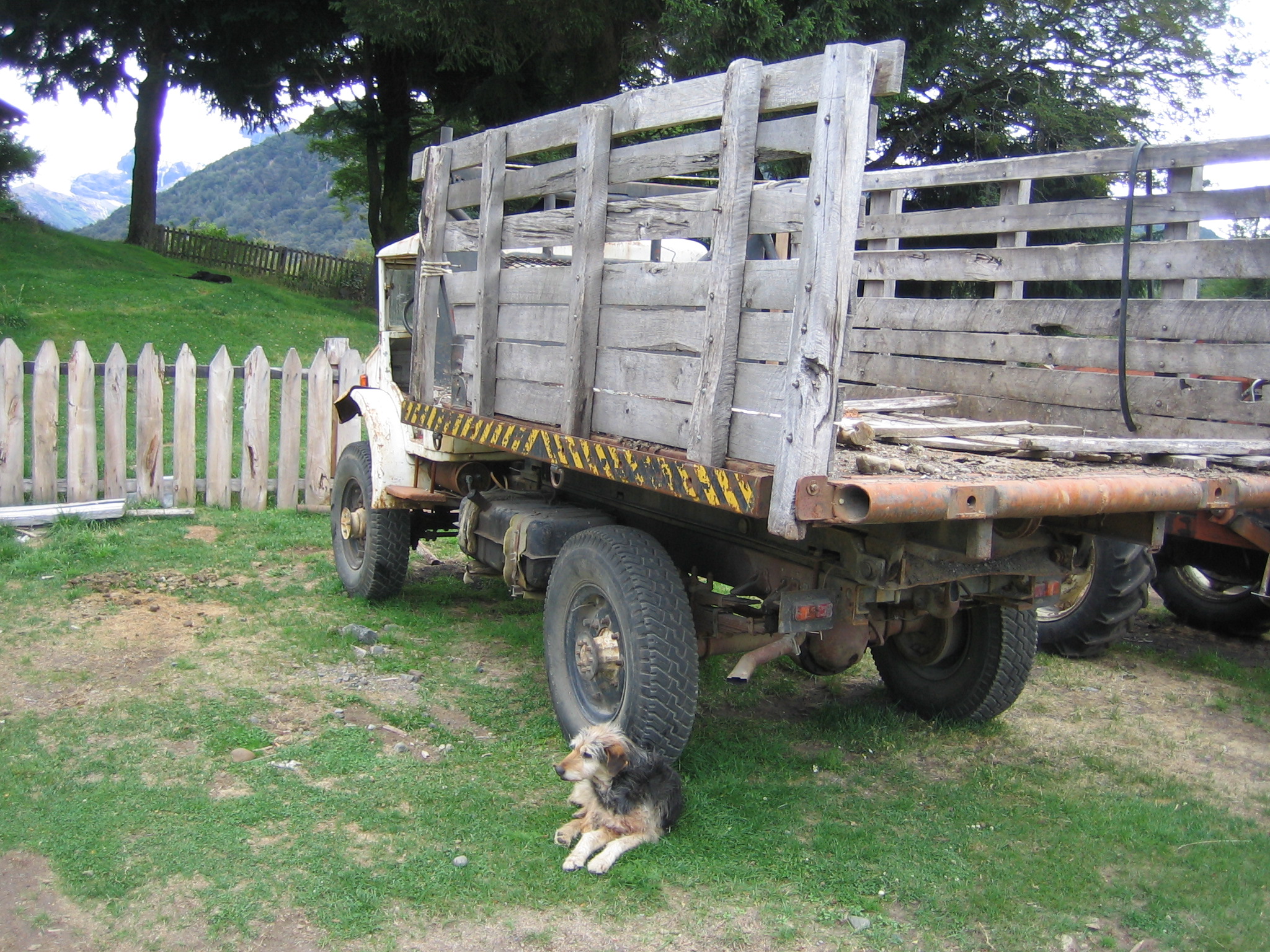
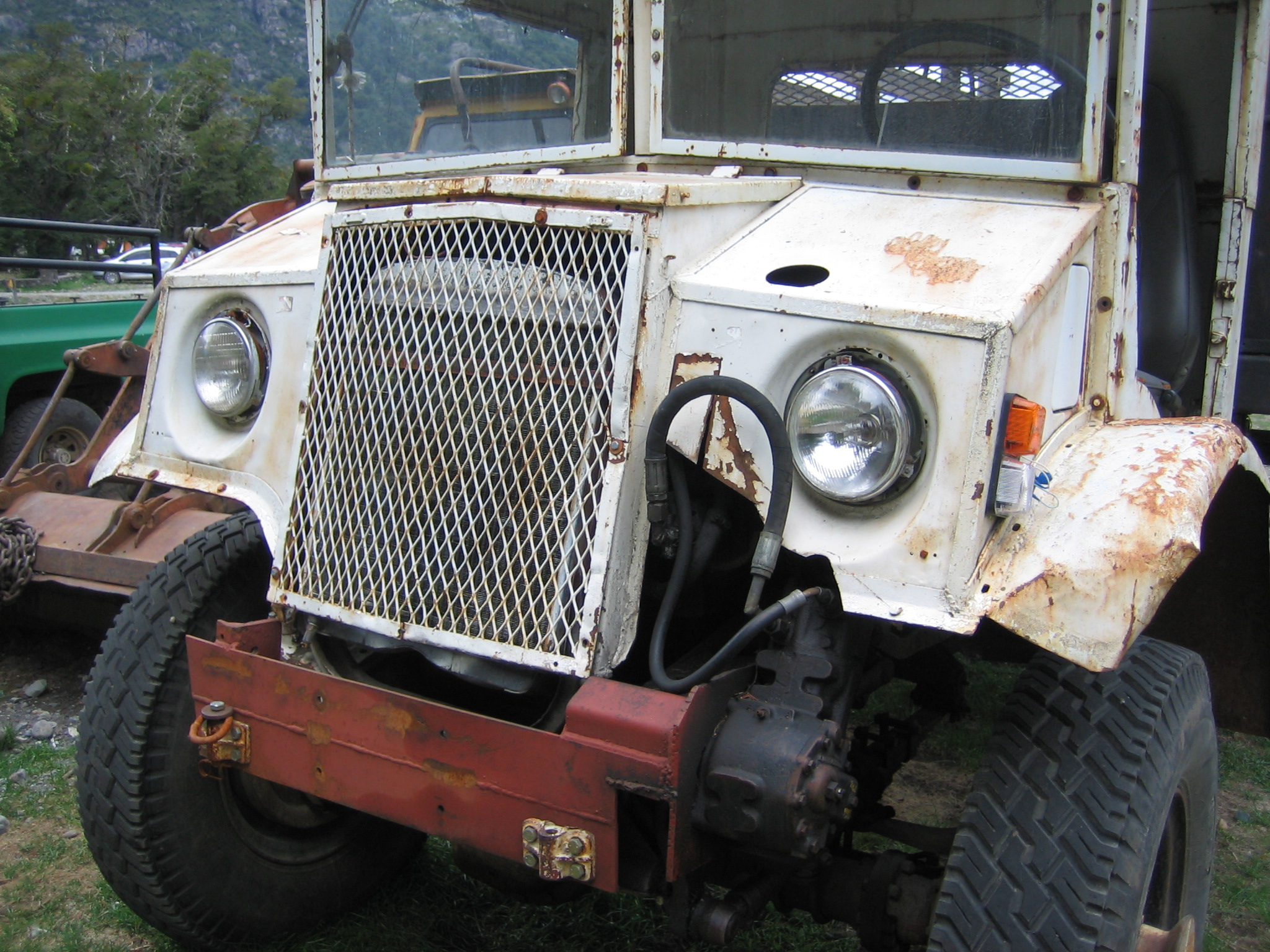
Other fascinating sights in the high country include this old flatbed. I guess it still runs, the key was in it. Nothing a little duct tape and baling wire can’t fix!

the dog is about as old as the truck

an International?

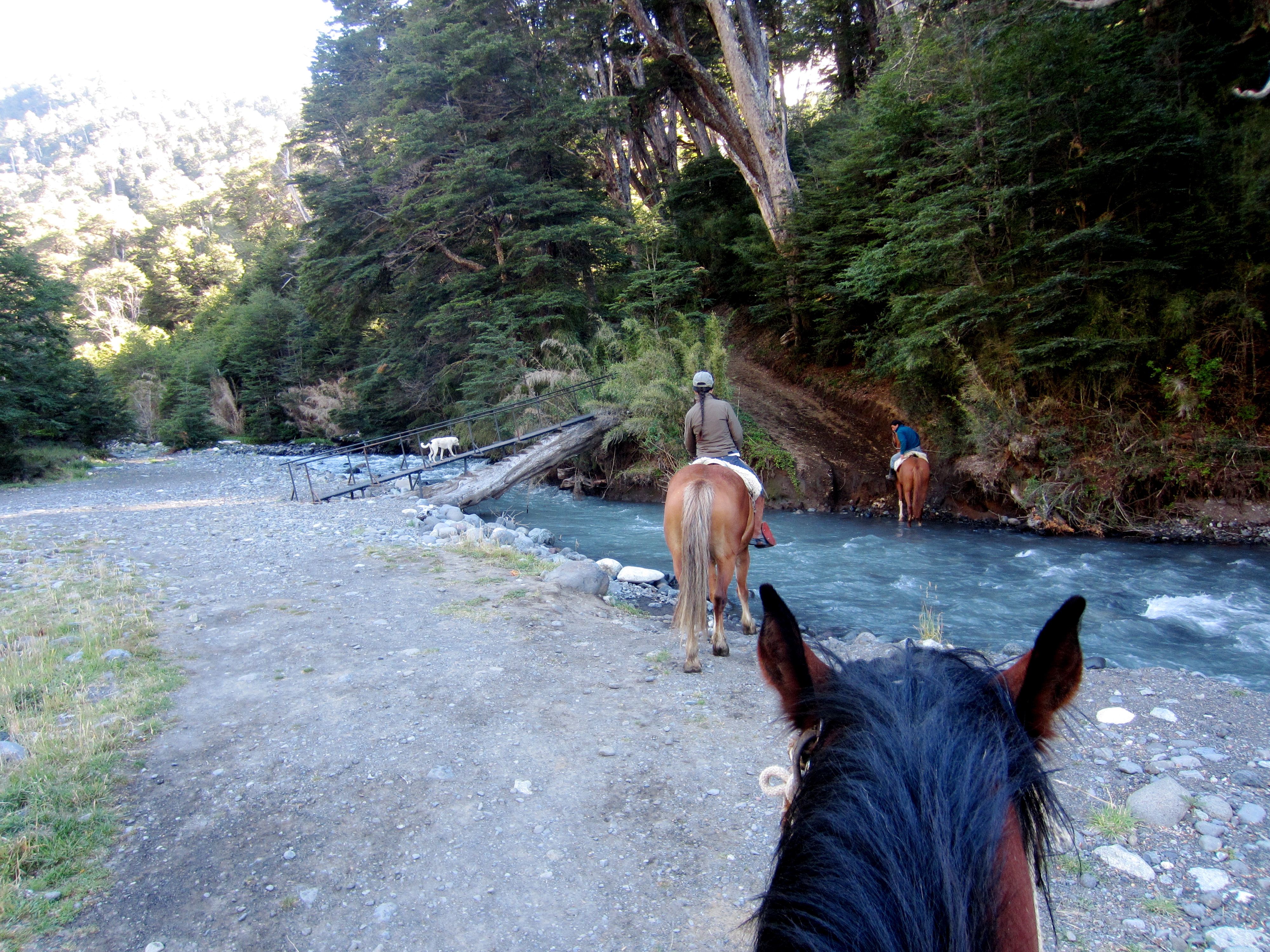
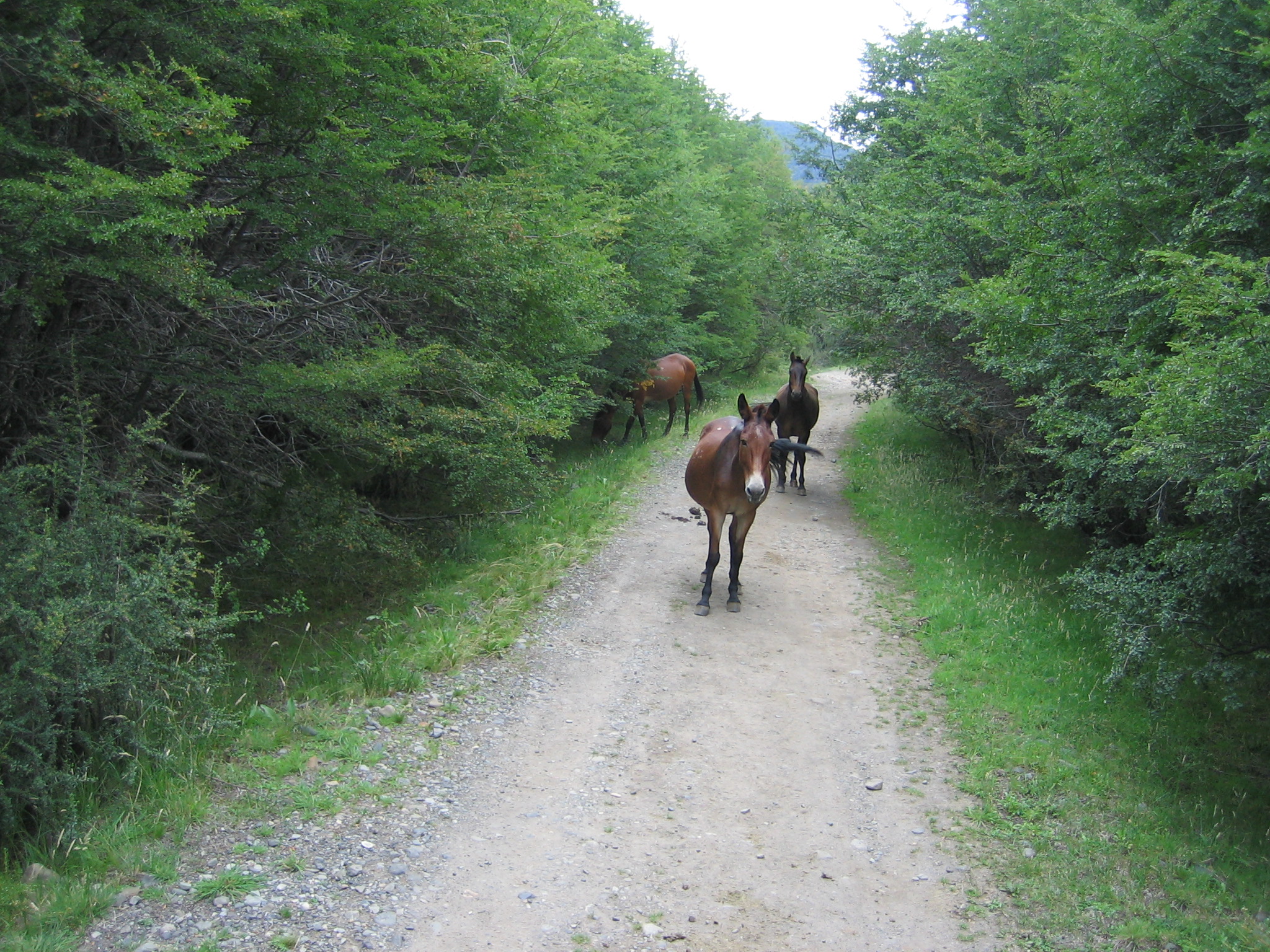
Riding back down to the lodge we followed an old trail through the meadows and creekbed. We came across some loose horses and mules belonging to the Pampa Linda stables. They do pack trips up into the mountains for 3-day and 5-day rides. The horses work one day on, one day off during summer, unless they’re out on a long ride.

she looks pregnant to me... ya think?

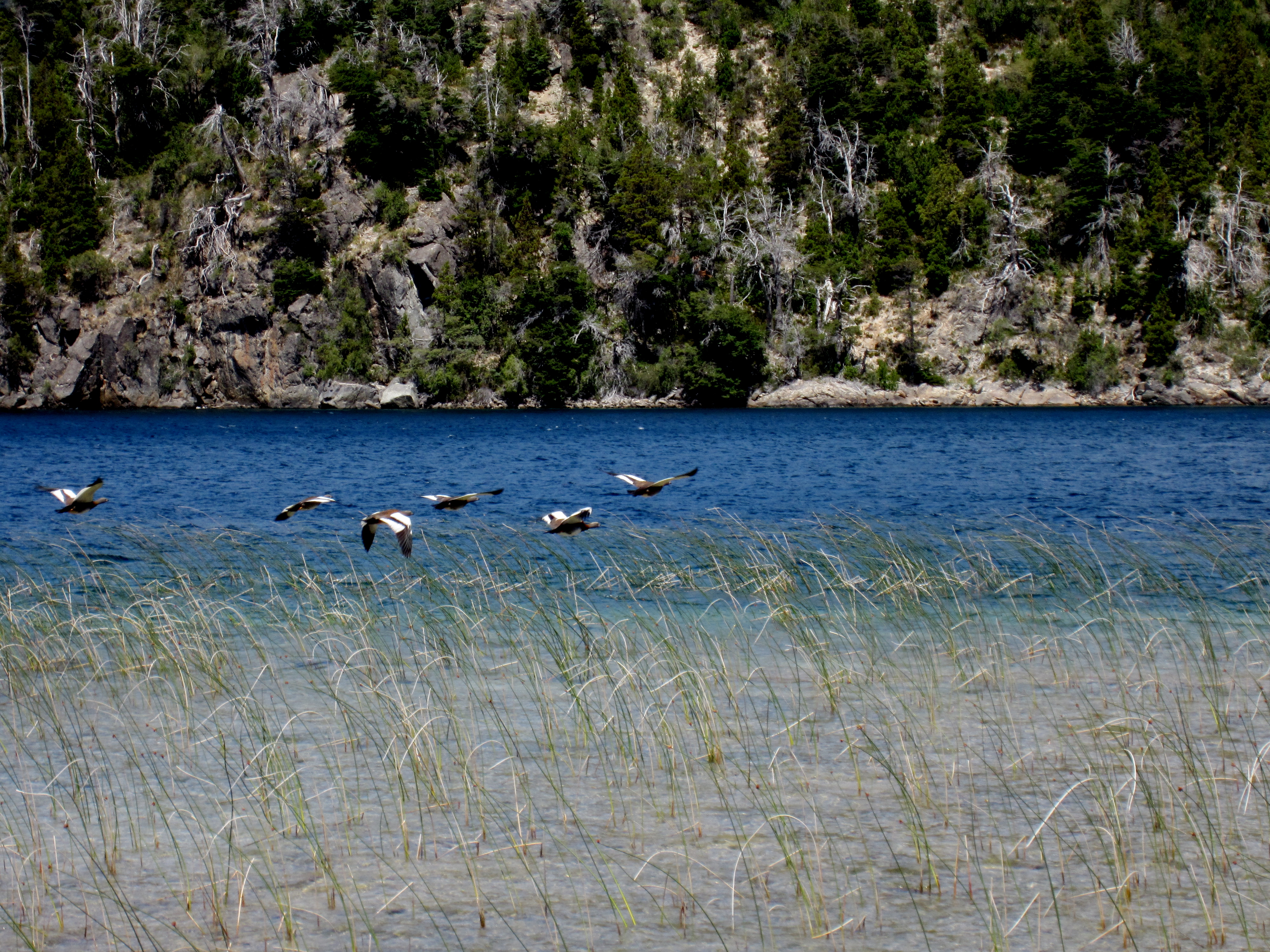
Patagonian wild ducks

Ben has been enjoying the thrills of fly-fishing: waiting for trout (brown, rainbow, and brook) to swim up and nibble the hook (special non-damaging hooks) from colorful little hand-tied flies. Perhaps we could start a new trend in earrings when the current feather craze is over, with cute fuzzy flies and other insect earring and hair ornaments, realistic enough to scare off the real flies and mosquitos! Body piercers would be in avant-goth heaven! The downside of fly-fishing is, I hear, losing your flies, snagging the line, and having to throw the fish back in!

fish like them!

There are only a few spots in Nahuel Huapi where you can actually keep a full-grown fish. That should make all of you animal protectors happy. And there are fish hatcheries all over the place. The little spawnlings are released into the lakes and rivers to keep all the tourist fishermen and fisherwomen happy. I can attest that fresh grilled trout is amazingly delicious!

I have learned 5 new species of trees: the huge, straight and tall ñire with shaggy bark; the straight and tall coíhue with beautiful oak-like branches way up high in the sky (it has a smoother bark); the arrayán, a cinnamon-colored cousin of the peely-bark madrone; the lenga, tall and slender, reminiscent of birch but not so white, beloved of elves; and the jacaranda, its lilac-violet blossoms seen all over Buenos Aires.

Yes, we are having one heck of a fabulous time here in Patagonia! This is the kind of place that makes you want to saddle up and ride the Andean version of the Pacific Crest Trail. If someone organizes it, I’ll sign up! I’m not kidding, either! but we’d have to ride into town to tango.

Next blog up: I spend a day horseback on the Estancia San Ramón.

Ciao from Patagonia!

A silly post from a silly girl

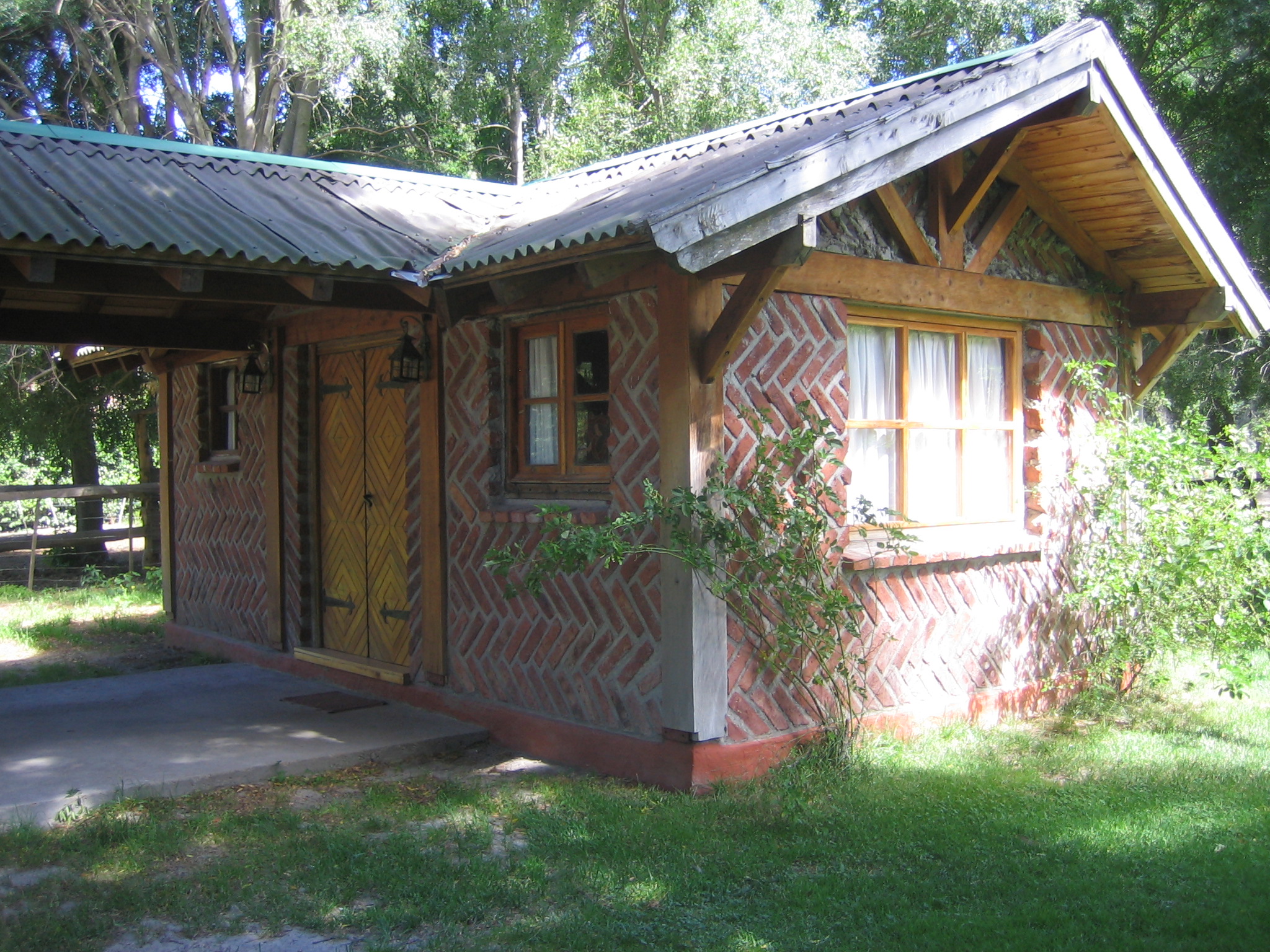
We came to Patagonia for a visit with our friend, Goldilocks, and the three Bears: Mama Bear, Papa Bear, and Baby Bear. We weren’t sure where they lived, but we saw a couple of places that seemed to fit the description:

Could this be their house?

Or maybe this one?

How cute is that?

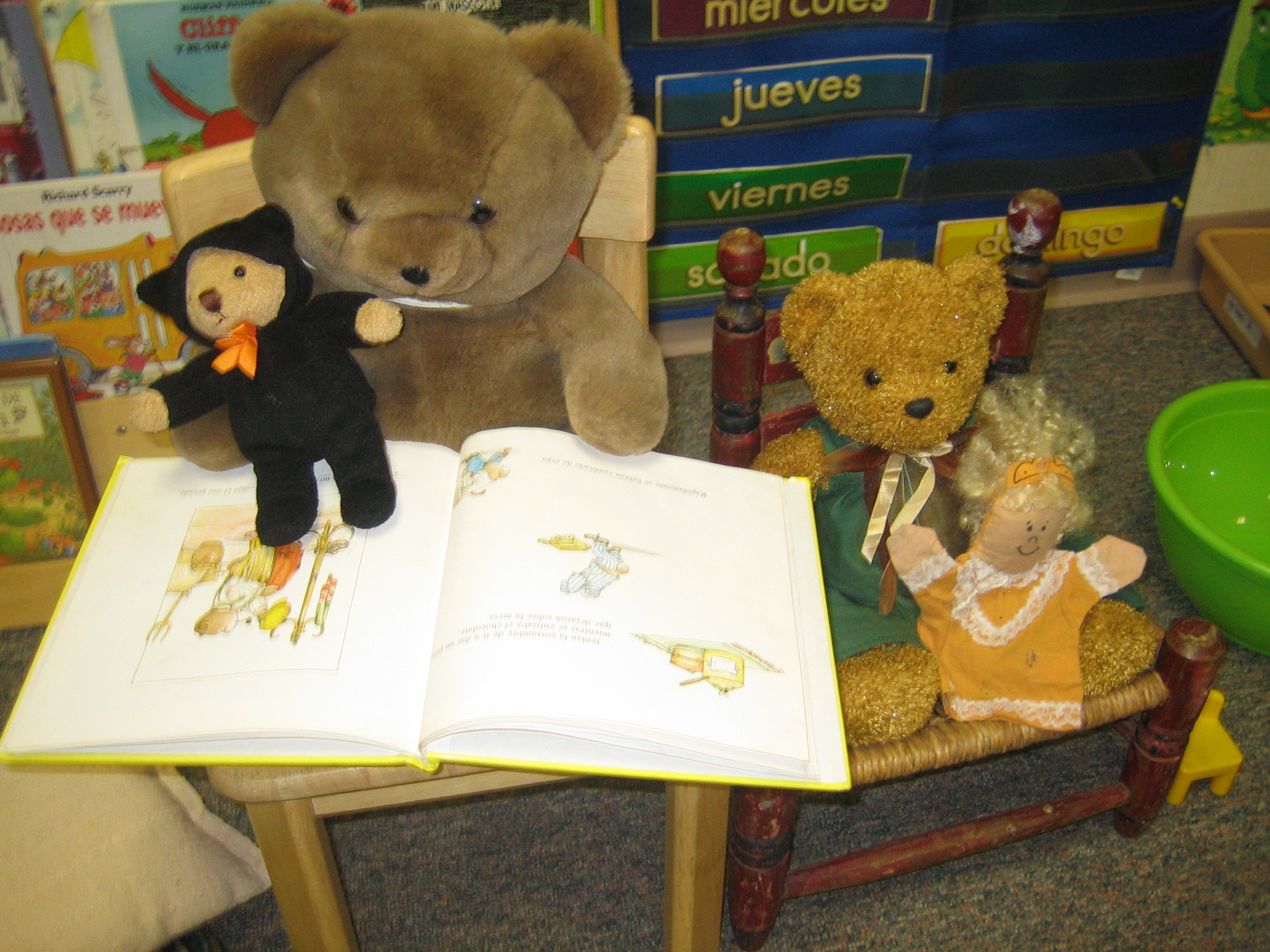
Yup, it’s their house! And here they are:

Papa Bear reading a story to Baby Bear and Goldilocks

Mama Bear showed us the kitchen:

a real storybook kitchen

with a dreamscape view:

Cerro Otto, above Bariloche

My storybook friends do exist, right in your house (if you have little ones) and also in your imagination! Others smarter than I have noted that during our absent-minded reflections and daydreams we are processing things on another level, that is, we are giving meaning to our day-to-day existence. Have you ever noticed how your creativity and inventiveness start to kick in when you slow down enough to notice? So if you love to get out into nature, ride horses, dance, go fishing, read a good book, whatever you do to relax and let the world slip away… you’re rewarding yourself with a good healthy dose of creativity and imagination. It’s never a waste of time!

Here’s a blooper from my next post, think of it as a preview:

Oh no, his horse tried to kiss him!

Ciao from Patagonia!

Patagonia: Nahuel Huapi

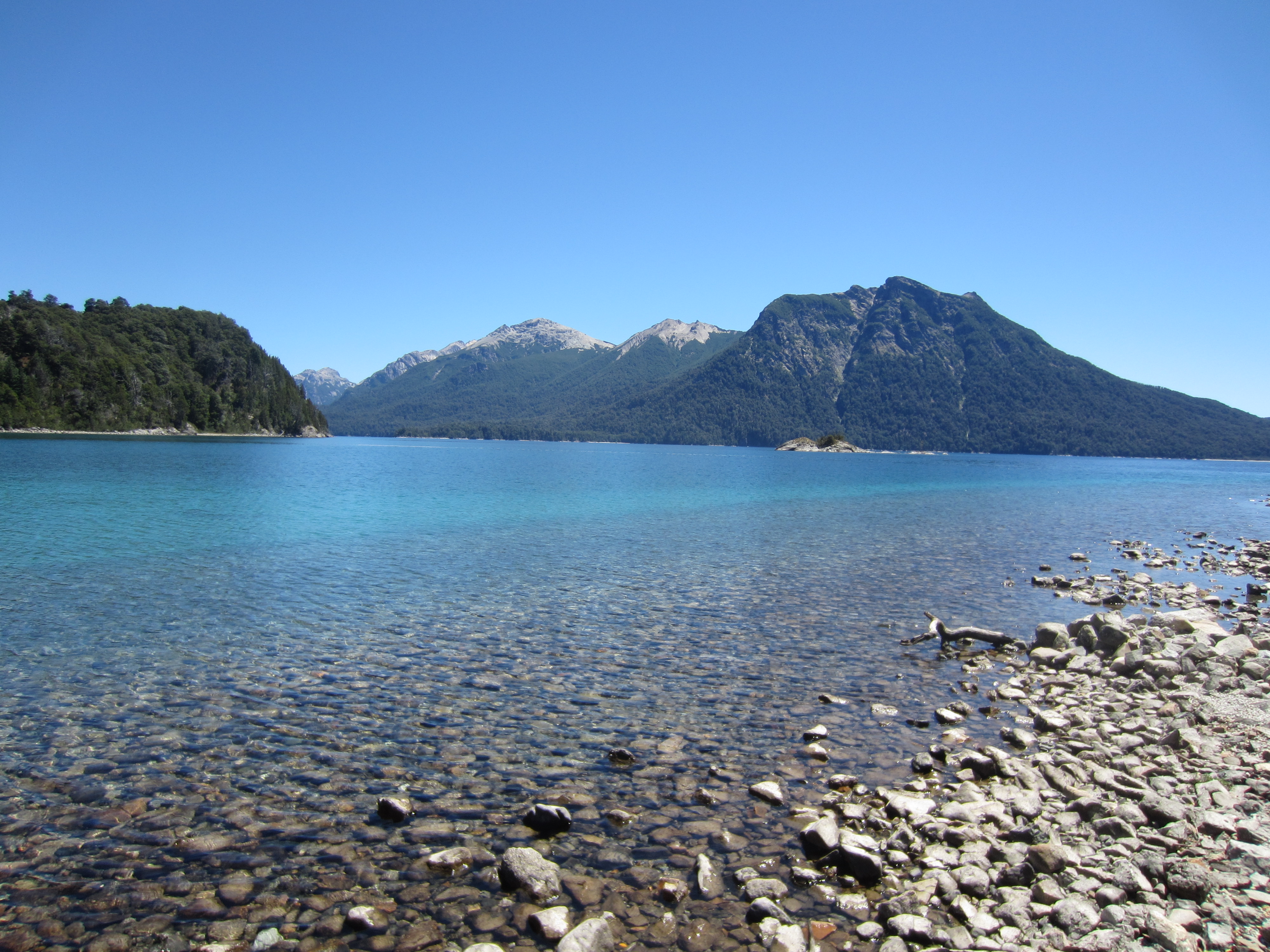
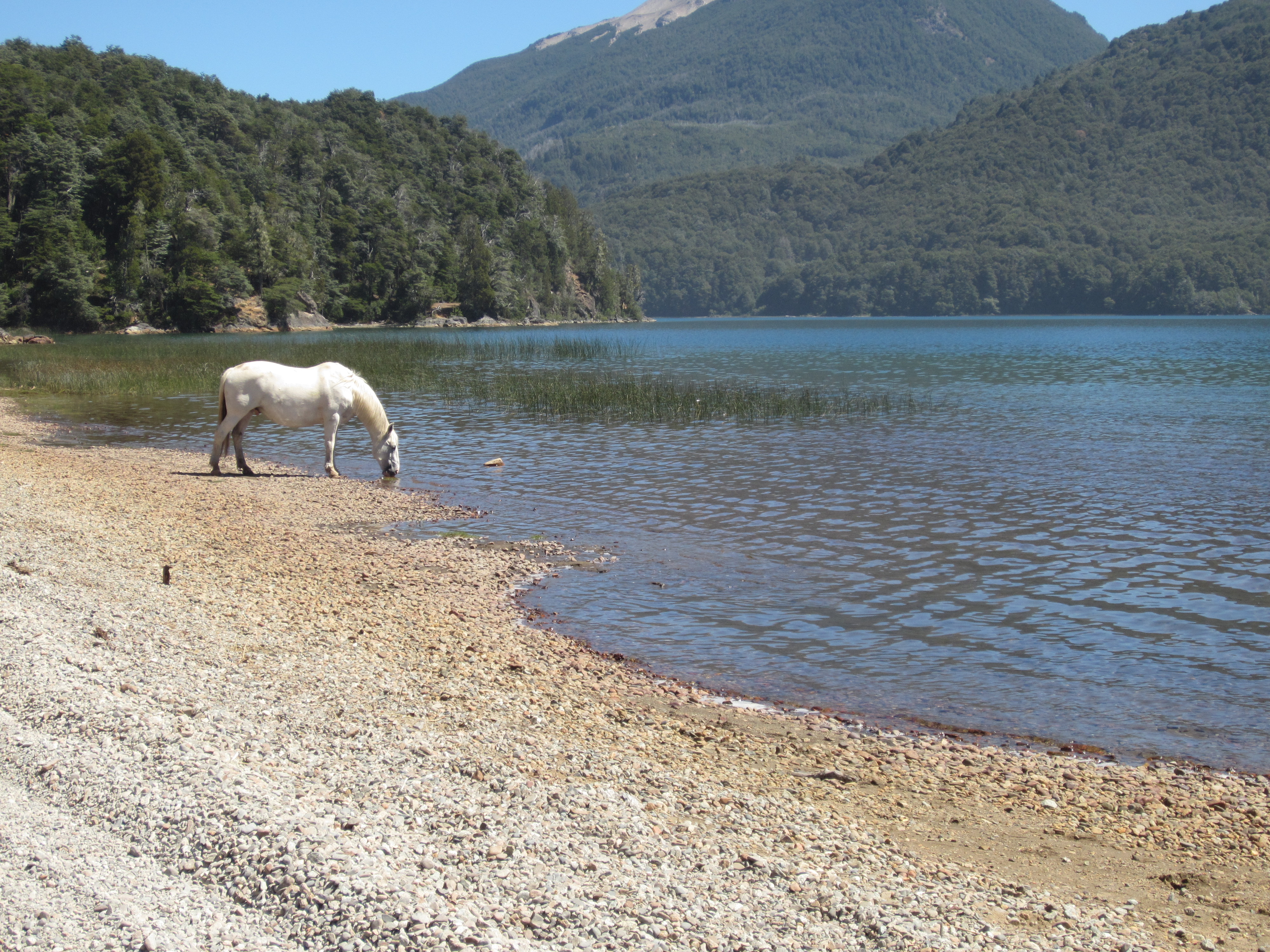
the beach at Lago Traful

They call this Patagonian high country the Lake District, land of seven lakes and seven rivers. Depending on your point of view, Patagonia can be a welcoming paradise of towering peaks and alpine lakes or a tedious composition of the endless, unknowable and unliveable wilderness — more than 300,000 square miles of Chile and Argentina in the southern cone of South America. There’s hundreds of lakes up here, and I don’t mean ponds. This beautiful blue paradise we found just a few kilometers from our cabin:
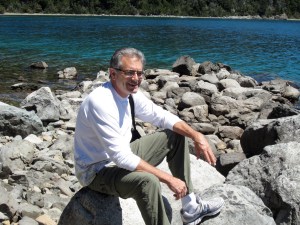
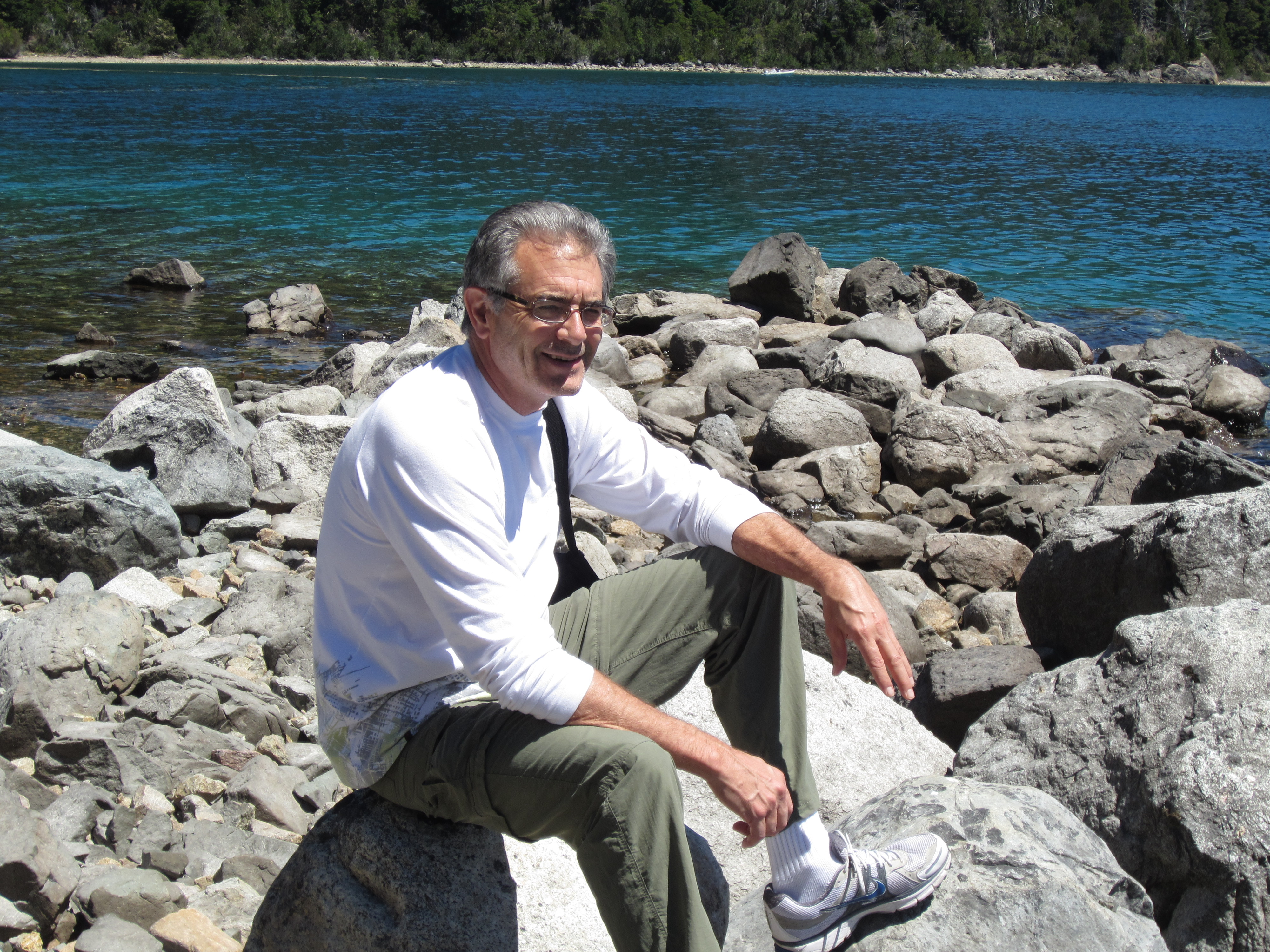
he's happy on the rocks

Lago Traful is a beach of pretty rainbow colored waters.  Traful is a Mapuche word meaning a confluence of creeks and rivers.
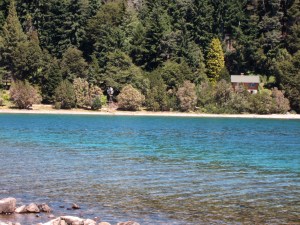
wish you were here!

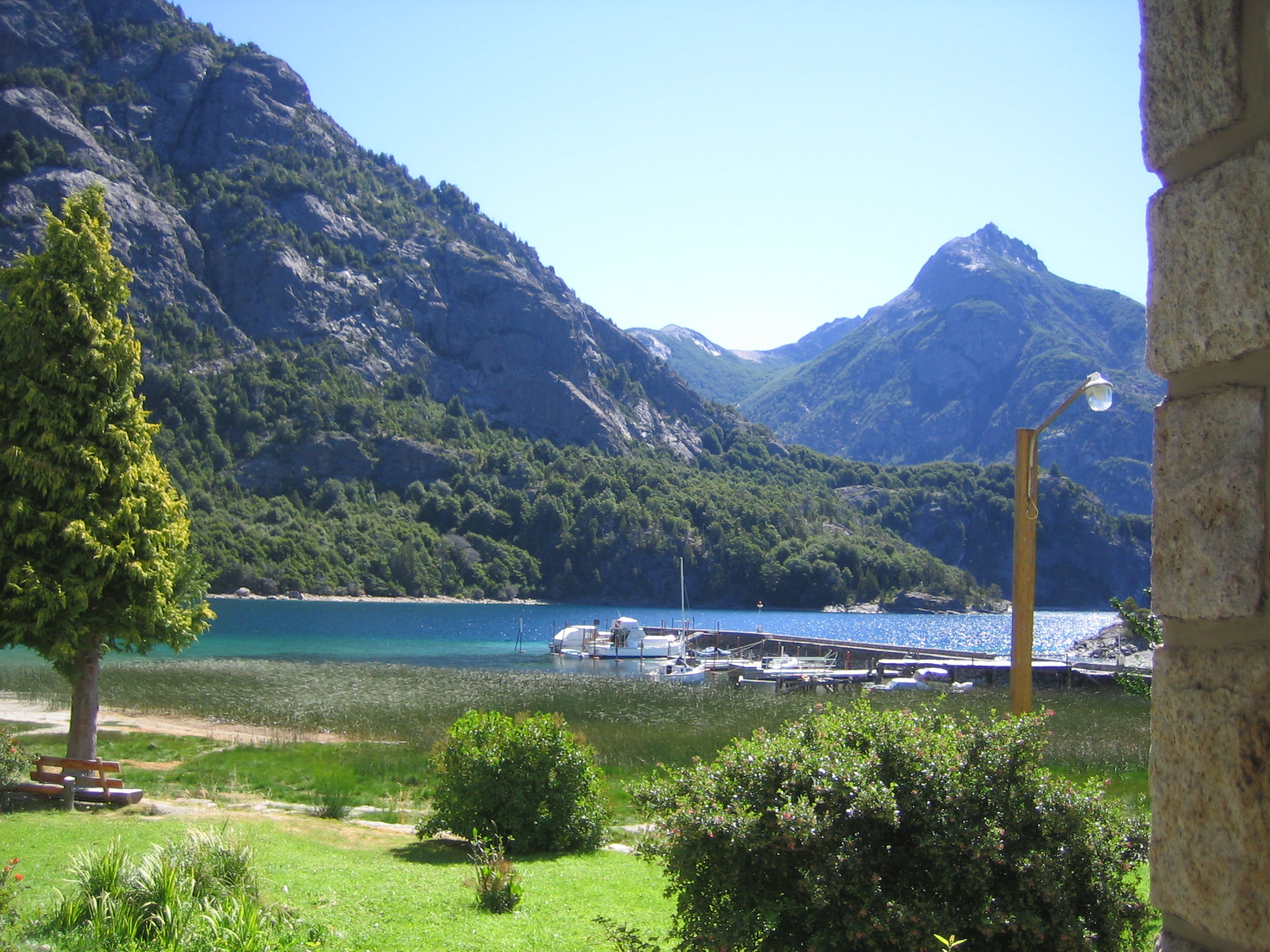
Just down the road and around a few curves is a tiny harbor at Bahía López, in Llao Llao:
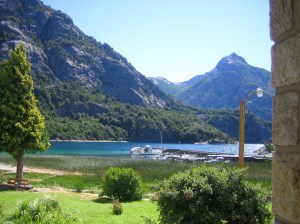
Porto Pañuelo

The world famous Hotel Llao Llao is perched on a hill just up the road. We hiked around the cove and along a trail that goes up and around the point.

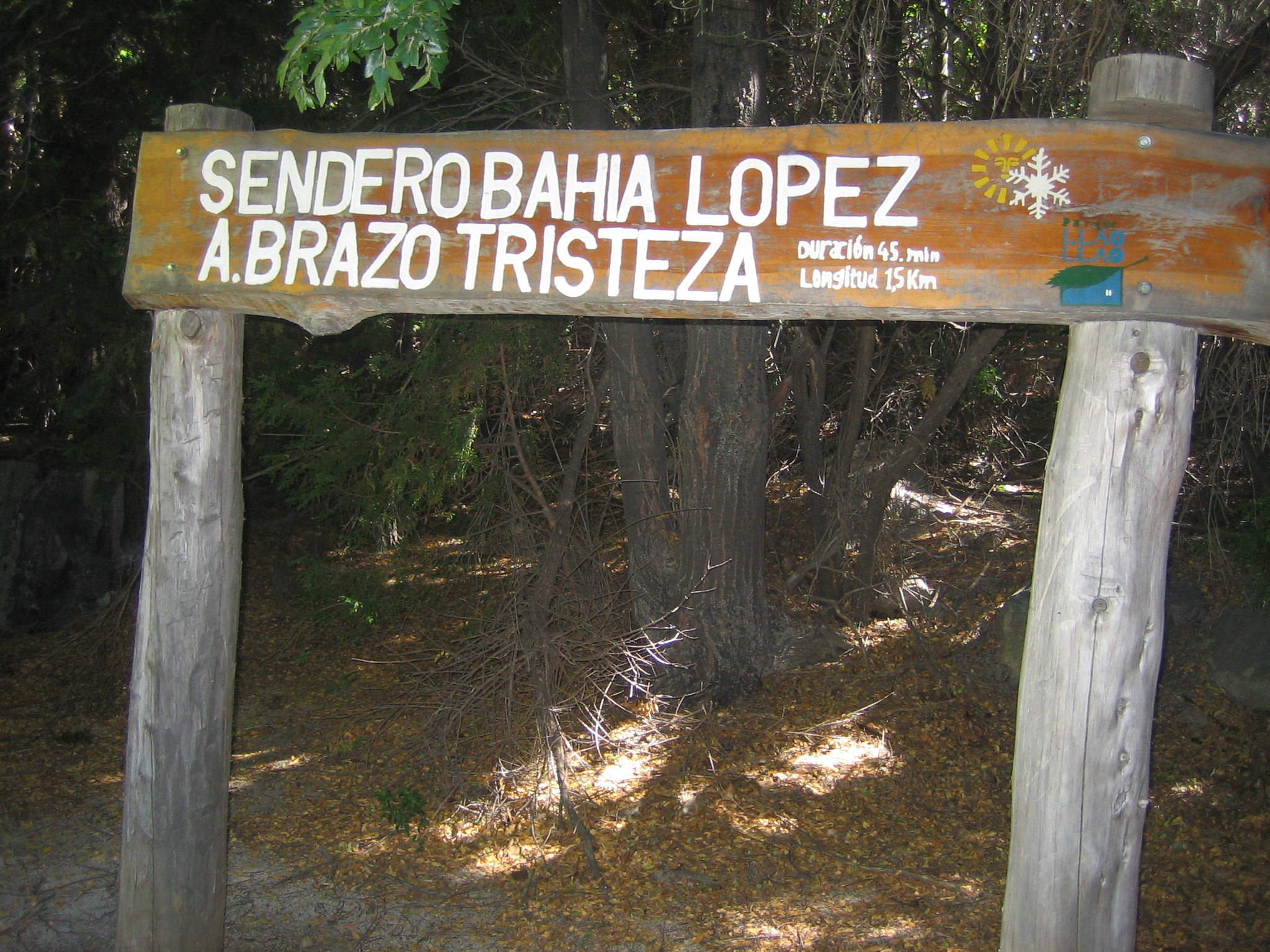
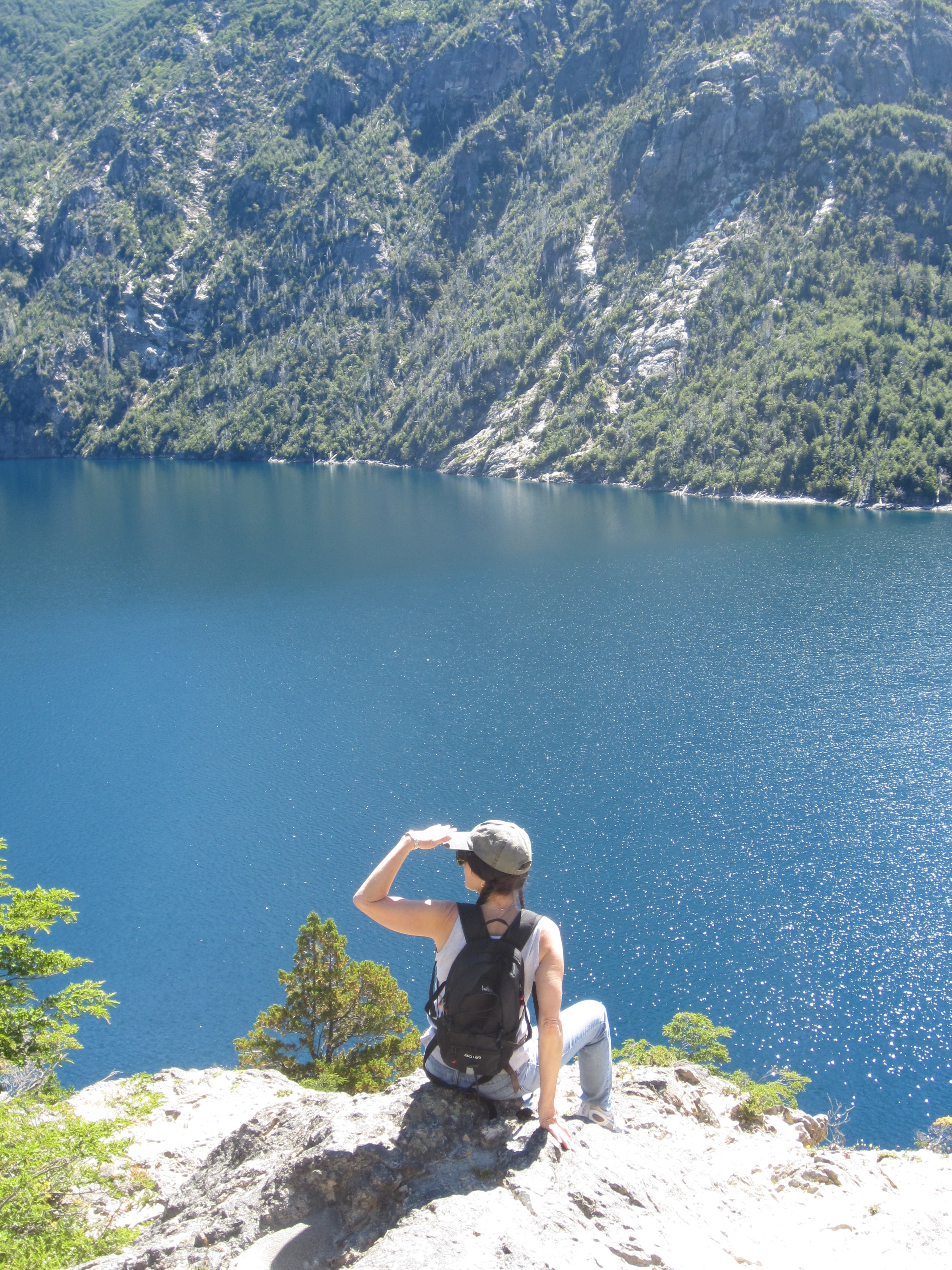
The Brazo Tristeza trail was spectacular: pretty day, short hike (less than an hour), lovely views! We had post-hike coffee at the big hotel. Reminds me of the Ahwahnee but not as grand.
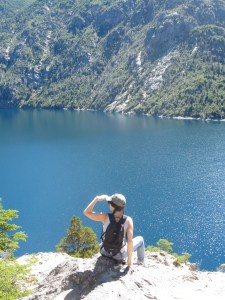
the view from the top

Calling all snow lovers! This could be the place for you. High peaks all around, gorgeous lakes of the most dazzling indigo blue, abundant fishing, hiking, skiing, trekking, mountaineering. Winter sports are the biggest draw here, causing a population surge in winter. Bariloche is built along the southern shore of Lago Nahuel Huapi, lined with hotels, lodges, cabins, casinos, spas…. however this is not Lake Tahoe. The shoreline isn’t built up all around the lake. In fact, there are precious few roads once you get s few kms out of town. Tahoe in the 1930s?
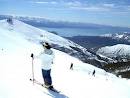
Bariloche in winter

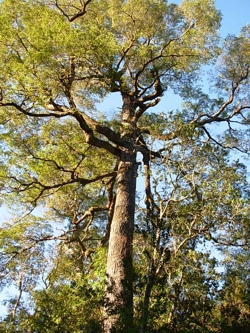
Nature lovers, no need to chain yourself to a tree. Miles of trails to hike in summer or x-country ski in winter. Tourist season here never ends, or so they say. In autumn people come for the fall colors, and in spring you can just imagine the wildflowers. National parks in Patagonia have stands of old growth trees like the beautiful coihues we hugged on our hike to Lago Llum.
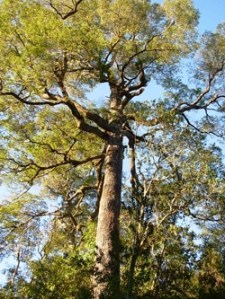
el coihue

The Llao Llao Hotel isn’t just a resort; it’s the centerpiece of the region, the key to the elaborate fantasy that informed the area’s development. During the 1930’s, Argentina’s military government created two contiguous national parks that extend for 160 miles along the rugged Chilean border; the Llao Llao was their capstone. Parks and hotels alike were the brainchildren of Ezequiel and Alejandro Bustillo, brothers who’d fallen under the spell of “el Sur,” the vast and trackless Patagonian wilderness that Argentina’s army had wrested from the natives just a half-century earlier. Ezequiel was the visionary bureaucrat, head of the National Park Service and central to the creation of its first park, Nahuel Huapi. Alejandro was the architect who transformed these craggy surroundings into stone-and-wood stage sets. In their hands, the Patagonian Andes of the nomadic Mapuche and Tehuelche nations became a romantic Alpine fantasia. Picture a band of gauchos singing “Edelweiss” by the campfire and you’ve got the general idea. [this paragraph taken from “Patagonia: Argentina’s Lake District,” by Frank Rose, 2008, Travel and Leisure]
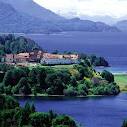
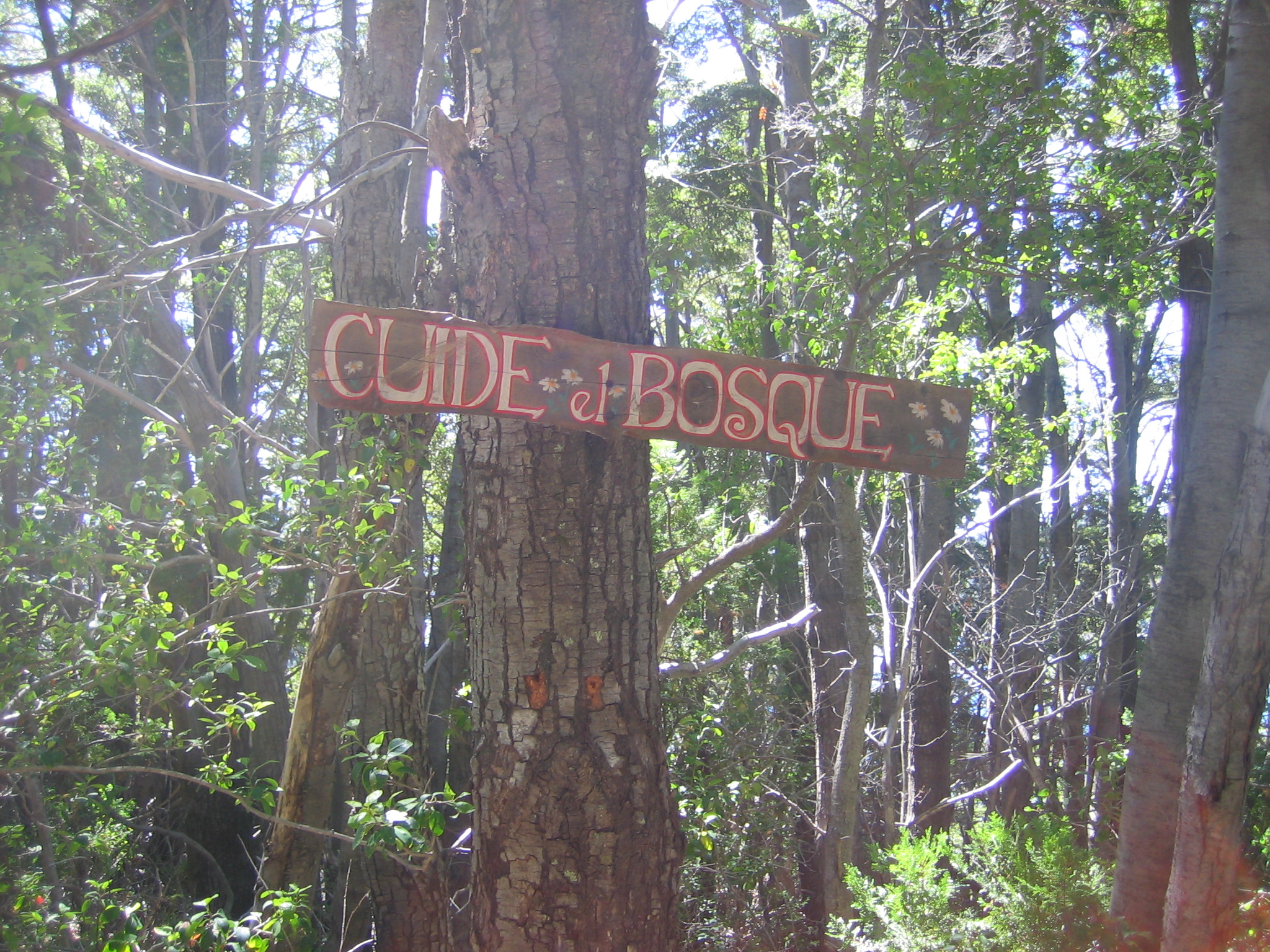
Trails in the parks are more or less maintained, though we had to climb over numerous big fallen trees bisecting the trail. The trails aren’t freeways like in Yosemite! A sweet hand-painted sign along the path reminds us to take good care of the forest:
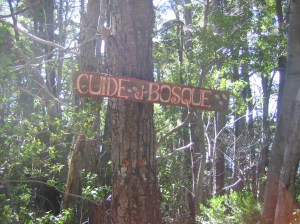
Cuide el Bosque

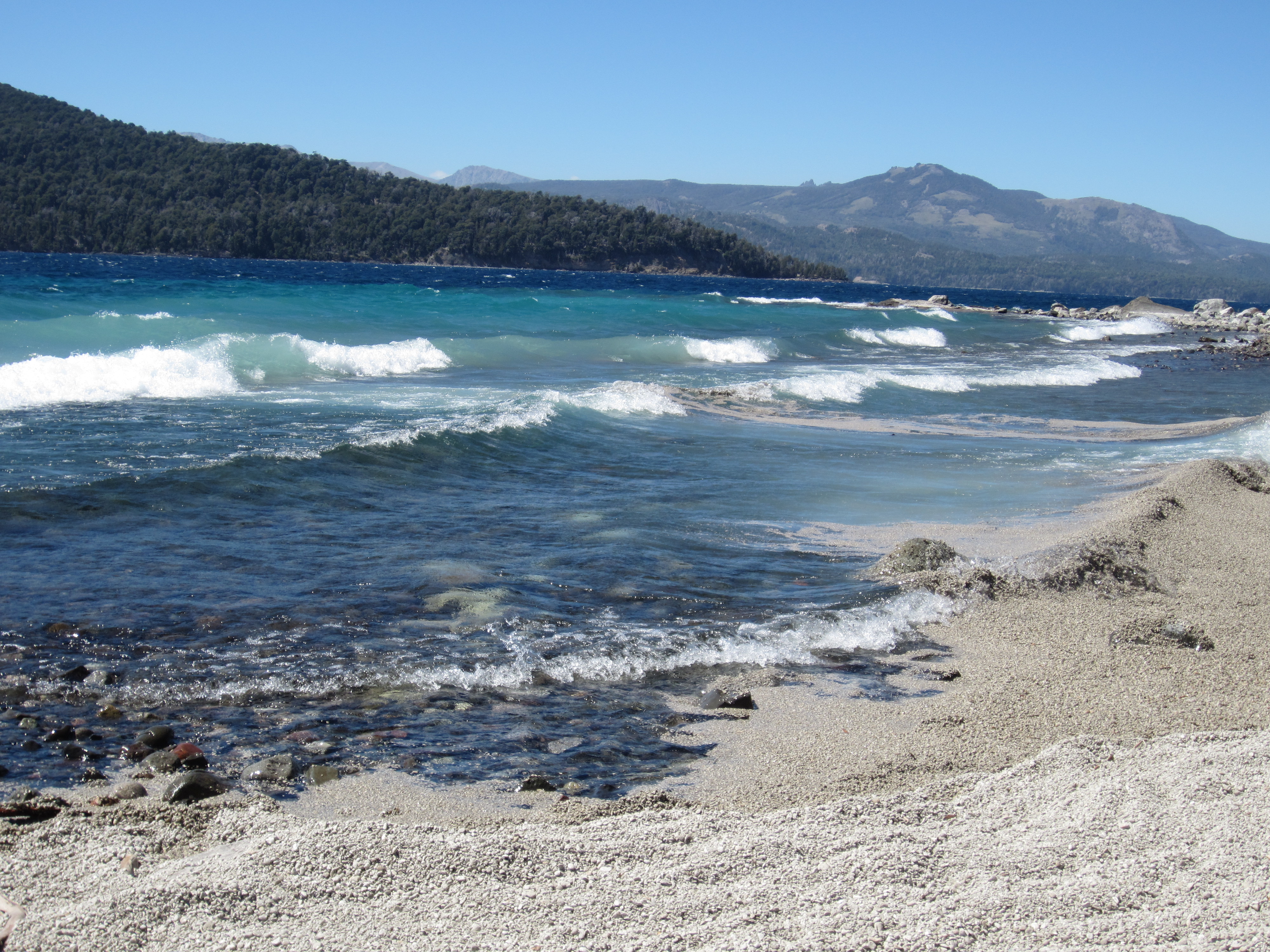
Day 3 in Bariloche we walked across the road and down to the beach. Let me fill in some background info here: Puyehue, an active volcano only 40 miles from Bariloche, (just across the border in Chile) blew its top on Ben’s birthday in 2011 (June 4). Look closely at the water and you’ll see what looks like a tan-colored scum on the surface.

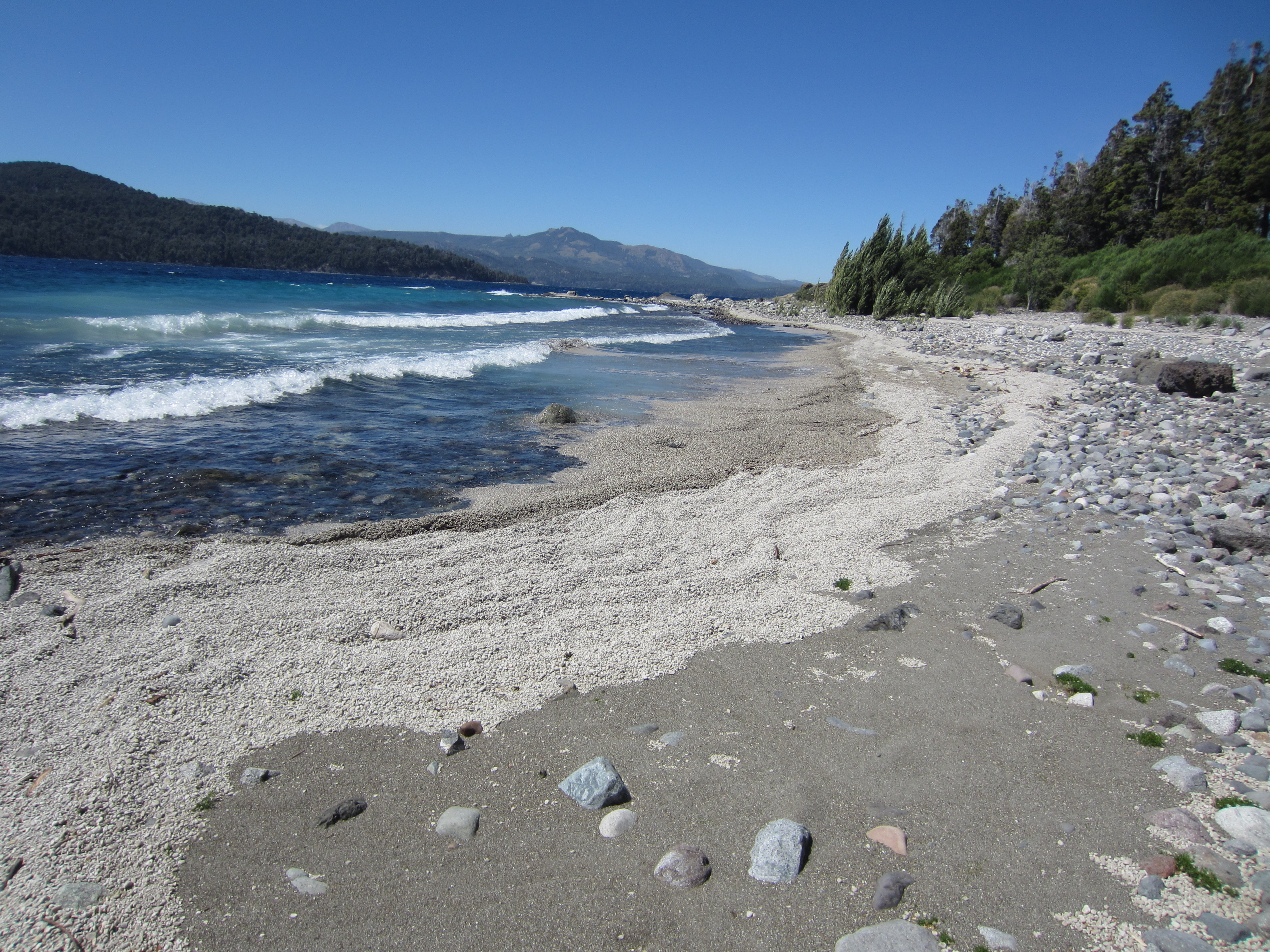
Look closely at the next photo and you’ll see the beach covered with small dark (wet) and tan (dry) pebbles which have washed up on shore. Volcanic pebbles.
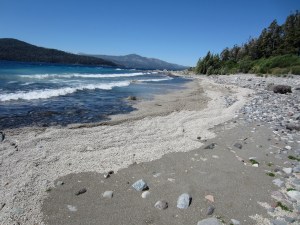
volcanic fallout

When you pick up a volcanic pebble, it feels unbelievably light, like a feather, or a marble from a different universe where they forgot to pay the gravity bill. Someone with a background in science could explain it better, using terms like mass, density, etc. These volcanic pebbles float on the water, and then wash up on the beach. On our ride yesterday the clouds of trail dust we were breathing was mostly volcanic ash. Definitely not something you want to breathe lots of.

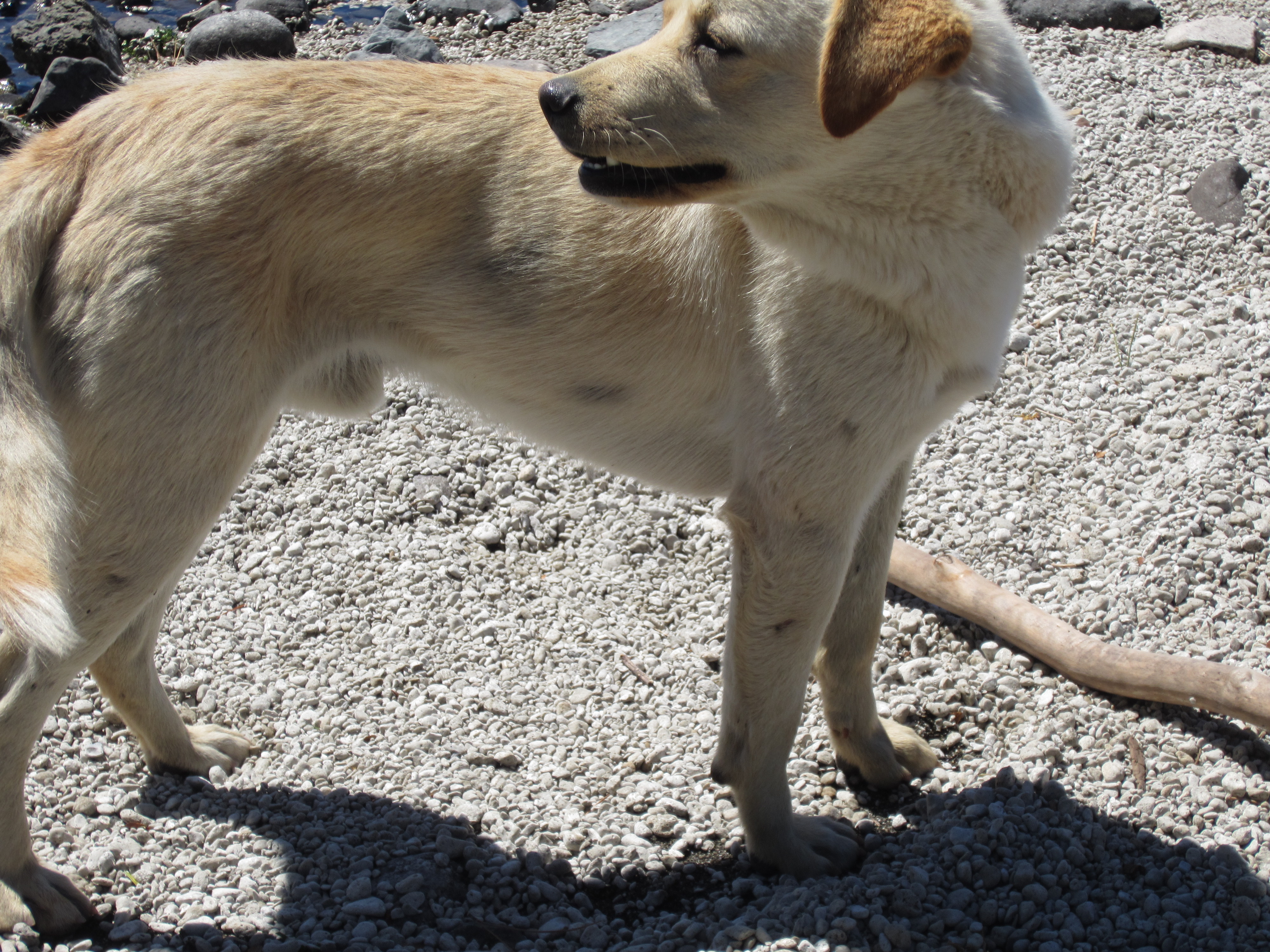
Anyhow, back to our walk around the neighborhood. A friendly yellow-spotted dog adopted us and followed us for about two hours:
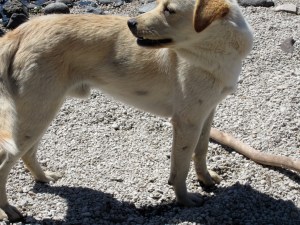
a friendly yellow dog

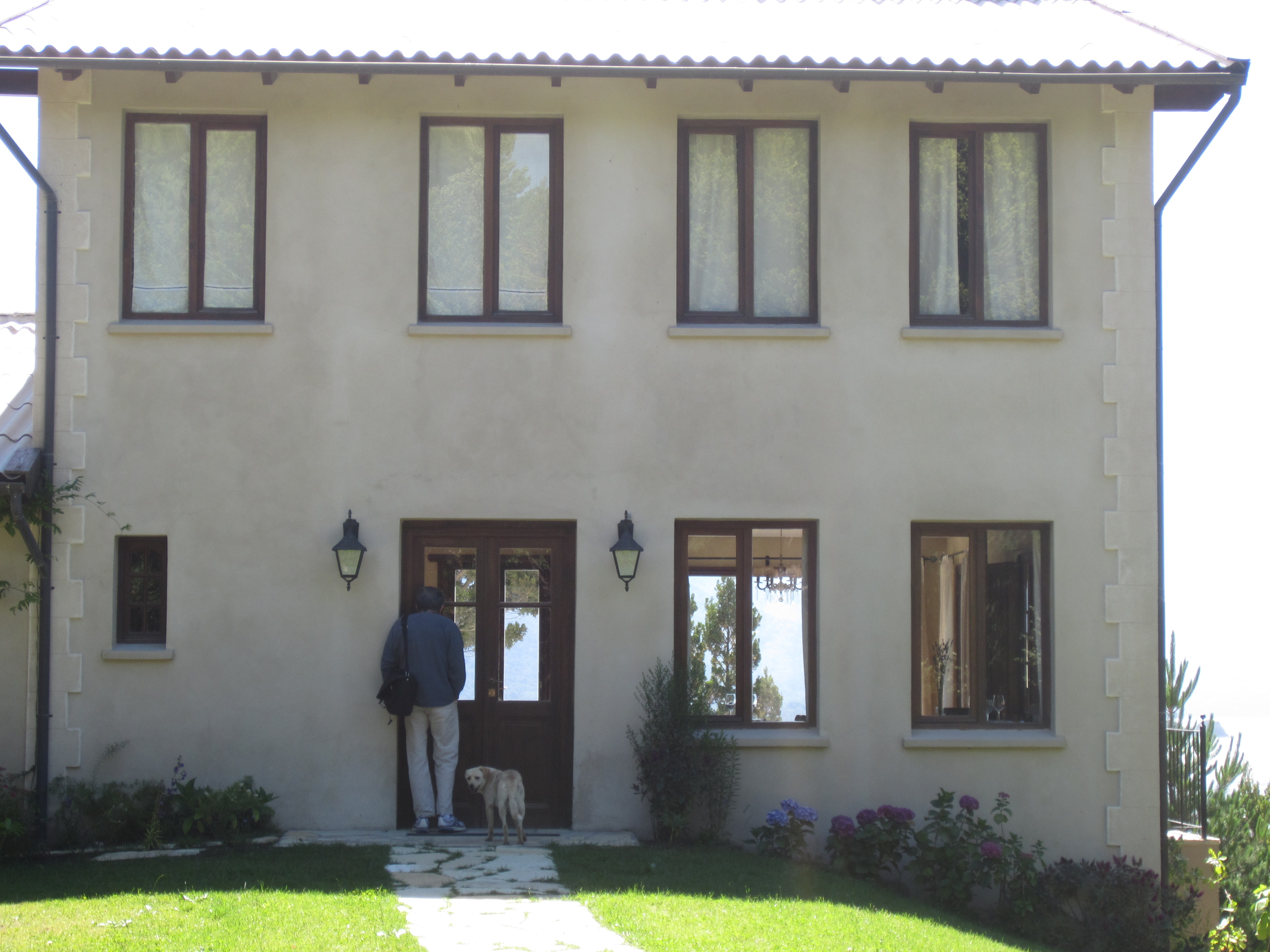
Here’s our adopted pal accompanying Ben to have a peek in a pretty restaurant just around the corner from our cabin. It was not yet open, so….

La Masia

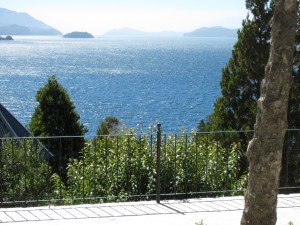
we went back later for dinner, but we didn’t have reservations and they couldn’t feed us! We’ll try again before we leave Llao Llao. There are loads of even more beautiful buildings in the area, but the back patio of La Masia feels like a sunny terrace somewhere along the Italian riviera.
At one point we were walking along the road and a big mean black dog named Pincho came running over and attacked our little pet-for-a-day. Pincho’s owners kept calling him but he was intent on chasing the invader off his turf. The little yellow dog came out of it alive with a puncture would on his left back inside leg, (just above the fetlock if he were a horse) and another owie on his inside right hind leg, not to mention the pain and humiliation. Pobrecito! I guess by then he’d figured out we wouldn’t make such good human pets after all. By the time we’d walked as far as Porto Pañuelo he was playing with a boy on a family outing, and we didn’t see him again. Off to greener pastures!

Our next day’s adventure had us driving to a lake in Mapuche territory, about an hour west of Bariloche. We left the main road just past Lago Gutierrez, turning onto a dirt road that wound its way thru tall brush and stands of willows in the river bottom for about 3 km. Our brave red fiat bounced and scraped along the ruts and potholes and rocks, till at last we drove into a clearing with campsites amongst trees by the lake. From there we crossed a wooden footbridge over the creek and took the trail to Lago Llum.

Photo taken before the hike : not yet tired, dirty and hungry!

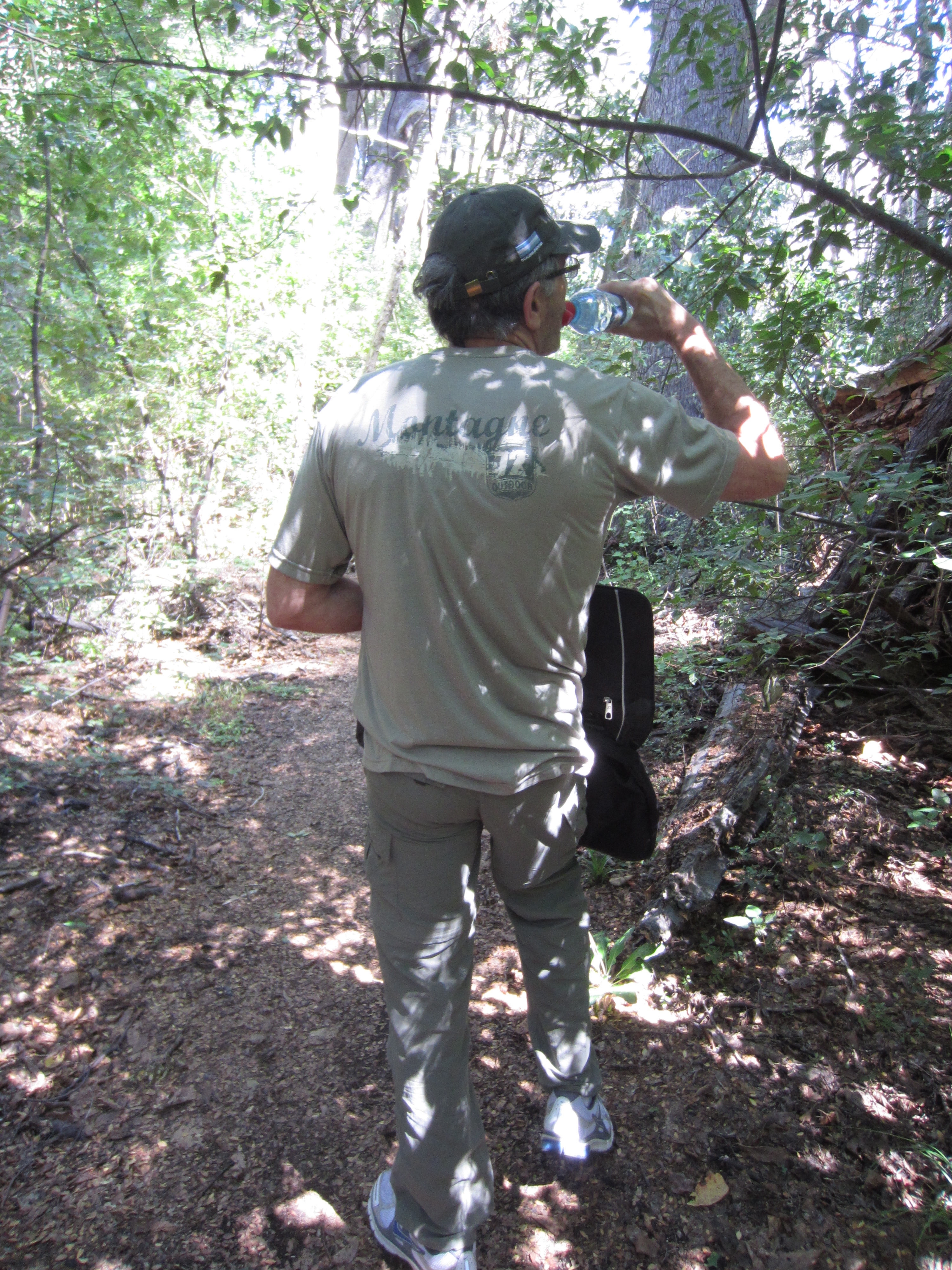
Ben taking a water break

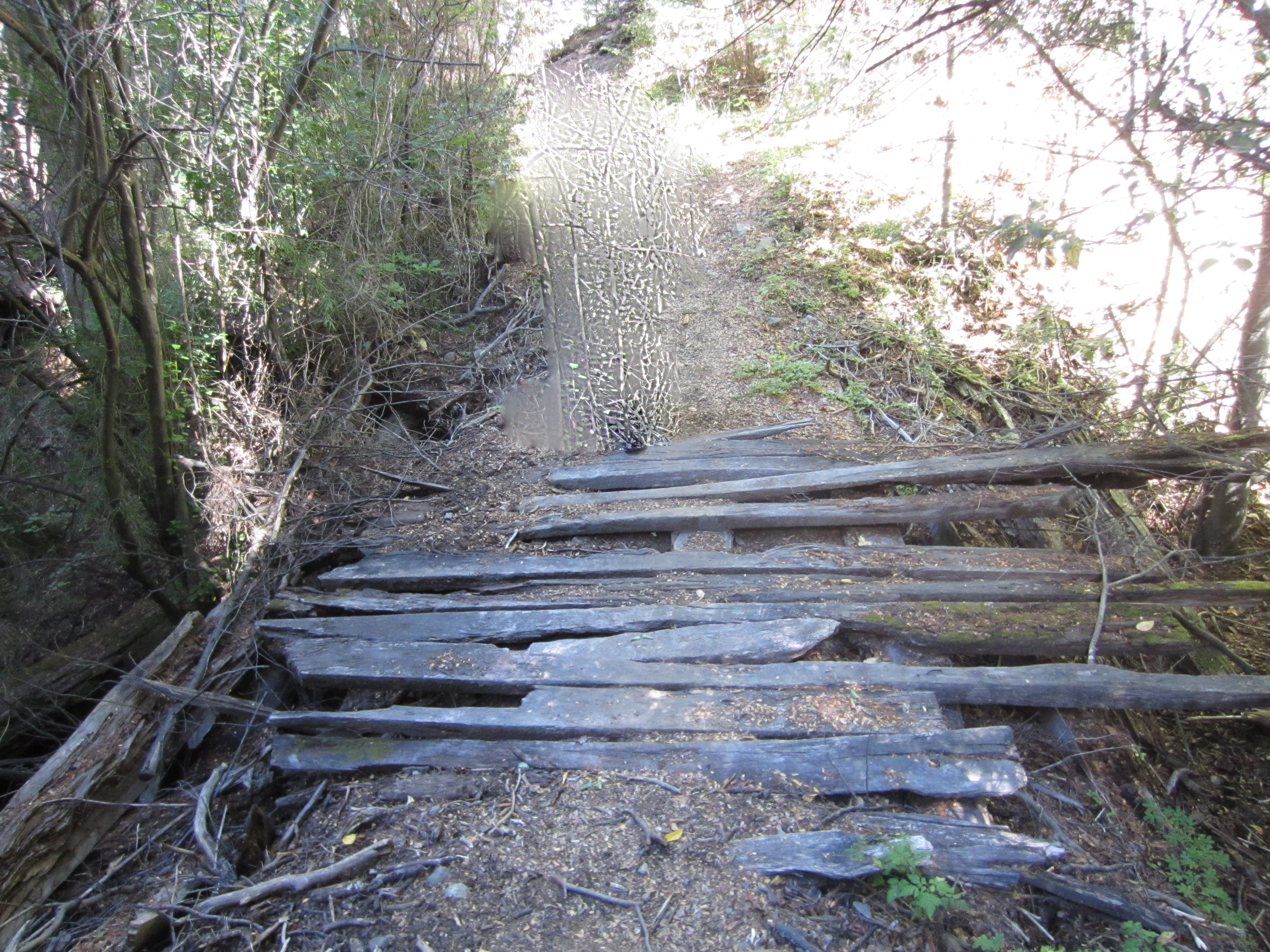
We climbed up and down along the beach and then up and over the ridge to Lago Llum. The woods were thick, lush, green, with huge coihues that clued us in to the fact  that we were following an old logging road. Here’s the remnants of an old ghost bridge:
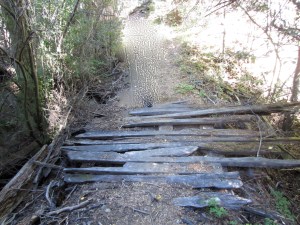
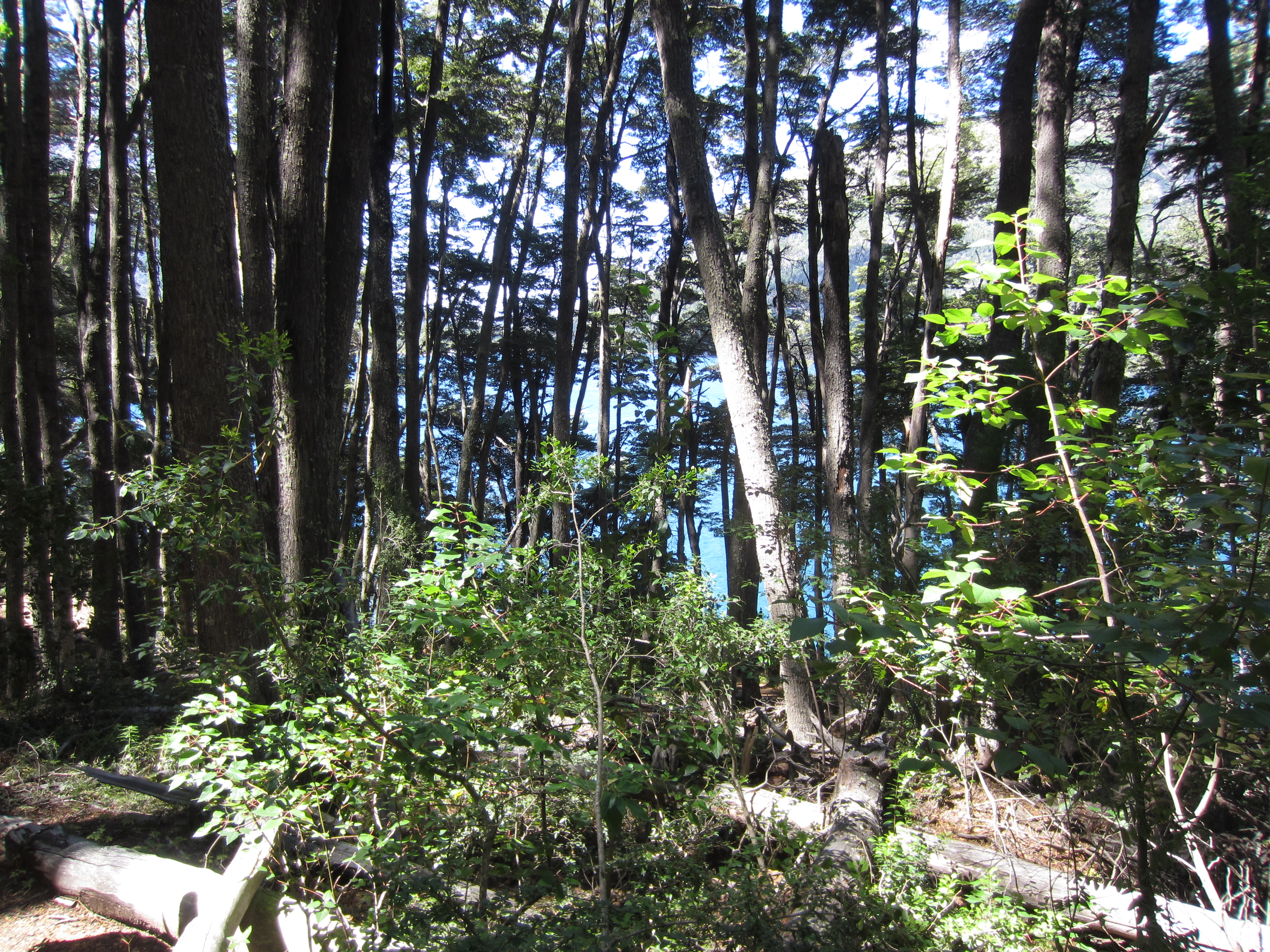
Along the trail we glimpsed the lake through the trees:
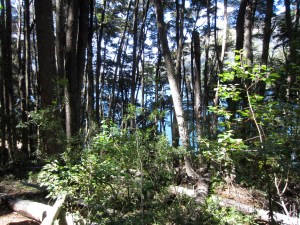
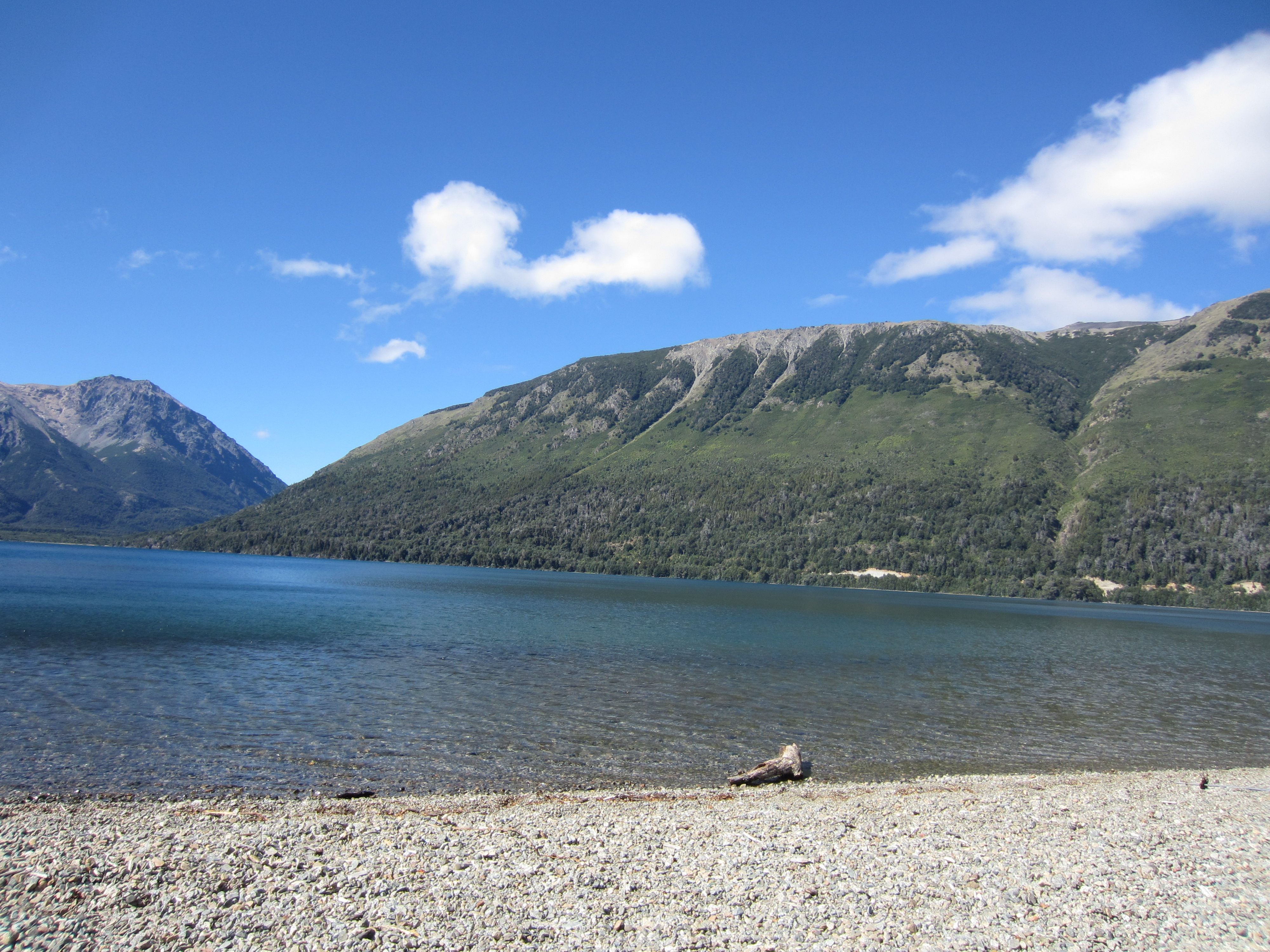
We kept spotting Lago Llum through the trees but we were high above it for what seemed like forever. After a 2-hour hike we finally skidded, slipped and slid the last 5 minutes down to a tranquil alpine beach: turquoise waters, no roads, no cars, no buildings, no tourists! (we don’t count, right?)  There were a few other hardy folks and kids there enjoying the day and even swimming in that cold water!
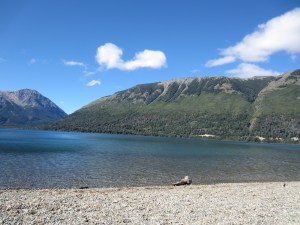
pretty clouds too

Some french bread appeared out of Ben’s knapsack along with a tin of salmon which we scarfed down while a yellowjacket maneuvered in anticipation. We stretched out on the pebbly beach and just lay there, eyes closed, for about 20 minutes. The sun was warm and there was only a whisper of a breeze. Paradise found! But we had to leave soon, it was already after 5 and we wanted to hike out while we could still see the trail.

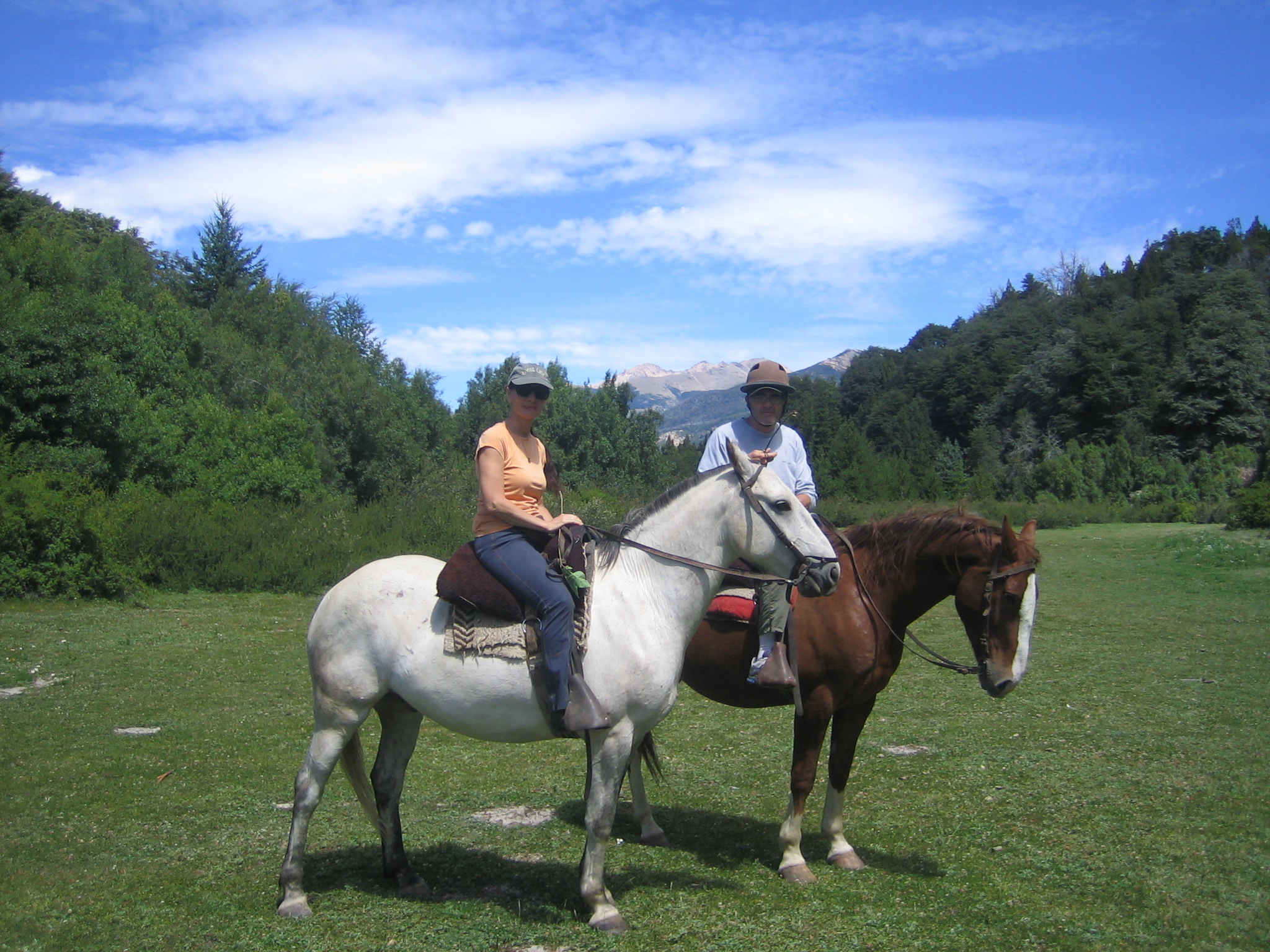
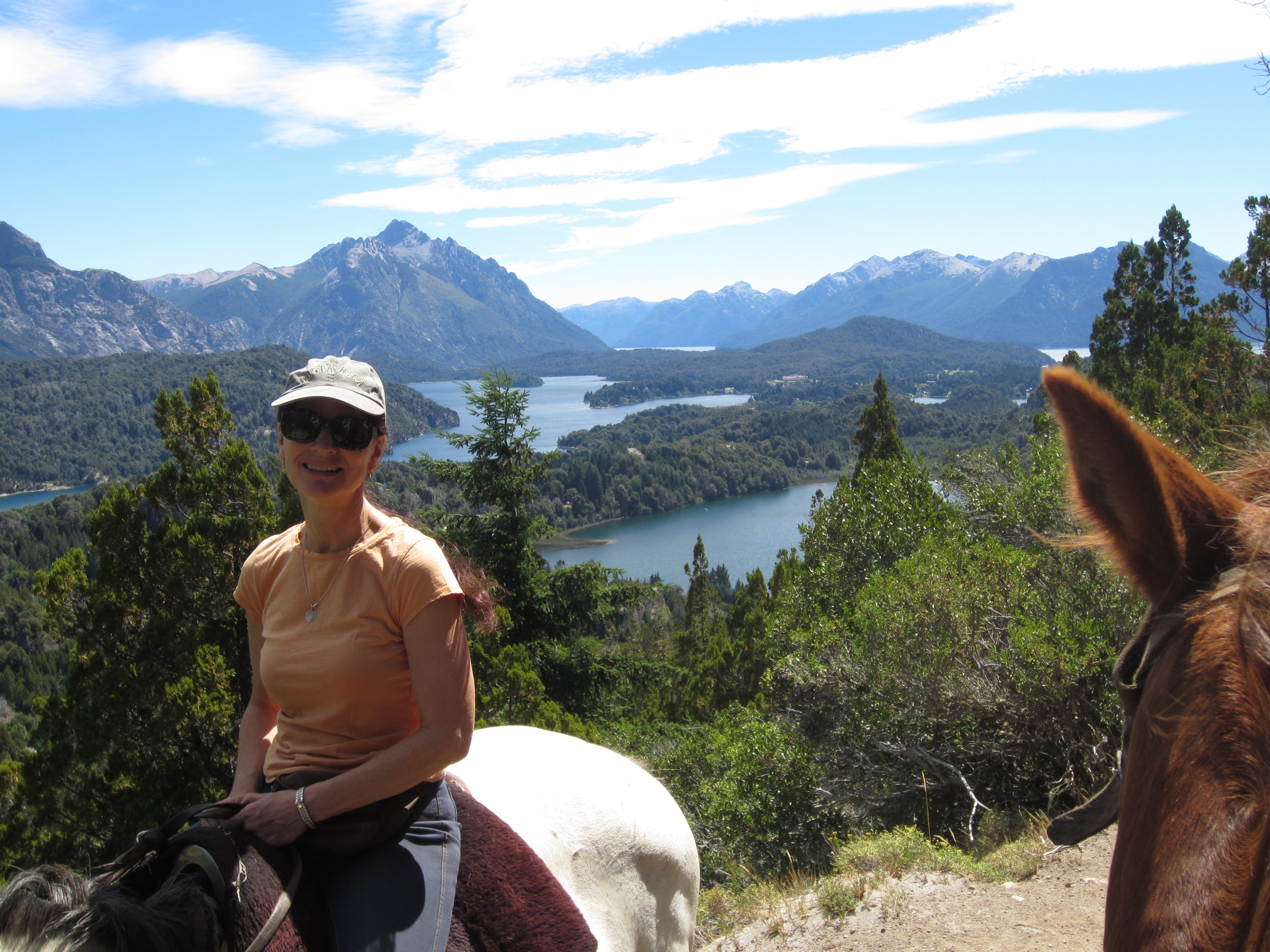
Yesterday we rode to Cerro Campanario. Here we are in a meadow below the peak. Our guide Nacho took this pix:

a couple of hammerheads!

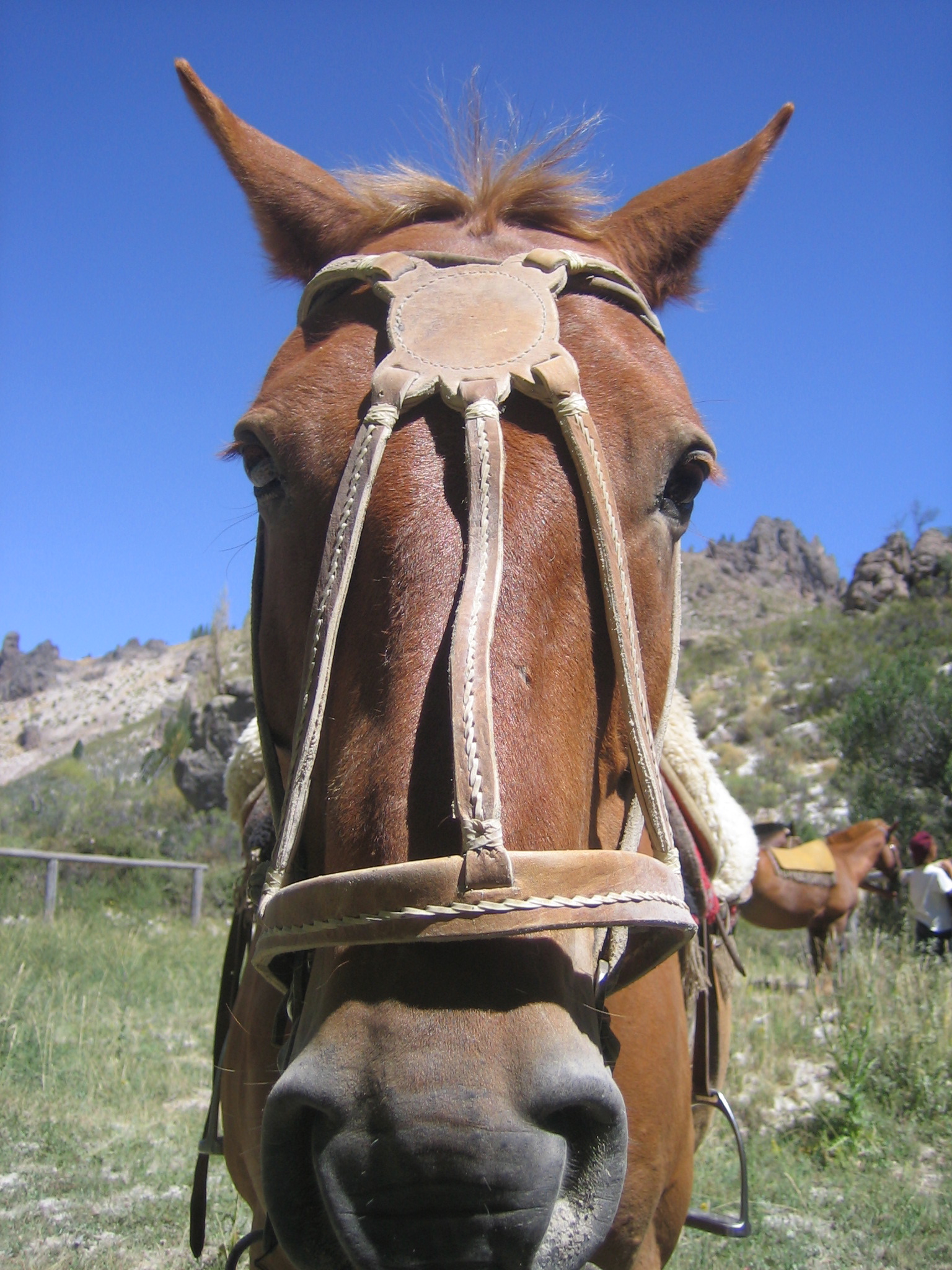
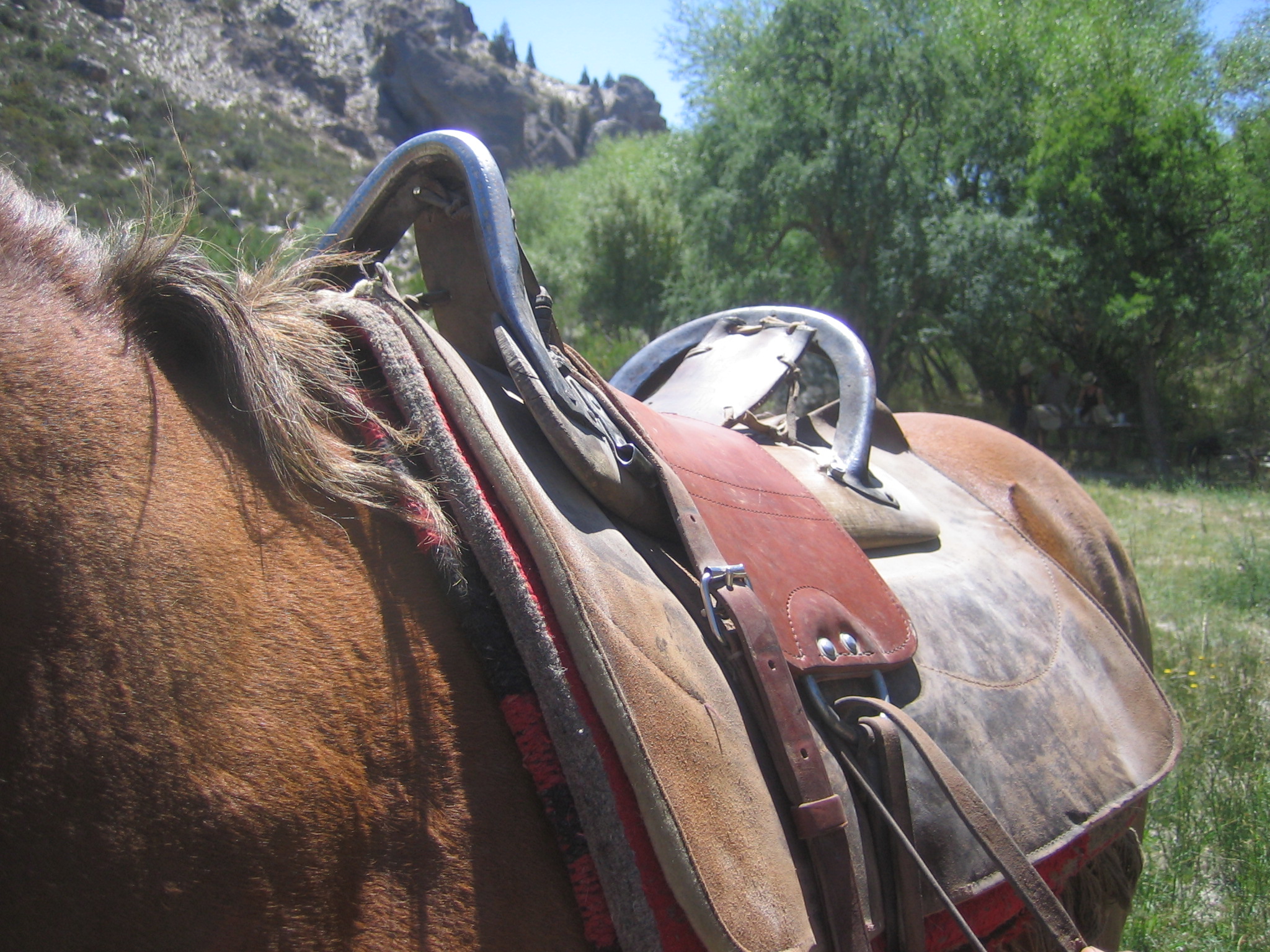
The horses here are stout hammerheads, called criollos. They appear to be descended from the European war-horse type, a blend of the large strong draft horse with the lightness, speed and intelligence of the Arab. The cowboys here, gauchos, wear wool caps or berets and loose trousers. Their “saddles” are definitely economical. Take a couple layers of wool pads or blankets, throw on the saddle tree (wooden bars, no horn), toss another pad on, top it off with a sheepskin or goatskin; loop the cinch around the whole enchilada and climb on board. The stirrups hang loose from the bars. They can be round or D-shaped, with or without tapaderos. It’s a pretty close contact rig, but I can’t quite bring myself to calling it a saddle. However it was comfortable enough for a 2 hour ride.

halfway up the trail

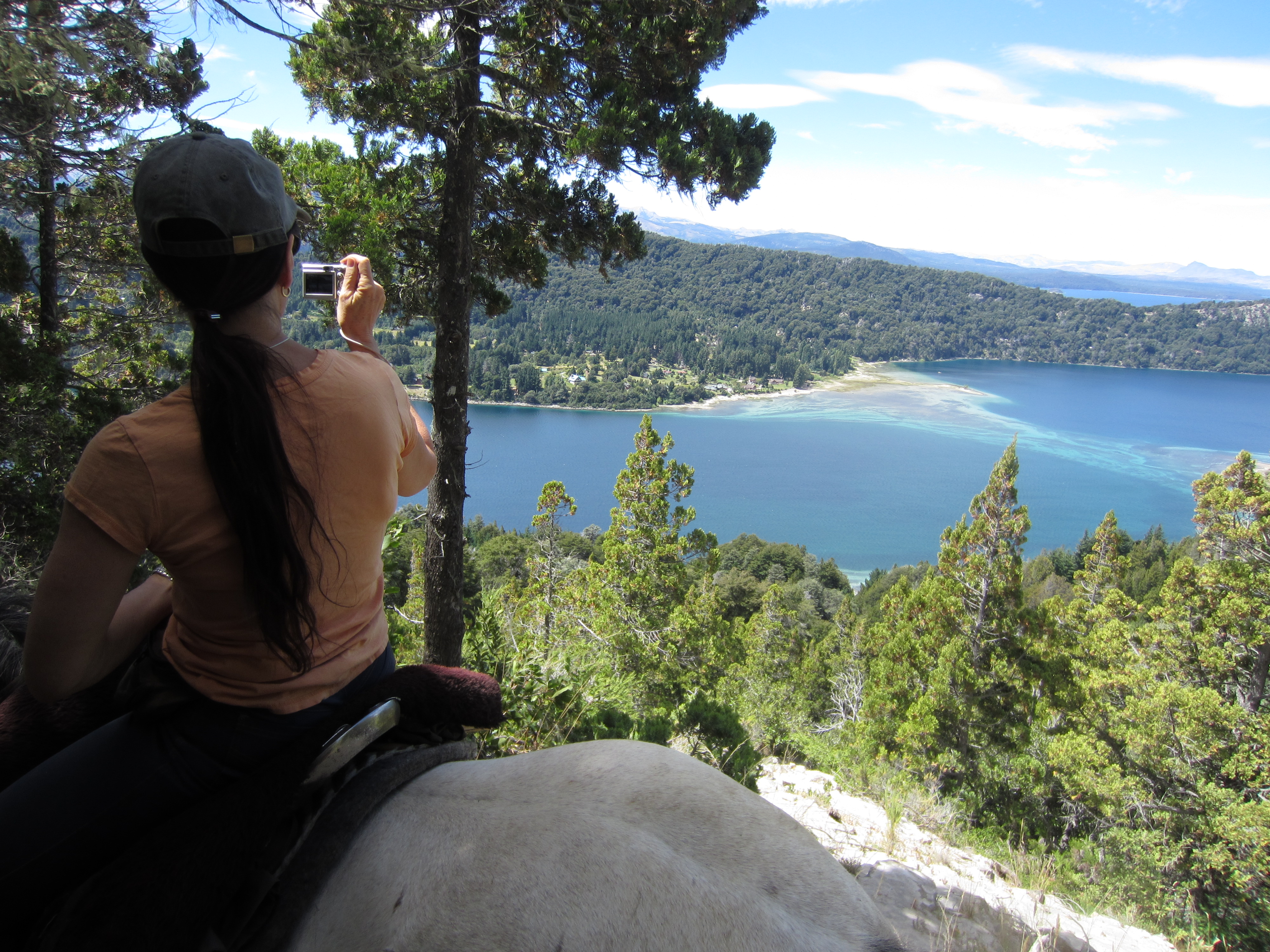
I was taking pictures all the way up…

and somebody was taking a pix of me!

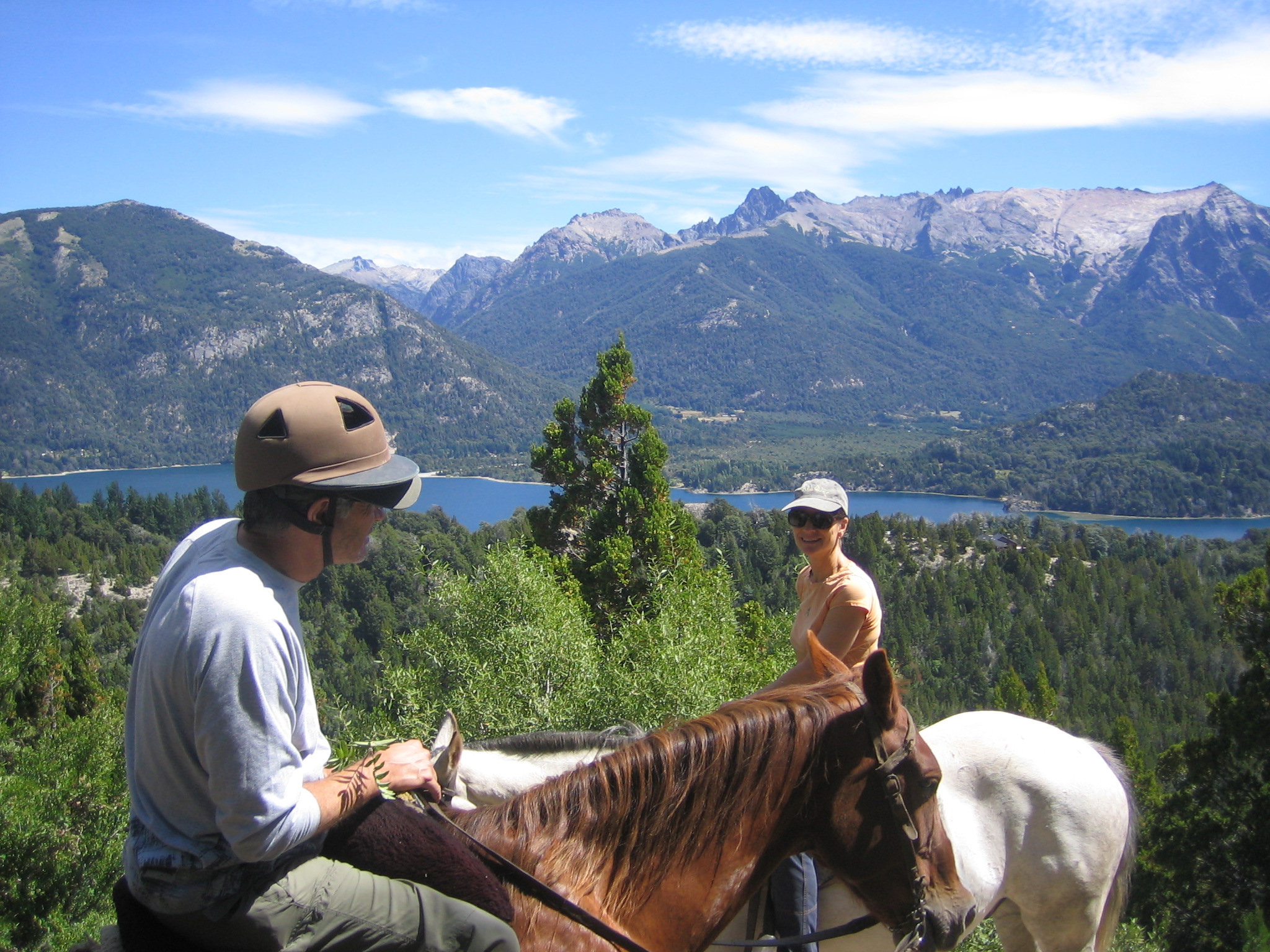
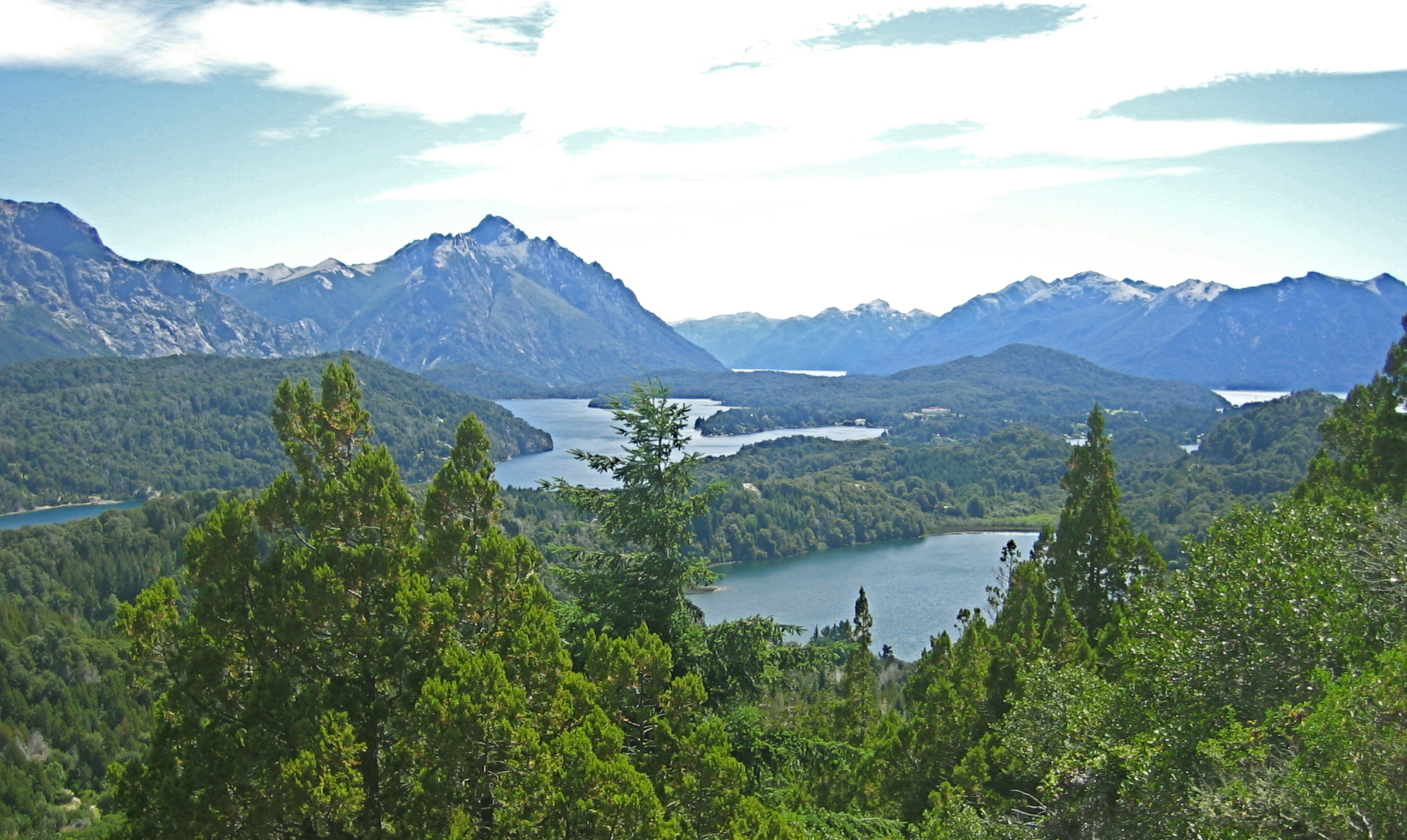
View from the top of the world:
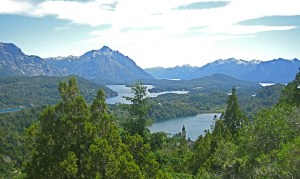
Lago Nahuel Huapi from Cerro Campanario

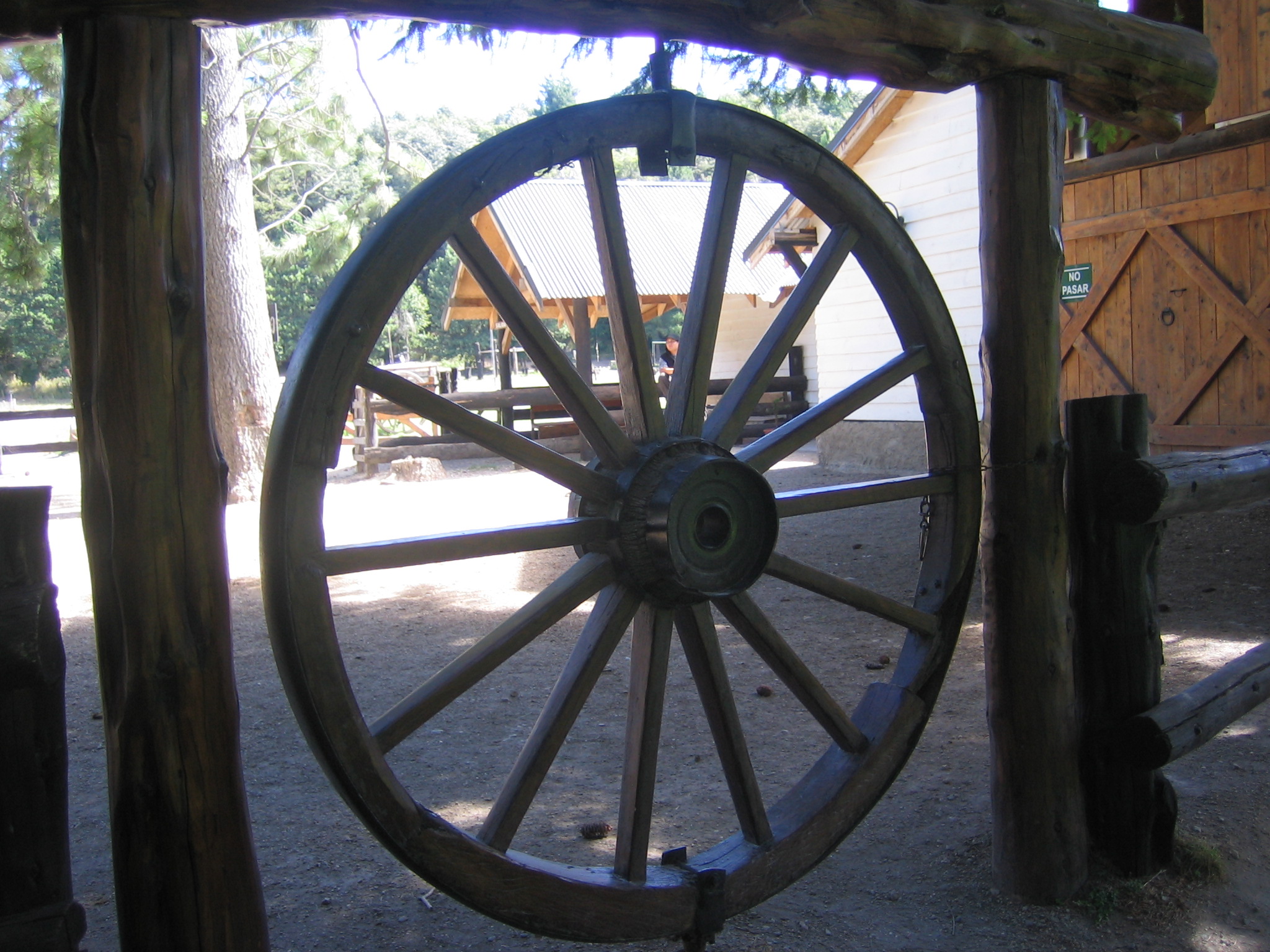
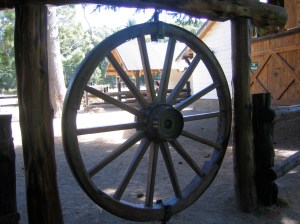
After the ride we were were covered head-to-toe in volcanic dust. Perhaps our next ride we will head out to a glacier where we can freeze our buns off!  I have to add this photo of a very clever wagon wheel gate. It is tall enough for a tall man to walk thru, and pivots on its axis to open/close; just like a tango dancer! What a cool idea!
Before I sign off, I must rave about the local cuisine. Several species of trout were imported way back when: brown (European native) and rainbow (western US native) are a lake district specialty. You can also purchase locally smoked trout, salmon, venison, and jabalí (wild boar). The steakhouses here, called parrillas, are incredible. We had delicious melt-in-your-mouth steak a few days ago at a place that makes Jocko’s (in Nipomo) seem like Burger King. Yesterday after our ride we stopped at a smoke shop and picked up some smoked salmon, smoked trout, and smoked cheese. My personal chef Benjamín made us a salad with red lettuce, arrugula (they call it rúcula here), smoked trout, slivers of red pepper, tomato, avocado, red onion and cubes of smoked cheese, served with artisan bread and local wine. Yum’s the word.

Bariloche is also the chocolate capital of South America, and there are chocolaterías to visit while looking for Willy Wonka. I counted at least a dozen just driving along the lakeshore into town. We stopped at an artisan chocolatería called Xoco Me, and helped ourselves to free samples. To die for!! Bariloche could fulfill even the most exigent gourmand’s death-by-chocolate fantasy.

artisan chocolates

The weather here in Bariloche is sunny and warm when there’s no wind (10% of the time?), a bit chilly when it’s breezy, or downright cold and windy! It dips into the 40s at night, and this is SUMMER! So much for the bathing suit and shorts I brought! The landscape and houses here remind me of Colorado in summer, only it’s colder and breezier. The wind is positively howling today, and it’s been sprinkling off and on, altho the whitecaps on the lake seem to be diminishing. A perfect excuse to stay inside and work on my blog. At least the volcano’s not erupting! Being in a place where the weather channel is produced and directed by mother nature kind of keeps you humble. Stay tuned for the next episode!

[For more info and amazing video of the volcanic eruption, check out this website: quake-tv.org.  Have a look at video 9.]
Ciao from Patagonia!

Greetings from Patagonia!
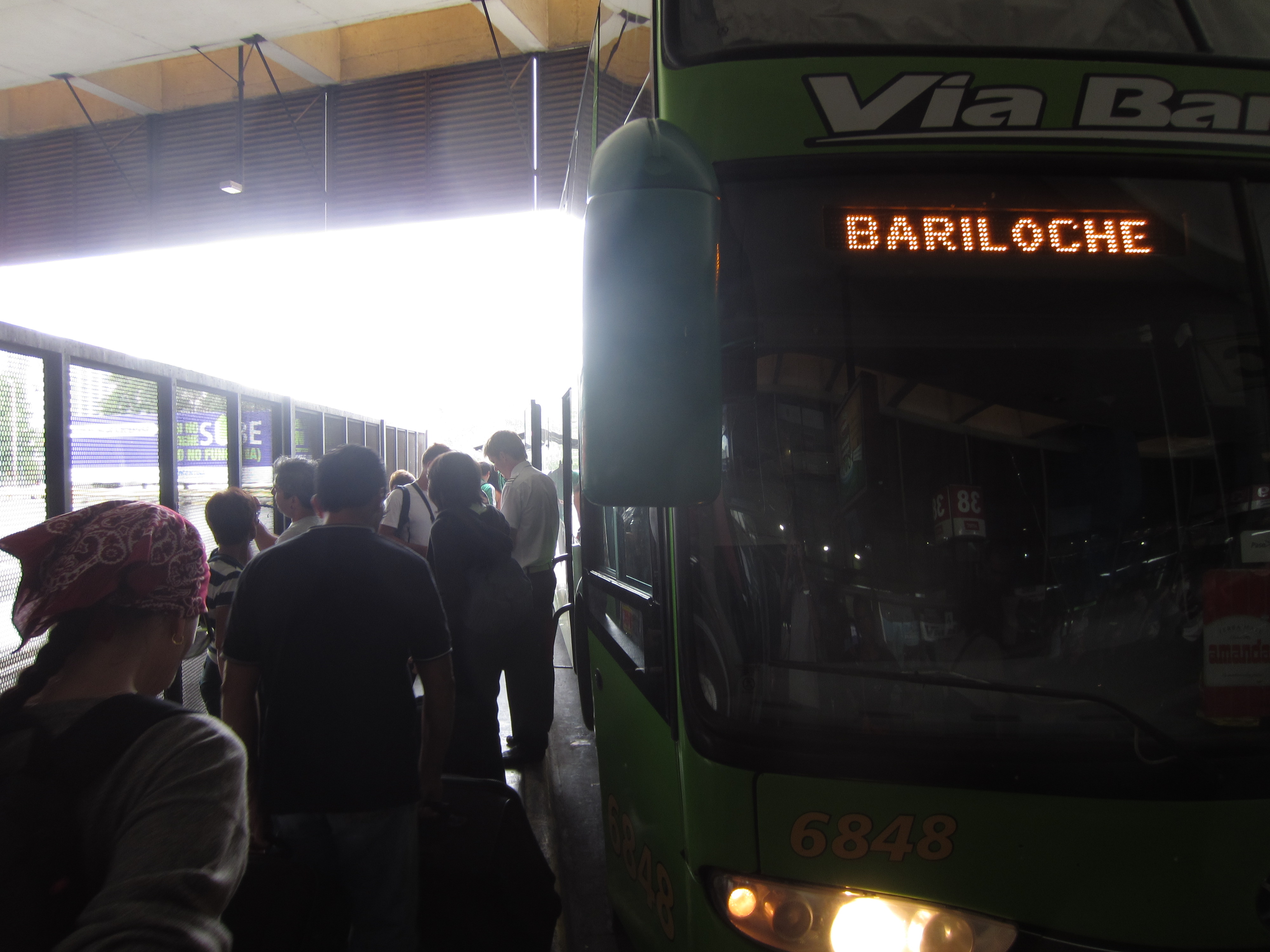
We arrived in Bariloche today, a 20-hour bus ride from Buenos Aires to the mountains that seem to be on top of the world… the southern world, that is!  Home of the majestic condor.

getting on board in Buenos Aires

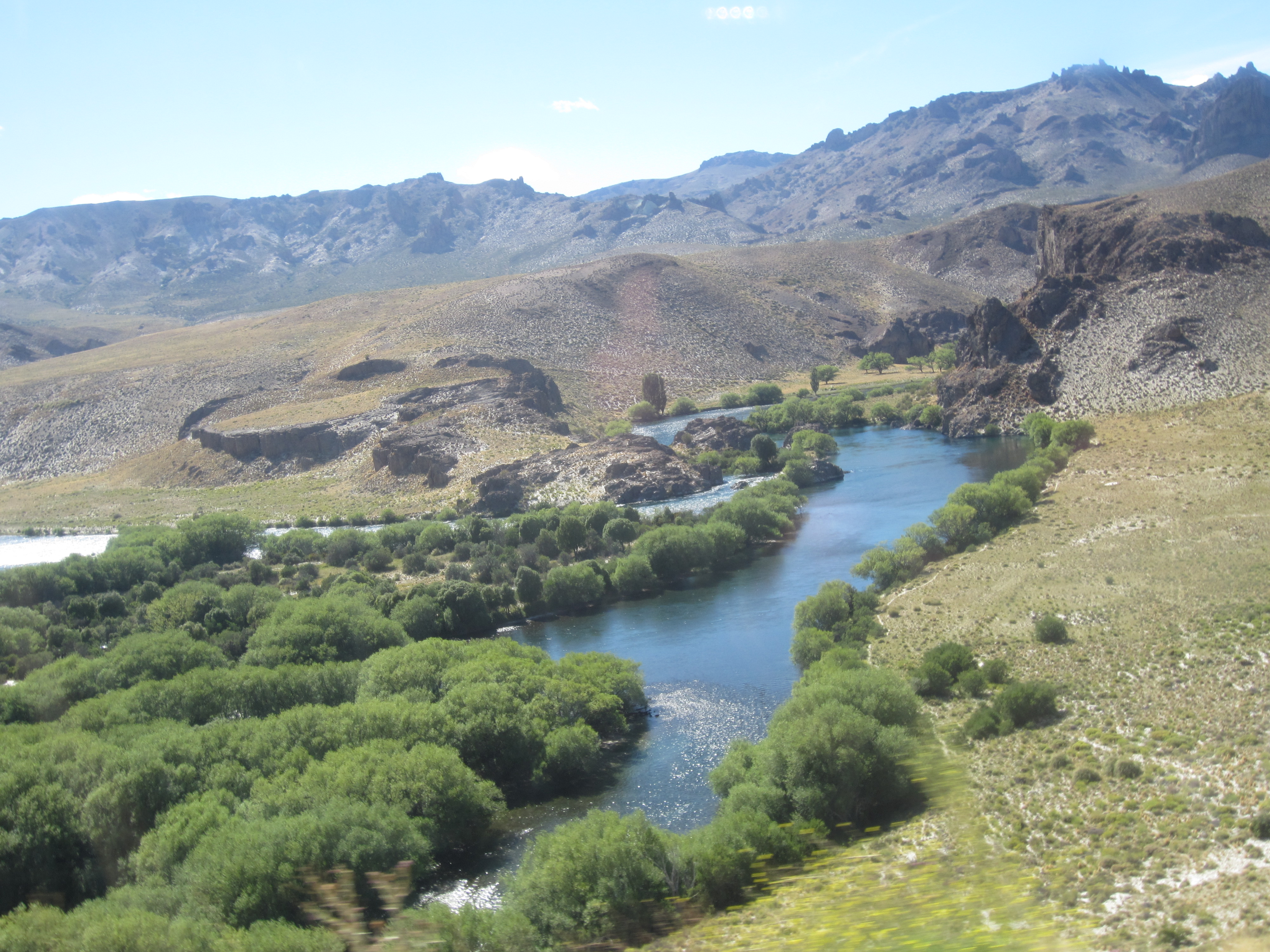
We traveled for hours and hours through the Pampas…. flat, fertile, green prairies as far as the eye can see… full of farmland, cattle and horses.  No hills at all.  The last few hours we began to go slowly but steadily uphill, and it was looking kinda like California Valley, low dry hills covered with scrub and sagebrush. Finally, in the last hour, we emerged into a gorgeous scenery of lakes and rivers.

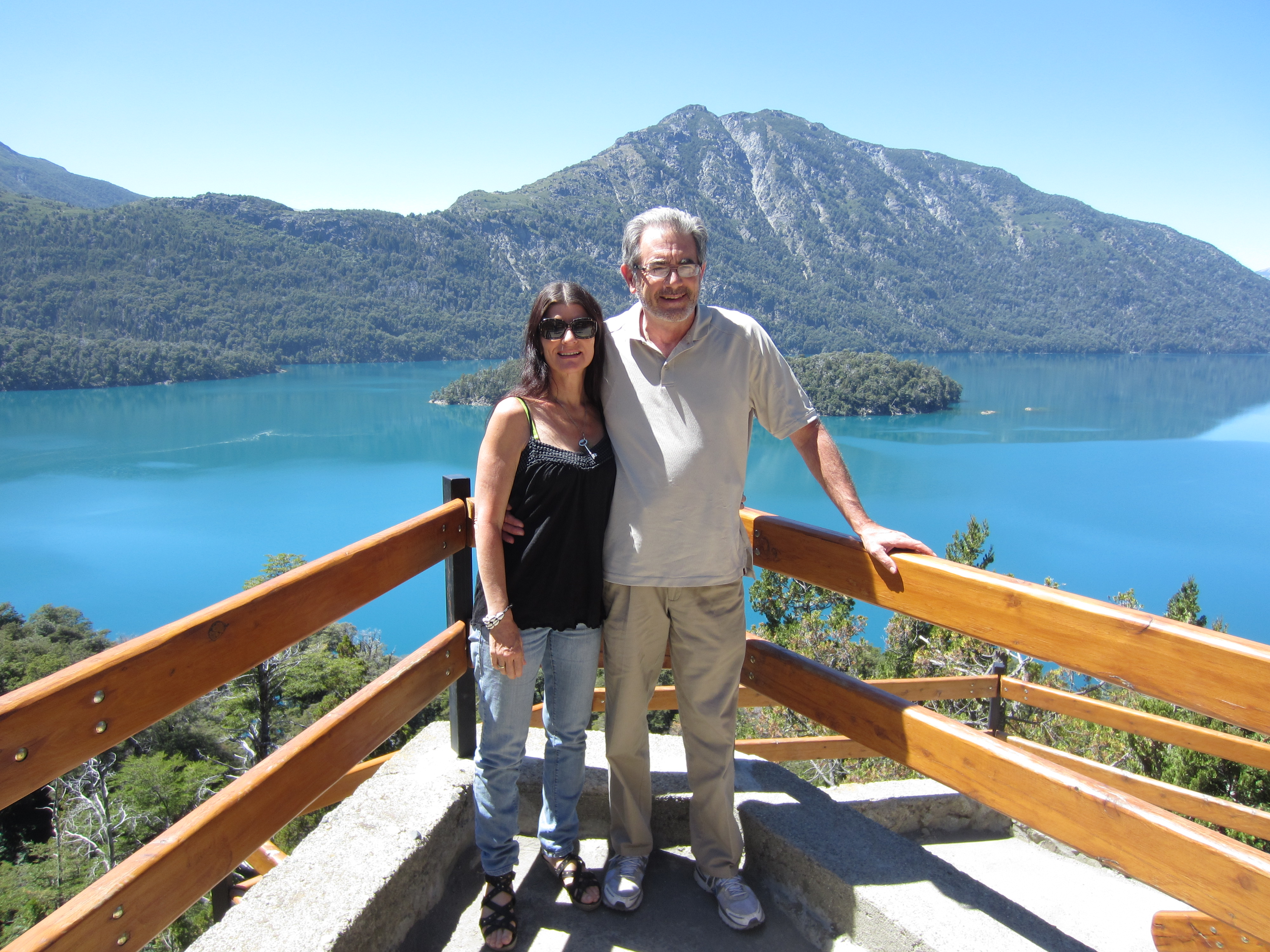
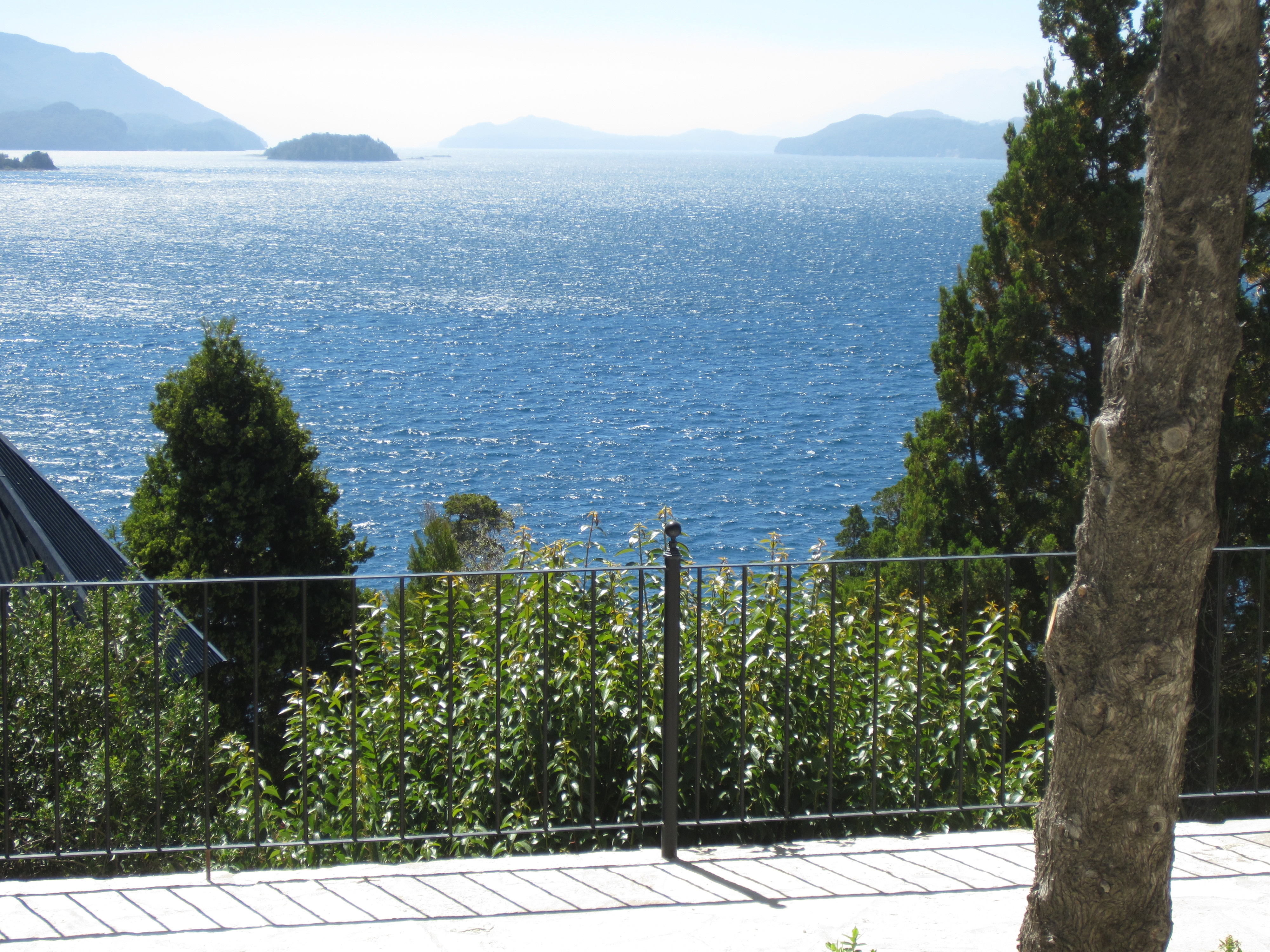
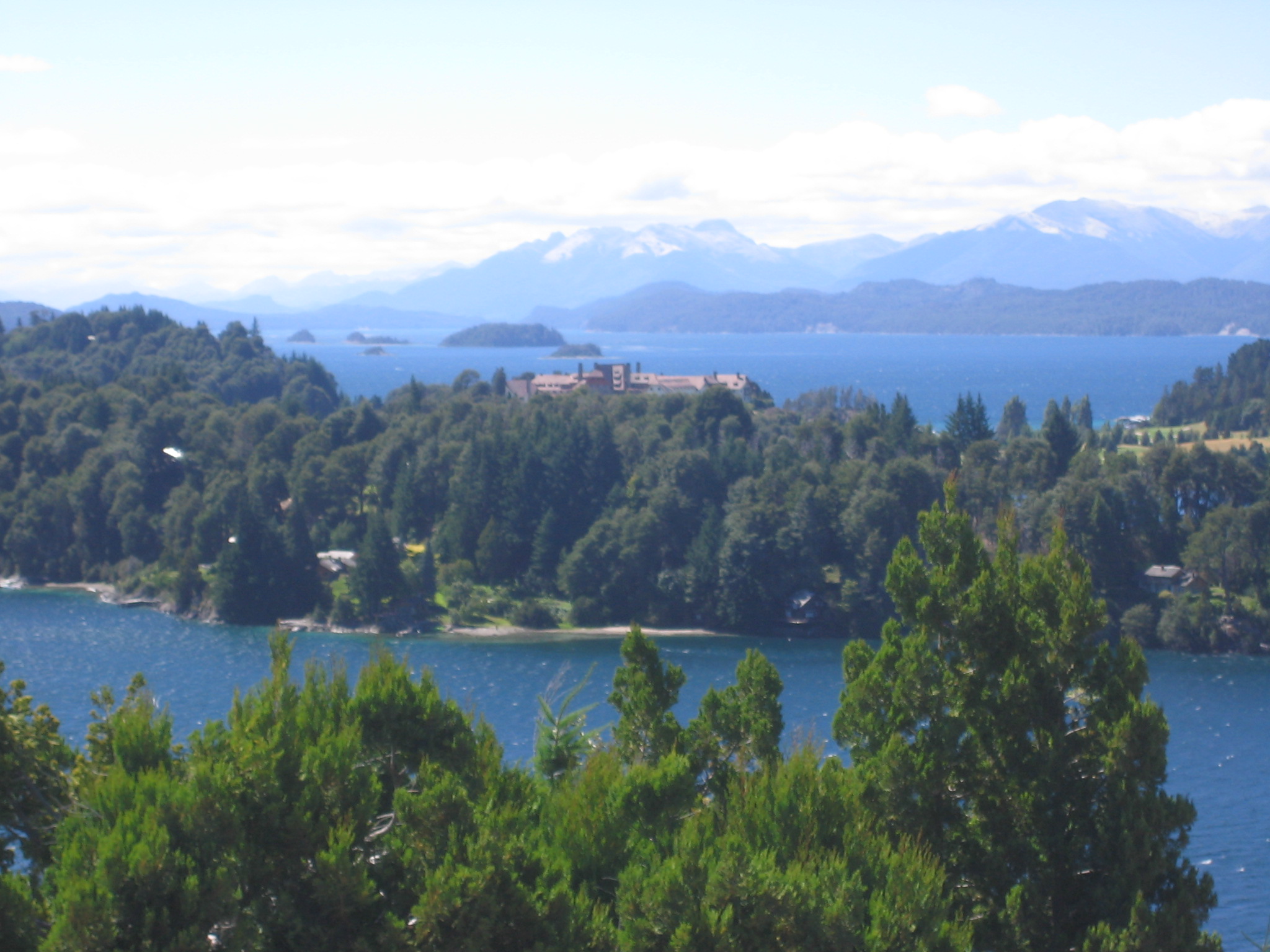
We picked up a rental car, checked into our cabin, and made a run into town for food and other essentials. Our cabin is perched on a hillside overlooking Lago Nahuel Huapi, (pronounced na-well wápee) with a breathtaking view. Tomorrow we will do an easy hike and feel out the glitches in our bodies and equipment. I have a brand new, very small backpack ready to be broken in. It holds the equivalent of about a gallon of milk… my goal was to avoid having to carry anything more than a small water bottle, sandwich, camera & rain jacket. If I need more than that, I’ll only go if I can ride a horse! Here’s the view from our cabin:

Lake Nahuel Huapi

Toto, we are definitely not in Kansas anymore!  I mean Buenos Aires! Stay tuned for more about our summer getaway!  Will they find a milonga in the midst of paradise?

Ciao from Llao Llao!

A Girl’s Guide to Tango Etiquette

TANGUERA RULES of ETIQUETTE

popularly known as:

A Girl’s Guide to Tango Etiquette:

by that infamous Tango Tramp

Roxy Montana!
1) A man wearing a cell phone on his waist or hip pocket in a milonga is either a taxi-dancer or a taxi-driver, or both!
2) It is rude to excuse or leave a partner before the end of the tanda. Unless there are tears running down both party’s cheeks, each must endure the suffering of their choice in partnering. That’s what ya get when you accepted their offer to dance just ‘cause they were cute — and you didn’t observe their dancing before the proposal.

3) One should NEVER offer or accept dance “advice” at a milonga. It’s OK at a practica. There is a distinct difference between the two events. Don’t say “thank you,” express your feelings, or accept another dance. Just put on your best poker face and move on. A real Tanguera will just stare and throw daggers with her eyes and motionless brow.

4) BE in the HERE and NOW while dancing.  Focus on the moment, the music, the connection: the essence of Tango. Chit-chat conversations are verboten! Save it for the cortina. If easy conversation isn’t your forte, impress me with your knowledge of the orchestra, the singer, the musicality, or the era.
5) A gentleman always carries a cotton handkerchief to remove persperation on his brow — developed, of course, during his dances with moi.

6) Walking a lady back to her seat, or wherever you found her, is a courtesy, and also to remind you of where to look for her again.

7) Floorcraft is an art — it requires practicing patience and stationary movements in a tight frame, without passing the rest of the dancers on the floor. Leaders who continually bump into others are extremely rude to say the least!

8)  A “gentleman” is not born — it is the way he presents himself.

9)  Cabaceo is not just a word — it is a tradition that acknowledges a willingness to accept a certain partner or saves face for a refusal – and both responses are just between two people. A lady waits seated until the gentleman comes to her and stands directly in front of her, offering his hand. An exception is possible when the path is extremely crowded, but you do risk mistaking a cabaceo intended for another – it happens all the time!

10) There is a difference between not returning the cabaceo and avoiding it: People do not always want to dance one tanda after another — it ain’t an aerobics contest — and they might look at you but do not nod acceptance. Try later? Perhaps. Once.

11)  Sometimes, dancers have their milonga partners, waltz partners, specific orchestra partners, etc. and they are looking for that person’s cabaceo. You don’t have to take it personally! However, if they do not look at you, and they turn away from you no matter how you attempt to reposition yourself in front of them … take a hint!

12)  If a woman is sitting with a man at the same table, ALWAYS acknowledge the man first before reaching for her hand, after she’s accepted your cabaceo, regardless of whether or not they are a “couple”….  This is a respectful gesture, even if you know they dance with other people. Seriously, this is a Latino macho thing and can otherwise be the cause of grief!

13)  Americans shake hands. Argentines kiss acquaintances on one cheek, close friends and family twice. French kiss twice (northerners) or four times(southerners).  Italians and politicians are always kissing!

14)  A gentleman wears a jacket.  He may take it off for a milonga, but always has it on for a vals. If you are a chronic perspirer, for Pete’s sake, bring an extra shirt!

15)  Greeting and thanking the milonga organizer and DJ is an appreciated courtesy.

16)  If you are a gentleman and realize that two men are before the woman at the same time and she takes your hand, a courteous response to the other man is “Forgive me.”

17)  Catching the eye of a potential partner is acceptable, but exchanging words while dancing is not polite.  Focus on your partner and the dance.

18)  Tipping the lounge attendant is good luck.

19)  If you make a misstep, it is up to the leader to adjust, so just wait for a moment for them to pause and start again.

20)  No need to make excuses for yourself during the dance. Even the slightest word can be distracting; it doesn’t matter whose fault it is and your partner has already moved onto the next sequence. At the end of the dance, you can smile and say, “Perfect.”

21)  “Thank you” is curt and may imply that you do not care to dance again, especially before the tanda is over!!! Instead, “I liked that”, or “I appreciate your lead” or “You really dance well” are very nice things to say.  “Your instructor taught you well,” or “I just had the best tanda of the evening” are nice alternative responses which imply you might look their way again sometime.

22)  “Would you like to go out for coffee?” does not mean Starbucks!!! (Drink up and brush your teeth before the milonga!) Remember that dancing more than two separate tandas with the same partner is a pretty strong indication that an invitation for coffee is brewing.

23)  If you inadvertently bump another couple, it is gracious to look their way briefly if it was more than just a tap. It is also appropriate for either the leader or the follower to reach behind or around their partner to protect them if you see another couple way too close for comfort. However it should not be such a strong defense that it becomes an offense!

typical crowded floor at La Viruta

24)  It is much appreciated when partners move quickly back to their “posts” in order to cabaceo for the next tanda. It is rude to dawdle on the floor. The 30-second rule applies between songs.

25)  Respect the tradition of the cabaceo! It is an Argentine tradition and should be upheld every bit as much as the tanda. If a man blatantly asks, “wanna dance?” smile and ask them if that is their “best cabaceo?” You might add a wink if you would like to accept, as a reminder to them that you respect the cabaceo. A real Tanguera will either look right through you or give a pickle-faced frown if she does not want to dance without the cabaceo … don’t bother the queen of the floor again!!!

26)  If your leader is placing you in an uncomfortable position, the follower has the right to reposition their embrace, hand level, or point of discomfort. If a follower is feeling rushed, she can move her left hand up to create space between them, and apply pressure to slow him down.

27)  Not all dancers are created equal … some have back or shoulder issues or other limitations. Perhaps their styling is completely different than yours, or they are at a different skill level.

28)  “No cabaceo” does not mean that a person does not like you. It is also okay to socialize during the tanda, but do not limit your friend’s ability to catch a cabaceo. Tangueras will sit next to each other and have a conversation while continuing to look around the room.

29)  At a milonga, it is a party: dress your best and enjoy. Casual clothing – especially jeans for a woman: may mean that you are just there for the exercise.  [however, the editor of this blog emphatically recommends: Never tell a woman what to wear!]

how to choose?

30)  You don’t have to dance every tanda – it is not a popularity contest. Save your energy – dance to the music that moves you the most, with partners that appreciate you.

31)  A milonga is the best opportunity for men to be gentlemen and women to be gracious … even if you are not a great dancer, they will remember you as “pleasant.”

Tete & Silvia

32)  Ladies – be mindful of your decorations: big bobbly beads dangling on your bosom are not inviting, and flowers in your hair might scare off those with sensitive smell or ticklish. Perfumes and colognes should be barely noticeable. Tucking a clove of garlic into your bra has been known to ward off the devil and/or vampires – jajaja, just kidding! A little black dress is always correct tango attire.

33)  If seated at a table, a fan, a glass of water, and a tin of breath-mints mark your territory as a serious Tanguera.

34)  In BsAs, if a gentleman escorts a lady outside, it is courteous to hail a cab for the lady and give the directions to the driver. The locals know the best routes to the next milonga or destination area.  No need to ask her exact address: she can give the exact number to the driver en route.

35)  If you come as a mixed group and your party is seated together, a gentleman still always acknowledges the gentleman seated close to the lady, even if they are not a “couple.”

36)  Attitude is everything!!!

THE GOLDEN RULE: If you are manifesting ANY symptoms of illness, regardless of whether or not you are contagious – STAY HOME!!! You don’t want to limit anyone’s Tango time, yours included, and you will be blamed if any partners come down with your condition!

copyright 2012 Roxy Montana

We can’t get enough of that Tango Attitude!!

Ciao from Buenos Aires!

Homesick but not Blue

Yes, we have noticed some yearning, longing, homesick kinda feelings creeping into our psyches lately.  Like there’s some kind of homing device built into our operating systems, some kind of self-regulating timer: ET phone home?  Is it built into our molecules?  Like the way fish automatically navigate upstream?  Is there a home port encoded in some part of our brains, perhaps the primal, repitilian brain?  Well, whatever it is, we’ve been feelin’ it.  Some mornings I just want to pull on boots and jeans and saddle up for a ride.  And we sure miss our kids, grandkids, friends, and families!  Not that we’re going to go rush out and jump on a plane home…  no way!  We LOVE Buenos Aires!!  But in a few months, when our endless summer finally turns to fall, it’ll be time to head back to the states.

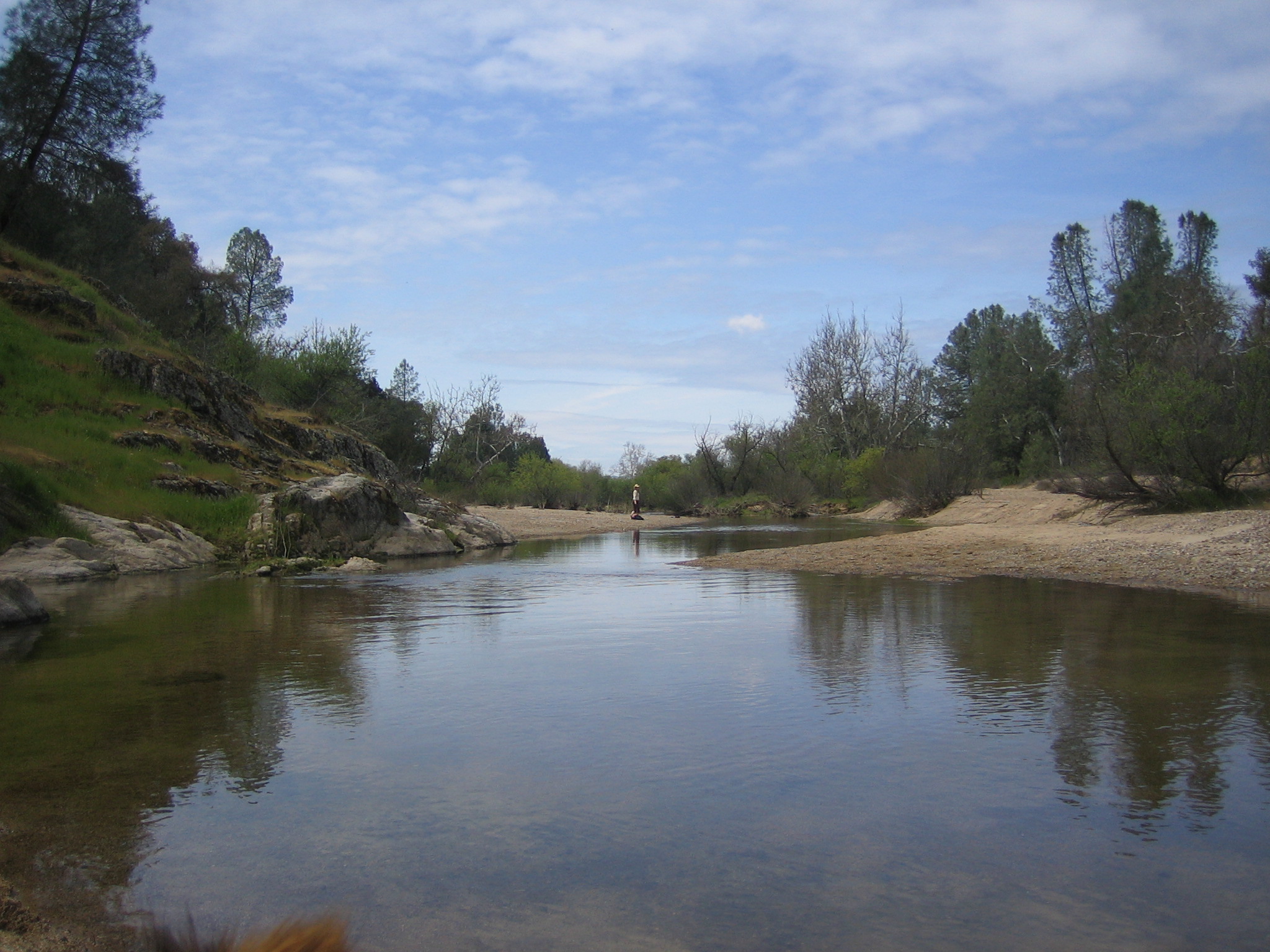
I really miss the Salinas River: out my back door, over the hill, down the trail thru the canyon.  A 20 minute hike and you’re in paradise!

Salinas River not far from its headwaters

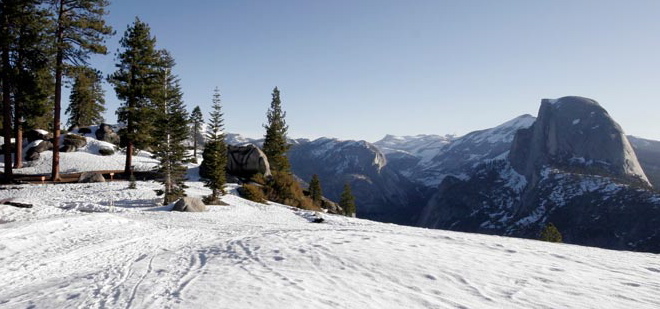
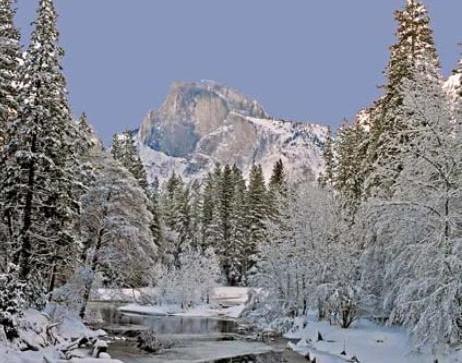
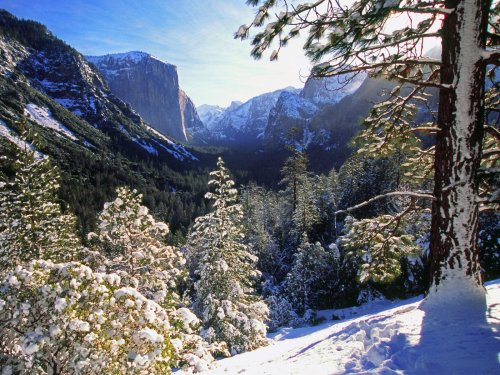
Ben says he misses Yosemite in winter:

view from Glacier Point

Half Dome

 doesn’t get any prettier than this!

Yosemite valley winter morning

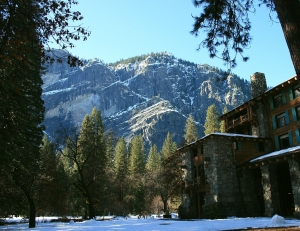
A couple of winters ago we stayed overnight at the Ahwahnee. Tromping around in the snow on that still cold morning was absolutely awesome.  Not to mention the delight of a cozy indoor lounge where one can kick back, read the paper and drink coffee in the midst of unforgettable scenery.  And be grateful that there’s no fast food joint in the valley… yet.  Or is there?

Yep, the guy misses Big Macs.  Not that there’s none to be had in Buenos Aires.  But I won’t go there unless I’m famished and even then only if there’s nothing else to eat for 20 miles in any direction.  So we actually haven’t tried the Big Macs here… not yet!

What else do I miss?  Well, buckle up, because my list is a lot longer than Ben’s.  Is that ’cause I’m a woman, or ’cause I’m spoiled (yes, please!) or what?  First of all I miss my two amazing kids and my family and Ben’s family and all my super wonderful friends back home.  I MISS YOU ALL!!!  Big hugs!!!

Here’s the rest of my list:

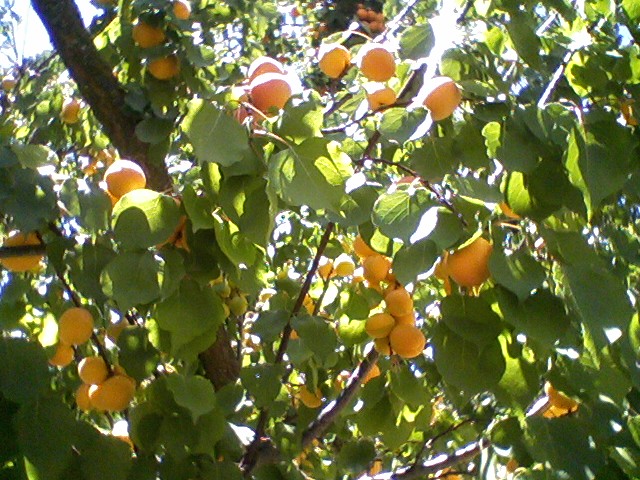
my apricot tree on the ranch

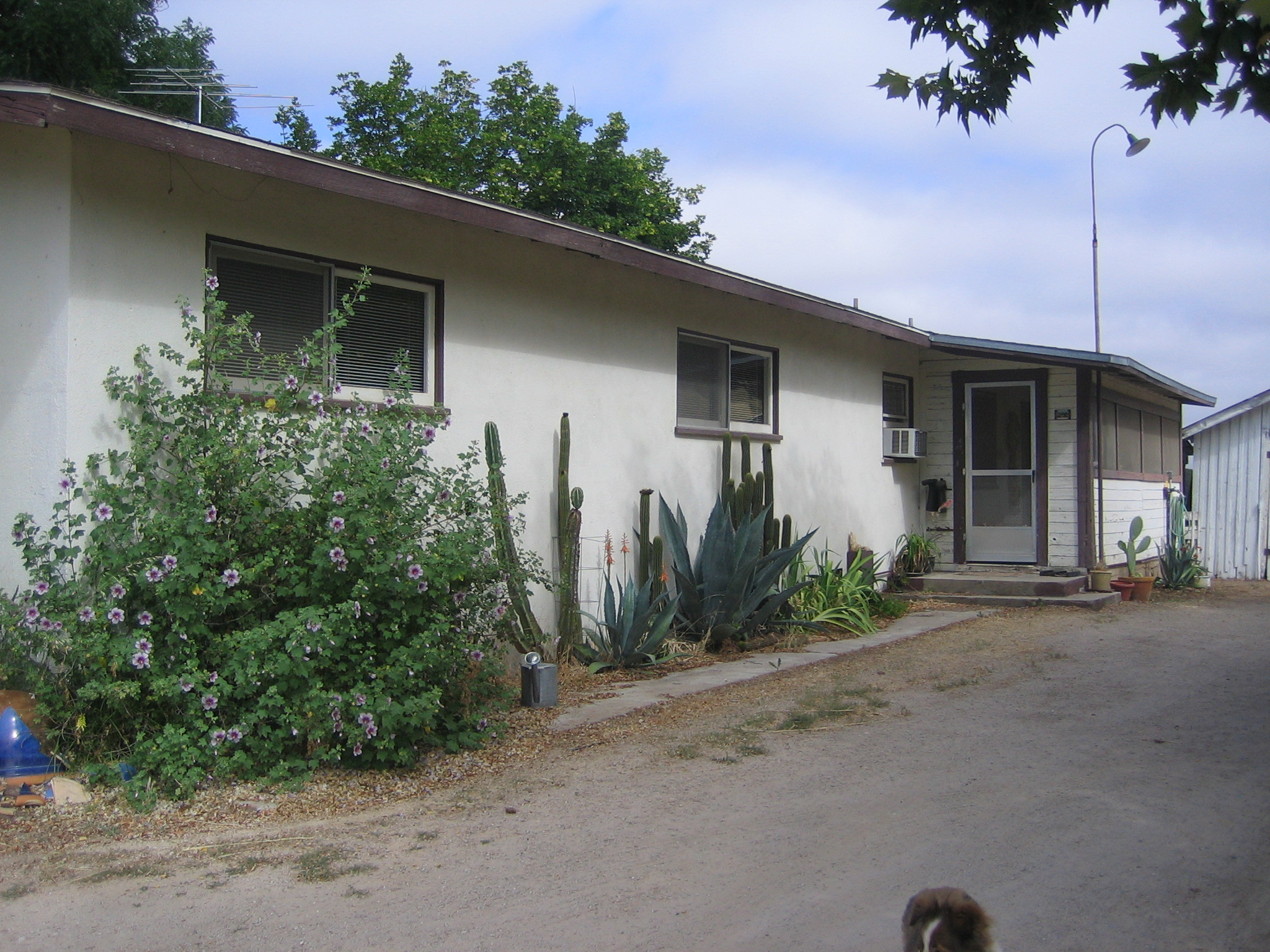
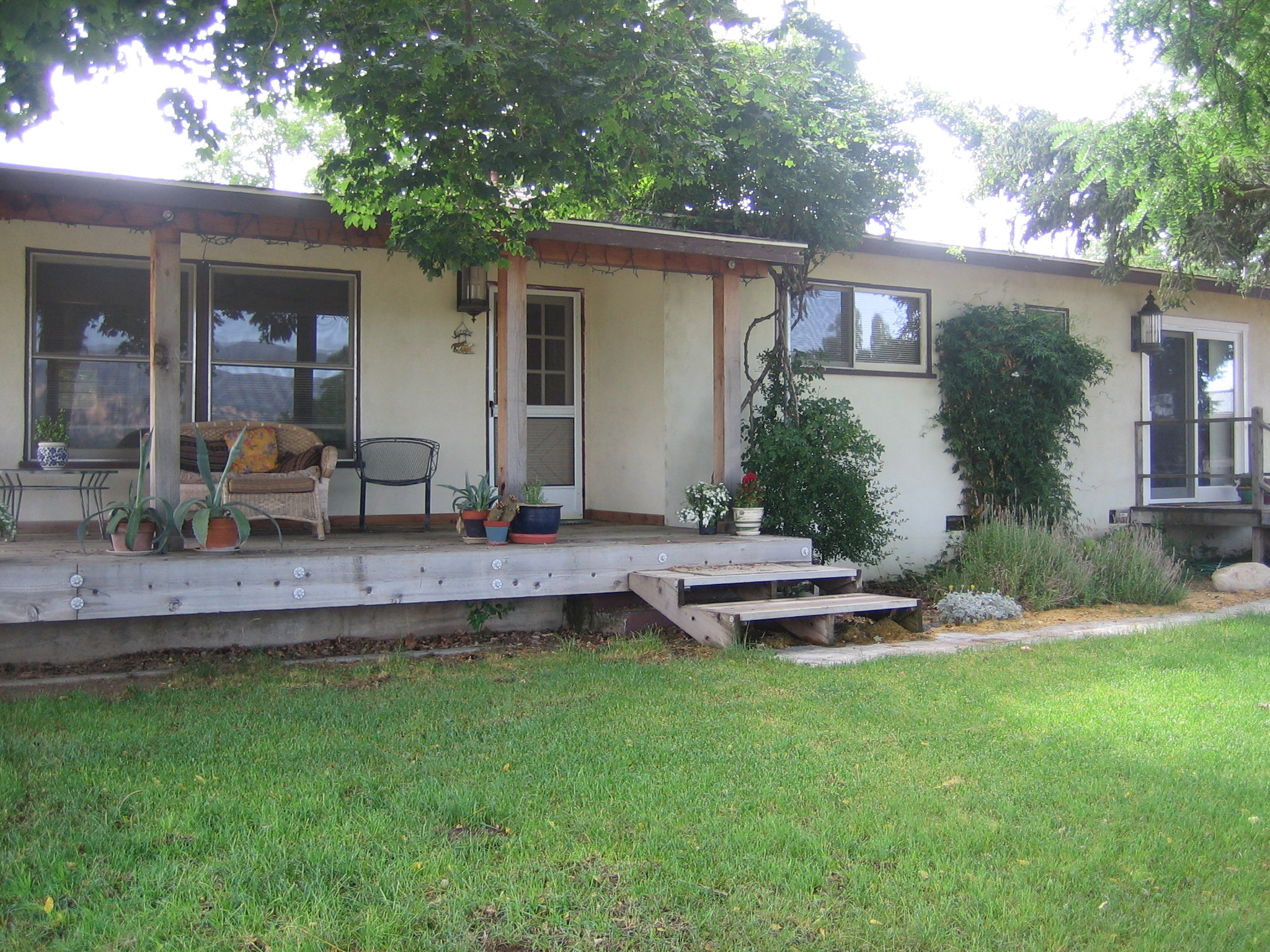
Last year’s apricots were a bumper crop!  Here’s the back of my old ranch house, facing the hills. The apricot tree is just to the right, near the barn, out of sight of the camera.

I love cactus and agaves

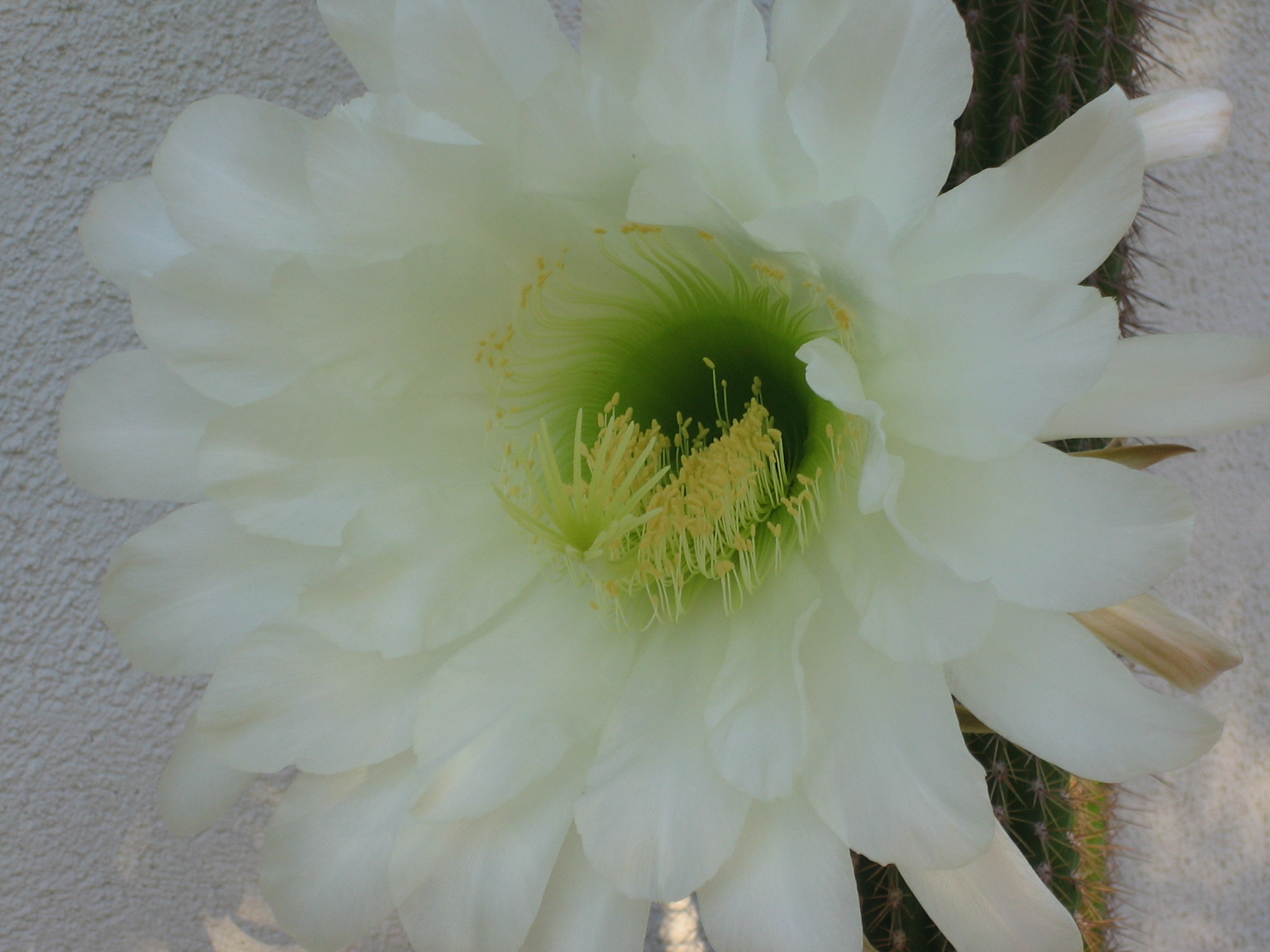
The organ pipe cactus flowers only once or twice a year, always in the hottest weather, and only at night.  They are amazingly beautiful:

la flor del nopal

A few summers ago we had a midsummer milonga at the ranch and the flowers bloomed that evening!  That was a magical full moon night!

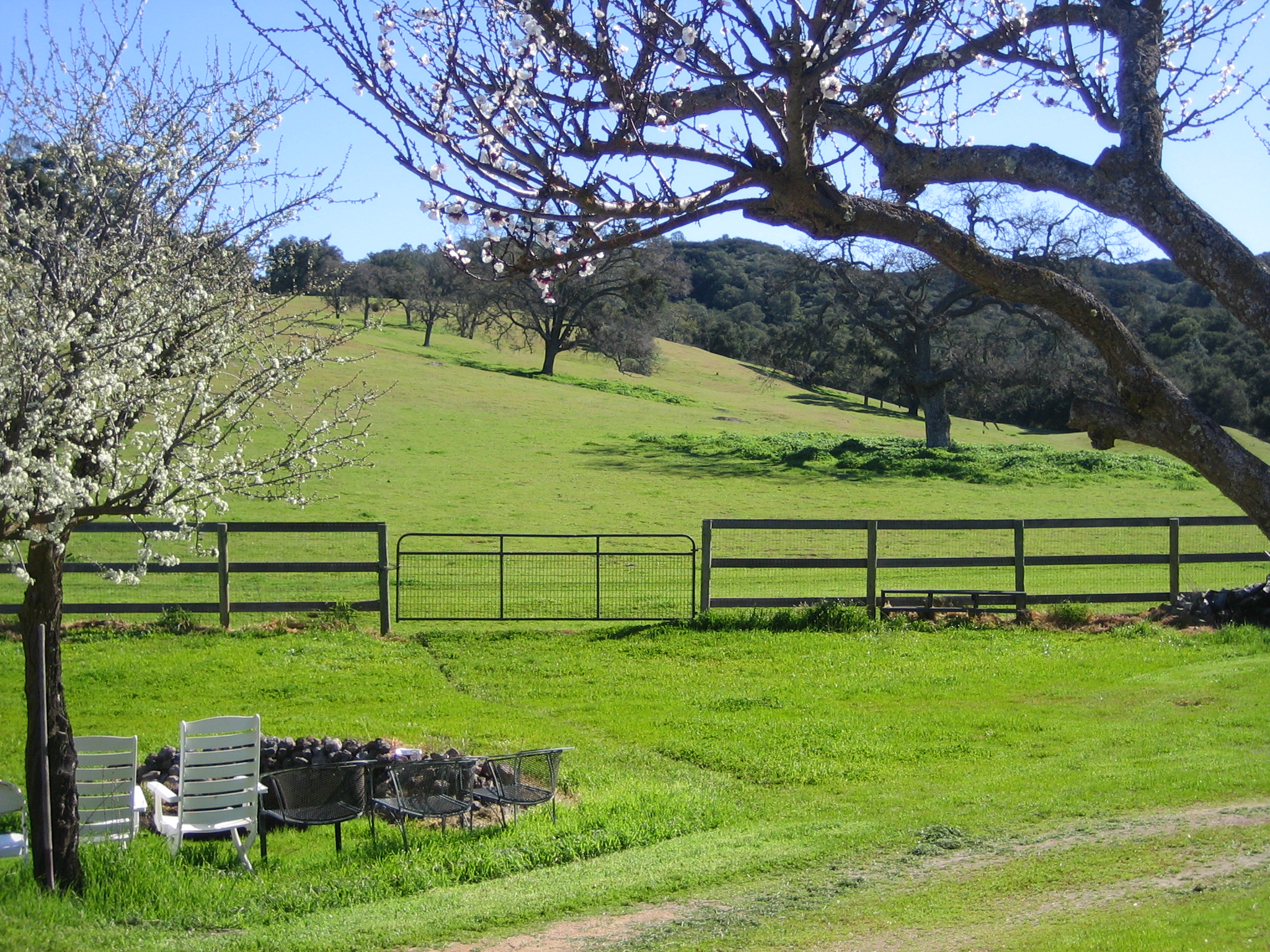
Here’s the back yard in spring:

you'd be homesick too!

The firepit is on the left behind the plum tree, and the apricot tree to the right is just beginning to flower.  Those are oak trees on the hill.  In the front of the house, big shade trees surround the lawn. Look for their reflections in the windows:

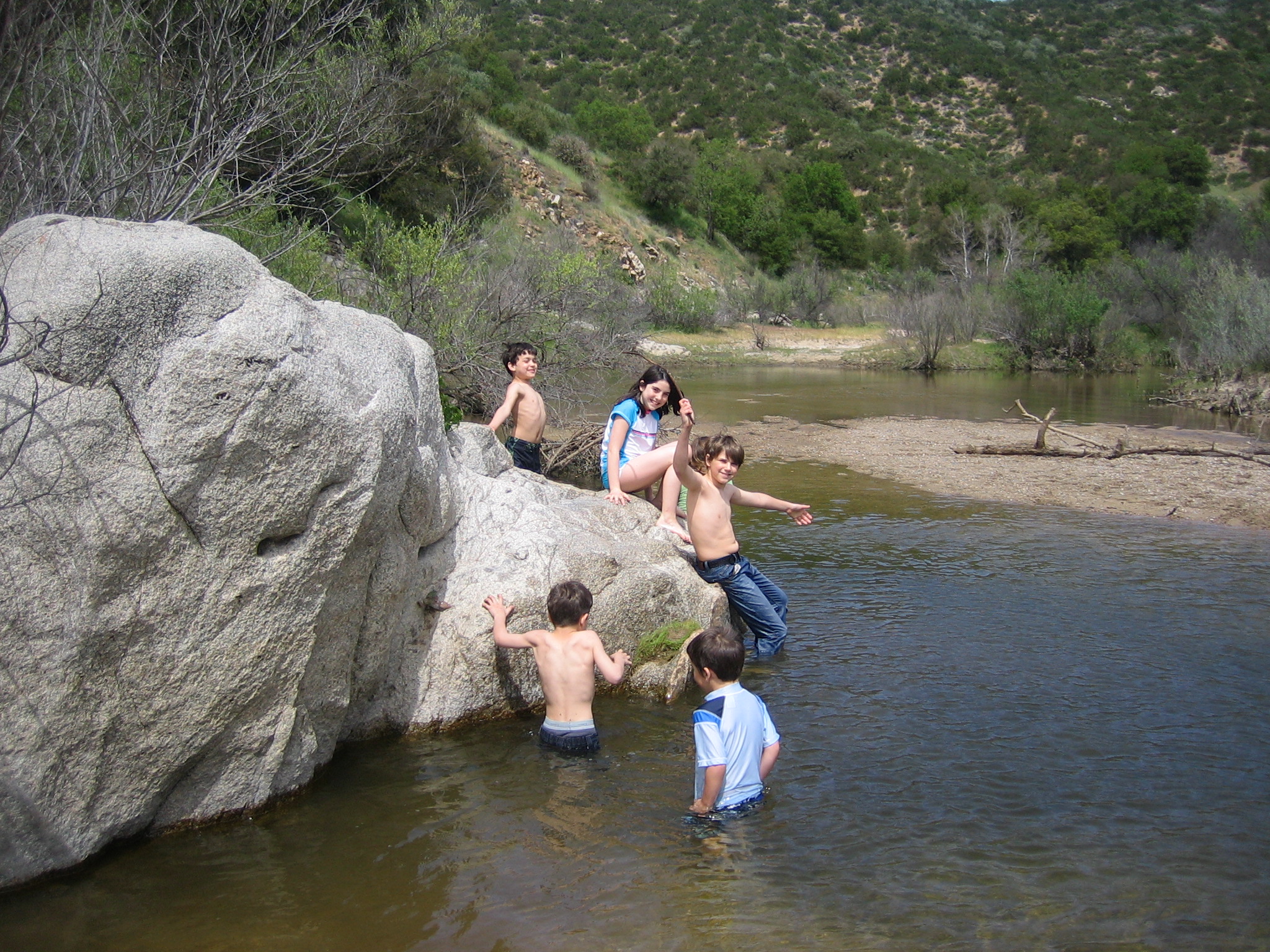
We redid the front porch a few years back.  I used to take friends with kids to the river for play days.  Just the other side of the hill behind the ranch:

kids having fun at the swimming hole

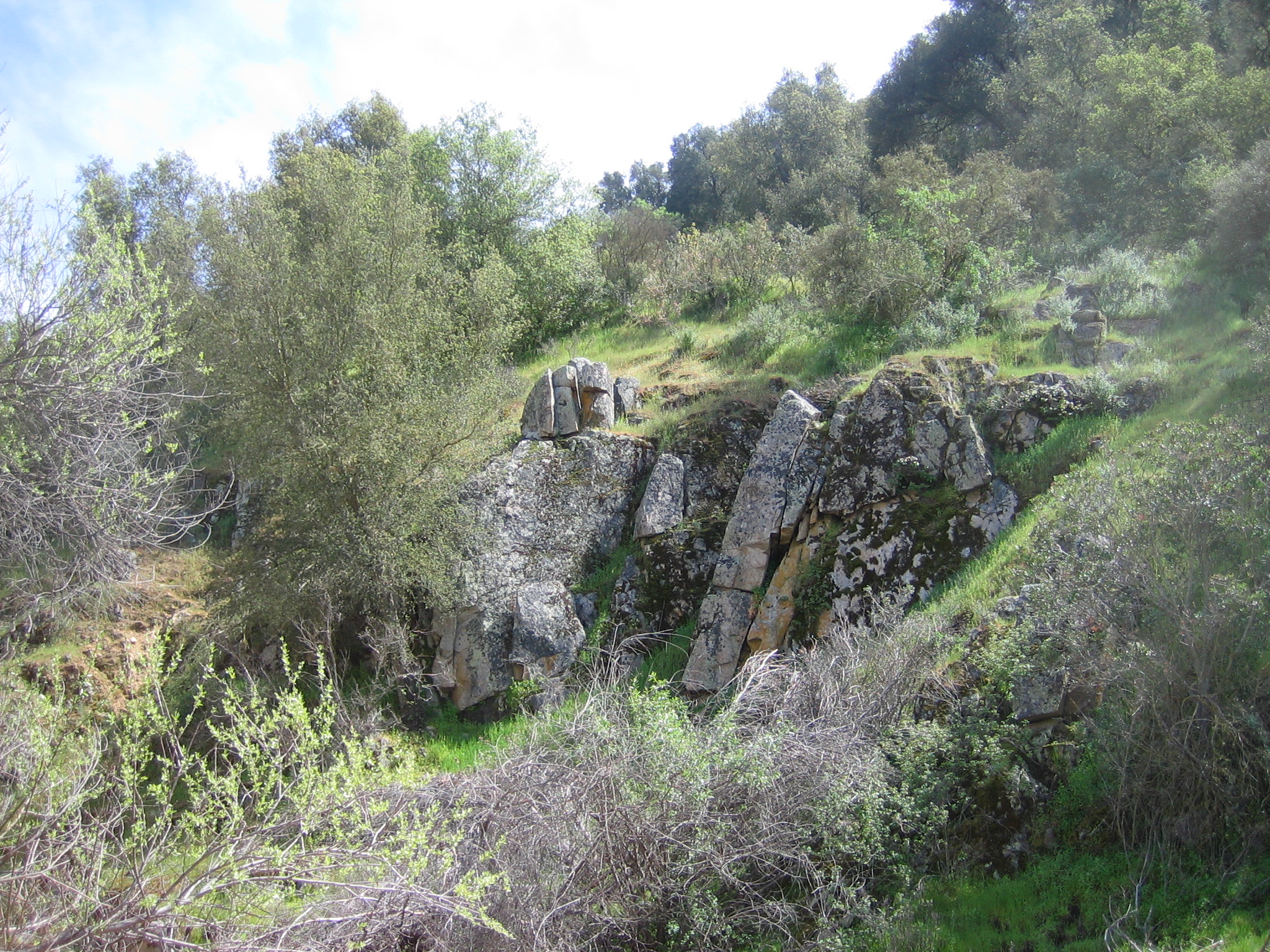
pretty granite outcroppings along the Salinas river

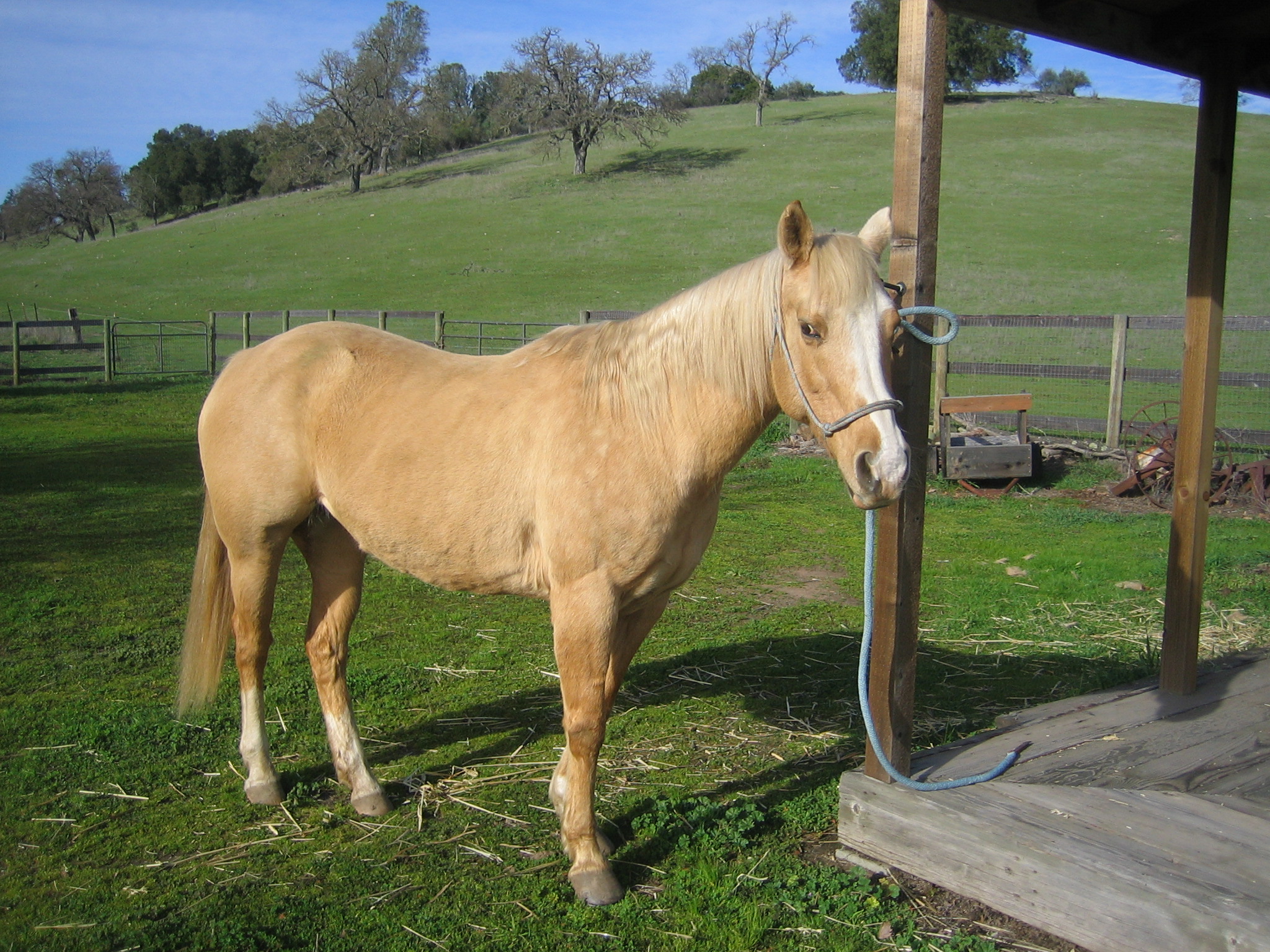
And of course the ranch wouldn’t be a ranch if it weren’t for all the pretty horses:

Stormy kinda scruffy in her winter coat

Here she is with a friend, showing off her summer color, dulce de leche:

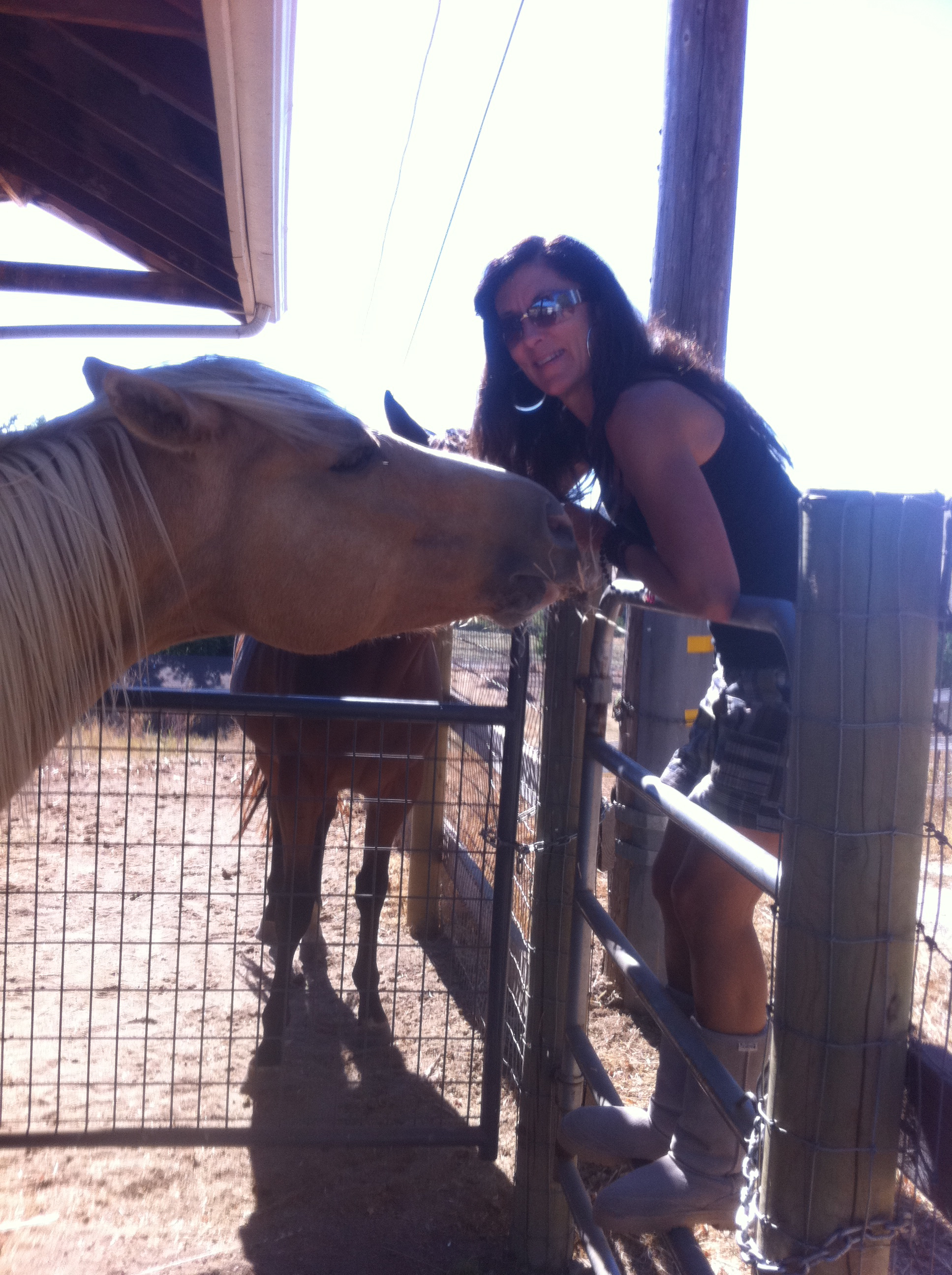
Stormy and Batman like visitors

We like visitors too…  when we’re not somewhere in a distant hemisphere!

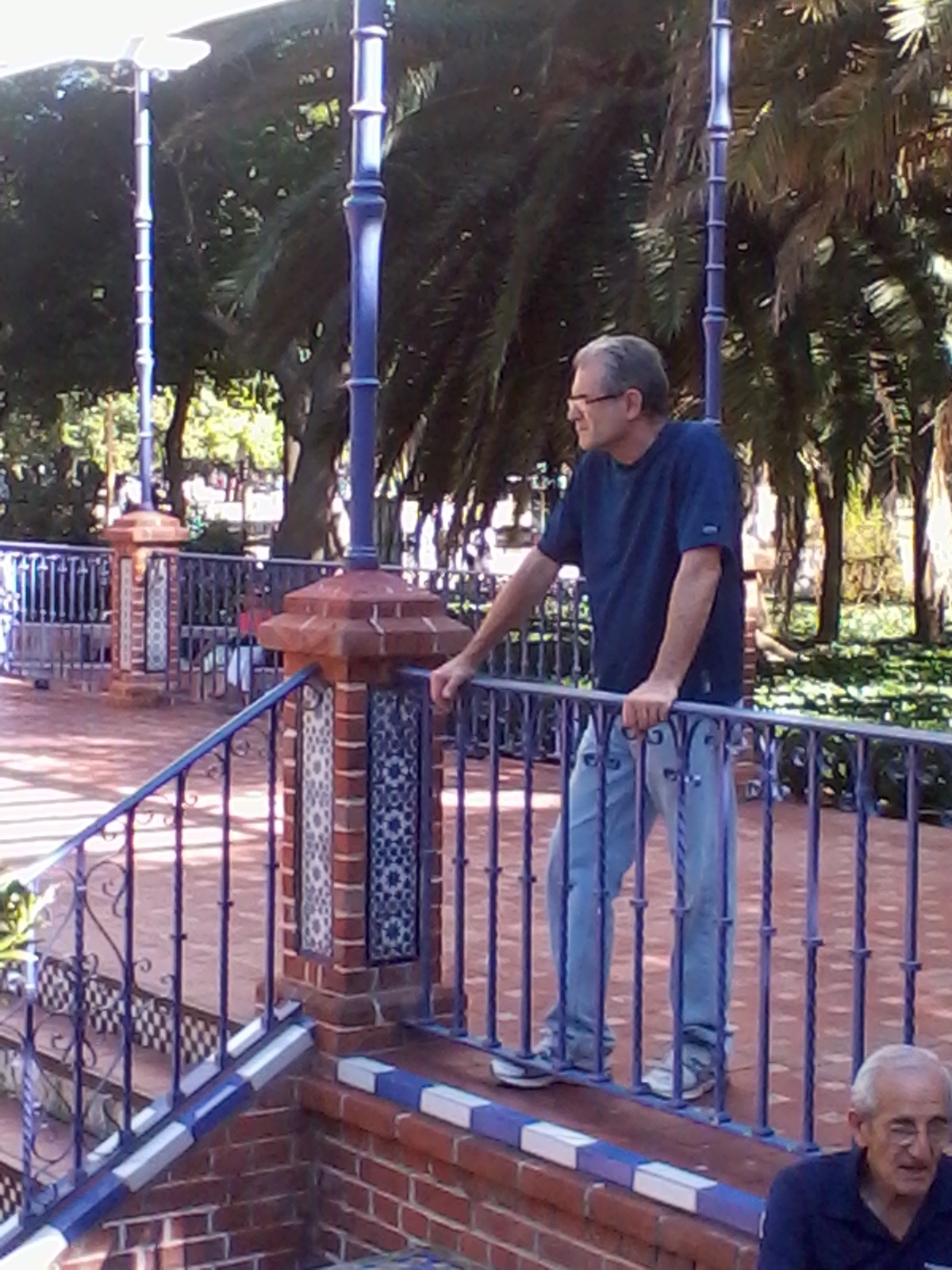
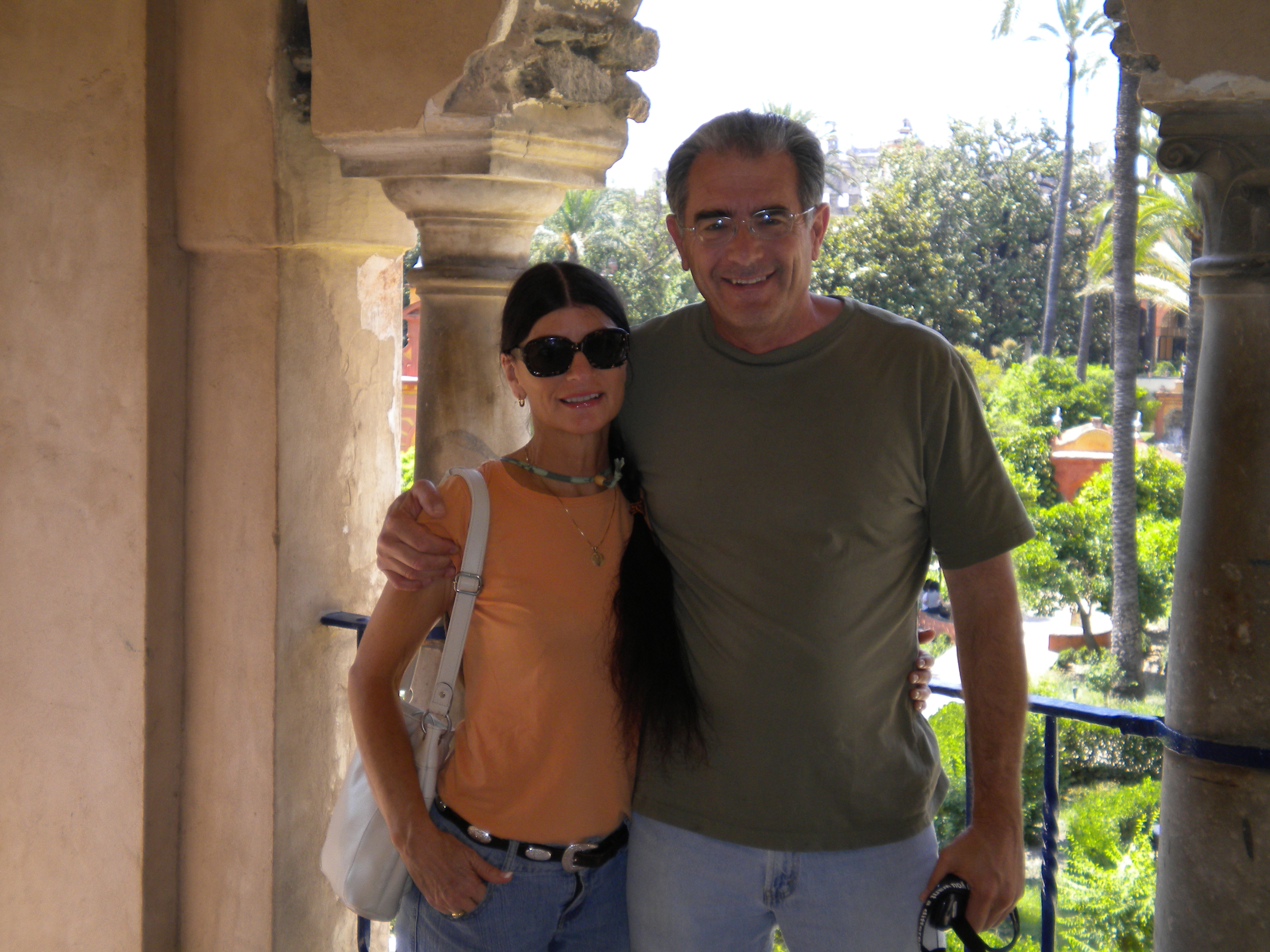
Today we got up at noon, after a great evening spent dancing at La Nacional.  We went for a walk in the park.  We like the Andalusian patio near the Rosedal, a gift from the city of Sevilla to Buenos Aires:

it's summer here in the southern hemisphere!

Ben’s wondering why there’s no water in the fountain in the middle of summer.  Who’s robbin’ this train, anyhow?

He likes café dobles on ice

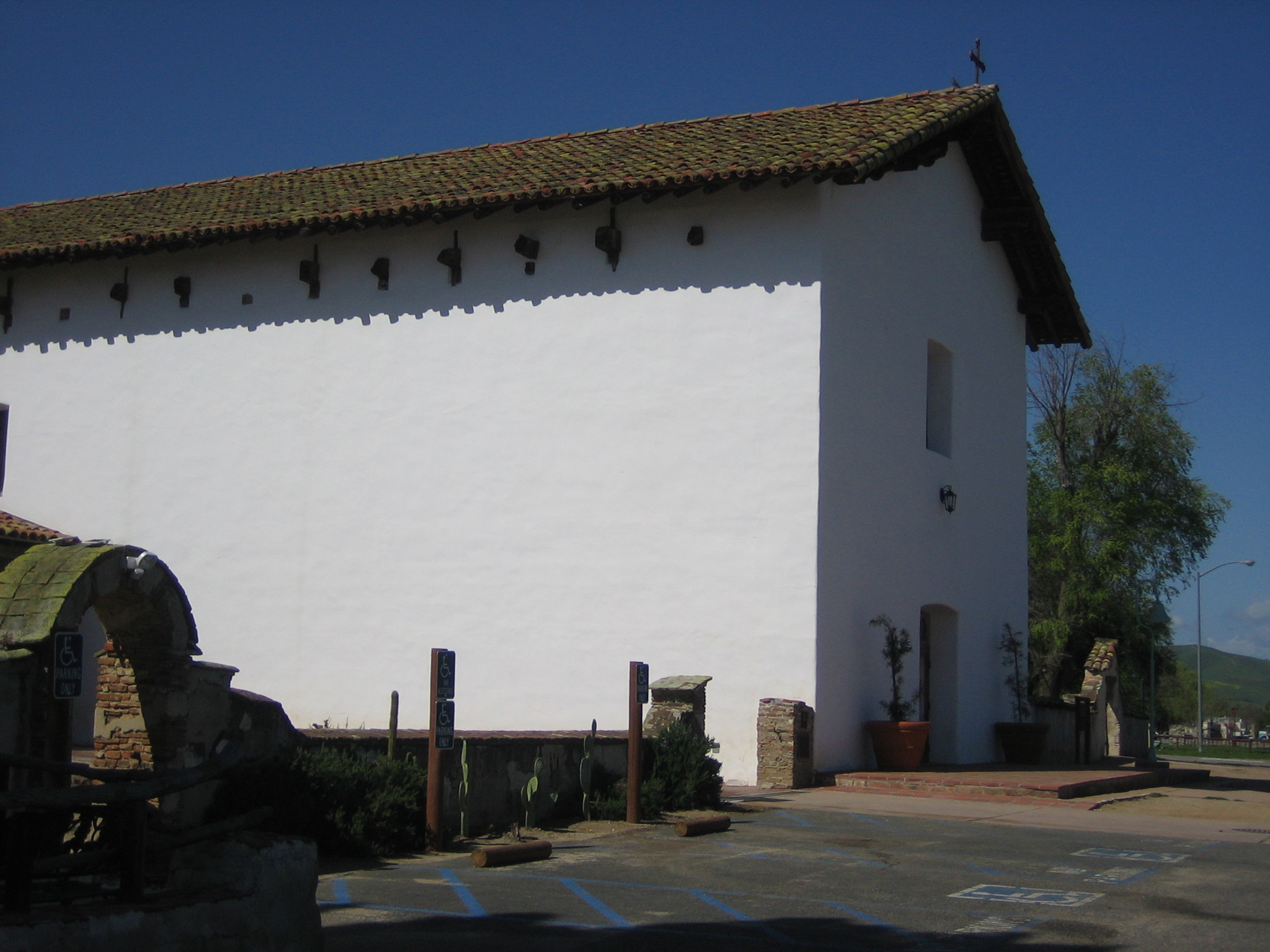
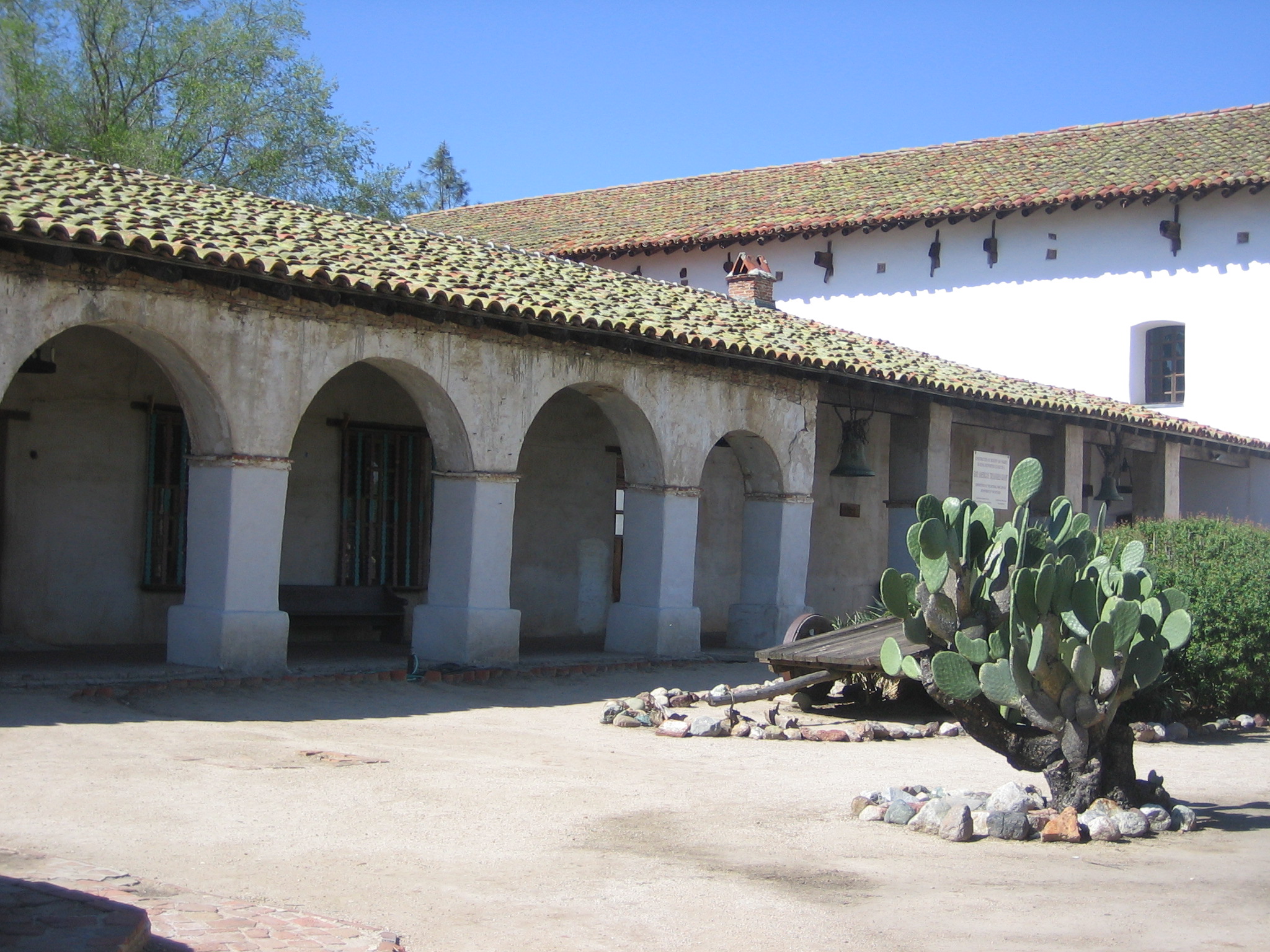
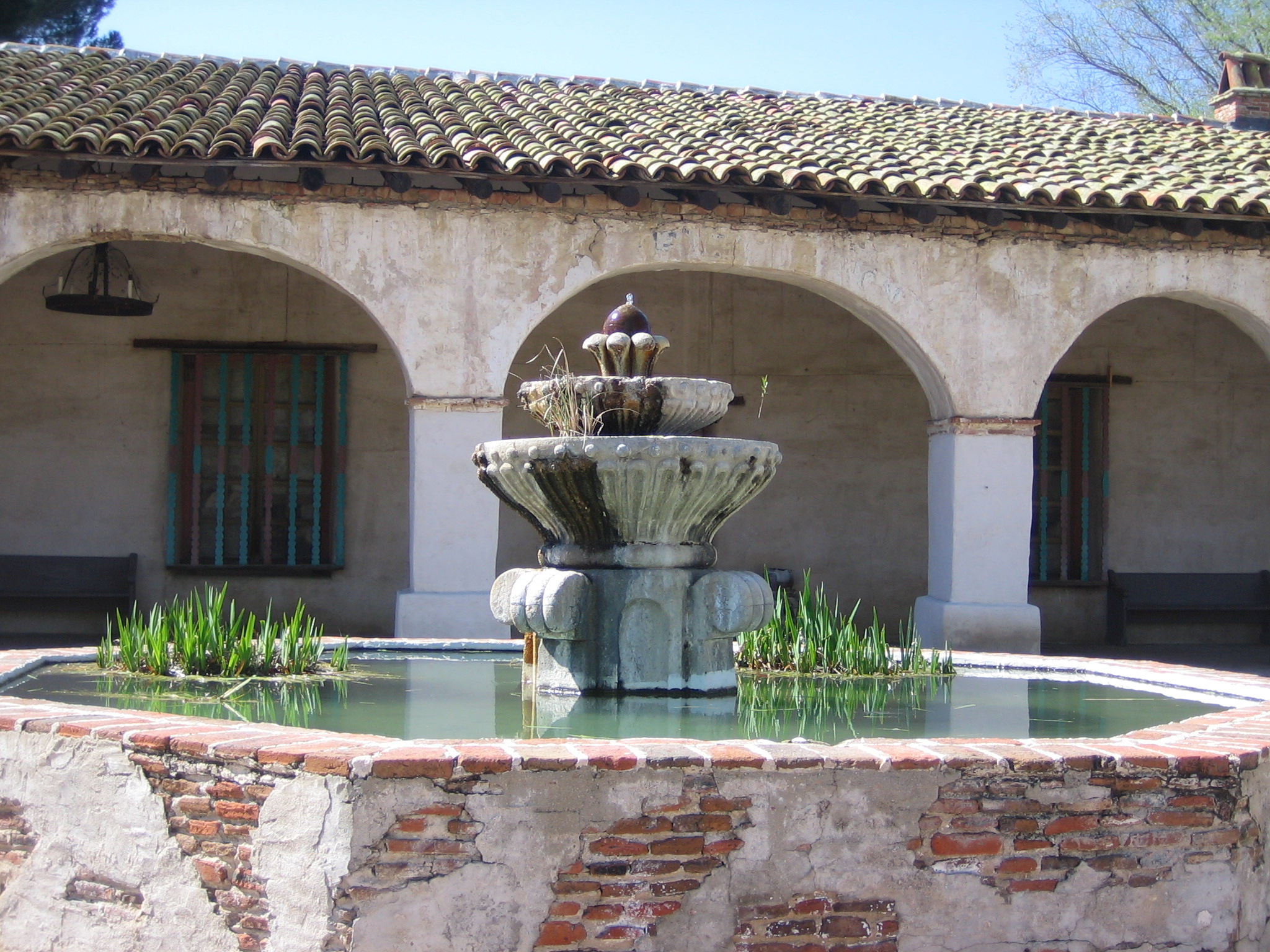
There’s a couple more things I miss.  Almost at the top of my list is Mission San Miguel.  Built in 1797, our local mission is an irreplaceable, beautiful and spiritual anchor for north county.  The mission is still in use as a parish church.  After being closed to the public for six years after the San Simeon quake of 2003, the church re-opened on September 29, 2009. The original murals inside the church, painted by Salinian Indians, are still intact, although extensive restoration had to be done after the quake. And the colorful history of San Miguel Mission is proof that truth is stranger than fiction! (Mark Twain)

Mission San Miguel

the courtyard

the fountain

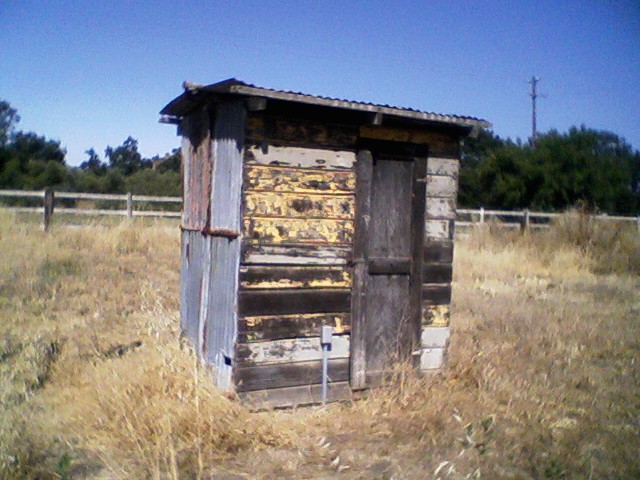
Last but not least, check out my totally wabi-sabi pump house on the ranch:  is this a Western classic or what?  (Careful!  black widows inside)  I sure miss the sweet water it pumps up to the house.

is this not the humblest of structures?

I guess there’s just no place like home.

Next blog up:  some great live music and Tango hints and secrets.

hmmm.... where in the world are they?

Ciao from Buenos Aires!